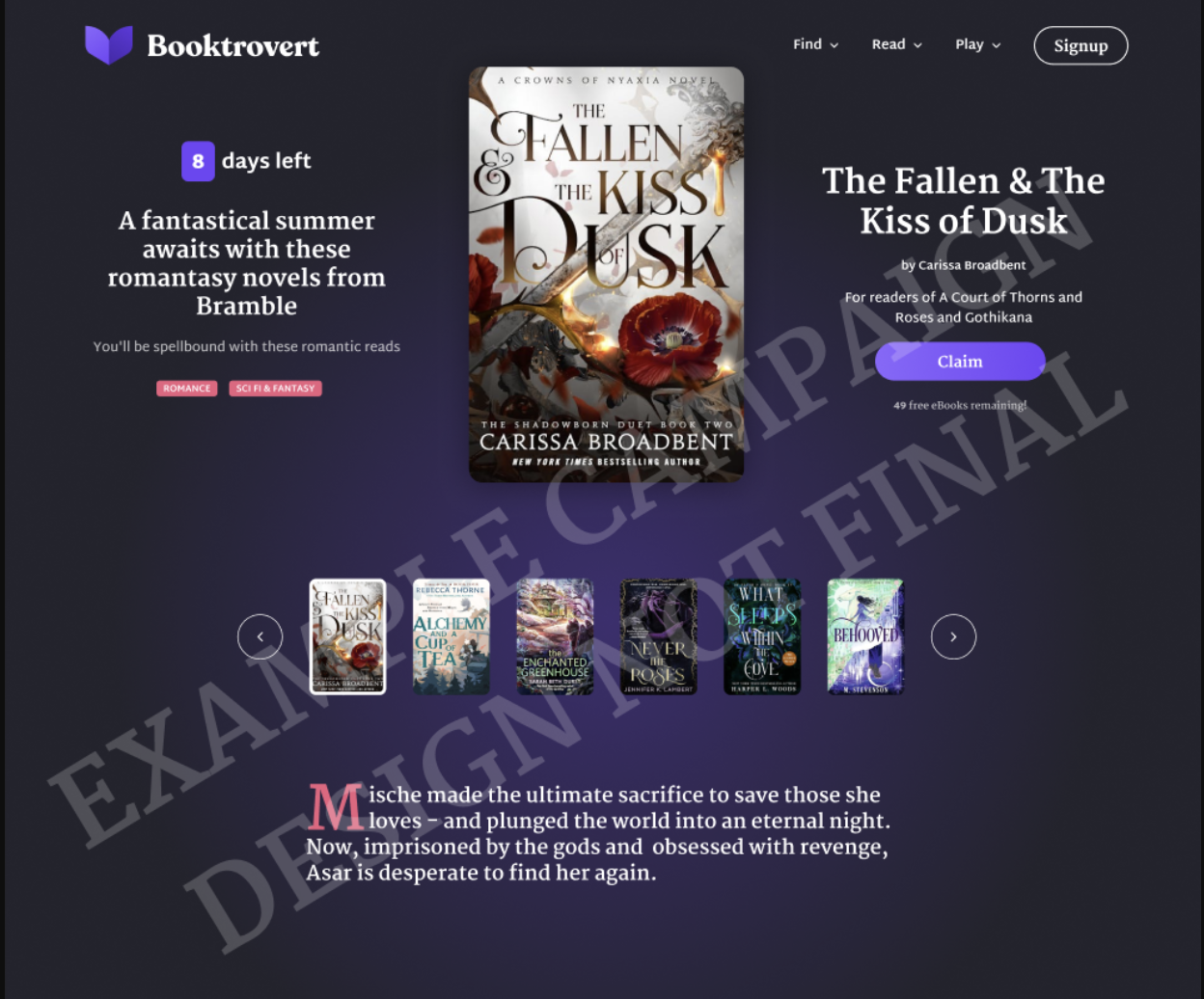
Smart consumer marketing isn’t about selling harder—it’s about creating buzz, building trust, and turning browsers into buyers.
First, what is consumer marketing?
The primary goal of consumer marketing is to increase discoverability for your book, both within and outside of the known target audience. It may include a number of different tactics, like:
- Advertising (increase visibility)
- Incentives (discounts, bundles, special packaging, etc.)
- Engagement campaigns (to encourage a flurry of activity that others want to join, like giveaways, limited-time offers, author interactions, etc.)
These efforts work together to put your book in front of the widest potential audience, with a goal of sales conversion. Consumer marketing tactics can and should effectively fill your sales funnel.
Why does it work?
Well-planned consumer marketing fosters reader engagement in both the short and long-term. The more often consumers see a product, the more likely they are to follow through to purchase it. Add on a lot of organic online activity around that product (for example: likes and comments on posts featuring the book cover, excited chatter about winning a giveaway, emotional online responses to the moods a book evoked) and readers will buy and read the book to ensure they’re not left out of the conversation happening within their communities!
The ultimate goal of consumer marketing in book publishing is driving sales and fostering long-term reader engagement. Encouraging word-of-mouth recommendations, maintaining ongoing engagement through newsletters and social media, and offering special promotions or giveaways can help sustain book sales beyond the initial launch. By continuously nurturing reader relationships and filling the sales funnel with additional potential consumers, publishers and authors can fatten the curve ahead of the long tail dropoff of sales.

Cannibalizing Sales: A False Assumption
There’s a long-standing myth that book giveaways will cannibalize sales. In reality, strategic efforts can ensure that the benefits of book giveaways far outweigh any potential lost sales. While giveaways provide free books upfront, they often lead to increased sales in the long run as new readers who enjoy the book recommend it to others, leave positive reviews, or purchase additional books from the same author or publisher. Often a reader will purchase the same book they got for free in a different format! (Hint: Digital giveaways are cost-effective, offer extensive reach, and help drive print sales!) Here are some key strategies to ensure giveaways enhance sales rather than replace them:
1. Use Giveaways as a Lead Generation Tool
Build a direct marketing channel by collecting participants’ email addresses. This will allow you to offer exclusive discounts, pre-order bonuses, or future book recommendations, increasing the likelihood of future purchases. Do more with this list than just sell to them – practice empathetic marketing efforts to truly engage with these fans and, instead of replacing sales, giveaways will help establish a loyal customer base.
2. Offer Limited-Time or Exclusive Copies
To maintain perceived value, keep giveaways limited by time or quantity, or exclusive. This ensures giveaways act as promotional tools rather than permanent free alternatives to paid books. Consider:
- Exclusive early access to members of your mailing list (or limit access to special book clubs, or the author’s street team)
- Gift a copy of the book to readers who participate in online activities – posting a review, following the author on social media, sharing posts, tagging friends, etc.
- Limited-edition bonuses like digital extras (a bonus short story, character art, playlist, etc.) that are only available to those who download the book during the giveaway window. This adds a sense of exclusivity even to a free item, and can drive urgency.
- Run giveaways when certain community goals are met, for instance: “When we hit 2k Instagram followers, I’ll release a free novella!” This turns readers into active promoters to unlock free content.
3. Pair Giveaways with Paid Promotions
Instead of relying solely on giveaways, integrate them with paid marketing campaigns to boost overall sales. For example:
- Running limited-time discounts alongside giveaways to encourage purchases from non-winners.
- Upselling other books or merchandise after a giveaway.
- Using retargeting ads to remind giveaway participants to buy related books.
4. Target the Right Audience
Instead of giving away books to general audiences, focus on specific groups that are likely to amplify sales by driving visibility. This includes:
- Influencers, bloggers, and reviewers who will generate buzz.
- Librarians and educators who may purchase copies for their institutions.
- Book club members who may encourage group purchases.
5. Reach Outside the Target Audience
Don’t be afraid to cast a wide net! A giveaway is a low-barrier entry point, making it a perfect opportunity to test new waters and attract unexpected fans. By broadening your efforts, you are likely to discover new audiences with their own spheres of influence.
- Advertise in unlikely (but aligned) spaces. Instead of just running ads or promotions in bookish spaces (like BookBub or Goodreads), try platforms that are less saturated but still relevant to your book’s themes.
- Create cross-interest appeal in your messaging. When promoting the giveaway outside your usual reader group, highlight elements that appeal to broader interests, for instance: “Love stories with powerful women and epic travel? Snag this free adventure-romance before it’s gone!”
Rather than negatively impacting revenue, strategic giveaways can help you grow your audience, increase engagement, and drive long-term sales.
Tracking ROI (Return on Investment)
Any marketer or publicist will tell you that it can be tricky to tie one specific campaign directly to sales results. The path from visibility to conversion isn’t always linear. A potential customer might see a press mention, hear about a book from a friend, and then finally click on a digital ad weeks later before making a purchase. Because of this complexity, it’s more useful to think beyond just direct sales and instead focus on a broader set of performance indicators.
When organizing campaigns, be sure to set goals and plan to track metrics like audience engagement, website traffic, lead generation, or social media growth. These indicators provide a clearer picture of how your campaigns are influencing customer behavior over time. When evaluated together, they can help you understand the cumulative impact of your consumer marketing efforts, even if it’s difficult to pinpoint a single source of ROI.
Get Started Now!
Giveaways and other consumer marketing efforts are powerful tools not just for boosting immediate sales, but for cultivating long-term engagement and reader loyalty. Combine tactics to increase visibility with incentive-driven campaigns and smart audience targeting, to turn casual browsers into devoted fans. Strategic giveaways serve as catalysts for discovery and word-of-mouth momentum, especially when paired with paid promotions and authentic community engagement. And while ROI can be challenging to measure in a straight line, focusing on holistic performance metrics offers a clearer picture of sustained impact. Ultimately, successful consumer marketing is about more than just selling a book—it’s about building relationships that keep readers coming back for more.
NetGalley is here to help: Schedule a Booktrovert campaign now!

We’re thrilled to offer NetGalley clients a streamlined consumer marketing platform for the widest audiences, while leveraging and retaining the professional community that exists at NetGalley. Learn more here, and see how it compares to Goodreads!