Six Things We Learned From the IPG Spring Conference


The Spring IPG conference was held in London on 11 February. It’s a vibrant and eclectic program of lectures, seminars and panel discussions, and always provokes much food for thought. Here are our half-dozen takeaways from the days’ sessions!

1. It’s important to ask yourself the right questions

    In his keynote speech, Ajay Chowdhury – tech entrepreneur with Shazam and acclaimed crime writer – talked of a series of questions one should ask oneself when undertaking any big project. These were:

    Does it matter? 
    Does it work?
    Can you win?


    It was a great starting point to the conference, and I think this interrogative approach to new and existing work processes and functions is really important. Asking yourself why you’re doing something can sometimes be as valuable as doing it in the first place.

    2. AI – it’s complicated…

      Ajay Chowdhury was the first, but by no means the last, speaker to talk about the power, pitfalls and possibilities of AI. It is just three short years since the launch of Chat GPT, and when George Walkley (publishing technology expert and provider of the IPG’s training in Artificial Intelligence) later asked the audience how many people had used AI in the last week, almost everyone raised their hand. The publishing industry’s legitimate fear of the effects of AI is also balanced by the fact many, possibly most, use it on a day-to-day basis. As do their readers!

      George’s very practical presentation echoed what Ajay had said earlier: that AI is brilliant at some things, but isn’t the answer to every question. Use cases, like specific research that could significantly reduce time spent, contract checks, and data analysis remains perfect for AI – though George did warn that AI hallucinations, according to OpenAI, are mathematically inevitable. Which leads us to…

      3. Authenticity and trust matters…

        BBC’s culture and media editor Katie Razzall gave her keynote address regarding how we trust our sources and said that “information is important, but so is who you get it from.” – and increasing this is moving away from institutions to individuals. Where we source our information is now a key battleground. Social media is no longer social: it is just media. The algorithms make sure that we are seeing content it believes we wish to see, and curates our view of world accordingly

        4. And books are trusted and authentic

          Books remain the gold standard of trustworthiness. But with that comes a responsibility for publishers to ensure their books are rigorously checked and meticulously researched. Katie Razzall expressed surprise that “there didn’t seem to be as much fact-checking of that work and due diligence around it as we would do in news journalism.” With individuals becoming bigger than brands, the onus is on both to ensure that what is produced meets the standards expected by readers.

          5. Reading enjoyment is at its lowest level in 20 years…

            In his keynote speech regarding the National Year of Reading, Jonathan Douglas, CEO of the National Literacy Trust, showed a graph showing the consistent year-on-year reduction in reading enjoyment. Jonathan argued that this leads to a number of negative social outcomes, including reduced educational attainment and a lack of social mobility. The theme of the National Year of Reading is GO ALL IN – meaning if you like something, you can improve your knowledge, and love of it, by reading about it. 

            6. But it’s not all doom and gloom!

              In a panel devoted to working with booksellers, Bea Carvalho from Waterstones and Sarah Walden of online retailer World of Books both mentioned that non-fiction was up year-on-year, despite many media reports suggesting that non-fiction publishing was struggling to find readers as people migrated to audio and podcasts. Viviane Basset also ran an excellent masterclass in marketing and publicity, which showed that grassroots appeals, as well as events and thoughtful interaction with influencers can make a huge difference to sales and engagement.

              As Bruce Daisley, formerly of big tech businesses including Twitter and YouTube, said in the final session of the day: “Books remain one of the things we celebrate spending money on… From an outsider’s perspective on publishing, there are plenty of reasons to fill up the positive column.”

              Posted ago | 0 Comments
              Divider

              NetGalley Promotion or Booktrovert Campaign – Why Not Both?


              When publishers are planning their marketing strategy, a common question that we hear is: Should we invest in a NetGalley promotion or a Booktrovert campaign? The short answer is: both, but for different goals. By combining the strengths of each platform, Harper360 created a powerful promotional moment for The Violin Maker’s Secret that reached both industry professionals and general consumers.

              Not Familiar With the Difference? Here’s a Quick Rundown

              • NetGalley Promotions reach book trade professionals: librarians, booksellers, reviewers, media, and educators who help build early buzz, reviews, and word-of-mouth.
              • Booktrovert Campaigns reach consumers: readers who are discovering books and deciding what to buy, with flexible calls to action like pre-orders, buy links, sweepstakes and giveaways.


              How the Two Platforms Worked Together

              On January 27, 2026,  Harper360 arranged aNetGalley eBlast to be sent to nearly 21,400 U.S.-based NetGalley members, spotlighting The Violin Maker’s Secret ahead of its February 24 on-sale date.

              In addition to giving NetGalley members the option to request the book, the publisher also drove readers to the Booktrovert landing page from the eBlast’s Available for Pre-Order CTA. There, readers could:

              • Learn more about The Violin Maker’s Secret
              • Explore additional Evie Woods titles
              • Choose their preferred retailer via pre-order and buy-now links
              • Share the Booktrovert campaign with their own audiences/general readers

              By positioning Booktrovert as the landing page for retail sales, the eBlast extended beyond NetGalley awareness and requests — giving readers a destination that supported multiple actions, all in one place.

              But That’s Not All: Booktrovert as a Standalone Discovery Channel


              Booktrovert works seamlessly for any special promotions you’re doing for your book (or books) without needing any in-house help to design or create a landing page. Plus, it also functions independently as a discovery destination for readers actively looking for their next great read.

              For this campaign run by Harper360, Evie Wood’s books reached almost 15,000 additional readers who clicked in from the daily Booktrovert Digest Newsletter, and resulted in over 2,600 unique campaign clicks from readers looking to learn more. 

              A Booktrovert campaign on its own drives visibility and engagement. When added to a corresponding NetGalley promotion, you expand the book’s reach beyond industry audiences and into consumer-first spaces.

              When used on its own, Booktrovert supports:

              • Consumer discovery beyond publisher-owned channels
              • Flexible CTAs that meet readers at different points in their buying journey
              • Ongoing visibility throughout the campaign window

              When used alongside NetGalley, it becomes a powerful bridge — transforming professional interest into consumer excitement and action.

              Create Your Own Booktrovert Campaign

              Click the “Booktrovert” tab within your NetGalley account to start using the simple campaign builder! Not yet a NetGalley client? Reach out here to get started!

              Divider

              Driving Early Reader Excitement with Exclusive Sweepstakes to Author-Owned Community

              Campaign Type: Private Booktrovert Sweepstakes
              Audience: Abby Jimenez’s Private Facebook Reader Group
              Title: The Night We Met
              Copies Available: 250
              Campaign Duration: 7 days

              Campaign Overview

              To generate early buzz and reward a highly engaged fan base, a private Booktrovert Sweepstakes campaign was launched exclusively for Abby Jimenez’s private Facebook reader group. This audience—comprised of deeply loyal, voracious readers—has a demonstrated history of enthusiasm for Jimenez’s work and a strong appetite for early access.

              The campaign offered members the opportunity to enter for a chance to win one of 250 digital advance copies of The Night We Met. By limiting access to a private, author-owned community, the campaign capitalized on trust, exclusivity, and built-in excitement.

              Strategy

              The core objective was to activate an already passionate reader community while maintaining a frictionless, equitable entry experience. Key strategic elements included:

              • Private Access: The campaign was available only to members of Abby Jimenez’s private Facebook group, reinforcing a sense of exclusivity and insider access.
              • Sweepstakes Format: Rather than first-come, first-served, the sweepstakes model allowed all interested readers to participate over a seven-day entry window, reducing urgency fatigue while maximizing participation.
              • Automated Fulfillment: Winners were randomly selected at the conclusion of the campaign and notified via email, where they could seamlessly download a protected ebook file.

              Execution – Ease & Challenge

              Readers were invited to enter the sweepstakes through a private Booktrovert campaign page promoted within the Facebook group, ensuring that only members of the exclusive group had access to enter. Once the seven-day entry period closed, winners were automatically selected and notified, selected readers could immediately start reading their protected ebook file.

              Ease: This approach minimizes the publisher’s administrative lift while ensuring a fair and transparent experience for participants.

              Challenge: Abby’s Facebook group includes readers from across the globe and, for now, Booktrovert only offers eBook access to U.S. readers. In part due to feedback from this campaign, the NetGalley-Booktrovert team is considering plans to expand service to readers in Canada as a first step toward wider distribution.

              Audience Engagement

              The private Facebook group proved to be an ideal environment for the campaign. Members are highly vocal, quick to share excitement, and eager to engage with anything related to Abby Jimenez’s work. The sweepstakes format amplified anticipation throughout the entry period, with readers actively encouraging one another to participate and expressing enthusiasm about the upcoming release.

              Because the campaign lived within an established community space, the promotion felt organic rather than transactional—more like a reward than a marketing initiative.

              Key Takeaways

              • Leverage Superfans: Highly engaged, author-owned communities are powerful launchpads for early-access campaigns.
              • Sweepstakes Reduce Friction: Allowing a multi-day entry window increases participation and goodwill, particularly in large or enthusiastic reader groups.
              • Exclusivity Drives Excitement: Private campaigns reinforce loyalty and make readers feel valued.
              • Automation Scales Trust: Random selection and automated delivery ensure fairness while streamlining execution.

              Why It Worked

              This private Booktrovert campaign succeeded by meeting readers where they already gather, offering meaningful access without complexity, and pairing exclusivity with ease of use. For authors with passionate fan bases, private sweepstakes campaigns are an effective way to generate early momentum while strengthening reader relationships ahead of publication.

              Create Your Own Booktrovert Campaign

              Click the “Booktrovert” tab within your NetGalley account to start using the simple campaign builder! Not yet a NetGalley client? Reach out here to get started!

              Divider

              From Shirtless Rivals to Cartoon Cuties: What Heated Rivalry Tells Us About Romance Cover Trends

              Romance covers have always worn their hearts on their sleeves — and sometimes very little else. But over the past decade, the visual language of romance books has gone through some major changes. One buzzy book in particular offers a perfect case study in how (and why) those trends have shifted: Heated Rivalry by Rachel Reid.

              Originally published by Carina Press with a photo‑based cover featuring two shirtless hockey players, Heated Rivalry now sports a bright, illustrated, decidedly PG redesign. Same story. Very different vibes.

              So what changed, and what does it tell us about the romance market today? Let’s lace up and take a look.

              A Tale of Two Covers

              The original cover, first published in 2019,  leaned hard into heat: a photographic image of two muscular men, bare chests on display, locked in a pose that clearly signaled this book is sexy. For years, this approach was a mainstay of romance publishing, especially in subgenres like historical or paranormal romance. The at-a-glance information gleaned from a cover like this was effective and instantly legible on shelves, especially for dedicated fans of the genre. In fact, it was designed for dedicated fans of the genre — heaving bosoms and glistening abs signaled to romance readers exactly what they were going to get between those pages. 

              The new cover from 2024, by contrast, swaps realism for illustration. The characters are still hockey rivals. There’s still tension. But now…they’ve got clothes on! The style is more playful, closer to rom-com vibes than straight spice. Compared to the photo-realistic cover, this illustrated cover can appeal even to readers who might not consider themselves romance readers (or hockey fans).

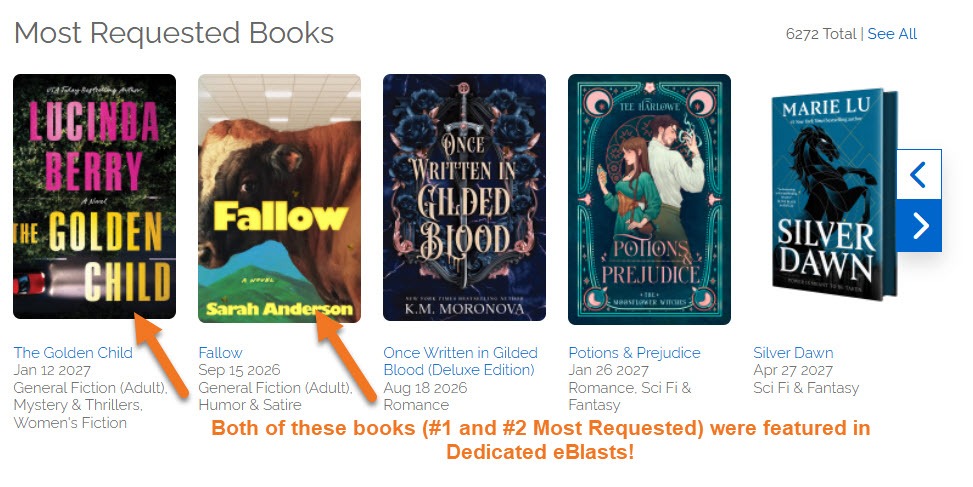
              Across NetGalley in particular, you’ll see illustrated romance covers consistently in our “Most Requested” carousels, both on the front page of the catalog and within the Romance category itself. They’re clearly here to stay, as our community continues to read, review, and share their love for this genre. 

              But Why?

              Illustration allows publishers to communicate romance without explicit sexual imagery, which has proven especially effective as romance readership has expanded and diversified, as reported by Shelf Awareness and BookNet Canada. Readers still want heat (arguably more than ever!), but these redesigned covers offer the chance to show off other elements readers enjoy such as humor, heart, and emotional payoff. 

              This kind of repositioning matters, even to the algorithms. Titles with refreshed metadata and packaging often see renewed attention from:

              • Librarians reassessing collections
              • Booksellers taking advantage of merchandising themes
              • Readers discovering (or rediscovering) backlist gems
              • Cross-over audiences, like TV-show watchers discovering source material

              In other words: a cover change isn’t just cosmetic. It’s strategic. And, as our friends at Firebrand believe: this is the perfect time to update outdated descriptions with search-optimized copy, too! Good backlist metadata can protect future sales and can unlock major gains in visibility and revenue.

              What This Means for Publishers

              Yes, we’ll acknowledge that the cutesier covers have made romance more algorithm‑friendly. Covers that feel “safe to share” tend to travel farther on social media and retailer recommendation feeds. That doesn’t necessarily mean the spicier covers are a thing of the past though – on NetGalley, we see these more often tagged  in the “Erotica” and/or “New Adult” categories, rather than just straight Romance.

              But a thoughtful redesign is more than just gaming algorithms, it’s about staying relevant as reader tastes evolve. Reaching a new audience the second time around is good for everyone (but especially the readers!).

              Curious how NetGalley can help you refresh your backlist? See our guide here! 

              Divider

              A More Sustainable (and Affordable) Strategy for Event-Ready Marketing

              As publishers look for ways to tighten conference budgets while also prioritizing  sustainability, NetGalley and Booktrovert offer solutions. With smart, streamlined alternatives to traditional print giveaways, we have the tools and data to measure success. Taking your digital catalog to industry events is practical, cost-effective, environmentally friendly, and surprisingly simple.

              Increasingly, teams are rethinking stacks of ARCs that require weeks of printing, expensive shipping costs, and a gamble on estimated demand. Digital access can replace or supplement physical galleys, ensuring that every interested attendee walks away with a way to read your book, even if your last print copy has already left the booth. Here’s how!

              Bringing NetGalley to Trade Conferences & Consumer Conventions

              How to Share NetGalley on the Show Floor

              A simple printed QR code can sit beside your remaining ARCs or replace them entirely. Scanning the QR code can send attendees to:

              • Request
              • Read Now
              • A Widget Link

              The CTA you choose depends on your goals, and you should also consider the type of event. For example:

              • At a trade conference like Winter Institute, where booksellers are the primary audience, a Widget Link gives these attendees instant access, a benefit when you need the broadest reach exclusive to attendees of the event.
              • At consumer-facing shows like BookCon, use Booktrovert instead to offer a public, large-scale digital giveaway or sweepstakes instead (more on that below).

              TIP: While some publishers link to a single priority title, you could also point attendees to your NetGalley Publisher Profile to showcase your full catalog. Or, if you want a single hub for multiple links, a LinkTree QR code works beautifully. When using Booktrovert, consider a multi-book campaign to promote up to 10 titles all on one landing page.

              Post-Event Follow Up

              A digital approach is perfect for after-event follow-up.  If you’re scanning badges or gathering business cards while meeting librarians, booksellers, or reviewers at the booth, follow up after the show with a NetGalley widget. It’s an easy, professional way to ensure attendees can immediately dive into your digital review copy (DRC) or advanced  listening copies (ALCs)

              TIP: Make NetGalley part of your booth design! Postcards, bookmarks, and other creative handouts are perfect to customize with your logo, cover art, and a QR code. Download a template here.

              Bringing Booktrovert to BookCon (and Beyond)

              Where NetGalley shines for industry outreach, Booktrovert is tailor-made for consumer shows— especially high-demand events like BookCon, where print copies disappear fast and shipping budgets disappear faster.

              With Booktrovert, you can set up:

              • Limited-Time digital giveaways (claim a copy), or
              • Limited-Quantity sweepstakes (enter to win)

              …all created and scheduled from within your existing NetGalley account. It takes only a few minutes to set up, and can be finalized 24 hours before your campaign launches.

              Booktrovert is a BookCon Sponsor in April 2025, and will be cross-promoting campaigns at the event, giving your titles an even bigger push. Reach out if you’d like to participate in Booktrovert’s show plans, including in-booth digital giveaways, and more!

              REAL LIFE EXAMPLE: Ashey Kronsberg at Boom! Studios launched a Booktrovert campaign to reach New York ComicCon attendees with a combination of outreach to their own newsletter mailing list and a QR code at the show to help direct traffic. 

              As Ashley told us, digital tactics are “becoming more of a need when it comes to B2B shows as not all retailers/librarians can bring physical copies back with them; so I anticipate it will become more unique for consumers as well.” This is where Booktrovert can fill in the gaps! 


              Built-In Event Insights

              With Booktrovert’s Detailed Analytics, you’ll be able to use the email addresses of everyone who entered your Sweepstakes or Giveaway to make post-event follow-up both thoughtful and targeted since they are already opted-in to hear from you. It’s an efficient way to keep the momentum going long after the event ends.

              Plus, learn more about demographics and who your book appeals most to, giving you actionable data to put more informed strategy behind your marketing tactics. 

              Why Digital Makes Sense

              Beyond convenience, bringing NetGalley and Booktrovert to events significantly reduces printing and shipping waste, making your conference presence more sustainable. It also lowers costs: no unexpected shipping charges, no last-minute reprints, no guessing how many copies to bring. Instead, every attendee can reliably access your titles in a format that’s immediate, accessible, and aligned with their reading preferences.

              Digital doesn’t necessarily need to replace print copies, but it does complement it in powerful ways, ensuring you never miss an opportunity to connect a reader with a book.

              If you’d like help planning your strategy for an upcoming conference, or want support choosing links, QR code destinations, or Booktrovert campaign options, we’re here to help.

              Divider

              How Indie Author M. Kevin Hayden used Booktrovert to Generate Visibility

              When it comes to early adoption of new tools for audience engagement, independent authors are often the first to experiment, and the first to see what works! For author M. Kevin Hayden, Booktrovert.com has become a key part of that journey. As one of Booktrovert’s earliest adopters, Kevin has used nearly every campaign type the platform offers—Giveaways, Sweepstakes, and Buy Now CTAs—to reach new readers and drive ongoing visibility for his work.

              In this Q&A, Kevin shares how he approaches each campaign type with a different goal in mind, what he’s learned about building momentum, and why Booktrovert has become an important part of his marketing strategy as an author.

              Tell us a little bit about yourself and your books!

              Certainly. I’m originally from the South Side of Chicago. An Old Soul is my debut novel and my first published work of fiction. It follows a young man who feels quietly displaced in his own life and in the world around him. The story is set in my old neighborhood of Gresham in 1996… or is it? It blends grounded realism with elements of synchronicity and speculative fiction.

              Willow Rose is my sophomore novel and is also now available. It leans into literary cosmic horror and follows a doctor who flees his past for rural northern Minnesota. A strange knock at his door one night sets off a chain of events that pulls him and others into a fight for survival against a malevolent monster, all in the wake of a comet that appears from nowhere.

              You’ve been part of Booktrovert since it launched! What helped you decide to take the leap with a brand-new platform?

              I’ve always been an early adopter. I’m naturally drawn to the new thing. I get excited about previously unknown possibilities and love being among the first to explore what something can become. Since NetGalley already has such a wide reach in the bookish community, I was genuinely excited to see how Booktrovert might build on that and help me connect with new readers in a different way.

              And honestly, I’ll probably be among the first in line for whatever you all come up with next—because why not?

              “Since NetGalley already has such a wide reach in the bookish community, I was genuinely excited to see how Booktrovert might build on that and help me connect with new readers in a different way.”

              – M. Kevin Hayden

              Your recent Sweepstakes for Willow Rose had a mysterious, cinematic hook. How did you approach writing the campaign title and description to capture readers’ attention?

              Honestly, I wasn’t sure how it would land. I just put myself in the reader’s shoes and asked, “What would make me click?”

              Willow Rose is intentionally a mysterious story, and some of the early reviews were very critical of the unanswered questions. In a way, the campaign was also my way of signaling what kind of experience the book offers — so the right reader would be more likely to lean in. I’ve learned the hard way how important that match really is.

              Our goal is to reach as many of those right readers as possible. To do that, you have to hang the appropriate sign.

              You’ve also used Booktrovert for a Buy Now campaign, promoting a punchy limited time sale. How are your goals different when considering these various CTAs? When and why would you run a Sweepstakes versus a campaign that drives to retailers?

              My goal early on was to reach more readers. I needed to gather early reviews — get the story in front of more eyes — and the giveaways helped with this. Booktrovert has proven an invaluable tool for overall visibility. I found that interest had a slight bump during those campaigns in the way of follows and Goodreads shelvings. I found that the new sweepstakes seemed to pull more interest than the earlier first-come giveaways from Booktrovert

              As far as the “Buy Now” CTA campaigns, I plan to utilize those also to help buoy dips in sales.

              Of note, as I work through this Q&A, I feel it’s time to setup a CTA campaign on Booktrovert.com now as my sales and visibility are dipping slightly. 

              The goal is to be seen. There are multiple shouting towers out there and it’s best to use as many as possible to avoid vanishing in a crowd. Millions of books are published a year and that crowd is dense.

              Willow Rose sweepstakes campaign stats as of Dec. 2, 2025

              As an independent author, what do you think is the most valuable outcome of running an ebook giveaway, whether that’s exposure, engagement, or something else entirely?

              As an Indie author, it cannot be understated that you have to make yourself findable. At baseline, we are all invisible. There isn’t a cadre of marketers, promoters or word of mouth spreaders working on our behalf. Usually, it’s only the author themselves. Even with well placed ads, campaigns, and giveaways, we are still relatively unseen. Even when visible, we can be looked over for traditionally published titles. Giveaways are a way to get the book in front of more eyes, pique interest, and gather reviews. Sometimes, you run into gold just because someone influential just happens to win a title. 

              For me, those are my main reasons for running the giveaways. To gather more potential reviews and increase visibility.

              “Booktrovert has proven an invaluable tool for overall visibility.”

              How does Booktrovert compare to other giveaway platforms you’ve tried? 

              Booktrovert is a very user-friendly and efficient tool. I can set up a campaign with minimal friction and get it live quickly, similar to NetGalley. Some other giveaway platforms require more data entry and have longer approval timelines. That said, I use Booktrovert in conjunction with other platforms. Visibility across multiple services is important because different readers prefer different ecosystems. Also, seeing the same title appear across platforms seems to increase interest and engagement.

              “Booktrovert is a very user-friendly and efficient tool. I can set up a campaign with minimal friction and get it live quickly, similar to NetGalley. Some other giveaway platforms require more data entry and have longer approval timelines.”

              What’s next for you?

              I recently completed a prequel short story for Willow Rose that will be available on my website and linked by QR code in future printings of the novel. I’m excited to gift more story to readers, and I hope it answers a few lingering questions while still preserving the intended mystery of Willow Rose.

              For those knocking at the door — remember the password: stay together 

              I’m also deep into a new project called Locked-In, a speculative dystopian novel set in the same universe as An Old Soul. There are several other stories brewing as well, and I’m hoping to finish Locked-In before they hijack my attention. Other storytellers know exactly what I mean. Ideas never wait their turn.


              Create Your Own Booktrovert Campaign

              Click the “Booktrovert” tab within your NetGalley account to start using the simple campaign builder! Not yet a NetGalley client? Reach out here to get started!

              Divider