Interview: Michelle Halket, Publisher, Central Avenue Publishing

Michelle Halket, Publisher of Central Avenue, occupies a unique position in an unpredictable book market. Michelle is a Canadian publisher, but the vast majority of sales come from the U.S. owing in large part to their authors’ expansive reach on social media and with the help of her distributor, Simon & Schuster.

We’re excited to share Michelle’s expertise about what works best for Central Avenue titles on NetGalley.


Michelle, you strike us as a publisher who is small and nimble enough to be creative, but data-savvy enough to never be reckless. What brings you to NetGalley with your books, even after trying different marketing strategies?

As any company will tell you, marketing is one of those difficult places to spend money because it’s nearly impossible to determine the actual ROI. I’ve been around long enough to have tried everything: print and digital advertising in trade journals, paid social posts, author tours (both in person and online), trade show booths, festivals. But the reason I have kept my NetGalley account active every year after I’ve pulled the plug on so many other avenues is because I can see the actual results. There’s three main areas:

  • 📊 Metrics: NetGalley shares with me so much data on who accessed the book, ratings of content and covers, impressions, review incidence, etc. These are the hard data that give me an idea of how widely the book was seen, read, and shared. 
  • ✍🏼 Reviews: Not only do I get those data points mentioned above, I get actual readers telling me their thoughts that get posted online in so many places. They all start with “Thank you to NetGalley and the publisher…” so I am not guessing where they got the book. I know that the money I spend every month is reaching readers who then share their reviews on socials and on bookstores. And the algorithms that favor customer interaction now favor our books because of how robust those reviews make our book pages. (For NetGalley’s take on the power of reviews, read here!)
  • 📨 Direct Consumer Relationships: I get to be able to contact each and every reviewer in a very targeted way – I can identify the ones who loved a book and let them know an author has a new one coming. Or I can ask people to join our newsletter where they can get even more freebies. All this goes so far in building reader relationships.

At NetGalley, we like to say our website is pretty easy to navigate and use. Can you speak about efficiency and ease of use while also addressing what it is that keeps you coming back?

The UX is simple, intuitive and attractive – from the colors, typeface and generous use of white space to how every aspect you might need links to each other. I can be on a book’s page setting up metadata and with one click access reviews, and then from there, set a custom outgoing message, or determine who I want to have auto-approval. Kudos to your designers for taking a complex and integrated ecosystem and making it easy to use.

You champion fiction—often literary—and poetry. This is not necessarily the “consumer literature” that follows trends, but rather a conscious decision to, in your words, “move readers, challenge perspectives, and leave a meaningful impression.” What do you look for when considering requests from the NetGalley community?

With nearly every request, we click through and take a look at the person requesting. I like knowing if they actually leave reviews, and when they do, are they honest and fair, or are they just there for the free books? I very much appreciate current and fleshed out bios with specific details, such as knowing they like to champion queer books. I always check out their approval rating as this tells me how my peers see that reviewer. And it was a great addition to be able to make notations on users as we often see the same users request our books. By making those notes, it feels like we have gotten to know them and then other people at our press can read our thoughts when they are answering requests.

You’ve shared that NetGalley data and reporting is vital to you and the success of your books. What are the marketing KPIs you’re looking at, and what ROI are you aiming for? 

We are realistic and have different metrics for each book, for example, a romance novel will garner more requests than poetry titles. Generally, with a poetry book, I’m looking for dozens of requests. With romance or upmarket fiction, I’m expecting hundreds of requests. While the review rates vary quite a bit, it’s the ability to reach out to reviewers to remind them for a review or to post it on socials or bookstores. I also pay attention to the thumbs up/down of the cover. Given how trends change in cover styles, it gives me an idea if we hit the mark, or missed it?

We are realistic and have different metrics for each book… Given how trends change… it gives me an idea if we hit the mark or missed it.

In addition to the number of requests, I’m looking at the people requesting. I don’t often auto-approve because we approve on a regular basis, and I like seeing the names and organizations. Knowing that booksellers from Germany are requesting a particular book helps us with selling foreign rights as I can bring this information to my agent. A request from a popular creator, or journalist means a possible huge reach and now I have that person’s email address to reach out with a more personal message.

My ROI is solidly founded on the contacts I’ve made and the relationships that have come from them. When I compare the cost of our NetGalley account to any other advertising or marketing initiative, I quickly see how much value I’m getting. This isn’t just a list of emails – these are people that I know asked for and liked what we do here.

When I compare the cost of our NetGalley account to any other advertising or marketing initiative, I quickly see how much value I’m getting.

Can you share specific examples of how your books have performed on our site? And how those results might compare to other tools you’ve used in the market?

I took a look at a group of titles across genres – each of which were posted to different galley sites at the same time. In every case, the number of requests on NetGalley exceeded the others – varying by a factor of 1.5x to 10x. In addition, the average review/request ratio on others was around 6%. On NetGalley it was 18%. My marketing dollars seem to work harder and are more efficient on NetGalley.

The number of requests on NetGalley exceeded the others — varying by a factor of 1.5x to 10x. In addition, the average review/request ratio on others was around 6%. On NetGalley it was 18%.

What books do you decide to list on NetGalley? How do you approach backlist?

Every frontlist book gets a stint on NetGalley, usually starting about 4 months pre-pub. We only have an account that allows for 5 titles at a time, so we don’t get much opportunity to list our older books. That said, I might have to look at this strategy a little more closely! 

When you think about a B2B community, who do you include? We know publishers need booksellers and librarians who will purchase and champion your books. Is your definition of B2B larger than this? 

Oh for sure! As I mentioned before, we often get requests from journalists, creators, media, rights acquisition editors at other publishers, and film/tv professionals. These groups are important as well and I love that I get access to all types of businesses here.

And, finally, please tell us a bit more about your motivation to create The Poetry Shelf on your website. It’s been a wonderful service to the industry and to readers. We congratulate you on its success!

Wow, thank you for asking about it! It came about after Winter Institute in 2025 when so many booksellers said they just didn’t know what to do with their poetry sections. Before my career in publishing I spent an equal amount of time in market research – much of that advising grocery and drug retailers how to optimize their sections. I decided to use these same principles of good assortment and shelf planning that large booksellers and other retailers use and adapt it for independent booksellers who don’t have a poetry expert on staff. It’s based on how consumers buy poetry (the same buyer doesn’t usually purchase a TikTok star’s book and Chaucer). It’s then coupled with data from the Bookscan bestseller list, and then I add in a bit of research on a feature section for the month. For example, March was Women and Spring, featuring books by great women poets about renewal and feminine energy. It’s been a huge hit and I’m honored to share it for free every month with booksellers via our website and an ongoing feature in Shelf Awareness. 

About Central Avenue Publishing

Central Avenue Publishing is a home for fiction and poetry about us at our worst – and best.

We are proud to publish books that have resonated widely—appearing on bestseller lists, earning awards, drawing support from literary heroes and celebrities, and finding readers around the world.

At Central Avenue Publishing, our mission is to publish fiction and poetry that reflect the best and worst of the human condition—stories that move readers, challenge perspectives, and leave a meaningful impression.

Divider

A More Sustainable (and Affordable) Strategy for Event-Ready Marketing

As publishers look for ways to tighten conference budgets while also prioritizing  sustainability, NetGalley and Booktrovert offer solutions. With smart, streamlined alternatives to traditional print giveaways, we have the tools and data to measure success. Taking your digital catalog to industry events is practical, cost-effective, environmentally friendly, and surprisingly simple.

Increasingly, teams are rethinking stacks of ARCs that require weeks of printing, expensive shipping costs, and a gamble on estimated demand. Digital access can replace or supplement physical galleys, ensuring that every interested attendee walks away with a way to read your book, even if your last print copy has already left the booth. Here’s how!

Bringing NetGalley to Trade Conferences & Consumer Conventions

How to Share NetGalley on the Show Floor

A simple printed QR code can sit beside your remaining ARCs or replace them entirely. Scanning the QR code can send attendees to:

  • Request
  • Read Now
  • A Widget Link

The CTA you choose depends on your goals, and you should also consider the type of event. For example:

  • At a trade conference like Winter Institute, where booksellers are the primary audience, a Widget Link gives these attendees instant access, a benefit when you need the broadest reach exclusive to attendees of the event.
  • At consumer-facing shows like BookCon, use Booktrovert instead to offer a public, large-scale digital giveaway or sweepstakes instead (more on that below).

TIP: While some publishers link to a single priority title, you could also point attendees to your NetGalley Publisher Profile to showcase your full catalog. Or, if you want a single hub for multiple links, a LinkTree QR code works beautifully. When using Booktrovert, consider a multi-book campaign to promote up to 10 titles all on one landing page.

Post-Event Follow Up

A digital approach is perfect for after-event follow-up.  If you’re scanning badges or gathering business cards while meeting librarians, booksellers, or reviewers at the booth, follow up after the show with a NetGalley widget. It’s an easy, professional way to ensure attendees can immediately dive into your digital review copy (DRC) or advanced  listening copies (ALCs)

TIP: Make NetGalley part of your booth design! Postcards, bookmarks, and other creative handouts are perfect to customize with your logo, cover art, and a QR code. Download a template here.

Bringing Booktrovert to BookCon (and Beyond)

Where NetGalley shines for industry outreach, Booktrovert is tailor-made for consumer shows— especially high-demand events like BookCon, where print copies disappear fast and shipping budgets disappear faster.

With Booktrovert, you can set up:

  • Limited-Time digital giveaways (claim a copy), or
  • Limited-Quantity sweepstakes (enter to win)

…all created and scheduled from within your existing NetGalley account. It takes only a few minutes to set up, and can be finalized 24 hours before your campaign launches.

Booktrovert is a BookCon Sponsor in April 2025, and will be cross-promoting campaigns at the event, giving your titles an even bigger push. Reach out if you’d like to participate in Booktrovert’s show plans, including in-booth digital giveaways, and more!

REAL LIFE EXAMPLE: Ashey Kronsberg at Boom! Studios launched a Booktrovert campaign to reach New York ComicCon attendees with a combination of outreach to their own newsletter mailing list and a QR code at the show to help direct traffic. 

As Ashley told us, digital tactics are “becoming more of a need when it comes to B2B shows as not all retailers/librarians can bring physical copies back with them; so I anticipate it will become more unique for consumers as well.” This is where Booktrovert can fill in the gaps! 


Built-In Event Insights

With Booktrovert’s Detailed Analytics, you’ll be able to use the email addresses of everyone who entered your Sweepstakes or Giveaway to make post-event follow-up both thoughtful and targeted since they are already opted-in to hear from you. It’s an efficient way to keep the momentum going long after the event ends.

Plus, learn more about demographics and who your book appeals most to, giving you actionable data to put more informed strategy behind your marketing tactics. 

Why Digital Makes Sense

Beyond convenience, bringing NetGalley and Booktrovert to events significantly reduces printing and shipping waste, making your conference presence more sustainable. It also lowers costs: no unexpected shipping charges, no last-minute reprints, no guessing how many copies to bring. Instead, every attendee can reliably access your titles in a format that’s immediate, accessible, and aligned with their reading preferences.

Digital doesn’t necessarily need to replace print copies, but it does complement it in powerful ways, ensuring you never miss an opportunity to connect a reader with a book.

If you’d like help planning your strategy for an upcoming conference, or want support choosing links, QR code destinations, or Booktrovert campaign options, we’re here to help.

Divider

Backlist, Front and Center: Year-Round Strategies for Long-Term Success

A Guide to Re-Energizing Your Books and Reaching New Readers Using NetGalley & Booktrovert

At NetGalley, we love seeing how publishers and authors breathe new life into their backlist titles. While frontlist books often get the spotlight, backlist marketing can be one of the most rewarding—and strategic—ways to grow revenue, strengthen discoverability, and reach new audiences. 

As Núria Cabutí, CEO of Penguin Random House Grupo Editorial, recently said during the 2025 Frankfurt Book Fair CEO Talk: “A book that has not been read is a new book, so if it’s backlist or frontlist, it doesn’t matter. What we need is powerful promotions.”

That philosophy perfectly captures the opportunity that backlist marketing presents. Whether you’re looking to celebrate an anniversary, connect to a cultural moment, or simply reintroduce readers to a beloved story, NetGalley and Booktrovert can help you make it happen.

Choosing Which Backlist Titles to Promote

When planning your next backlist campaign, start by identifying which titles are most likely to resonate right now. Consider whether a book fits into a trending genre, has seasonal significance, or ties into an upcoming anniversary, reprint, or special edition. Is there a media adaptation or author milestone on the horizon? Or is the title about to be released in a new format, like an audiobook?

Each of these moments can offer a fresh reason to bring a backlist book back to readers’ attention through NetGalley and Booktrovert.

“A book that has not been read is a new book, so if it’s backlist or frontlist, it doesn’t matter. What we need is powerful promotions.”

– Núria Cabutí, CEO of Penguin Random House Grupo Editorial

Reframe and Refresh for Emerging Trends

Five years ago, “romantasy” wasn’t an established genre, even though romance and fantasy have long been natural companions. By staying attuned to trends like this, you can reposition older titles to meet new reader expectations.

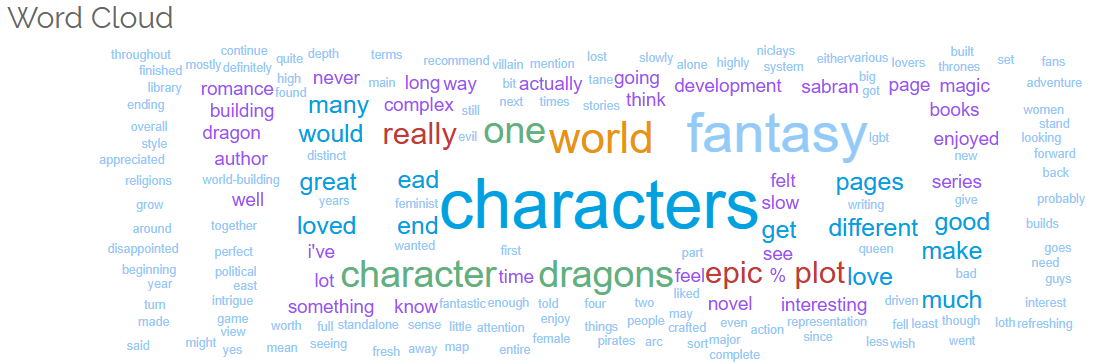
Use NetGalley tools like the Word Cloud and Feedback Reports to uncover the language readers use most often, then refresh your book descriptions and marketing copy to better align with these trending keywords. Once your messaging feels current, you can reintroduce the book to readers in a big way through a Booktrovert Sweepstakes or Giveaway.

TIP: Unsure what Booktrovert CTA to pick? Check out our guide here! 

Browsing the NetGalley catalog is also a great way to spot cover design trends and genre shifts before they hit the retail shelves, helping you stay ahead of what readers are looking for. Use the “Most Requested” carousel, both on the catalog homepage and within your categories of interest, to really see what’s trending! 

Promote Around Merchandising Themes

Seasonal and cultural moments are key opportunities to connect your books with active readers. Use NetGalley’s Title Timeline to plan around recurring themes, like spooky reads for Halloween, heartwarming romances for Valentine’s Day, or thought-provoking political nonfiction tied to election cycles.

When your title appears at just the right time, you’ll capture readers’ attention when their interest is at its peak. For inspiration, check out the NetGalley Media Kit, which highlights dozens of seasonal, holiday, and other themes you can use to plan ahead.

Celebrate Milestones

Every milestone is a marketing opportunity.

Anniversaries offer a natural moment to reintroduce your book to new readers. Celebrate 10,000 copies sold or 25 years in print by offering review copies on NetGalley alongside a Booktrovert Giveaway campaign to consumers. Or, promote a just-for-fans sale using a Private Buy Now campaign. These combined efforts help boost visibility, generate buzz, and spark renewed interest in your title.

If you’re releasing a new edition or anniversary reprint, consider using a NetGalley eBlast to make a splash and ensure readers take notice! Want the widest possible reach? Our NetGalley + Booktrovert Combos “menu” has even more ideas for how to choose the most impactful ways to promote every type of book (and for every type of goal!). 

Take Advantage of Media Tie-ins

If your book is being adapted to a film or television show, or even if it shares similar themes or subject matter, now’s the time to capture audience excitement. Use NetGalley and Booktrovert to reignite reviews and conversations that connect your title to what’s trending on screen.

To help booksellers and librarians recommend your book to their communities, consider developing a Book Club Kit for your backlist titles. These assets make it easier for professionals to champion your book when readers are hungry for similar stories.

Pitch Books in a Series

Your NetGalley history is a valuable resource for reaching proven audiences. If you have an upcoming installment in a series, list book one again on NetGalley to rekindle early enthusiasm and bring new readers into the fold.

Divider

Booktrovert vs. Goodreads: Why Modern Book Marketing Needs a Modern Platform

When it comes to running effective, flexible, and modern book marketing campaigns, Booktrovert is setting a new standard—far outpacing other giveaway platforms in features, value, and control.

📣 Call to Action Flexibility
Booktrovert empowers authors and publishers with multiple CTAs including Giveaway, Sweepstakes, Pre-Order, Buy Now, (or mix & match!), offering marketing versatility across a book’s lifecycle. Goodreads, by contrast, limits campaigns to giveaway only, making it far less adaptable.

📚 Campaign Scale & Control
Booktrovert allows up to 10 books per campaign, while Goodreads supports only one, making it inefficient for grouped titles, like series, authors’ backlist, or even seasonal campaigns. Want to give away more than 100 copies? Booktrovert lets you decide the limit, by number of books (Sweepstakes) or time (Giveaways). Goodreads Giveaways cap at 100 copies.

🔒 Visibility Options
Booktrovert lets you choose public or private campaigns, ideal for targeted promotions or exclusive access. (Here are 10 Ways to use Booktrovert!) Goodreads? Always public, which restricts strategic customization and limits your creative marketing ideas!

⚙️ Giveaway versus Sweepstakes Mechanics
Giveaways
: Unlimited quantity for a limited amount of time, and participants claim their eBook instantly. You choose giveaway duration from 1-7 days. Detailed Analytics (optional add-on) will include email addresses for readers who claim a copy. Fulfillment is digital with a permanent license via Web Reader, Kindle, Kobo—depending on your settings. After the giveaway ends, the CTA will automatically switch to retail. 

Sweepstakes: You offer a limited quantity of eBooks, and participants can enter to win.
Entries are collected for the full 7 days of your campaign, then winners will be randomly drawn and automatically notified. Detailed Analytics (optional add-on) will include email addresses of everyone who entered. Fulfillment is digital with a permanent license via Web Reader, Kindle, Kobo—depending on your settings. After the sweepstakes ends, the CTA will automatically switch to retail.

Goodreads Giveaways run on an enter-to-win model, where readers must wait until the campaign ends, creating little momentum or real-time engagement.

⚡ Fulfillment & Retail
Booktrovert giveaways and sweepstakes deliver instant digital fulfillment via Kobo, Kindle, and Web Reader. If a giveaway campaigns automatically switch to retail CTAs if they are shorter than 7 days, with links you choose to drive sales wherever you want.

Sweepstakes winners are automatically and randomly chosen, automatically notified, and have instant digital fulfillment. No action needed from the publisher!

Goodreads, however, requires you manually ship print books or limit your eBook giveaways to Kindle-available titles. There’s also no retail campaign option on Goodreads.

📊 Reporting & Data
Booktrovert provides standard engagement reports and offers detailed analytics, including email addresses for giveaway winners. Goodreads Giveaways give you just a list of winners—no engagement metrics, no reader insights.

💸 Cost & Value

Booktrovert campaigns start at $200 per title, with pricing based on campaign type and scale—no printing or shipping costs. Plus Booktrovert offers optional add-ons for even more advertising and reporting. Goodreads Giveaways range from $119 to $599, plus shipping and printing, making them more expensive for less control and insight.

🌟 Reader Experience & Discovery
Booktrovert is designed with readers in mind—modern, intuitive, and engaging. It offers interactive features and discovery tools that encourage real-time interaction and curation. Goodreads, by contrast, is perceived as outdated and inefficient.


Bottom line: If you want to use a flexible, data-rich, and cost-effective platform for consumer marketing, Booktrovert is the clear winner. 👉 Launch your campaign on Booktrovert today

Divider

Freebies, FOMO, and Sales Funnels: The Secret Recipe for Selling More Books

Smart consumer marketing isn’t about selling harder—it’s about creating buzz, building trust, and turning browsers into buyers.


First, what is consumer marketing?

The primary goal of consumer marketing is to increase discoverability for your book, both within and outside of the known target audience. It may include a number of different tactics, like:

  • Advertising (increase visibility)
  • Incentives (discounts, bundles, special packaging, etc.)
  • Engagement campaigns (to encourage a flurry of activity that others want to join, like giveaways, limited-time offers, author interactions, etc.)

These efforts work together to put your book in front of the widest potential audience, with a goal of sales conversion. Consumer marketing tactics can and should effectively fill your sales funnel. 

Why does it work?

Well-planned consumer marketing fosters reader engagement in both the short and long-term. The more often consumers see a product, the more likely they are to follow through to purchase it. Add on a lot of organic online activity around that product (for example: likes and comments on posts featuring the book cover, excited chatter about winning a giveaway, emotional online responses to the moods a book evoked) and readers will buy and read the book to ensure they’re not left out of the conversation happening within their communities!

The ultimate goal of consumer marketing in book publishing is driving sales and fostering long-term reader engagement. Encouraging word-of-mouth recommendations, maintaining ongoing engagement through newsletters and social media, and offering special promotions or giveaways can help sustain book sales beyond the initial launch. By continuously nurturing reader relationships and filling the sales funnel with additional potential consumers, publishers and authors can fatten the curve ahead of the long tail dropoff of sales.

Image via “Should You Invest in the Long Tail” by Anita Elberse

Cannibalizing Sales: A False Assumption

There’s a long-standing myth that book giveaways will cannibalize sales. In reality, strategic efforts can ensure that the benefits of book giveaways far outweigh any potential lost sales. While giveaways provide free books upfront, they often lead to increased sales in the long run as new readers who enjoy the book recommend it to others, leave positive reviews, or purchase additional books from the same author or publisher. Often a reader will purchase the same book they got for free in a different format! (Hint: Digital giveaways are cost-effective, offer extensive reach, and help drive print sales!)  Here are some key strategies to ensure giveaways enhance sales rather than replace them:

1. Use Giveaways as a Lead Generation Tool

Build a direct marketing channel by collecting participants’ email addresses. This will allow you to offer exclusive discounts, pre-order bonuses, or future book recommendations, increasing the likelihood of future purchases. Do more with this list than just sell to them – practice empathetic marketing efforts to truly engage with these fans and, instead of replacing sales, giveaways will help establish a loyal customer base.

2. Offer Limited-Time or Exclusive Copies

To maintain perceived value, keep giveaways limited by time or quantity, or exclusive. This ensures giveaways act as promotional tools rather than permanent free alternatives to paid books. Consider:

  • Exclusive early access to members of your mailing list (or limit access to special book clubs, or the author’s street team)
  • Gift a copy of the book to readers who participate in online activities – posting a review, following the author on social media, sharing posts, tagging friends, etc.
  • Limited-edition bonuses like digital extras (a bonus short story, character art, playlist, etc.) that are only available to those who download the book during the giveaway window. This adds a sense of exclusivity even to a free item, and can drive urgency.
  • Run giveaways when certain community goals are met, for instance: “When we hit 2k Instagram followers, I’ll release a free novella!” This turns readers into active promoters to unlock free content.

3. Pair Giveaways with Paid Promotions

Instead of relying solely on giveaways, integrate them with paid marketing campaigns to boost overall sales. For example:

  • Running limited-time discounts alongside giveaways to encourage purchases from non-winners.
  • Upselling other books or merchandise after a giveaway.
  • Using retargeting ads to remind giveaway participants to buy related books.

4. Target the Right Audience

Instead of giving away books to general audiences, focus on specific groups that are likely to amplify sales by driving visibility. This includes:

  • Influencers, bloggers, and reviewers who will generate buzz.
  • Librarians and educators who may purchase copies for their institutions.
  • Book club members who may encourage group purchases.

5. Reach Outside the Target Audience 

Don’t be afraid to cast a wide net! A giveaway is a low-barrier entry point, making it a perfect opportunity to test new waters and attract unexpected fans. By broadening your efforts, you are likely to discover new audiences with their own spheres of influence.

  • Advertise in unlikely (but aligned) spaces. Instead of just running ads or promotions in bookish spaces (like BookBub or Goodreads), try platforms that are less saturated but still relevant to your book’s themes.
  • Create cross-interest appeal in your messaging. When promoting the giveaway outside your usual reader group, highlight elements that appeal to broader interests, for instance:  “Love stories with powerful women and epic travel? Snag this free adventure-romance before it’s gone!”

Rather than negatively impacting revenue, strategic giveaways can help you grow your audience, increase engagement, and drive long-term sales.

Tracking ROI (Return on Investment)

Any marketer or publicist will tell you that it can be tricky to tie one specific campaign directly to sales results. The path from visibility to conversion isn’t always linear. A potential customer might see a press mention, hear about a book from a friend, and then finally click on a digital ad weeks later before making a purchase. Because of this complexity, it’s more useful to think beyond just direct sales and instead focus on a broader set of performance indicators.

When organizing campaigns, be sure to set goals and plan to track metrics like audience engagement, website traffic, lead generation, or social media growth. These indicators provide a clearer picture of how your campaigns are influencing customer behavior over time. When evaluated together, they can help you understand the cumulative impact of your consumer marketing efforts, even if it’s difficult to pinpoint a single source of ROI.

Get Started Now!

Giveaways and other consumer marketing efforts are powerful tools not just for boosting immediate sales, but for cultivating long-term engagement and reader loyalty. Combine tactics to increase visibility with incentive-driven campaigns and smart audience targeting, to turn casual browsers into devoted fans. Strategic giveaways serve as catalysts for discovery and word-of-mouth momentum, especially when paired with paid promotions and authentic community engagement. And while ROI can be challenging to measure in a straight line, focusing on holistic performance metrics offers a clearer picture of sustained impact. Ultimately, successful consumer marketing is about more than just selling a book—it’s about building relationships that keep readers coming back for more.

NetGalley is here to help: Schedule a Booktrovert campaign now!

We’re thrilled to offer NetGalley clients a streamlined consumer marketing platform for the widest audiences, while leveraging and retaining the professional community that exists at NetGalley. Learn more here, and see how it compares to Goodreads!

Divider

Sustainability 2025

Sustainability has long been a hot topic in the book industry. With an environmentally savvy consumer market and labor force composed of people who want to make the world a better place, it only makes sense that publishers would lead the charge on sustainable practices. Sadly, this has not always been the case. Now, with rising costs of production, looming tariffs, and much uncertainty in the market there is no better time to face challenges head on and look for solutions wherever they can be found.

Those solutions are often found globally. The Green Book Alliance (GBA), a collaboration across Book Industry Communication (BIC) in the U.K., BookNet Canada, and the Book Industry Study Group (BISG) in the U.S., has been sharing sustainability resources and findings for five years. Brian O’Leary, executive director of BISG, told us “Environmental issues don’t know borders. As the largest publishing market in the world, what happens in the U.S. has an outsized impact on the industry and the world.”

Photo by Katrin Bolovtsova

No doubt geographic and geopolitical disruptions will continue to impact the book world this year. Publishers and partners will be discussing ways in which they can reduce costs, speed up production, and align with environmental solutions. NetGalley will be tracking these discussions at conferences and, importantly, demonstrating at least one proven and reliable way to help publishers and book professionals reduce their carbon footprint: Digital Review Copies.

For a book community that has been hungry for strong voices and authentic commitments to save the planet, perhaps this is the year we are ready for real leadership. We’ve all seen the industry slip backward into pre-pandemic practices of sharing physical ARCs instead of digital or audiobooks, all while regarding conference galley rooms with a bit of dismay.

“We as publishers need to push them to realize that this is a problem not only for the environment, but for the supply chain as well… It is a not good for bookstores, publishers or authors (who don’t earn a royalty from third party sales) that these pre-market [print] copies are out there.”

Karla Olson, Patagonia Books

Karla Olson, Director of Patagonia Books, has long been a voice of reason and clarity in our industry. She aims to protect the planet, but also quickly meet the demands of a fickle and competitive market. In 2019, Karla and the team at Patagonia Books declared they would no longer print galleys for environmental reasons. “What’s the point of killing trees, using water, expending fossil fuel, and creating greenhouse gases for something that can easily be replaced by a digital version?” In 2025, she regrets to see publishers actually producing  increased quantities of disposable print copies since the pandemic. She writes,

“One of the most impactful ways to improve sustainability is to NOT print ARCs or galleys. Digital galleys are just fine, and in fact, better for the system overall. During the pandemic, many reviewers were accepting DRCs, and we were really hopeful that that would stick. Unfortunately, many reviewers are reverting to their old systems of stacks of ARCs on their desks or in the galley room, instead of cataloging DRCs. We as publishers need to push them to realize that this is a problem not only for the environment, but for the supply chain as well. Those printed ARCs get picked up by the third party sellers on Amazon, who sell them for less and win the buy button. It is not good for bookstores, publishers or authors (who don’t earn a royalty from third party sales) that these pre-market copies are out there.”

Environmental impact at various moments throughout the supply chain is urgent for publishers to continuously acknowledge and make effort to minimize. O’Leary points out, “BISG’s work helps show how actions in one part of the supply chain play out across the industry. Content creation has become fundamentally digital, but we’re not always taking advantage of the opportunities digital provides.”

With a proactive commitment to LCP, a brand new NetGalley Reader, and audiobook early-listening solutions, NetGalley is a proven alternative to print review copies. It’s not just about amplifying our own product. It’s about providing answers to practices that are not only out of fashion, but out of step with our industry’s values. Not only are book files safe and secure thanks to the most up-to-date technology, publishers also benefit from fast, easy tools to distribute digital review copies far beyond the typical reach of print.

Let’s take a chunk out of the galley room and replace tables lined with paper, ink, and cardboard boxes with QR codes and directions for how and where to access digital review copies and audiobooks. We’re here to help! 

With a proactive commitment to LCP, a brand new NetGalley Reader, and audiobook early-listening solutions, NetGalley is a proven alternative to print review copies. It’s not just about amplifying our own product. It’s about providing answers to practices that are not only out of fashion, but out of step with our industry’s values.

This article will be updated during the 2025 conference season with feedback from reviewers, publishers, and partners.

Divider