2026 U.S. Book Show Recap

NetGalley + Enchantress Marketing: Mastering Perpetual Discovery for Backlist

Last week we had the pleasure of sponsoring the U.S. Book Show, where we attended many excellent panels focused on how data, modern discoverability, and emerging technologies are shifting the landscape and addressing industry-wide challenges. Topics ranged from shaping trends by leveraging data for strategic acquisitions to reacting to trends using social listening tools and surfacing backlist, and, of course, experimenting with AI to streamline workflows. It was within this context that we took the stage with our session: “Beyond Launch: Mastering Perpetual Discovery for Backlist.” 

Moderated by Darcy Piedmonte (Director, NetGalley + Booktrovert), and including Kristina Radke (SVP, NetGalley + Booktrovert) and Ashleigh Heaton (Founder, Enchantress Marketing), we focused in on ideas for how to maintain sales velocity once the initial launch budget is spent. Here are a few highlights and takeaways from our conversation:
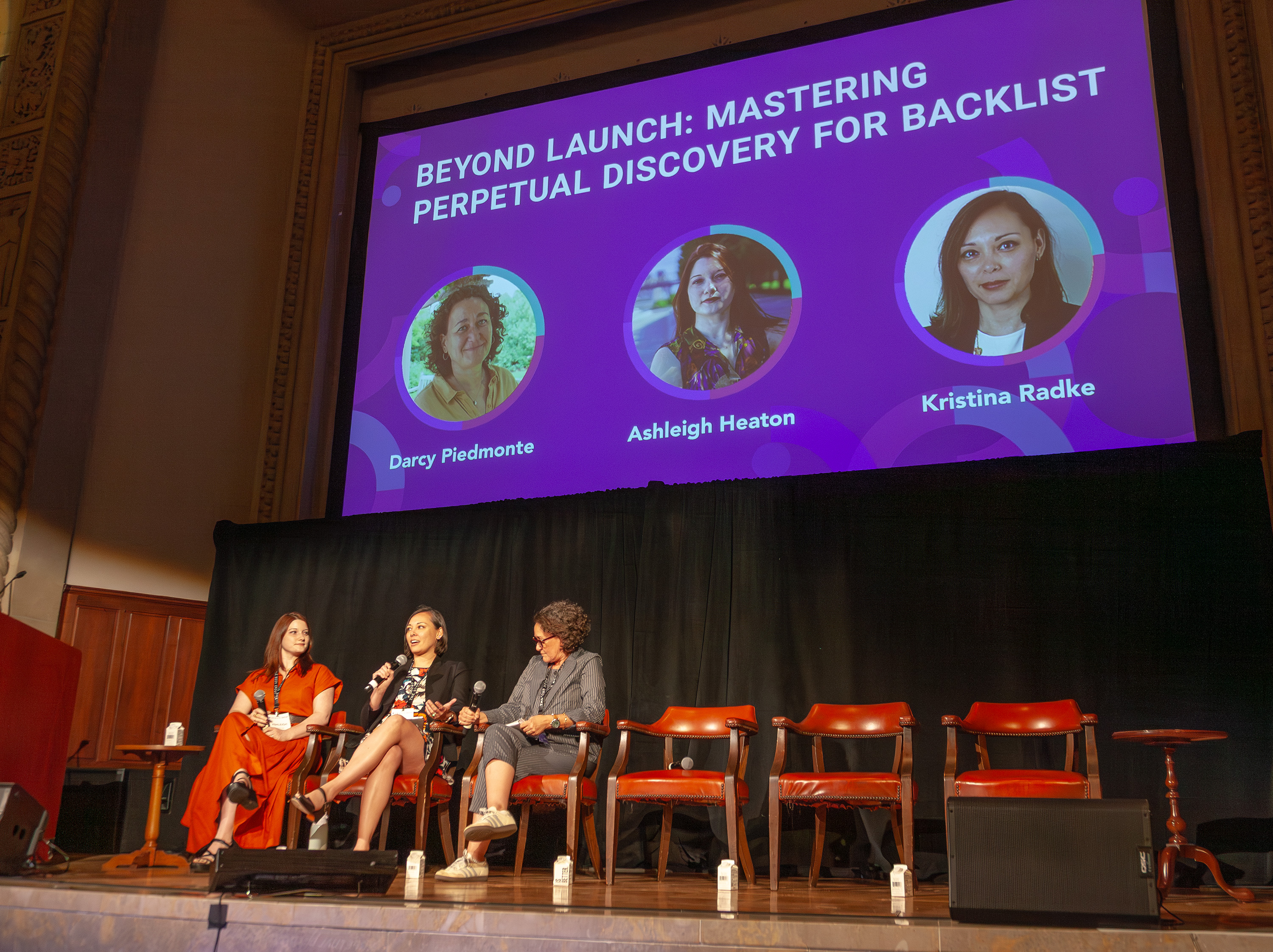
Photo: Enchantress Marketing

1. Marketing is Applied Human Psychology 

Ashleigh said it beautifully, “Marketing is applied human psychology. It is both an art and a science.” As with all science, robust data is essential. Marketers often rely on intuition and emotional connection with a project to fuel campaign decisions, which should always be the throughline of that work. And rich audience data can confirm intuitions or point out potential internalized bias or assumptions.

To get at the data, social listening tools can help publishers identify social media influencers, understand the online conversation for a brand or book, highlight top-performing platforms/accounts, and offer a big-picture summary of an audience or trend. Ashleigh specifically mentioned Brandwatch or Meltwater for deep consumer insights. And other social scheduling tools that also offer social monitoring for your owned channels: Sprout, Metricool, Hootsuite.

2. Reviews as the Cornerstone

Overlapping with social listening, Ashleigh recommended digging into consumer reviews to understand consumer sentiment. These reviews are dynamic data that help publishers identify common themes, keywords, descriptors, tropes, tags, and comps. Kristina reinforced the idea that publishers should leverage data from reviews to ensure the best positioning for backlist titles. For instance, ensuring that a trending trope is explicitly mentioned in the book description, or adding new words, like “romantasy”, to your metadata. That is the type of information that may not have been relevant 10 years ago, but will ensure better discoverability today.

Sentiment has always been among the most important things that marketers need to understand about their readers, and now it also matters for online search and discovery. Sentiment signals are one way that AI search models (like the “AI Overview” in your Google search, now powered by Gemini) understand how to answer a particular question that readers ask. These AI models synthesize information from online sources, including book reviews, to learn how to talk about your book. Reviews give these tools a more nuanced understanding of which books to mention when someone asks for a “standalone romantasy book”, for instance.

3. Leveraging All Your Data

There were many sessions about AI throughout the conference, and Kristina called forth a number of points made in other sessions related to context, clarity, and intent (Cameron Lennon’s session on GEO) and the opportunity to use data across all parts of the publishing workflow to create “superdiscoverability” (Brooke Dobson & Keith Riegert’s lunchtime session). 

Kristina emphasized that AI now makes it possible to surface backlist in a more nuanced way than before. Where publishers once relied on institutional knowledge and keywords to search for backlist books that might match a hot trend, now they can connect data across title management, social listening, and consumer analytics tools to prompt a more specific search: “Look at books published 5 or more years ago, identify the top 10 titles to be included in a Pride Month marketing campaign, filter based on LGBTQ+ main characters and openly LGBTQ authors, with high lifetime sales that have slowed in the last 12 months, and focus on currently-trending themes like queer joy or found family.” 

This relies on publishers doing the work to connect these databases (ask your technologists about “Model Context Protocol”), and to fully understand what types of robust searches they want to do. Kristina encouraged managers to ask team members to deliver specific questions like the example above to share with technologists as an example of what they want to achieve.

In Conclusion

What this all points to is a future where data supercharges marketers’ intuition. By treating reviews as dynamic data and utilizing advanced search, publishers can move past the initial launch hype and establish an ongoing ROI for the true backbone of their business: the backlist.  The conversations we had both on and off the stage reminded us that while technology continues to change rapidly, our core mission as an industry – helping readers find the most relevant books for them, whether newly launched or deep in the backlist – remains the same. Beyond the excellent programming, the U.S. Book Show remains one of the best places to meet our clients and partners who share this dedication to driving discoverability. 

Want to dive deeper? Check out NetGalley’s article: Discoverability in the age of AI.
Divider

London Book Fair Wrap-Up 2026

It was with a mixture of nostalgia and anticipation that the publishing world met at Olympia for the last London Book Fair before its move to ExCel in 2027. Described by some in the media as “high energy” and “really busy”, despite the absence of a number of Middle East based companies, it certainly felt that way for NetGalley. Here are our takeaways:

The book world is cautiously upbeat…

Despite economic pressures, the fair felt energised. Publishers, agents, and booksellers reported steady deal‑making, but to me, it was more the sense of people being relaxed with one another, smiling in the sunshine. Kathleen Farrar, managing director of sales and marketing at Bloomsbury said that “books are a place where people have refuge”, against a “scary” global landscape and that sentiment I think you could see all over the fair.

But the reading ‘crisis’ needs addressing

The UK’s National Year of Reading was woven through the entire fair, with literacy charities and publishers stressing that declining reading rates pose a bigger long‑term threat than AI. Pan Macmillan CEO Joanna Prior warned that the industry must treat reading engagement as a structural priority, not a marketing campaign. It will be interesting to see whether this is something that is still at the forefront next year.

AI can still draw a crowd

Outside of our meetings, the highlight of the fair for me was the brilliant Firebrand Group  panel: How Metadata, SEO and GEO Can Help Sell More Books Worldwide. Joshua Tallent (Firebrand Technologies), Kristina Radke (NetGalley), Sarah Arbuthnot (Supadu), and moderated by Mary McAveney, CEO of Abrams, talked to a standing-room only International Stage and gave an absolutely fascinating and informative discussion. You can watch it here. Plus, take a look at the one-sheet attendees received during this talk, with articles from Firebrand Technologies, NetGalley, and Supadu on this topic!

Click to watch the panel:

Mary McAveney, CEO of Abrams, with the Firebrand Group: Joshua Tallent (Director of Sales & Education, Firebrand Technologies), Sarah Arbuthnot (President, Supadu), and Kristina Radke (SVP, Business Growth & Engagement)

As at the IPG Conference (our wrap-up here), the conversation around AI has subtly shifted from existential fear to practical integration: rights management, workflow automation, and ethical boundaries. It underscores the fact that we are still learning as an industry where we are headed.

The conversation around AI has subtly shifted from existential fear to practical integration: rights management, workflow automation, and ethical boundaries.

And rights are increasingly a battleground

The big Rights news of the fair was Bonnie “Lessons in Chemistry” Garmus moving from PRH to Bonnier. Any massive move like this is likely to cause gossip, but it was the reason for the switch that had people talking. Tom Weldon, CEO of PRH UK,  refused to purchase the new book as the author’s agents had already sold exclusive English-Language rights to the German publisher. This he considered to be a red line. Increasingly, UK and US publishers are hugely improving their revenues with their English-Language edition being sold into countries with a high density of (usually young) readers who want to read in English. This is one to watch!

Nonfiction is far from a spent force

Despite talk of fiction’s dominance, nonfiction is proving to be resilient, and there were strong showings in this genre in the rights centre. Narrative nonfiction, wellness, and politics/current affairs were the subjects gaining the most amount of traction.

Leaving Olympia is bittersweet

It’s cold when it’s cold and steaming when it’s hot; you can do a deal in the time it takes to get to the front of the queue for coffee (this actually happened). The WiFi is appalling; the bag search can take an eternity, but I couldn’t help but feel a touch of sadness leaving the Fair for the last time. We’ve had a lot of good times there, and it will be missed. As will our annual dinner at Ffiona’s Restaurant. But onwards and upwards. We can’t wait for 2027 at ExCel.

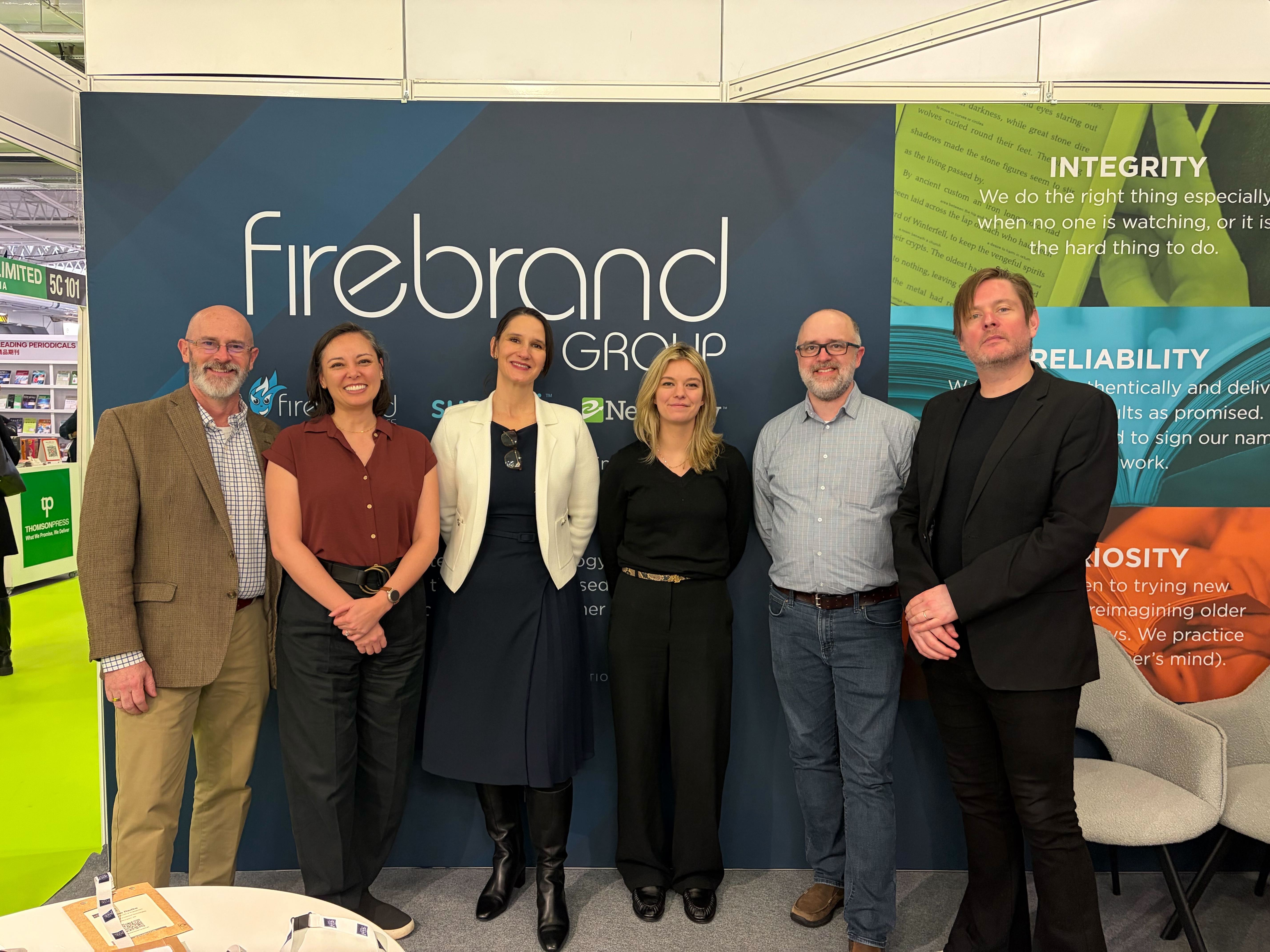
Members of the Firebrand Technologies and NetGalley teams: Rob Stevens, Kristina Radke, Angela Bole, Sidney Thompson, Joshua Tallent, & Stuart Evers.
Divider

ABA Winter Institute Wrap-Up 2026

The 21st annual ABA Winter Institute (Wi2026), held in Pittsburgh from February 23–26, 2026, served as an essential gathering for a literary community navigating both creative celebrations and sociopolitical turbulence. Against the backdrop of the “City of Bridges,” nearly 1,000 attendees addressed the industry’s most pressing questions, from the rise of AI to the defense of free expression.

The Bookseller Perspective: Resilience and Resistance

For booksellers, the atmosphere was a blend of professional development and concern for health and safety in bookselling. While keynotes from icons like LeVar Burton provided inspiration and relevance, the educational tracks shifted toward necessary cultural tools for survival. Sessions like “Bookstores in the Time of Fascism” reflected a new reality where shops face book bans and threats of violence. 

The Publisher Perspective: Strategy and Representation

Publishers came to Wi26 to launch their most important books of the year. The “Past Is Alive” panel featured heavyweights like Colson Whitehead and Min Jin Lee, signaling a major industry bet on deeply researched historical fiction. For publishing professionals, the goal was to reinforce the supply chain and marketing support for independent stores, which remain the industry’s most vital “handsellers” in an increasingly automated world.

The Vendor Perspective: Systems and Sustainability

For the technology and bookstore merchandise vendors on the floor, Wi2026 was about providing the solutions to the challenges discussed in the main halls.

NetGalley occupied its now-essential role as the digital bridge between publishers’ marketing goals and booksellers’ curation needs. 

One of NetGalley’s most critical functions for the ABA community remains the Indie Next List nomination process. NetGalley emphasized that booksellers who link their ABA store number to their profile receive higher “priority” in the publisher’s request queue. 

NetGalley continues to power the ABA’s Digital Box Newsletter, a curated, monthly “white-glove” service where select publishers offer pre-approved digital access to high-priority titles, ensuring indie booksellers have early access to priority books and time to both nominate these titles and make buying decisions.

In a time where carbon footprint is of paramount importance, NetGalley continued to position itself as the sustainable alternative to the “Galley Room” excess. Our platform is an easy way to expand access to review copies using QR Code displays, and reduce the monetary and environmental costs of physical books.  Our all-digital option allows attendees to instantly add titles to their digital shelves, saving on shipping costs and paper waste—a major talking point for the environmentally-conscious Pittsburgh cohort.

Reflecting a 25% year-over-year increase in member interest in audio, NetGalley’s 2026 role is also to promote audiobooks. The NetGalley Shelf app meets booksellers where they are, allowing them to move expediently through their TBR list. 

Winter Institute remains the best opportunity for ABA booksellers, publishers and the partners who serve the industry to come together in a shared space. With challenges to free speech, book bans, and bookstores on the front lines of culture and community, Wi created a supportive and deeply informative environment.

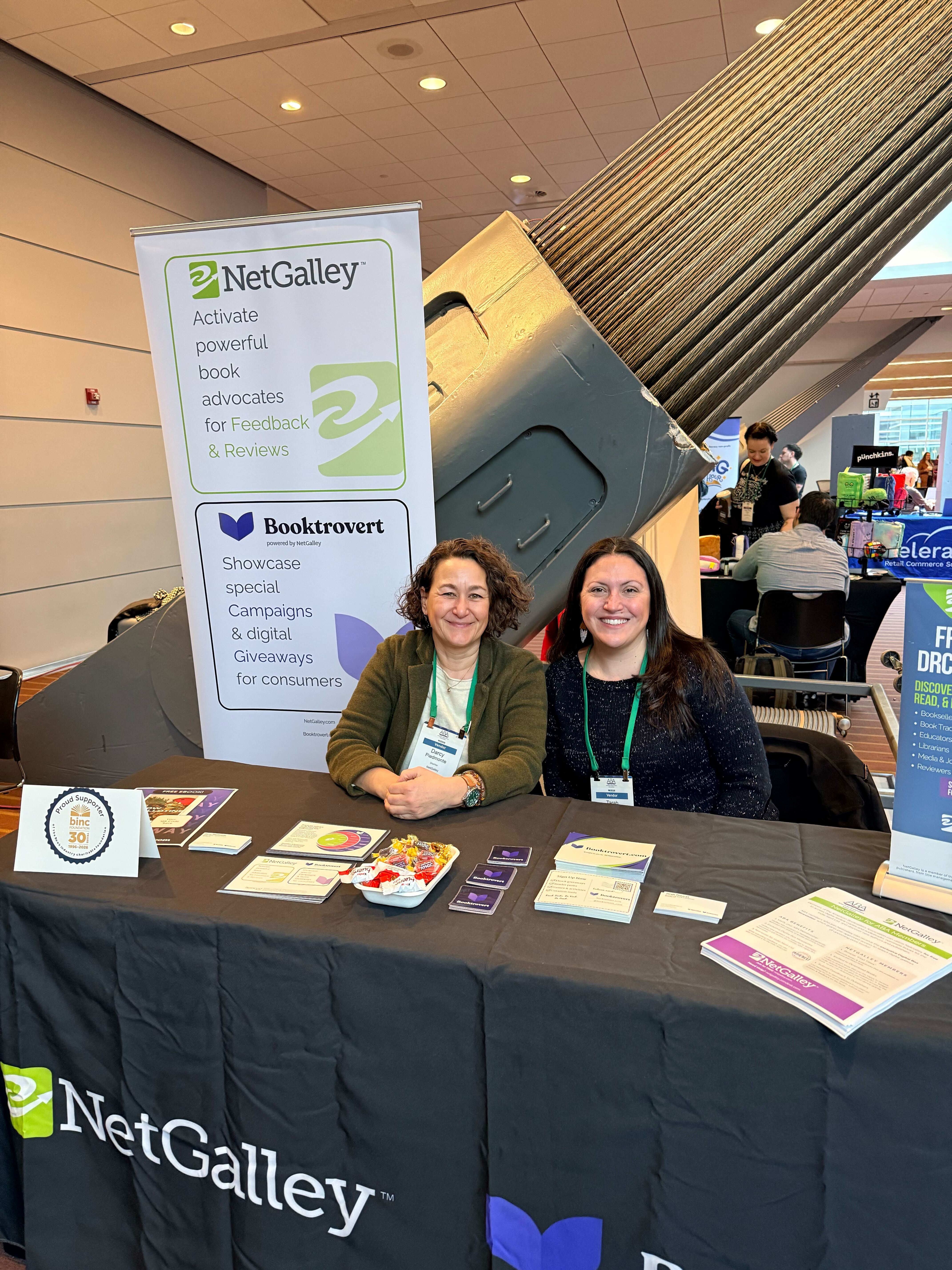
Darcy Piedmonte (Director, Customer Acquisition & Success) and Tarah Theoret (Vice President, Community Growth & Engagement) at the NetGalley table during ABA Midwinter 2026
Divider

A More Sustainable (and Affordable) Strategy for Event-Ready Marketing

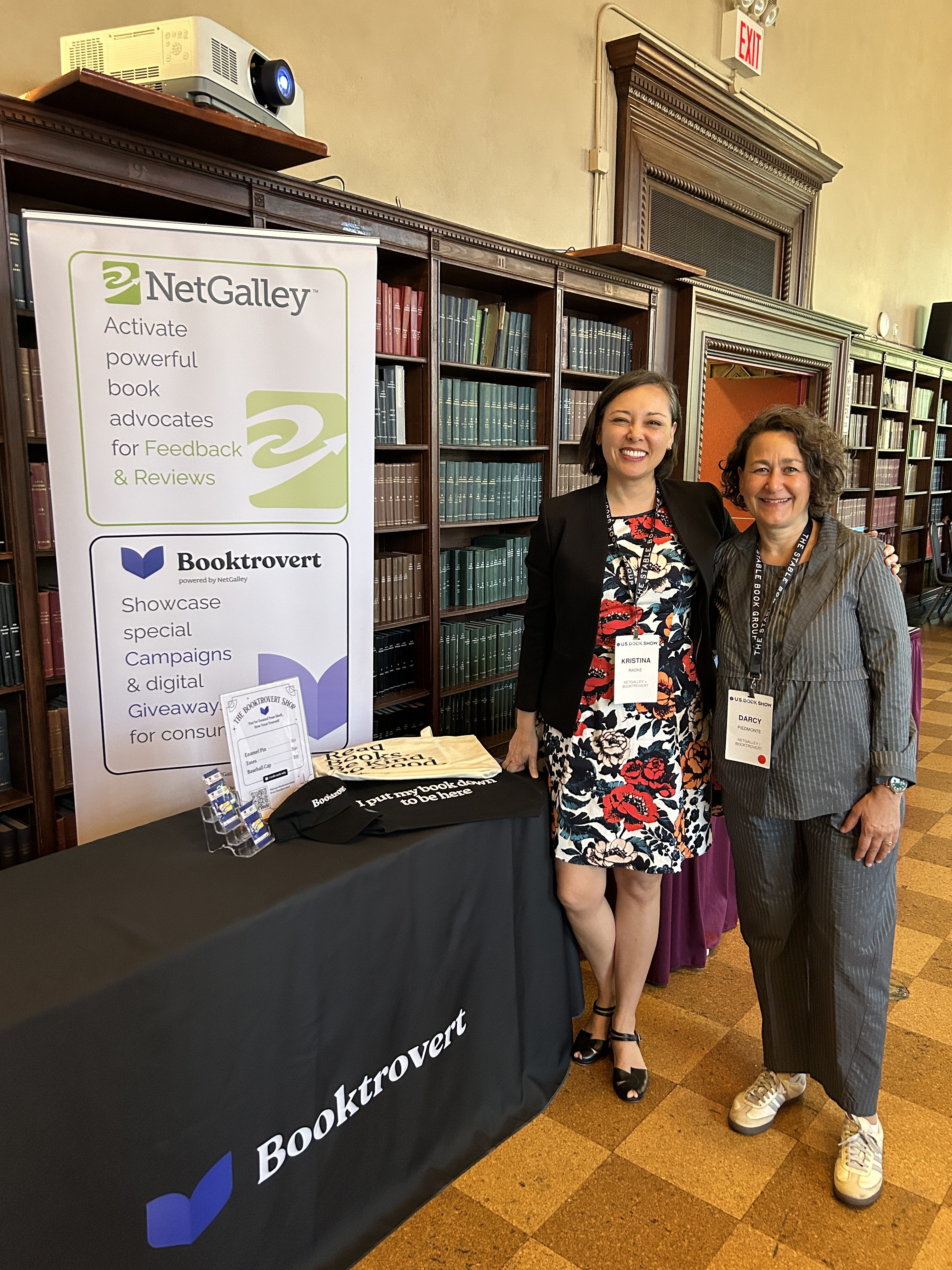
As publishers look for ways to tighten conference budgets while also prioritizing  sustainability, NetGalley and Booktrovert offer solutions. With smart, streamlined alternatives to traditional print giveaways, we have the tools and data to measure success. Taking your digital catalog to industry events is practical, cost-effective, environmentally friendly, and surprisingly simple.

Increasingly, teams are rethinking stacks of ARCs that require weeks of printing, expensive shipping costs, and a gamble on estimated demand. Digital access can replace or supplement physical galleys, ensuring that every interested attendee walks away with a way to read your book, even if your last print copy has already left the booth. Here’s how!

Bringing NetGalley to Trade Conferences & Consumer Conventions

How to Share NetGalley on the Show Floor

A simple printed QR code can sit beside your remaining ARCs or replace them entirely. Scanning the QR code can send attendees to:

  • Request
  • Read Now
  • A Widget Link

The CTA you choose depends on your goals, and you should also consider the type of event. For example:

  • At a trade conference like Winter Institute, where booksellers are the primary audience, a Widget Link gives these attendees instant access, a benefit when you need the broadest reach exclusive to attendees of the event.
  • At consumer-facing shows like BookCon, use Booktrovert instead to offer a public, large-scale digital giveaway or sweepstakes instead (more on that below).

TIP: While some publishers link to a single priority title, you could also point attendees to your NetGalley Publisher Profile to showcase your full catalog. Or, if you want a single hub for multiple links, a LinkTree QR code works beautifully. When using Booktrovert, consider a multi-book campaign to promote up to 10 titles all on one landing page.

Post-Event Follow Up

A digital approach is perfect for after-event follow-up.  If you’re scanning badges or gathering business cards while meeting librarians, booksellers, or reviewers at the booth, follow up after the show with a NetGalley widget. It’s an easy, professional way to ensure attendees can immediately dive into your digital review copy (DRC) or advanced  listening copies (ALCs)

TIP: Make NetGalley part of your booth design! Postcards, bookmarks, and other creative handouts are perfect to customize with your logo, cover art, and a QR code. Download a template here.

Bringing Booktrovert to Consumer Events

Where NetGalley shines for industry outreach, Booktrovert is tailor-made for consumer shows— especially high-demand events like BookCon, where print copies disappear fast and shipping budgets disappear faster.

With Booktrovert, you can set up:

  • Limited-Time digital giveaways (claim a copy), or
  • Limited-Quantity sweepstakes (enter to win)

…all created and scheduled from within your existing NetGalley account. It takes only a few minutes to set up, and can be finalized 24 hours before your campaign launches.

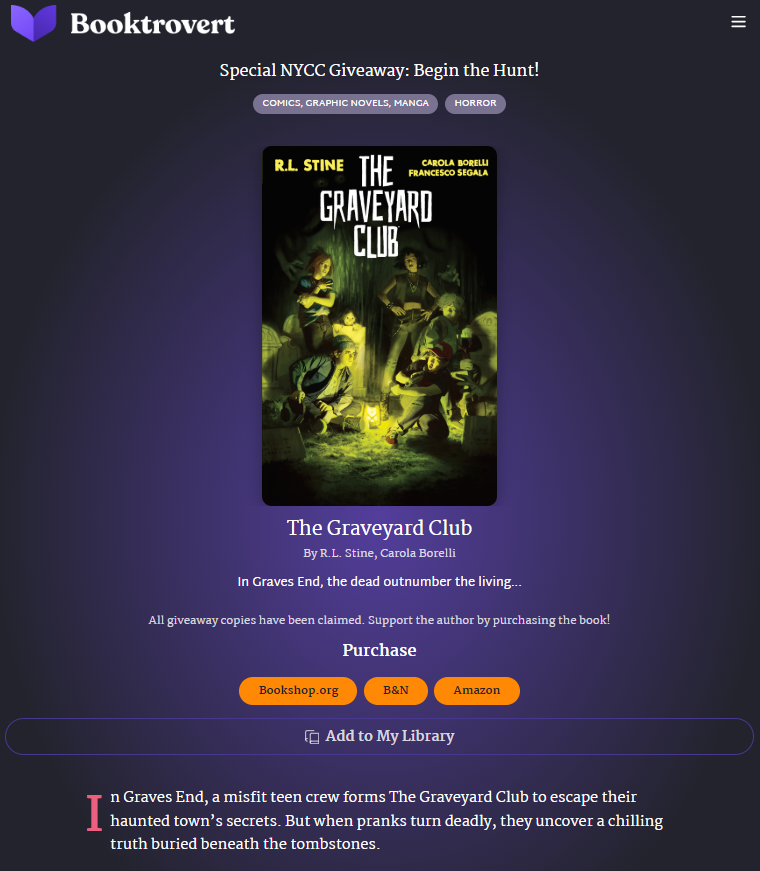
REAL LIFE EXAMPLE: Ashey Kronsberg at Boom! Studios launched a Booktrovert campaign to reach New York ComicCon attendees with a combination of outreach to their own newsletter mailing list and a QR code at the show to help direct traffic. 

As Ashley told us, digital tactics are “becoming more of a need when it comes to B2B shows as not all retailers/librarians can bring physical copies back with them; so I anticipate it will become more unique for consumers as well.” This is where Booktrovert can fill in the gaps! 

Built-In Event Insights

With Booktrovert’s Detailed Analytics, you’ll be able to use the email addresses of everyone who entered your Sweepstakes or Giveaway to make post-event follow-up both thoughtful and targeted since they are already opted-in to hear from you. It’s an efficient way to keep the momentum going long after the event ends.

Plus, learn more about demographics and who your book appeals most to, giving you actionable data to put more informed strategy behind your marketing tactics. 

Why Digital Makes Sense

Beyond convenience, bringing NetGalley and Booktrovert to events significantly reduces printing and shipping waste, making your conference presence more sustainable. It also lowers costs: no unexpected shipping charges, no last-minute reprints, no guessing how many copies to bring. Instead, every attendee can reliably access your titles in a format that’s immediate, accessible, and aligned with their reading preferences.

Digital doesn’t necessarily need to replace print copies, but it does complement it in powerful ways, ensuring you never miss an opportunity to connect a reader with a book.

If you’d like help planning your strategy for an upcoming conference, or want support choosing links, QR code destinations, or Booktrovert campaign options, we’re here to help.

Divider

London Book Fair Wrap-Up 2025

The London Book Fair 2025 was busy – both for NetGalley and for the book trade in general. Publishing Perspectives reports around 300,000 attendees and a 10% increase in activity in the International Rights center. It was certainly noticeable how busy all the halls at Olympia were, especially on the first two days of the fair. It felt like old times, even as we ushered in the new with our Firebrand Group stand moving to a bigger, better and more spacious area.

With more room in our stand, we were able to conduct even more meetings than usual and make the most of our whole Firebrand Group – NetGalley, Firebrand Technologies, Supadu, and Media Do International – being in the same place at the same time.

Clients & colleagues of the Firebrand Group at London Book Fair

While there are uncertainties out there for global publishing, this year’s theme, “Defining the Future of Creative Content”, hinted at the number of conversations surrounding AI. There was an energy and a spark across the fair as businesses weighed the threats and opportunities throughout the industry. 

The announcement of Booktrovert – a brand new, standalone consumer marketing platform powered by NetGalley – was timed to coincide with the fair. Booktrovert will be launched in Q2 2025, as a destination website where readers can celebrate their love of books by participating in digital giveaways, special promotions, and fun bookish activities. Publishers and authors looking to reach U.S. readers will be able to start scheduling campaigns very soon!


Aside from the meetings and the long queues for coffee, London Book Fair is all about connections. The opportunity to discuss ideas in person with both clients and colleagues is always a pleasure. The energy of this year’s London Book Fair was welcome to see, and promises much for the rest of the year!

Stuart Evers (Director, NetGalley UK) and Kristina Radke (SVP, Business Growth & Engagement) at the Firebrand Group stand during LBF

Divider

IPG Spring Conference 2025: Challenges and Opportunities for Independent Publishers

The Independent Publishers Guild Spring Conference 2025 was subtitled “Going for Growth”, and it provided an opportunity for Independent and Academic Presses to discover new ways to innovate and to grow, despite the significant challenges facing the publishing industry.

After a fascinating insight into the use of data and statistics by Tim Harford, host of Radio 4’s brilliant More or Less, the conference moved on to a panel discussion on the lay of the land for independent publishers. Kate Wilson (Nosy Crow), Bella Lacey (Granta Books), and Karen Phillips (SAGE Publishing) gave a fascinating insight into what is at the forefront of all indie publishers’ minds, namely AI, increased National Insurance contributions, inflation, declining interest in reading among young people, post-Brexit trade regulations, and economic uncertainty with the U.S. 

These were themes that were returned to over the course of the day, but for all the turbulence caused by these disruptions, the mood remained one of resilience and determination, looking for the positives and the opportunities available.

In this vein, Dan Mucha of World of Books shared insights on online book sales, emphasizing the importance of discoverability and reader engagement. Amongst the key takeaways was that reviews were very important for consumers, on which to base their purchasing decisions, and also to help with discoverability. 

Discoverability was also covered in some detail by Michael Tamblyn, Rakuten Kobo CEO, in his session on the future of Book Subscription services. Data from Kobo’s digital subscription service, Kobo Plus, suggested that subscribers started six times more books per month than those who purchase individual titles. Furthermore, subscription sales did not appear to cannibalize traditional sales; rather, they expanded the readership. 

Michael finished his session with a quick and highly informative look at AI for publishers. Ultimately, AI’s full impact remains uncertain. While it may disrupt traditional processes, it could also open new doors for creativity, efficiency, and innovation within publishing. 

Closing the conference, Frank Cottrell Boyce raised an impassioned call to action regarding the decline in reading for pleasure among children. With 1 in 11 UK children growing up without a book at home, the industry must work together to find new ways to engage young readers. The publishing community, whether independent or not, has a unique opportunity to champion literacy, ensuring that future generations develop a lifelong love of reading.

With this in mind, we recently published a Community Spotlight on the Children’s & Middle Grade categories, so click to read more about activity for these books on NetGalley, and insight about UK NetGalley members’ engagement

Divider