The 2025 Winter Institute, presented by the American Booksellers Association, was one of the most high-energy, collaborative, and emotionally charged events we’ve attended. While we acknowledge the reports of a contentious community forum, the personal experience of the NetGalley team members who attended was one of optimism and hope. From booksellers eager to get started or learn how to utilize NetGalley even more to publishers discussing evolving industry trends, we found the gathering to be dynamic and insightful overall.
Booksellers: Learning, Listening, and Looking for Audiobooks
Tarah Theoret (VP, Community Engagement) and Darcy Piedmonte (Director of Customer Acquisition & Success)
Winter Institute remains an incredible opportunity to connect with booksellers at all stages of their careers. This year, we met many new booksellers who were excited to learn how to utilize new tools available on NetGalley (like the NetGalley Reader) and confirm that their staff could sign up for their own NetGalley accounts and use the ABA store number. Education was a key theme for us, ensuring that booksellers understand widget invites, auto-approvals, feedback expectations, and how NetGalley can help streamline their workflows.
One persistent misconception we addressed was the belief that booksellers are required to maintain an 80% Feedback Ratio on NetGalley. While it is recommended that all member types submit Feedback, we recognize that writing a review may not be a priority for booksellers in the same way it is for a journalist or consumer reviewer. As NetGalley continues to evolve, we are exploring ways to further customize the Feedback process for booksellers and other member types.
A recurring theme in our conversations? Booksellers want more audiobooks! Several expressed that audiobooks help them keep up with their TBR lists and allow them to be more effective handsellers. Our response? “Tell your sales reps how important audiobooks are to you and your staff,” because booksellers really care about reading books before including them in their inventory and selling them. In other words, hand-selling is alive and well and distinguishes the indies from other retail spaces.
Publishers: Digital Expansion and Strategic Conversations
A notable question from many publishers was, “Can you tell us more about NetGalley’s reach?” While the focus at Winter Institute remains the bookseller community, publishers are keen to hear how NetGalley connects them to independent booksellers, and also other member groups like librarians and journalists. They were interested in stats, reporting, and facilitation of communication with those who’ve interacted with their books, particularly when comp books, or additional titles by a given author are published. To learn more about NetGalley’s reach, check out our 2025 Community Update and Community Spotlight on Children’s and Middle Grade activity!
An additional trend in the Galley Room was the increasing use of QR codes for digital access. We were happy to show how easy and sustainable QR codes can be right at our table. A partnership with Patagonia Books allowed us to exclusively offer their book, Tools to Save Our Home Planet, via QR code. A number of other publishers incorporated QR codes alongside physical galleys in the Galley Room and we were thrilled by this interest in a growing digital shift. We encourage publishers to further streamline their processes by linking straight to NetGalley and ensure a seamless experience for booksellers. To that end, we also shared a QR code of our own Sustainability in Publishing post.
We also planted seeds for NetGalley’s upcoming consumer marketing opportunity, Booktrovert, and the response was overwhelmingly positive. Publishers have long wanted to target both book trade professionals and consumers, but not necessarily in the same space. When they heard that “it’s coming,” excitement was palpable.
Looking Ahead: Opportunities & Next Steps
Overall, Winter Institute 2025 was an energizing reminder of the passion, dedication, and resilience of the book industry. As booksellers, publishers, and industry professionals continue to adapt and innovate, NetGalley remains committed to supporting the connections that bring books into the hands of readers everywhere.
This year’s Audio Publishers Association Conference (APAC) reaffirmed what industry professionals have long suspected: the audiobook market is not just healthy—it’s thriving. With digital audio surpassing e-book unit sales in 2025 and maintaining double-digit annual growth, the format’s dominance is clearer than ever. Industry leaders, including Simon & Schuster CEO, Jonathan Karp, underscored the importance of audio in expanding readership and accessibility, particularly for audiences who might not otherwise buy a book.
Audio’s Expanding Role in Publishing
One of the biggest themes of APAC 2025 was how audiobook sales augment rather than cannibalize book sales. In every business track session, publishers emphasized access to new audiences. In fact, audio is driving book acquisitions, according to Chris Lynch (President & Publisher for S&S Audio) in conversation with Karp. Many bestsellers today originated as self-published audiobooks, proving that the format is an entry point for new voices. Publishers are paying close attention to indie creators and original projects designed specifically for audio. Karp noted that “audio is integral to our growth strategy,” with major publishers actively seeking to acquire audio publishers and strengthen their foothold in this growing sector.
Short-form audio also emerged as a key opportunity, with speakers emphasizing that some projects are better suited to spoken-word formats than print. While economic challenges exist—listeners often associate longer audiobooks with greater value—there is enthusiasm for exploring more flexible pricing models to accommodate shorter content.
The AI Debate: Balancing Technology and Human Artistry
A collective groan rippled through the audience when AI narration came up. The tension is clear: while AI offers potential for cost-effective solutions, especially for backlist titles that might not otherwise be produced, it also raises concerns about diminishing the human artistry at the heart of audiobooks. Chris Lynch noted that AI could help bring audiobooks to underserved markets where traditional production wouldn’t be financially viable, but Karp reminded attendees: “You are artisans… essential to the success of audiobooks.”
For international markets, AI-assisted translation and narration could help expand access, but industry leaders emphasized the importance of local voices. Listeners often prefer narrators who match their regional accents and cultural contexts. The balance between AI’s efficiency and human performance remains a crucial industry challenge.
Marketing Like You Mean It
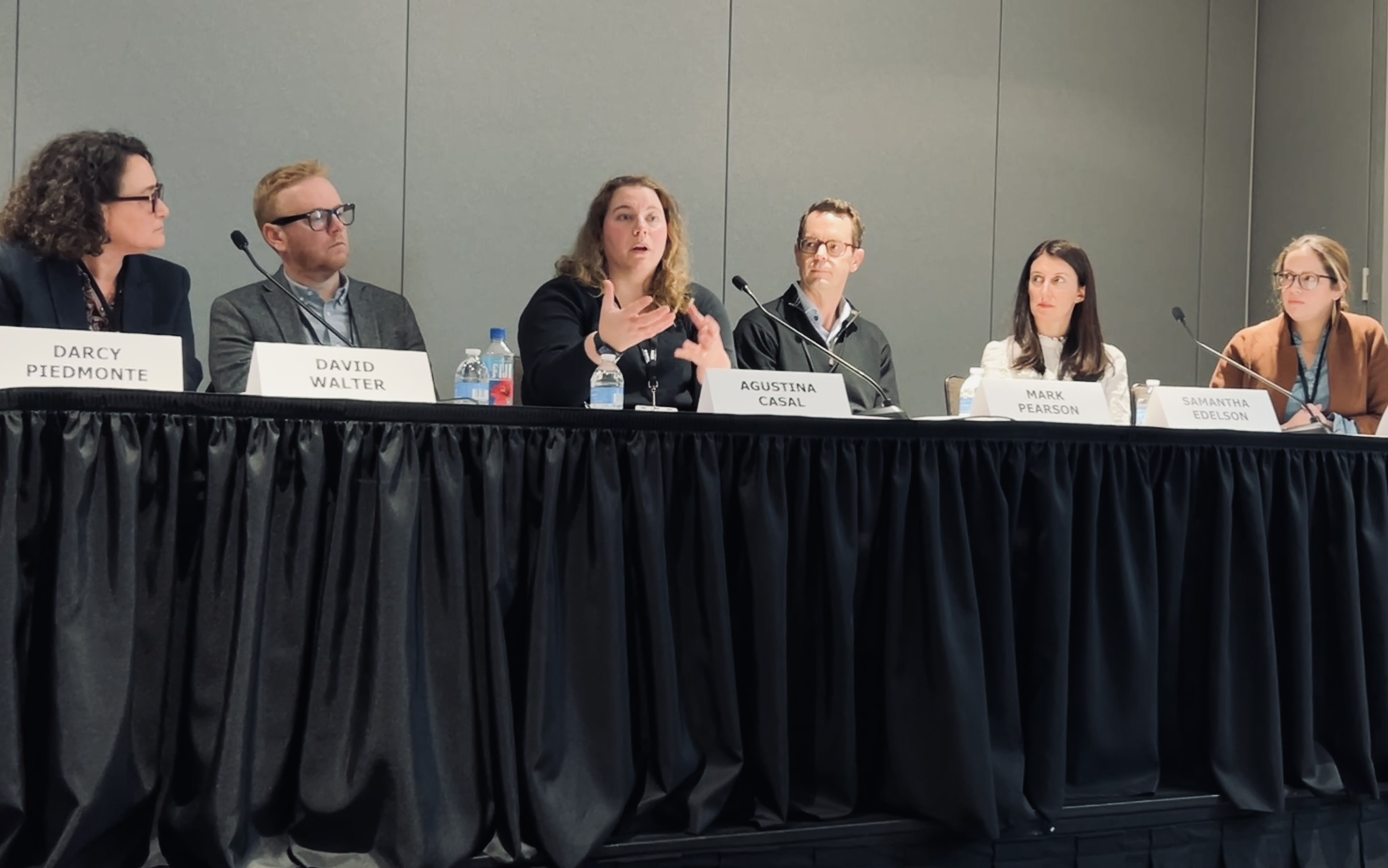
A standout session from the conference was Seizing the Rise of Audiobooks, Marketing Like You Mean It, moderated by NetGalley’s own Darcy Piedmonte, Director of Customer Acquisition & Success. Piedmonte led a dynamic conversation on how publishers can move beyond the fear that audiobooks cannibalize print sales and instead embrace the rapid expansion of audio into new and diverse markets.
Marketing Like You Mean It panel at APAC 2025
Panelists included:
David Walter, Executive Director of Client Development – Books for Circana
Agustina Casal, Director of Digital Sales & Marketing for Ingram Content Group
Samantha Edelson, Vice President of Marketing for Macmillan Audio
Mark Pearson, Co-Founder & CEO of Libro.fm
Jess Kessler, Head of Brand & Content Marketing of Audible, North America
The discussion covered key strategies for innovative and creative audio marketing, including how audiobook marketing continues to evolve alongside digital media consumption. Some of the biggest trends discussed included:
All Boats Rise: When audiobooks do well, all books do well. While print stays remarkably stable over time, new formats add to publishers’ overall sales.
Podcasts & Audiobooks: The impact of podcasts on audiobook sales remains a topic of debate. While some see competition, others view it as an opportunity to inspire nonfiction authors to craft compelling, high-quality content.
Younger Audiences & Genre Growth: The 18-25 demographic is rapidly growing, particularly in nonfiction (well-being) and genre fiction (romance, thriller). The increase in kids’ audiobook consumption also presents a major opportunity, especially through screen-free speaker devices like Yoto and Toniebox.
Fandom Mentality: Readers increasingly engage with books like fans of TV series or movies, wanting content across multiple formats. The success of multicast productions, such as 1984 featuring Cynthia Erivo and Andrew Garfield, exemplifies how casting choices can draw in new audiences.
Gaming Crossovers: Creative marketing strategies are reaching new audiences, for instance the Red Dead Redemption gaming community, with projects like Red Dead’s History: A Video Game, an Obsession, and America’s Violent Past (narrated by Roger Clark, the iconic and award-winning full performance-capture actor) that connect books to their interests.
Discoverability & Metadata: Ensuring accurate and refreshed metadata remains critical. Publishers are investing in tools to optimize audiobook discoverability across platforms.
Opportunities for Marketing: Audiobooks offer a multitude of ways for booksellers, narrators, educators, and influencers to bring stories to life through listening.
Global Audiobook Market: What’s Next?
The international audiobook market is evolving rapidly. Emerging markets like France and Brazil are set to accelerate their growth, learning from the U.S. experience.
France is on the verge of becoming a mature market, aided by a booming graphic novel-to-audio pipeline.
The Nordic region remains a leader, with 60% of books consumed in audio format, driving authors to write with audio-first storytelling in mind.
Spain and Latin America are key areas of investment, with publishers focused on translating backlist titles and creating original Spanish-language content.
Local accents matter—listeners in Portugal prefer European Portuguese over Brazilian, and Spanish-speaking listeners are divided among regional dialect preferences.
The German children’s audiobook market is flourishing, bolstered by speaker boxes that have become the third-largest seller of children’s books.
Looking Forward: Challenges & Opportunities
Despite its rapid growth, the audiobook industry faces several challenges:
Marketing & Publicity Struggles: Simply releasing an audiobook isn’t enough—publishers need strong hooks tied to cultural moments to break through the noise. Digital marketing tools, including NetGalley, are making early audiobook promotions easier than ever, allowing for pre-pub reviews and cross-format marketing efforts. As mentioned above, the success of one format is a win for all!
Balancing Format & Content: Publishers must assess whether a story is best suited for an audiobook, a documentary, or another medium. In the case of audiobooks based on graphic novels or manga, producers are closely considering whether the concepts depicted in the art will translate to the audio format and, if so, diving in to create the audiobook.
The First Listen Matters: If a listener’s first audiobook experience is poor—whether due to AI narration or low production quality—they may abandon the format entirely.
Piracy on YouTube: Publishers voiced concerns about unauthorized audiobook uploads that fail to compensate rights holders.
Final Thoughts
Audiobooks are not just surviving—they’re thriving, expanding, and reshaping the publishing landscape. Whether it’s embracing indie voices, exploring new markets, or refining marketing strategies, the industry is adapting to ensure that audio continues to be a powerful storytelling force.
As Karp put it, “A great book is a great book.” The challenge ahead is ensuring that audiences can find, access, and engage with these books—no matter how they choose to read or listen.
Publishing professionals from across the industry descended on Nashville, TN at the end of September to attend the Publishing Innovation Forum, hosted by the Firebrand Group. This premier in-person event was designed to unite individuals from various segments of the book publishing industry to share insights, explore new trends, and discuss strategies to adapt to a rapidly evolving publishing landscape. With approximately 150 participants, the forum encouraged collaboration and innovation, ensuring attendees gain valuable knowledge and connections to drive future success in the industry. Expert keynote presentations, and three dedicated breakout tracks for Business, Technology, and Marketing, resulted in lively conversation and important takeaways. For our audience at NetGalley Insights, we have collected some key themes and tips from the highly experienced speakers.
Attendees at the inaugural Publishing Innovation Forum, 2024
Session: Innovations in Book Promotion: Publicity Trends That Move the Needle
Speakers: Kimberly Sneed (Digital Media Director, PR by the book) and Marika Flatt (Owner, PR by the Book)
Kimberly Sneed and Marika Flatt of PR by the Book kicked off this session by explaining that the goal for publicity efforts is to drive author and book recognition, visibility, and overall exposure. The wider the name recognition in the world, the greater chance that book and that author have to build and grow. Exposure is extremely important in early promotional efforts because you are planting seeds for a long trail that follows, even into the backlist. Some important avenues for modern publicists to focus on include:
Podcasts: There are hundreds of thousands of podcasts available. Find the right ones in both subject matter and audience for your individual authors.
NetGalley and other platforms: Maximize title pages on every platform to include assets like videos, advanced praise, author pages or social media, etc.
Social Media: Both presence and promotion matter. Identify and engage with niche, micro audiences, prioritize authenticity, align your messaging with their values.
Immersive Storytelling Techniques: Design “expert” pages for your authors, create additional materials like exclusive content, serialized content, short videos, and adjacent narratives to drive engagement and customize media outreach.
One size does not fit all in book marketing and publicity. Step outside the box and don’t be afraid to try something new! No matter what, always connect and build on what you have. Sneed’s and Flatt’s approach is centered on flexibility, experimentation, and working closely with authors to tailor strategies to individual needs and audiences.
Session: Influencers vs. Community: Strategic Activation for Your Book Campaigns
Speakers: Sarah Walsh (Brand Strategist, Branch & Bramble) and Hallie Fields (Social Media Assistant Manager, NetGalley)
Each speaker presented two distinct yet powerful marketing approaches: Sarah Walsh highlighted influencer campaigns, while Hallie Fields emphasized community-driven campaigns.
Walsh showcased how partnerships with influencers can boost brand awareness, leaning on examples like #marcreadsabook and HarperCollins’ #shelvesinthecity. These examples demonstrated the importance of personalized and trend-focused initiatives. It’s important to note that these campaigns were certainly in the high-budget realm; however, there are lessons to be learned from these exciting campaigns that even a publisher with a smaller budget should keep in mind:
Jump on trends and interact with followers as part of the community, not an administrator or organizer.
Consider the best type of influences to engage. Micro influencers can have big engagement numbers.
Give influencers time and opportunity to tell their stories. Bring them to beautiful spaces, or give them Instagrammable assets.
Form ongoing partnerships, not just one-off posts, which allows the influencer to create ongoing content that is more organic and authentic.
Fields focused on examples from Camp NetGalley, a community-based challenge campaign, and #MyNetGalleyYear, an annually recurring checkpoint campaign. These examples encourage user-generated content (UGC) by asking audiences to complete a task and share it with their followers. These campaigns allow you to engage with, and unite, the entire community, and allow you to secure your brand’s place in a recurring social landscape.
Know your community. At NetGalley, we know our members love fun, nostalgic, interactive experiences, so we built Camp NetGalley with that in mind.
Prizes can be simple and digital! In the case of Camp NetGalley, it was a digital badge members can share, and which appear in their NetGalley accounts. For #MyNetGalleyYear, a template we created for them makes it easy for them to brag about everything they’ve read.
UGC is excellent to share back to your community, help them feel involved, and take some load off your own content creation.
Consider creating campaigns that can be recurring, which gives the community something to look forward to.
Both strategies – influencer campaigns and community engagement – underscore the importance of creating meaningful, relatable experiences that resonate with audiences, while maintaining authenticity and connection.
Session: Book Marketing at Any Budget
Speakers:
Kim Lauber (Vice President of Marketing at Abrams)
Ashley Marie Mireles-Guerrero (Director of Sales and Marketing at Familius Publishing)
Allison Marie Pond (Director of Marketing at Mad Cave Studios)
Jin Yu (Director of Marketing at Berkley/PRH)
It was exciting to see these top leaders from across the publishing spectrum in one space, delving into practical approaches for maximizing impact in the marketing, publicity, and advertising spaces. The collective in-house wisdom from publishers large and small, who publish across many diverse categories, was too vast to fully cover in this short article, but here are a few key points:
Know your audience: Identify where the niche is, where and in what format they will buy, speak to them directly, customize your metadata to reach them.
Maximize metadata to boost discoverability, and feed the search engine with more content – announcements, bumpers, reviews – which will expand your reach.
Not all marketing involves advertising, and not all marketing has to be expensive.
When you do advertising, consider self-serve ads where you can control where the spend is placed. If you do have an ad budget, consider Amazon ads which one speaker said “are expensive, but are worth it.”
Events are a good way to connect with your community. Library and bookseller communities are especially relationship-based. Be sure to identify what you want to get out of it before deciding to attend since they can be expensive.
Virtual events have lower cost and can work if you’re creative on how you approach them.
Give out QR codes or offer to include items in grab-bags, like bookmarks or other items, which are a great way to stimulate interest.
PR is a lot of effort, make the most of it. Continue to utilize the results and keep it updated, making sure to leverage any media hits by letting additional outlets know it’s being talked about.
Session: Building Brand Trust: The Role of Empathetic Marketing in Publishing
In this popular and engaging session, Lyman emphasized that understanding audience values and emotions is key to creating impactful marketing campaigns. By analyzing consumer patterns in reviews and social interactions, publishers can tailor their messaging to resonate with their audience, and shift from transactional hooks to more meaningful communications.
Our values drive our emotions, which drive our decisions.
Make small shifts toward empathy, like altering email subject lines to be more engaging vs. a flat statement or sales hook.
Example from Alleyoop: Their customer feedback popup doesn’t ask what kind of makeup they like, or why, but rather asks the consumer about themselves and what issues they want to solve. For instance, one response is “I can only spend 5 minutes on my makeup.”
To maintain authenticity as you move into more empathetic language, start shifting your hooks to focus on the consumer. Stop making statements like, “Available now!” and shift to how readers will benefit from it. Questions are a great way to do this. A more empathetic subject line would be, “Need more time with your family?”
Bottom line: Empathy strengthens the connection between brands and consumers.
Session: Challenges in Audiobook Marketing and How to Overcome Them
Barto began this session by pointing out three main audiobook audiences: those who want, need, or happen to discover audiobooks. She emphasized that each of these audiences listens to audiobooks for their own reasons and that marketers should keep each of them in mind when considering their marketing language and campaigns–your approach can and should be slightly different when promoting to people who love the audio format, versus those who need to listen to audiobooks due to lifestyle or accessibility constraints. And never forget about those listeners who don’t yet know that they will love audiobooks! A few tips from Barto:
Think about audiobook marketing holistically. Integrate audiobooks into the broader marketing efforts through all aspects of the launch and ongoing campaign efforts. Start by educating authors that the audiobook will be available and is just as exciting and desirable as the hardcover. Make sure you update audio metadata at the same times as you update the other formats’ metadata.
Incorporate audio-specific keywords in metadata. Keywords like “dual-narrator” or “full cast recording” are important.
Market the production process. Listeners romanticize the publishing and in-studio processes. Lean into this!
Encourage narrators to be part of the promotion. Offer them announcement assets to share, ask them to record in-studio content, and leverage their audiences.
Create custom content (bonus chapters, interviews, music, bloopers, etc). If you’re going to pitch bloopers as a fun, custom bit of content to media outlets, be sure you’ve asked the studio not to discard or cut these bloopers during the recording process.
Barto pointed out that some publishers still seem to hold on to the notion that audiobook sales will somehow cannibalize print sales, but there has been no evidence of this! If anything, consumers will seek out the format they want. Make it easy for them to find. Audiobooks are more likely to be an “in addition” purchase than they are to replace a print sale.
Overall Themes
As you can see, themes of audience-centric and empathetic messaging ran throughout all of these marketing-focused sessions. Our expert speakers encouraged a shift from pushing books at people and, instead, connecting with readers.
Remember that not every influential reader is a celebrity, and they won’t all ask you for thousands of dollars to promote your books. Identify your core micro influencers, niche communities, and those who are passionate about the types of books you publish. These are the influencers that will drive word of mouth for your books most effectively and authentically.
Don’t be afraid to experiment! Get creative. Find fun ways to engage with your audience. Try new advertising techniques and assess whether they work for you. Adjust as needed.
We are thrilled that the inaugural Publishing Innovation Forum was received so positively by attendees, who told us they were inspired and leaving Nashville equipped to try out some of the strategies outlined above. We hope to see you at another Publishing Innovation Forum in the future!
– The NetGalley Team
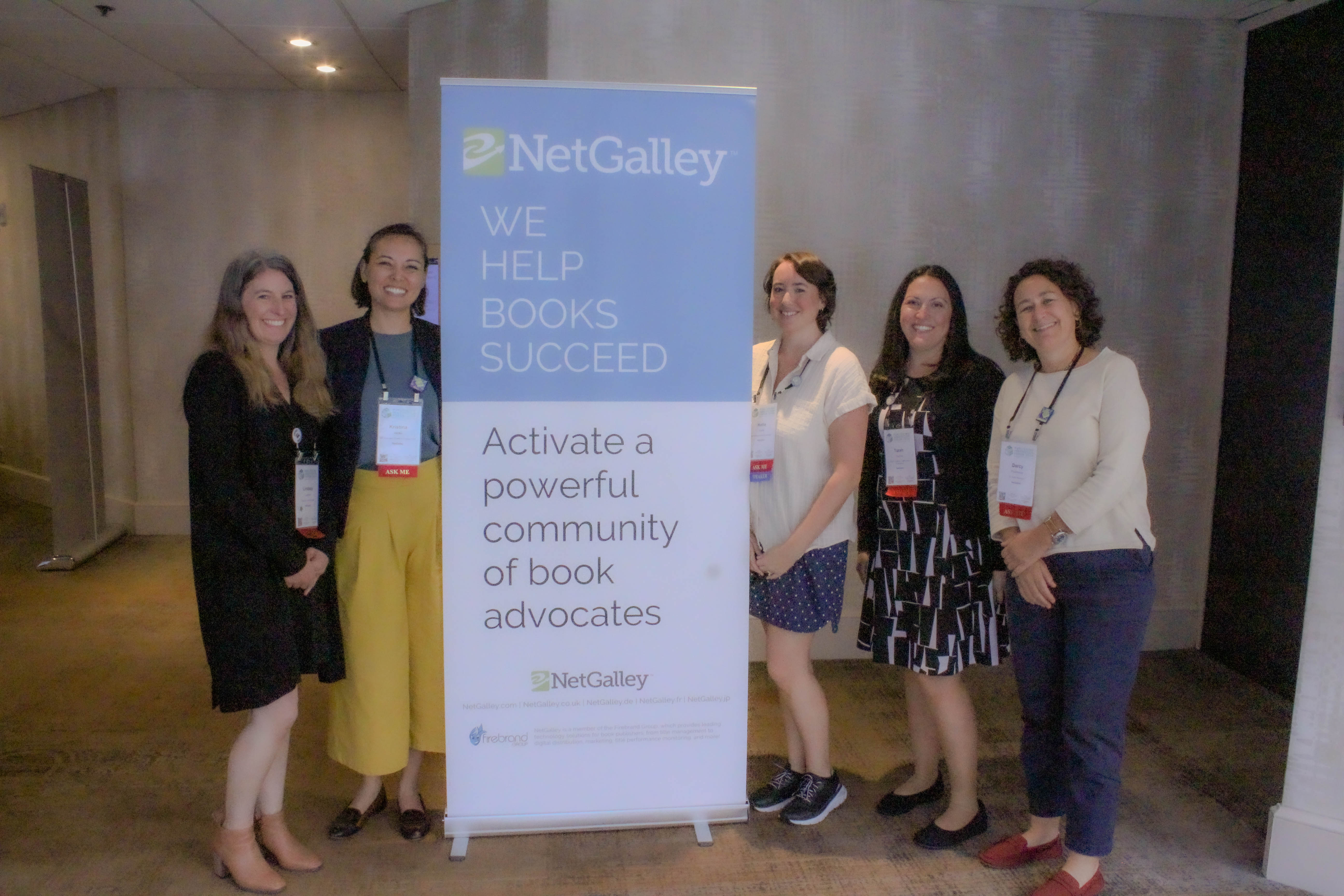
NetGalley team members at Publishing Innovation Forum, 2024: Lindsey Lochner, Kristina Radke, Hallie Fields, Tarah Theoret, Darcy Piedmonte
Marika Flatt is the owner and founder of PR by the Book, an Austin, Texas-based publicity firm. She is a regular speaker in the book industry regarding marketing and publicity and joins us on the BookSmarts Podcast to discuss book publicity tips for both publishers and self-published authors, as well as how publicity should be conducted throughout the entire publishing process.
Her publicity firm, PR by the Book, helps authors elevate their relevancy and create buss for their titles by helping authors turn into influencers. With over 900 book titles and over 20 years of experience, their success and specialty spans over many different genres, including travel, lifestyle, outdoors, self-help, parenting, and Christian titles.
To learn more, visit PRbythebook.com. You can also request to join their private “Author to Influencer Accelerator” group on Facebook to learn how authors can take advantage of DIY publicity opportunities.
Joshua Tallent is an acclaimed teacher and guide on the role of data in publishing, and a vocal advocate for high quality book metadata. In his spare time, Joshua enjoys playing complex board games, playing Minecraft, and fiddling with his 3D printer.
Emily Lyman is the CEO and Founder of Branch & Bramble, an award-winning digital marketing agency for lifestyle brands. With nearly a decade of experience helping companies achieve tangible marketing results, Emily joins us on the BookSmarts Podcast to discuss the role of empathetic marketing in publishing and the importance of building brand trust with consumers.
Emily will speaking about how to build brand trust at the upcoming inaugural Publishing Innovation Forum, September 24-26, in Nashville, TN! This conference is open to the entire publishing community and will focus on the many changes our industry has faced, and how to prepare and adapt for the future.
“[Brand trust] is essentially the level of confidence that consumers have in a brand’s ability to keep its promises. And these promises can include the quality of products or services, the brand’s values and mission, or how the brand treats its employees and its customers. There’s a lot of factors that go into brand trust. And what’s been fascinating as a marketer is to see the evolution of brand trust over the years, and how it changes, and how important it becomes not only to consumers as a whole, but we have some really interesting data on how brand trust is thought about generationally, as well.” – Emily Lyman
Joshua Tallent is an acclaimed teacher and guide on the role of data in publishing, and a vocal advocate for high quality book metadata. In his spare time, Joshua enjoys playing complex board games, playing Minecraft, and fiddling with his 3D printer.
Mary McAveney (Abrams), Andy Hunter (Bookshop.org), and Michael Tamblyn (Kobo) to Keynote the Inaugural PUBLISHING INNOVATION FORUM, September 24-26 in Nashville, TN
Newburyport, MA (May 15, 2024)—The Firebrand Group—a global collection of companies, including Firebrand Technologies, NetGalley, and Supadu Ltd—is excited to announce three inspiring keynote speakers for its inaugural Publishing Innovation Forum (#PubInnovation24). All members of the publishing industry are invited to join these influencers, along with more than 20 additional expert speakers, during this three-day event, September 24-26, 2024 in Nashville, Tennessee.
The three keynote speakers are:
Andy Hunter, Founder and CEO, Bookshop.org. Andy is also the co-creator and publisher of the websites Literary Hub, Crime Reads and BookMarks, and co-founder and chairman of Electric Literature. His focus is keeping literature a vital part of our culture in the digital age. His company, Bookshop.org, is an online bookstore with an explicit mission to help promote and financially support the brick-and-mortar independent bookselling community.
Mary McAveney, President and CEO, Abrams. Mary is a publishing veteran with decades of experience and expertise in marketing, strategy, and branding. McAveney is known throughout the industry as a forward-thinking innovator who delivers success based on data-driven tactics, direct-to-consumer relationships, and digital discovery. As President and CEO of Abrams, McAveney oversees the company’s three divisions—Abrams, Abrams Children’s Books, and Abrams ComicArts—as well as the Abrams Distribution Client business.
Michael Tamblyn, CEO, Kobo. Michael combines his passion for books and reading with a deep focus on hardware and software experiences that can make reading lives better. In addition to leading Rakuten Kobo, the global digital bestseller, he is also a Senior Executive Officer of Rakuten, the Japanese ecommerce giant.
Formerly known as the Firebrand Group Industry Conference, the Publishing Innovation Forum was rebranded in May 2024 to better reflect the event’s focus on bringing the entire publishing industry together for conversations related to evolving and adapting to the book industry’s many changes. Attendees can expect to learn how their industry peers are transforming their toughest challenges into innovations and initiatives that will successfully benefit sales, rights and permissions, marketing, audiobooks, ebooks, printing, distribution, and more.
“It’s important to all of us at the Firebrand Group that the Publishing Innovation Forum is a welcoming community of book industry professionals willing to share their collective knowledge and expertise,”said Angela Bole, CEO of Firebrand Technologies and NetGalley. “We know it’s collaborative environments like this that provide the keys to solving common challenges and ensuring our industry remains strong, informed, and ready for the future. As a collection of companies, we’re committed to fostering these environments both internally and externally.”
Sessions at the Publishing Innovation Forum will cover a variety of important topics that impact the industry. Three broad tracks (Marketing, Technology, and Business), along with numerous networking and idea-sharing opportunities, will provide learning opportunities for publishing professionals at every level.
“We’re all in this together,” said Joshua Tallent, Firebrand Technologies’ Director of Sales & Education and lead conference programmer. “That’s why it’s so important for us to gather at events like the Publishing Innovation Forum to jointly solve problems as we plan for the future.”
Early bird registration for the Publishing Innovation Forum is available through June 30, 2024. More information, including a link to register, is available at publishinginnovationforum.com.
# # #
About the Firebrand Group The Firebrand Group—a global collection of companies including Firebrand Technologies, NetGalley, and Supadu Ltd—offering comprehensive technology solutions to nurture book publisher success. The companies within Firebrand Group are owned by Media Do International (MD-i), the US-based subsidiary of Japan’s Media Do Co., Ltd, one of the largest ebook distribution companies in the world retaining the largest share of Japan’s ebook market. For more information on Media Do’s services and corporate divisions, visit mediado.jp/english.