Audio Publishers Association Conference 2025 Wrap-Up: Key Takeaways and Trends

This year’s Audio Publishers Association Conference (APAC) reaffirmed what industry professionals have long suspected: the audiobook market is not just healthy—it’s thriving. With digital audio surpassing e-book unit sales in 2025 and maintaining double-digit annual growth, the format’s dominance is clearer than ever. Industry leaders, including Simon & Schuster CEO, Jonathan Karp, underscored the importance of audio in expanding readership and accessibility, particularly for audiences who might not otherwise buy a book.
Audio’s Expanding Role in Publishing

One of the biggest themes of APAC 2025 was how audiobook sales augment rather than cannibalize book sales. In every business track session, publishers emphasized access to new audiences. In fact, audio is driving book acquisitions, according to Chris Lynch (President & Publisher for S&S Audio) in conversation with Karp. Many bestsellers today originated as self-published audiobooks, proving that the format is an entry point for new voices. Publishers are paying close attention to indie creators and original projects designed specifically for audio. Karp noted that “audio is integral to our growth strategy,” with major publishers actively seeking to acquire audio publishers and strengthen their foothold in this growing sector.

Short-form audio also emerged as a key opportunity, with speakers emphasizing that some projects are better suited to spoken-word formats than print. While economic challenges exist—listeners often associate longer audiobooks with greater value—there is enthusiasm for exploring more flexible pricing models to accommodate shorter content.

The AI Debate: Balancing Technology and Human Artistry

A collective groan rippled through the audience when AI narration came up. The tension is clear: while AI offers potential for cost-effective solutions, especially for backlist titles that might not otherwise be produced, it also raises concerns about diminishing the human artistry at the heart of audiobooks. Chris Lynch noted that AI could help bring audiobooks to underserved markets where traditional production wouldn’t be financially viable, but Karp reminded attendees: “You are artisans… essential to the success of audiobooks.”

For international markets, AI-assisted translation and narration could help expand access, but industry leaders emphasized the importance of local voices. Listeners often prefer narrators who match their regional accents and cultural contexts. The balance between AI’s efficiency and human performance remains a crucial industry challenge.

Marketing Like You Mean It

A standout session from the conference was Seizing the Rise of Audiobooks, Marketing Like You Mean It, moderated by NetGalley’s own Darcy Piedmonte, Director of Customer Acquisition & Success. Piedmonte led a dynamic conversation on how publishers can move beyond the fear that audiobooks cannibalize print sales and instead embrace the rapid expansion of audio into new and diverse markets.
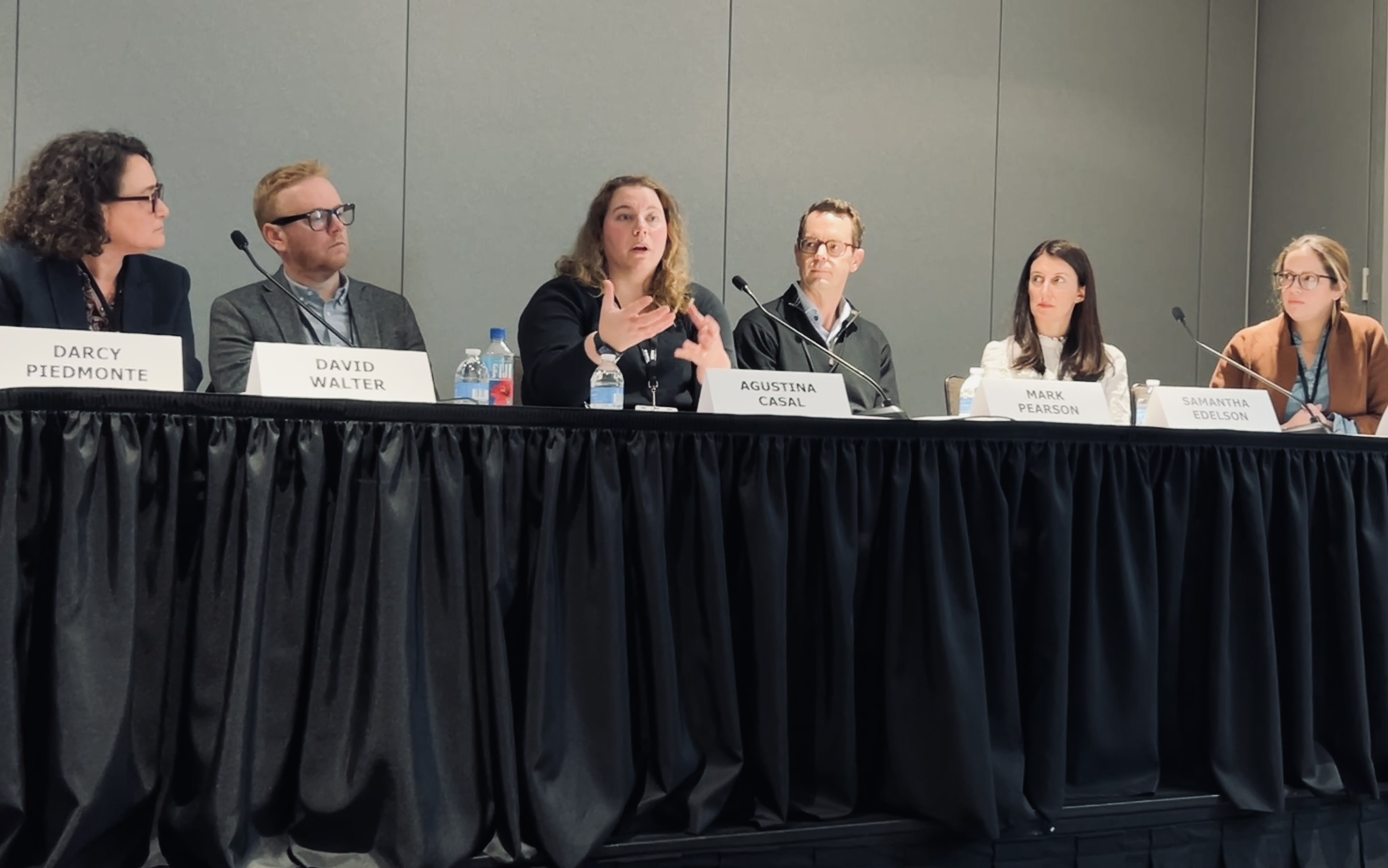
Marketing Like You Mean It panel at APAC 2025

Panelists included:

  • David Walter, Executive Director of Client Development – Books for Circana
  • Agustina Casal, Director of Digital Sales & Marketing for Ingram Content Group
  • Samantha Edelson, Vice President of Marketing for Macmillan Audio
  • Mark Pearson, Co-Founder & CEO of Libro.fm
  • Jess Kessler, Head of Brand & Content Marketing of Audible, North America


The discussion covered key strategies for innovative and creative audio marketing, including how audiobook marketing continues to evolve alongside digital media consumption. Some of the biggest trends discussed included:

  • All Boats Rise: When audiobooks do well, all books do well. While print stays remarkably stable over time, new formats add to publishers’ overall sales.
  • Podcasts & Audiobooks: The impact of podcasts on audiobook sales remains a topic of debate. While some see competition, others view it as an opportunity to inspire nonfiction authors to craft compelling, high-quality content.
  • Younger Audiences & Genre Growth: The 18-25 demographic is rapidly growing, particularly in nonfiction (well-being) and genre fiction (romance, thriller). The increase in kids’ audiobook consumption also presents a major opportunity, especially through screen-free speaker devices like Yoto and Toniebox.
  • Fandom Mentality: Readers increasingly engage with books like fans of TV series or movies, wanting content across multiple formats. The success of multicast productions, such as 1984 featuring Cynthia Erivo and Andrew Garfield, exemplifies how casting choices can draw in new audiences.
  • Gaming Crossovers: Creative marketing strategies are reaching new audiences, for instance the Red Dead Redemption gaming community, with projects like Red Dead’s History: A Video Game, an Obsession, and America’s Violent Past (narrated by Roger Clark, the iconic and award-winning full performance-capture actor) that connect books to their interests.
  • Discoverability & Metadata: Ensuring accurate and refreshed metadata remains critical. Publishers are investing in tools to optimize audiobook discoverability across platforms.
  • Opportunities for Marketing: Audiobooks offer a multitude of ways for booksellers, narrators, educators, and influencers to bring stories to life through listening.

Global Audiobook Market: What’s Next?

The international audiobook market is evolving rapidly. Emerging markets like France and Brazil are set to accelerate their growth, learning from the U.S. experience.

  • France is on the verge of becoming a mature market, aided by a booming graphic novel-to-audio pipeline.
  • The Nordic region remains a leader, with 60% of books consumed in audio format, driving authors to write with audio-first storytelling in mind.
  • Spain and Latin America are key areas of investment, with publishers focused on translating backlist titles and creating original Spanish-language content.
  • Local accents matter—listeners in Portugal prefer European Portuguese over Brazilian, and Spanish-speaking listeners are divided among regional dialect preferences.
  • The German children’s audiobook market is flourishing, bolstered by speaker boxes that have become the third-largest seller of children’s books.

Looking Forward: Challenges & Opportunities

Despite its rapid growth, the audiobook industry faces several challenges:

  • Marketing & Publicity Struggles: Simply releasing an audiobook isn’t enough—publishers need strong hooks tied to cultural moments to break through the noise. Digital marketing tools, including NetGalley, are making early audiobook promotions easier than ever, allowing for pre-pub reviews and cross-format marketing efforts. As mentioned above, the success of one format is a win for all! 
  • Balancing Format & Content: Publishers must assess whether a story is best suited for an audiobook, a documentary, or another medium. In the case of audiobooks based on graphic novels or manga, producers are closely considering whether the concepts depicted in the art will translate to the audio format and, if so, diving in to create the audiobook.
  • The First Listen Matters: If a listener’s first audiobook experience is poor—whether due to AI narration or low production quality—they may abandon the format entirely.
  • Piracy on YouTube: Publishers voiced concerns about unauthorized audiobook uploads that fail to compensate rights holders.

Final Thoughts

Audiobooks are not just surviving—they’re thriving, expanding, and reshaping the publishing landscape. Whether it’s embracing indie voices, exploring new markets, or refining marketing strategies, the industry is adapting to ensure that audio continues to be a powerful storytelling force.

As Karp put it, “A great book is a great book.” The challenge ahead is ensuring that audiences can find, access, and engage with these books—no matter how they choose to read or listen.

Divider

Recommended Strategies for Audiobooks on NetGalley

It’s been a couple of years since we last answered some of publishers’ burning questions about promoting audiobooks on NetGalley. Now, with even more data to draw upon, we’re excited to share updated recommendations for audiobook publishers!

How early should I add my audiobook to NetGalley?

As early as possible! In most cases, we’ve seen that publishers are uploading their audiobooks to NetGalley within one month of pub date. This makes sense for most audiobooks, where the final file is not available until very close to the release date. However, if you have a highly-anticipated title, consider building extra buffer time into the production schedule to take advantage of a longer pre-pub marketing timeline. This can help you piggy-back the audio format alongside the earliest marketing and publicity efforts for a simultaneous hardcover release.

67.5% of audiobooks are added to NetGalley 30 days or less prior to the pub date.* However, if you have a highly-anticipated title, consider building extra buffer time into the production schedule.

In the chart below, you will see that a small selection of titles were added to NetGalley much earlier than one month pre-pub. 

67.5% of audiobooks are added to NetGalley 30 days or less prior to the pub date.

How long should my audiobook be available to NetGalley members?

3-4 months is our recommendation for audiobooks to remain active on NetGalley. Generally, the longer you keep an audiobook active on NetGalley, the more impressions it will receive, and we’ve seen that 90 – 120 days of activity is the sweet spot! Right now we’re seeing that most audiobooks are active on NetGalley for only 2 – 8 weeks but, based on our data, activity continues to grow all the way up to 4 months. Keep your audiobooks active for longer so you don’t miss out on members who discover and request a copy in those additional few weeks!

Audiobooks that are active on NetGalley for 90-120 days receive the most impressions, on average.

Audiobooks that are active on NetGalley for 90-120 days receive the most impressions, on average.

How can I drive more activity for my audiobook on NetGalley?

In addition to the organic interest that’s found on NetGalley, there are a number of ways to drive additional activity:

  • Widget: The NetGalley Widget is the quickest and easiest way to invite your key contacts to access your titles. Simply include the widget link in your pitch email and use our template language to ensure they have all the information they need to get started right away. This tool is included as part of your NetGalley subscription.
  • Detailed Activity & Feedback Reports – Use your Detailed Activity and Feedback reports for comp titles to identify key contacts who may be interested in your new title, and invite them to listen using the NetGalley widget. These reports, and more, are available on demand within your account.
  • NetGalley Promotions – Audiobooks can be included in any NetGalley promotion, from email promotions like newsletters and eBlasts, to on-site promotions like Category or Dashboard Spotlights, Featured Title placement, etc. There are also a number of audio-dedicated promotions available throughout the year. The link above suggests options based on specific goals like gaining overall exposure, introducing a new imprint, or driving activity during a particular time period. You can also view our Media Kit to see more information about open and click rates, editorial calendars, and pricing.


Audiobooks can be included in any NetGalley Promotion!

What should I expect from NetGalley members’ audiobook reviews?

In our article, How to Write an Audiobook Review, we recommend that NetGalley members discuss a number of audio-specific features in addition to commenting on the content of the book. For instance, we ask them to focus on the narration, discuss how the audiobook flows, mention unique elements like music or if it is a full-cast recording, and share a specific recommendation.

Members are highly likely to submit audiobook Feedback on NetGalley and share it widely with their audiences.

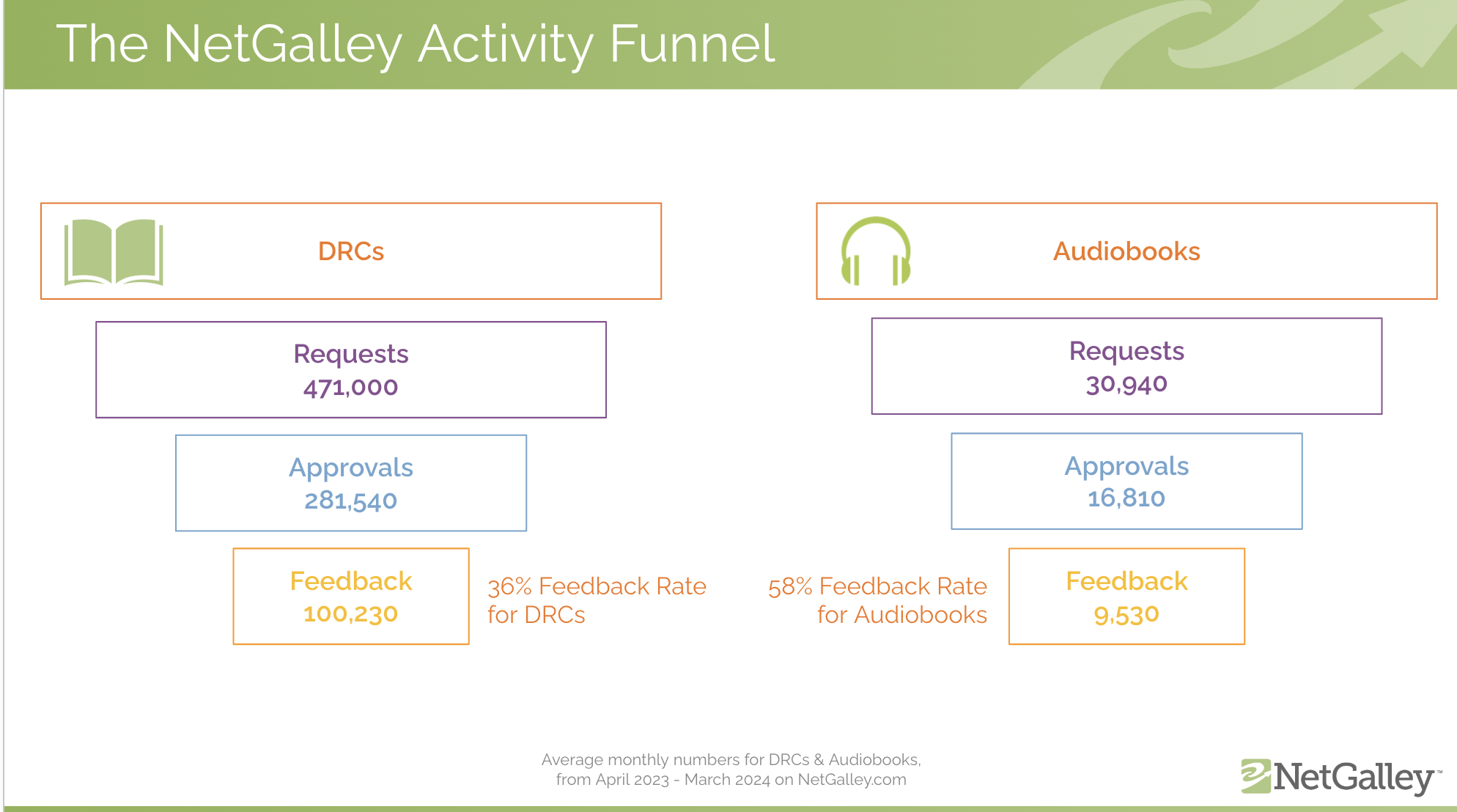
The Feedback Rate** for audiobooks is 58%, which continues to be higher, on average, than it is for digital review copies (36%). This means that approved members are highly likely to submit Feedback on NetGalley and share it widely with their audiences. We are thrilled that NetGalley members continue to embrace the audio format. 

Remember, you can always follow up with approved members to encourage them to share their Feedback! Take a look at our template language here, and best practices for reaching out to NetGalley members.

**Feedback Rate is calculated based on the amount of overall Feedback submitted divided by the number of approvals (of any kind).

For more information about audiobooks on NetGalley:

*Data is based on audiobooks created on NetGalley.com between July 1 2023 – June 30 2024 unless otherwise noted.

Divider

Introducing Audio Excerpts on NetGalley!

“Promoting all book formats is good for all books”

The audio boom is finally coming to NetGalley! 

We are thrilled to announce that NetGalley is now supporting Audio Excerpts. 

Right now, publishers can add Audio Excerpts for any books listed on the site, regardless of publication date. 

“This is just the first step in our audio strategy,” says Kristina Radke, VP Business Growth and Engagement. “By summer 2020 NetGalley will also support full audiobook files so publishers can share their audiobooks with important publicity contacts, reach new, influential audiences who provide feedback and reviews, as well as track and report on access granted, feedback received, and trends in activity. Promoting all book formats is good for all books, and now audio publishers will have the same powerful tools that their print and digital counterparts have had for years.”

NetGalley members can browse for Audio Excerpts in the catalog and listen to them through an on-site, streaming player. As they listen to the Excerpt, they are then prompted to submit early feedback by responding to questions about their experiences. Publishers receive these aggregated responses, plus number of listens and average listening time, as part of the reports that already exist in their account. 

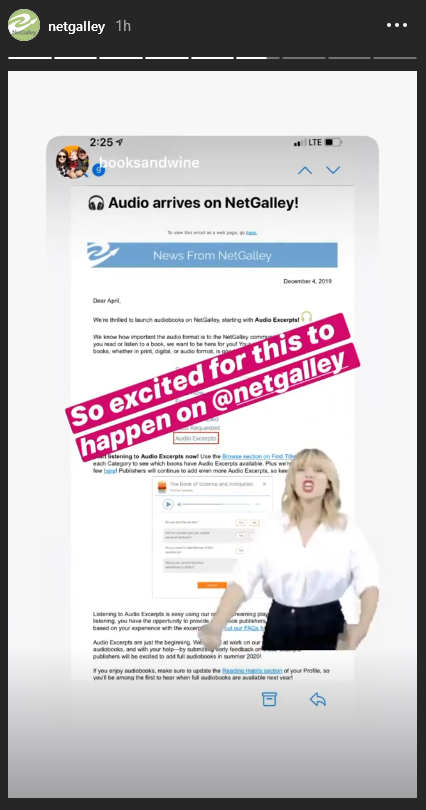
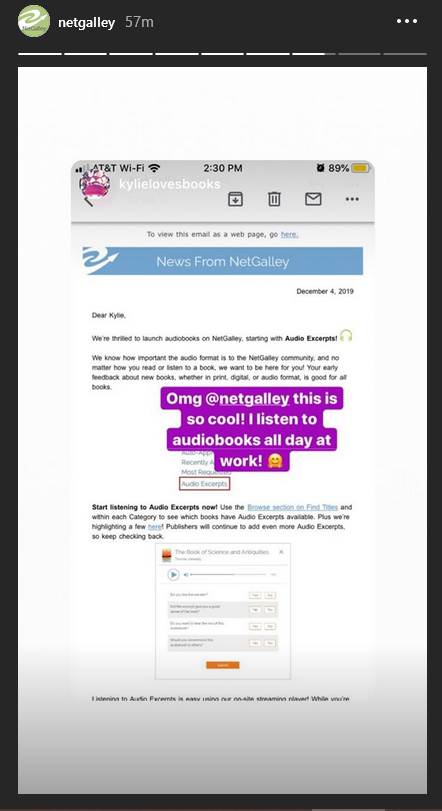
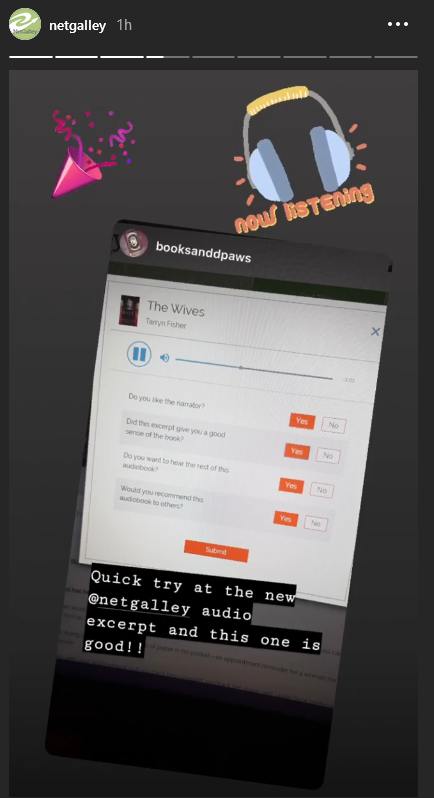
Members are just as excited as we are; they’ve been anxiously awaiting audio on NetGalley as much as publishers! Before launching Audio Excerpts, we asked our members via social media about their audio listening habits. Some of them hoped and guessed that we were going to be supporting audio soon. And once we announced the launch of Audio Excerpts on NetGalley, they weren’t shy when sharing their excitement

NetGalley clients can add their Audio Excerpts during this free trial period (until May 15, 2020). Just click “Upload/Preview Files” on any Title Details page. 

According to the Audio Publishers Association’s 2018 annual survey, audio is continuing to grow. And we’re happy to support that growth on NetGalley.

Image: Audio Publishers Association 2018 annual survey, illustration by Findaway

To see the new marketing programs designed to highlight audio on NetGalley, check out the 2020 Media Kit.

We look forward to promoting even more books, in every format!

Divider
Divider

Trends at Livre Paris: The power of self-publishing, the global audio market, and keeping young readers’ attention

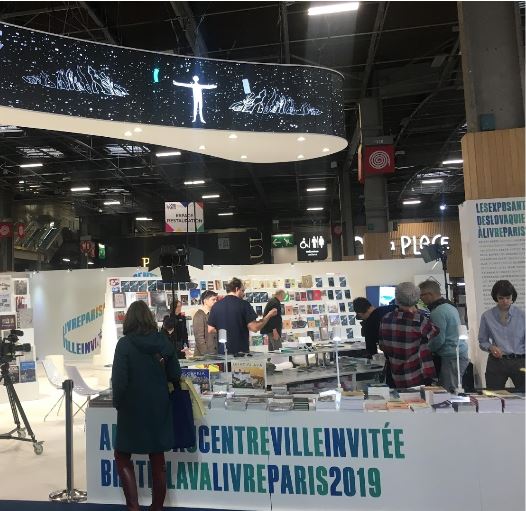
With conference season in full force around the world, NetGalley France’s Astrid Pourbaix attended Livre Paris, or Paris Book Fair. In its 39th year, Livre Paris gives visitors a grasp on global book trends. 1,200 exhibitors from 45 countries displayed their services, products, and titles. The 160,000 attendees could sit in on one of 800 conference sessions or wait in line for an author signing from one of the 3,000 authors in attendance.

Whereas London Book Fair focused on the Indonesian book market, Livre Paris honored several different global regions. Primarily, the festival focused on Europe as a whole. Speakers including Livre Paris director Sébastien Fresneau discussed Europe’s rich and diverse cultural history as well as issues that affect the whole continent’s book market, such as the EU copyright directive legislation. Additionally, both Bratislava – the capital of Slovakia – and Oman were invited as special honorees.

A major takeaway from Livre Paris, like London Book Fair, was the growing children’s market. School visits to the fair have increased, and Livre Paris has responded by providing more programming designed for younger readers. Students, young influencers, and authors of children’s and YA books appeared on panels and in programs.

One challenge noted during the fair is that young readers’ attention is volatile. Publishing needs to do more to enliven young reading communities and keep them engaged.

Audio was in the air. 2 out of every 10 French people listened to an audiobook in 2018, doubled from 2017. For the first time, there was a prize awarded for audiobooks. Plus, writers and comedians were invited to record audio at the fair.

Like the US market, we are seeing the power of self-publishing in France. Both Amazon Direct Publishing and Books on Demand presented at the fair, indicating that self-publishing is an established part of the French book industry. Attendees also saw the Gutenberg One robot, a print-on-demand solution that can print books in less than 5 minutes. A recent survey saw that 80% of French people enjoy writing and 53% already wrote or would like to write a book one day, indicating that self-publishing is likely to keep growing in the French market. Check out our coverage of London Book Fair, as well as recent events from BIGNY and the Future of Media. And, keep up with NetGalley Insights conference coverage by signing up for our weekly newsletter!

Divider

London Book Fair: Making a more inclusive book industry

The London Book Fair is one of the largest annual gatherings for the book industry, particularly for agents and publishers looking to trade in international rights. Between March 12 – March 14, attendees who were not sitting in the Rights Hall or dashing to meetings sat in on seminars, strolled the booths, and met colleagues from around the globe who also made the trip to Olympia London.

Where the Book World Comes to Meet

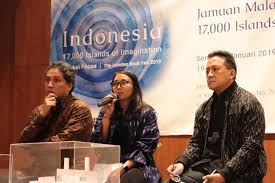
Each year, the London Book Fair focuses on a particular market from around the world. This year the spotlight was on Indonesia. Made up of thousands of islands and religiously diverse, Indonesia was able to showcase their books and culture to a global audience. The Indonesian book market is as diverse as its many thousands of islands, titles are produced in many different languages, and few are translated into English. Theirs is a growing market, with an increasing international presence. Fiction – short stories, in particular – are popular in Indonesia. Indonesian readers read across a broad number of topics, but myths, spirituality and beliefs seem to be at the forefront of Indonesian publishing.

Throughout the Fair, we found that the most prevalent theme was inclusivity. Genres and formats that are growing in the industry are the ones best able to connect with a diverse audience. By making the publishing industry more diverse, it takes steps to become more inclusive.

Diversity refers to the different kinds of people who are involved in an industry, or the different kinds of stories that are told. Inclusion refers to an overall atmosphere that is welcoming to different kinds of people, including those who have been traditionally marginalized within the industry.

Diversity

One of the biggest aims of the publishing industry over the last few years has been that of creating books with more diverse characters, written by more diverse authors. Whilst the industry is heading towards having greater diversity, there is more that needs to be done. Actor, author, and TV presenter Cerrie Burnell highlighted, during the Diversity: Where’s the Issue panel, that diversity within books, children’s books in particular, needs to be more normalized. She said it should be as “normal as observing it when living and walking around London.” Author and illustrator Rose Robins took a similar stance, suggesting that neurodiverse characters should be included more in literature, rather than treated as plot devices. (That’s one of the reasons we loved The Kiss Quotient – check out our recent case study here!)

To connect with audiences from different backgrounds, the publishing industry needs to become more diverse as a profession, in addition to publishing more books with more diverse characters. Speakers from HarperCollins, SAGE Publishing, and EW Group touched on this in their panel on building a more diverse and inclusive industry. Efforts to make publishing houses more diverse need to start from the recruitment stage to keep the industry vibrant.

Poetry

At LBF19, we saw that poetry is on the rise. Poetry sales in January 2019 were at an all-time high, growing by 12% according to Nielsen Bookscan. The recent success of poetry has been attributed to its being more inclusive and diverse than other book genres, with more young people than ever buying and engaging with poetry. The success of Rupi Kaur, writing about her experience as a woman and as a daughter of immigrants, as well as Charly Cox, indicates that there is a huge audience eager to see themselves reflected in the books that they read. And with platforms like Instagram, poets have new ways of reaching younger, digitally engaged audiences. More traditional forms have also found a new audience, with Robin Robertson’s The Long Take the first work of poetry to be nominated for the Man Booker Prize. Sales of poetry have been building for the past few years, and it looks like 2019 will continue to see an upsurge of interest  in the popularity of poetry.

Audiobooks

Unsurprisingly, of all the formats discussed at the London Book Fair audiobooks continues  to be on everyone’s radar. According to Nielsen figures the sales of audiobooks have increased by 87% in the UK since 2014. The popularity of audiobooks has been linked to the trend of podcasts and engaging young men in particular with a different format of reading. But audiobooks have seen a rise overall and the boom seems set to continue for 2019 and onwards. (Check out some of our podcast coverage here.)

Nonfiction

Nonfiction is also a hot topic, as both adult and children’s nonfiction sales have increased in the last year. For adult nonfiction, a large proportion of the success comes down to feminist titles and inspiring books such as Slay in Your Lane by Yomi Adegoke and Elizabeth Uviebenene, Bloody Brilliant Women by Cathy Newman and Dolly Alderton’s Everything I Know About Love. As nonfiction has become more diverse in its scope, it has drawn in new audiences.

We were encouraged to see the book industry slowly moving towards being more inclusive, with publishers and authors having great successes on more diverse books. Different formats and genres are reaching new audiences and encouraging a whole new generation of readers.Keep up with the rest of our conference season coverage by subscribing to NetGalley Insights!

Divider