An Author’s Path

NetGalley’s own Stuart Evers and Myfanwy Collins share their expert insights as authors and publishing-industry professionals regarding how a book gets written and makes its way into the world.

In “An Author’s Path,” they give a roadmap detailing how authors can find the time and discipline to finish their book, and what to do with it once it’s been written. Stuart covers the conventional publishing route; from finding an agent to represent you and your book, to editing the manuscript, sending out ARCs, and more. Myfanwy explains how and why an author should consider submitting to writing contests or journals, and the basics behind writing a successful query letter. Then, they discuss the basics of book marketing and publicity; how to solicit blurbs and use social media to your advantage.

You can view the full video here. We’ve also included some timestamps so that you can quickly find the most relevant information for your needs.


Timestamps:

  • Intro: 0:00
  • How to write a book: 1:30
  • What to do with your book once you’ve finished writing it: 8:15
  • The conventional publishing route (finding an agent, pitching publishers, editing, ARCs) 9:38
  • Submitting to your work to journals & contests, writing query letters 22:29
  • Book marketing and publicity: soliciting blurbs, using social media: 32:08
  • Q&A: 50:10
Divider

The Librarian Twitterverse

Librarians are an enthusiastic and digitally savvy bunch, which means that many of them are on Twitter, talking about their libraries, and talking to each other. They tweet about their favorite new titles, and about the daily life of working in a library. Librarians on Twitter highlight their community programming, while publishers’ library marketing teams announce their new releases and chat with individual librarians directly or via hashtag conversations. Pay attention to the vibrant librarian Twitterverse to get a better sense of what librarians are looking for, what resources they’re using to find new books, and to gain inspiration for new ways to connect with these important influencers.

Follow individual librarians on Twitter. Some librarians, like Gwyneth Jones and Shannon Miller are vocal, enthusiastic, and plugged into the wider world of pop culture and media. This kind of librarian recommends titles not only to their own library patrons, but to the rest of their digital community as well. Take note of who they are retweeting and which media sources they are linking to to get a sense of which authors they are reading, and whose opinions they trust. If they’re not already on your radar, add those media sources to your pitch list! Looking at these accounts will give you a more personal understanding of who these librarians are and what they are looking for.

Follow trade organizations and publications that librarians use to stay on top of news and trends. The ALA is a great resource for librarians, and for you, to stay up-to-date with national legislation, funding opportunities, and trends that impact the librarians across the country. Review journals like School Library Journal or Booklist offer insight into which kinds of stories librarians are hankering after, and can give ideas about how to most successfully position your titles for librarians.

Many publishers have dedicated library marketing teams who are focused on serving this specific community. Pay attention to publishers’ library marketing presence and see how they are engaging with libraries and librarians on the platform. For example, W.W. Norton’s library marketing department reached out directly to librarian and pop culture critic, Margaret H. Willison, to ensure that Norton would still send her galleys after she changed addresses. It was a casual, friendly, and mutually beneficial interaction. Penguin Random House periodically runs a Twitter chat, #AskALibrarian to engage multiple segments of their audience. Librarians get to champion their favorite books across a range of interests, and readers get personalized recommendations from highly trained and enthusiastic professionals.

Look at hashtags to see conversations around different topics that are important to librarians. Librarians use hashtags like #libraryreads and #readersadvisory to talk about what they are reading at their libraries and what they are recommending to their community. Get a sense of what kinds of stories librarians are excited to read and recommend. #librariesareforeveryone lets librarians demonstrate the diverse programming available at their libraries, for different ages, demographics, and reader types. You can use it to used to keep up with how librarians are thinking about  inclusivity, diversity, and representation in the library space. Use these hashtags to see what kinds of books different librarians’ communities are craving, and use that information to shape the way you market your titles to individual librarians.

How have you interacted with librarians on Twitter? Who do you follow on social media to keep up with new library trends? Email us at insights@netgalley.com. We hope to feature your success stories in future posts!

Divider

Case Study: Glimmerglass Girl

How an indie author’s debut chapbook became one of the most requested poetry titles on NetGalley

On NetGalley Insights, we highlight the successes of NetGalley publishers and authors, and share some of their strategies. Today, we’re talking with Holly Lyn Walrath. She is a poet and author whose work has appeared in Strange Horizons, Fireside Fiction, Luna Station Quarterly, Liminality, and elsewhere. Glimmerglass Girl, published by Finishing Line Press, is her first chapbook, and is one of the most requested poetry titles on NetGalley.

Glimmerglass Girl is your debut book of poetry (on sale Aug. 3, 2018). Tell us a bit about your overall strategy for promoting your debut book. Some authors find it challenging to build a community of advocates and influencers before they are a well-established name.

When I set out to promote Glimmerglass Girl, my main goal was to get pre-orders, so my promotion period started sometime in April. I think that was very helpful because starting out that early meant I had plenty of time for outreach. Beyond reaching out to my existing network of friends and fellow writers, I spent a lot of time contacting poetry reviewers and booksellers. Since my book is short and illustrated, I focused on booksellers that were local to the Houston area or interested in indie and rare books or zines. Because my book is being published by a small press, they don’t have the resources bigger publishers have. It is quite a challenge when you’re just starting out. There were a few times when I felt overwhelmed by self-promotion! But, I was surprised by how kind and supportive the poetry community is.

How has your experience launching your own book differed from being published alongside other authors in collections?

When you’re publishing a poem or short story in a collection or anthology, you have the support of every author who’s been published alongside you. They all share the book with their network and that has an amplifying effect. But when you’re publishing your own book, it’s just you! (Or in my case, me and Finishing Line Press, my publisher.) You have to rely on yourself a lot more.

Our audience of publishers and authors is always eager to learn more about how others are planning their publicity and marketing efforts on NetGalley. Where does NetGalley fit into the overall strategy and timeline for Glimmerglass Girl?

At first I wasn’t sure what NetGalley would do for my book, but I decided to try it out anyway. I work as a freelance editor, so I’ve seen clients use NetGalley to varying degrees of success. For me, listing my book on NetGalley was an extra push to get the word out about my book and a bit of an experiment. But I think that experiment has really paid off. It’s also been so much easier to get ARCs into the hands of folks who want to read the book—I just send them a link to NetGalley.

Which segments of the NetGalley community were most important to you (ie. Reviewers, Librarians, Booksellers), and why? How did you go about reaching them?

The biggest reward has been in receiving reviews on Goodreads, Blogs, and Twitter. Because I started early, I have a good amount of ratings on Goodreads and my book isn’t even out yet! It’s also very useful to have a list of reviewers that I can contact when the book comes out and ask them to review on Amazon and other retailers.

How did you optimize your Title Details page to drive requests and reviews for your book?

I included a short description with a few blurbs and an excerpt from an early review of Glimmerglass Girl by VIDA: Women in Literary Arts. I was careful to link to my Instagram, Goodreads, and Twitter accounts with the #GlimmerglassGirl hashtag so readers could easily tag me online, allowing me to reshare their posts about the book. I also included a press kit from my publisher with additional information about the book.

We loved how you linked to Glimmerglass Girl’s Title Details page on Twitter, bringing attention to your title using NetGalley, for an audience that might not already be on NetGalley. Why was this audience important to you?

It’s pretty much ingrained in me that when I have news, I share it on Twitter (I’m addicted!). I noticed that any reviewers use the #NetGalley hashtag on Twitter when they review an ARC. So it made sense to me that that audience would also be scrolling through the hashtag to look for new books to check out. There’s also a fantastic audience of writers, readers, and fans of books on Twitter via the #amwriting, #amediting, and #amreading hashtags, who don’t know about NetGalley but would love to be a part of the community here.

*for more information about incorporating hashtags into your marketing strategy, check out this 3-minute video.

Tell us more about strategies you used to leverage your NetGalley listing outside the site.

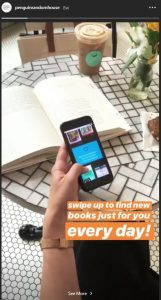
One strategy that’s been super fun is reaching out to Instagram’s book community. There are readers who post beautiful, artful, enchanting posts with their current TBR pile or reading obsessions. I asked a few of them to check out my book on NetGalley and got a lot of responses back from people excited to be offered a free ARC. I think that’s a pretty unique way to reach readers. I’ve also added the NetGalley link to my website and Press Kit.

Which NetGalley marketing tools did you take advantage of, and how did you use them to leverage interest?

I’ll be ramping up my NetGalley marketing in August when the book comes out. Glimmerglass Girl was chosen as a featured title as part of the “debut authors” month so it will appear on the front page of NetGalley. I’m stoked for this opportunity and curious to see how it goes. I think this last burst of interest should help get the book in front of more readers.

How did you engage with members who requested access? Did you follow up with them via email?

I made sure to follow members who requested access to Glimmerglass Girl on Goodreads and Twitter and share any blog posts to my website. I plan on reaching out to all my members who requested access with an update when the book is live to let them know they can order it, review it on Amazon and other retailers, and thank them for reading. I’m grateful for this chance to get to know other lovers of poetry, but I didn’t want to bombard them with emails either.

How will NetGalley be incorporated into your post-pub strategy?

My book will be on NetGalley for about two months post-publication and my hope is that this will help garner some Amazon reviews . . . for the coveted algorithm! I’m also planning a Goodreads Giveaway during August and I’ll probably pair this with NetGalley to let anyone who enters know that they can also get a free copy while they wait (and vice-versa with members who’ve already requested my book and might want to enter the giveaway.)

What is your top tip for authors listing an individual title on NetGalley?

Make sure to check out the other titles in your category. Read their description and model your title page off the books that you love and that are successful. I think readers really rely on the description to know whether they’ll like a book, so having some comp titles (books similar to yours) is helpful. In the case of Glimmerglass Girl, I’d love to reach the audiences of authors like Rupi Kaur and Lang Leav—women readers who are sure of themselves and maybe a bit creative too. Don’t be afraid to name-drop similar authors!

Glimmerglass Girl comes out on August 3 from Finishing Line Press. You can pre-order it here.

*Interviews have been edited for clarity and length.

Divider

How To Pitch: Sarah Miniaci, Senior Account Executive at Smith Publicity

Finding placement in relevant media channels is integral to a book’s success. After all, nobody will read or buy a book if they’ve never heard of it! Securing those crucial placements requires pitching. In our How to Pitch series, we hear from some of the publicists who use NetGalley to learn more about their strategies and successes.

We’re thrilled to kick off this series with Sarah Miniaci, Senior Account Executive at Smith Publicity.

We know that pitching books to important media is just one part of what you do. How do crafting the right message, finding the right person to contact, and other pitching-related projects this fit into your workflow?

You’re absolutely right that pitching books to important media is just one of the many initiatives a book publicist undertakes – but, it’s an incredibly important one, and it is the effort we spend the most time on by far in any given week. The many factors we take into account in crafting a pitch – and then identifying the right contact to send it to – include but aren’t limited to: the book’s plot, themes, timely topics, geographic tie-in’s, and key messages, the author’s background, talking points in relation to the book, local market hooks, and past media credentials and/or existing media relationships, what’s going on in the news, what’s trending in the entertainment publishing industry (and/or genre landscape) at large, and what changes are afoot in the media (from contact role updates to new outlets opening to other outlets shuttering their doors or changing focus, establishing new sections, etc.). So, it’s a lot of work – a full-time job, truly! – but work that is very much worth it when it results in the right coverage placement for the right book at the right time.

How do you determine the right people to pitch? Do you have certain contacts that you send every book to, or is the decision really based on each particular book?

As full-time book publicists we have a great benefit when it comes to developing our pitch lists, which is that we spend all day every day immersed in the literary media landscape – and so we are able to develop a strong gauge on which books are suitable for (and appealing to) which contacts. That said, there is no single contact to whom I would send each and every book. A self-published romance novel is not going to be relevant to the same media contacts to whom we pitch high-profile business non-fiction. For that matter, there can be great discrepancies even within the same genre landscape – two separate thrillers novels, both with October 2018 publication dates, can and will usually have very different publicity plans. To establish our pitch targets, we’re really looking in-depth at the book and author, and from there determining how and who we’re going to present them to as a good candidate for coverage. Does the book have a complex female protagonist or is the narrator a young African-American man? Is it set in modern-day New York City or rural Missouri at the turn of the century? Is the author’s voice gritty and hyper-realistic or breezy and family-friendly? Every pitch list we create for every book we work on is painstakingly crafted and highly personalized, taking all of these factors and more into account.

What strategies do you use to make your pitch emails stand out?

Every publicist has their own quirks and executes their pitching a little differently, but the majority of pitching these days is conducted over email – at least as a first point of contact, and for print and online media almost exclusively. Some contacts for broadcast outlets, like radio and television, still like a good phone pitch. As professional publicists, it’s our job to know who likes to be pitched in what ways and act accordingly. Some contacts also like being pitched over social media – but, I will warn, most do not, and certainly not over Facebook (it’s a very personal platform and faux pas to get in touch this way unless otherwise explicitly stated!).

In terms of standing out with your pitch, it’s my sincere belief that if you’ve taken the time to identify the right contact to pitch, you won’t find it hard to stand out and get a response. You need to be confident that this kind of book from this kind of author is precisely the kind of thing that this contact has a demonstrated interest and solid background of editorial coverage in. It’s really important to be cognizant of the fact that the media and reviewers you are pitching don’t actually want to say “no” to the pitches they’re receiving. They love nothing better than a good pitch they can actually do something with. The more thoughtful, targeted, and helpful you can be to the media, the much better your chances of success become. Remember: media contacts and reviewers have jobs to do, too – be of value and you’ll find a lot of open doors and great relationships await!

What resources do you use to sharpen your skills for crafting just the right message in your pitch?

It may sound obvious, but the very best way to sharpen one’s pitching skills is, in my view, by reading and consuming media! To keep up with the magazine landscape, I personally love the Texture app. Twitter is a great way to stay engaged with outlets and media contacts and get a feel for what they’re covering. With newspapers, Twitter can also be helpful (you can follow not only publications but in many cases specific sections, too, such as @nytimesbooks, @globebooks, @latimesbooks, and the list goes on). I also like subscribing to the weekend editions of a couple of print newspapers. Not only is it a nice way to spend a Sunday morning with a little breakfast and pot of coffee, it’s also valuable in gaining a genuine understanding of the media coverage landscape for books. I’m a public radio junkie (as a Canadian, I can’t get enough of the CBC, but I love and often live-stream NPR and the BBC at my desk, too!) and love following #Bookstagram influencers and other media contacts I interact with a lot on Instagram. It really all goes back to the idea of getting to know the people and outlets you’re pitching. Once you get that, everything else really does fall into place.

What do you do if you don’t get a response? 

In this day and age, we all have over-stuffed inboxes and it is completely understandable that not every email you send out is going to receive – or even warrant – an immediate response. That said, if I’m reaching out to a contact with a book that I genuinely believe is going to be a perfect fit for them, I don’t hesitate to follow up about a week after my initial pitch send – it’s always possible that they were on vacation, on deadline, or just otherwise distracted when the first one came through, but interested and grateful for the follow-up! Otherwise, if you’ve done your research and are confident that this contact should, in fact, be receiving your pitch (I keep stressing this because it really is the most important part), keep following up with new angles, story ideas, subject lines. Media contacts often get back to us weeks, months, and sometimes even years after the initial pitch was sent!

Give us your top tip for publicists!

Do your homework, read/listen to/watch media voraciously, and always remember: the person you’re pitching doesn’t want to have to say no, so make it easy for them to say yes!

NetGalley Insights tip: Authors, whether or not they are working with publicists, should also be thinking about these strategies. Authors can help their publicist, or use these strategies to pitch their own titles. Authors should be thinking about how to tie their books to media outlets, influencers, regional opportunities, and more. Authors should be consuming relevant media to learn more about how titles are being positioned, and who is talking about what.  


Sarah Miniaci is a Senior Account Executive and Business Development Associate at Smith Publicity – one of the leading book publicity agencies in the world, with offices in Toronto and New Jersey. Founded in 1997, Smith Publicity has worked with more than 3,000 authors and publishers, from New York Times bestsellers to first time, self-published authors.

To connect with Sarah or another publicist at Smith Publicity, contact them at www.SmithPublicity.com or find them on social media @SmithPublicity on Twitter, Facebook, Instagram, and LinkedIn.

*Interviews have been edited for clarity and length.

Divider

Ask a Librarian: Amanda Buschmann

Putting your titles in the hands of librarians is an important part of any book’s success story. Librarians build collections for their library branch, pick titles for their own reading groups, and were the original comp-title recommendation engines before the age of algorithms. Librarians are book advocates in their community and beyond!

In our Ask A Librarian series, we ask librarians on NetGalley about what makes their community special, what they read, and how they stay up to date with the best new titles for their patrons.

Amanda Buschmann, an elementary school librarian in Houston, shares some insights about her community below:

Tell us about your library’s community, and the patrons who use your services: I work in a Title I district in a Title I elementary school, where I see approximately 850+ students on a rotating basis. The school services grades one through five, and the school is a bilingual school with a majority of Hispanic students.

What resources or programs make your library unique? We were one of the first libraries to routinely use a 3D printer and a Makerspace, and we are also the only school with a Gadget Girls club – a club designed solely for girls interested in STEM to explore science and tech in a stress-free environment. Our collection reflects these practices; we have a STEM resource section is that very popular, with a mixture of non-fiction and fiction books geared towards STEM.

Based on what they’re checking out, what kinds of books are your readers most interested in? Graphic novels are the most popular, including graphic novel versions of non-fiction subjects like electricity and biographies. Graphic novels are an effective way to grab a student’s attention and then supplement with additional texts.

What percentage of your patrons check out digital books versus print? Nearly all of my students use print resources, as very few have tablets of their own.

What resources do you use to find new books to recommend, or to add to your library’s collection? The largest and most effective resource I use is other librarians. I am part of a few different Facebook groups geared towards Future Ready and elementary librarians, and they are beyond helpful. So many fabulous ideas! I also love to use School Library Journal and Kirkus Reviews.

What’s your strategy for finding new books on NetGalley? Firstly, I peruse the Most Requested titles to see if there is anything pressing that I am missing out on. Then, I scroll through the offerings and look for titles and covers that catch my eye.

What catches your eye when you are on the hunt for new books? Cover? Title? Description? I will admit I am a sucker for a beautiful cover, and lately books have been coming out with gorgeous covers. A strong, not overly lengthy title is also paramount to catching my attention. Then I delve into the description.

If you’re looking for ways to engage librarians like Amanda on NetGalley, remember to auto-approve all members of the ALA, and include your titles in the NetGalley newsletter: Librarian Edition. And, be sure your cover art is eye-catching! Check out our Cover Love winners for inspiration. You can nominate your own title for Cover Love here. The promotion is free if your title is selected. And, check out the rest of our Ask a Librarian series!

How have you successfully engaged librarians? Email insights@netgalley.com with your story. We look forward to featuring your successes on future Insights posts.

Interviews have been edited for clarity and length.

Divider

Pre-Publication Tips for Authors: Ensure Your Book is Ready for Publication

As an author, you have likely spent more hours than you care to count dreaming up your story, imagining the inner workings of your characters and working through plot structure. And now that your manuscript is ready, your book is almost ready to meet the world! In order to help your book make a positive first impression, here are some ways to make sure that it’s ready for publication.

You’ll want to do everything in your power to make sure that it grabs a potential reader’s attention right away… and holds it. This means a strong cover design, editing with a fine tooth comb, and adhering to publishing standards and deadlines.

Book cover inspiration from @perfectbound_

Readers are inundated with books to choose from, at their libraries –on retail websites, and in brick-and-mortar bookstores–which means that your cover matters. Make sure that it looks professional and eye-catching, and pay attention to what other books look like in the category or genre you’re writing. For inspiration, check out perfectbound_ or  She Designs Books. You might end up shelling out for a professional book design, but a compelling cover makes a big difference for readers in a crowded marketplace.

Once you have a reader’s attention with an enticing cover, one of the quickest ways you could lose that attention is with typos and grammatical errors. A book might be full of the most fascinating characters and original worldbuilding, but if the apostrophes are always in the wrong place and commas are running rampant on the page, the reader will be quickly distracted and turned off. Make sure that you are sending your book out into the world in its very best possible state, with a comprehensive line edit. Your book gets one first impression with readers, so make sure it’s as strong as possible by sorting out any wayward spelling or grammar issues.

If you intend for bookstores and libraries to carry your book, make sure to set a realistic pub date and stick to it. Most bookstores, libraries, and even “long lead” review outlets, need significant time to plan what new books will be added to their store. Setting your pub date at least six months in the future will give you time to share it with book buyers at stores, librarians in charge of collection development, and traditional review organizations. Additionally, it’s important to  ensure that any digital files you have are formatted correctly, and that you have an ISBN number.

While graphic design, line editing, and ISBNs might not seem like the most important part of publishing your book, these are the details that will help your book stand out for readers, reviewers, and retailers.

Divider