
3 Easy Ways to Harness the Power of Dopamine
Readers bring books to life. The act of reading—taking in the words an author has written and translating them through the lens of our own unique understanding—creates a highly emotional connection between the reader and the book. Books teach us, challenge us, validate us, reflect our fantasies, help us understand our realities. When a reader truly connects with a book they cannot help but talk about it, and in sharing their experience they quickly find that every other reader knows this feeling. It creates a kick of dopamine—the neurotransmitter responsible for pleasure and motivation—that reinforces their desire to connect with others, encouraging people to continue to share their thoughts with friends, family, and strangers online. In the process, these readers increase the visibility for the books they’ve read and kick off a positive emotional loop: more people share more thoughts, which leads to more people sharing theirs as well. This looks like organic momentum (see: BookTok!), but there are ways to get the snowball rolling. So how do we harness this power?
First and foremost, remember that the book itself will create the initial emotional response in the reader. The suggestions below are ways to help readers continue living in the world of your book, whether fiction or nonfiction, to identify and share all the feelings the book generated in them.
1. Give them visual assets to share.

Make it easy for readers to post on the platforms they already use by creating easily-shareable, well-designed digital images or gifs. They should match the emotion or mood of the book and could be beautiful or scary, funny or serious. Everyone loves to answer the question of “what should I read to fit my mood?” and your assets can help define the mood visually for others who see it. Consider making them customizable or interactive (choose colors, add text, etc.)
By giving readers something to share, you are helping them collect likes and comments, releasing little bursts of dopamine every time someone engages with their post. Plus, you are reinforcing the book’s branding through consistency of design, making it recognizable in its repetition across multiple readers’ posts.
2. Engage with readers, not trends.
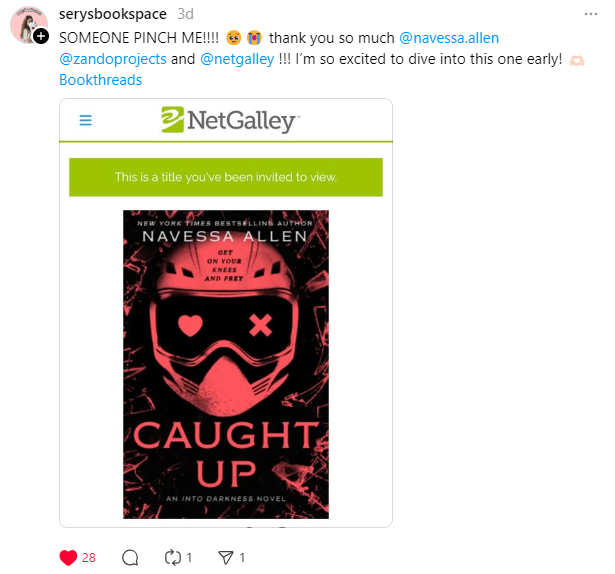
Instead of chasing fleeting trends, trust your audience to engage with them naturally—just give them the right tools to do so. Online communities can quickly spot when brands force their way into trends, often labeling these attempts as “cringe.” Rather than trying to fit in, empower your audience to take the lead. Beyond providing assets (mentioned above), give them something worth sharing that sparks excitement and pride. Let them brag: I won a giveaway! I got this free sticker at my local bookstore! I identified this easter egg online! I completed this challenge! I was asked to participate in this special event! These experiences encourage organic participation.
When people have something meaningful to share, they spread the message in an authentic way that resonates within their communities. Gamifying engagement through challenges, achievements, and interactive experiences keeps audiences invested and excited. These moments not only generate buzz but also tap into the brain’s reward system—triggering dopamine and reinforcing participation. By shifting the focus from forced brand participation to community-driven engagement, you create a more natural and lasting connection with your audience.
3. Plug in to communities outside of the typical reader-centric communities.
A sense of connection is a powerful way to release the brain’s reward chemicals, and one of the best ways to cultivate it is by engaging with established communities beyond reader-centric spaces. When people feel seen and included in something that aligns with their interests and values, they’re more likely to participate and share. For example, if you have a cookbook to promote, collaborate with a local cooking school to teach one of your recipes (and encourage them to share their photos of the dish with a hashtag). This not only creates excitement but also fosters real-world engagement.
Similarly, if your book features a character who has their own hobbies (like surfing), run a book giveaway in an online surfer’s forum, or at a surfing competition. You can do this digitally very easily, without needing to worry about printing and shipping. A targeted giveaway like this taps into a passionate, built-in audience that already values the subject matter.
Be sure you’re practicing Empathetic Marketing to generate warm feelings of inclusion and recognition throughout the community, resulting in shared enthusiasm for your book. By meeting people where they already are and giving them something meaningful to engage with, you create authentic, lasting connections that go beyond just promoting content—they build genuine engagement and excitement.
Readers transform a solitary activity into a shared experience. By giving them the tools to do so, you’re not just marketing a book; you’re connecting with the individuals who make up a community.
At its core, book promotion isn’t about chasing trends or forcing engagement—it’s about nurturing the emotional connection readers naturally form with your content. When readers love a book, they want to talk about it, share it, and celebrate it with others. These readers are transforming a solitary activity into a shared experience. By giving them the tools to do so, you’re not just marketing a book; you’re connecting with the individuals who make up a community. When readers feel empowered to bring a book into their world and share it in a way that feels personal, the excitement grows organically, creating a ripple effect that keeps the book alive in conversations long after the final page is turned.
