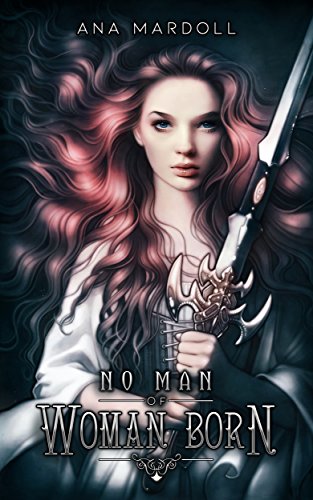
Case Study: No Man of Woman Born by Ana Mardoll

How an activist fantasy writer used xer own experiences as a reviewer to get 80+ NetGalley post-pub reviews for a short story collection

As a reviewer as well as author and indie publisher, Ana Mardoll has a unique perspective about what gets a person excited about a new book. For xer*, it’s instant access, plus concrete information about a book’s content – including possible triggers. Knowing xer own likes, dislikes, and habits as a reviewer helped Mardoll optimize the timing, availability, and Title Details copy for No Man of Woman Born. And xer strategy worked – during its time on NetGalley, No Man of Woman Born earned over 80 reviews, with an average 4-star rating. 

*Xie/xer/xers are the gender neutral pronouns that Mardoll uses. 
As both an activist and a writer, how does writing fantasy provide a platform to explore issues that are important to you, especially around queerness & disability?

The great thing about fantasy is that you have the total power to create your world from scratch. You don’t have to add hatred for queer people and disabled people into your world; that hatred isn’t some mandatory state that all civilizations reach in the journey from fire and the wheel to airplanes and cellphones. You can choose what challenges your characters face and aren’t constrained by the real world. There’s a lot of power in that!

What were your goals for No Man of Woman Born on NetGalley?

My goal was to get reviews and reach a wider audience. As an indie publisher, my marketing budget is extremely low, so book blogs and word-of-mouth sharing from reviewers is very helpful to me. Having been a reviewer myself, I know all too well that we rarely have the time to review everything we request. That helped me set realistic expectations for what to expect, since I knew that a request didn’t equal an eventual review. I was a reviewer for many years and I understand the importance of reviews on a book–and I respect how much work and labor goes into that effort! I’ve always had wonderful experiences with the NetGalley team as a reviewer, so I trusted them to put my book in the hands of reviewers in a respectful, thoughtful manner. I believe they did well.

No Man of Woman Born became available on NetGalley after its publication date. Tell us how you came to use NetGalley as a post-pub tool and why that works for you.

I have ADHD and whenever people hype books in advance of pub date, I get all excited, and then I never end up buying the book because by the time it becomes available I’ve already had my interest snagged by some new shiny thing! (I have the same problem with movie trailers!) So I’m very much about post-publication hype. It doesn’t help your first week sales, true, but as a smaller-name indie that first week isn’t as important to me as the long haul. If I can get people excited about a book that they can then immediately one-click read, review, and buy that very day, that’s a big win for me.

I’m very much about post-publication hype. It doesn’t help your first week sales, true, but as a smaller-name indie that first week isn’t as important to me as the long haul.

No Man of Woman Born was available to any interested member as a Read Now title. Tell us about why you chose that availability setting.

I want to read a book when I request it, not two days later when the publisher clicks the “Approve” button. It’s just an attention span issue–any delay between “I want the thing” and “I get the thing” means I’m less likely to do the thing. Additionally, as the publisher in question I didn’t really want to have to log in and press the approval button; it seemed like my time could be better spent writing.

In your Title Details you note “…these prophecies recognize and acknowledge each character’s gender, even when others do not. Note: No trans or nonbinary characters were killed in the making of this book. Trigger warnings and neopronoun pronunciation guides are provided for each story.” Tell us why this is important information to include and what you hoped it would tell NetGalley members about your perspective as an author?

A lot of trans literature is inaccessible to a lot of trans readers because a LOT of it is about trans people facing hatred and trauma, even up to and including their own deaths. Trans characters on television are usually victims in crime dramas. There’s effort to change this and broaden the scope of how we’re allowed to see ourselves, but it’s still something to be wary of when approaching a trans book. I wanted to let readers know that wasn’t going to happen here; that no trans characters would be killed, and that any traumas they engaged in would be appropriately trigger warned in advance so they could choose whether they wanted to read that or not.

Where did you leverage your NetGalley listing outside of the site? 

Twitter mostly – that’s where the bulk of my audience is these days. Twitter has been a good platform for me simply because that’s where my audience already is. If I had 20,000 Facebook followers, I’d be sharing there instead or in addition to Twitter. 

 What’s your top tip for authors listing their title on NetGalley?

Make sure your readers know what they’re getting; the majority of my lower-star reviews were from people who didn’t enjoy short stories and hadn’t realized my book was a collection–that’s fair and a good note to me that I need to market the book more clearly in that regard!
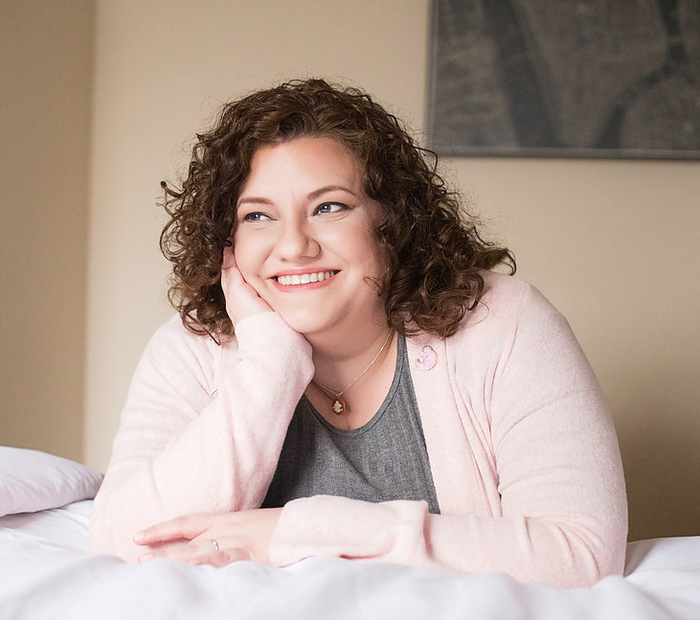

Ana Mardoll is a writer and activist who lives in the dusty Texas wilderness with two spoiled cats. Xer favorite employment is weaving new tellings of old fairy tales, fashioning beautiful creations to bring comfort on cold nights. Xie is the author of the Earthside series, the Rewoven Tales novels, and several short stories.

Interviews have been edited for clarity and length.

Read the rest of our case studies, featuring authors, trade publishers, and academic publishers here.

Divider

Pre-Publication Tips for Authors: Build Discoverability

Search Engine Optimization (SEO) is the primary strategy that helps online content find its way to readers. SEO boosts discoverability. It means having thoughtfully and strategically optimized keywords. In practice, an author with great SEO skills stands a better chance of having their website or information show up earlier in Google results. 

The goal of SEO is to lead people to your content by paying attention to what they’re looking for If they’re looking for content similar to the content that you write, you want them to find you! When most of us type in a Google search, we know the general contours of what we’re looking for, but not the exact thing. That’s why we type broad keywords around the topic into a search engine. When you include those relevant keywords about the topics you cover in your own writing, you help your work rise to the top of the results page for people who are already interested in what you’re doing.

When you think about developing an SEO strategy, think about what someone might be looking for when you want them to find your work. What search terms are they likely to use? Those search terms will become the keywords that you can incorporate into your work.

There are a few ways to go about boosting SEO for your writing projects. 

One is through clear titles and subject lines for your writing. If you are posting a short story about undead hordes in an industrial English city, your title should include words like “zombie,” “brains,” and “Manchester.” That way, people looking for stories about the undead in the UK will be better able to find your work. 

You can also put keywords into your metadata and into the content itself. For example, WordPress lets you list keywords for your posts. But be sure to use your keywords in the writing itself, too. Adding in these keywords in metadata and content might seem redundant, but search algorithms work on repetition, so we recommend adding them in. 

Making your content easily shareable helps boost its discoverability as well. If you’re writing about how a specific author has inspired your current work, tag that author and add a link to your favorite book they’ve written. This makes it easy for that author to know that someone is writing about them, and makes it easy for them to share your work if they like. As an article or a website gets shared, it is more prioritized by search algorithms because it’s clear that readers are engaging with it already. 

Check out more author tips here, and subscribe to our weekly newsletter so that you don’t miss any of our best practices, case studies, or insider insights.

Divider

5 Tips for Newly Signed Authors from a Senior Literary Agent

Literary agents bridge the space between editors and authors, working with both to shepherd great books into the world. Because they work closely with both editors and authors, they have a unique vantage point within the industry. They know what editors expect, and how authors can best set themselves up for a successful working relationship. Here’s what the Nancy Yost Literary Agency’s Senior Agent Sarah Younger wishes every newly signed author knew:

1. You don’t have to be on every social media platform known to man

In fact, for fiction, you don’t have to be on social media at all. Sometimes publishers like to see authors supporting their book publishing efforts through social media, but you don’t need to have a robust following while you’re in the querying stage. You may not even need to have a big social media footprint when or even after your book is sold. Social media can become overwhelming, take away from writing time, and be a source of frustration to authors who aren’t innately inclined to visit the platforms. This is okay. However, social media can be a place where you find community and friendship. It can also be a way to communicate with your fans and readers, not to mention a fun way to support your books. Ultimately, when it comes to social media you have to find your own personal comfort level. If it doesn’t feel natural, don’t force it.

2. Get ready for edits

Yes, the author has the final say on their story, and their writing, and their book. But you should be prepared to work with your agent on possible revisions before manuscript submissions and know you’ll eventually get feedback and edits from an editor, copy editor, possible beta readers, and critique partners. They all want to help make your work stronger. And help you tell the story you want to tell. I know that the first response writers have when faced with revisions is not always LET’S GET TO WORK, but having a good attitude about those revisions will go a long way in establishing and preserving a great working relationship with the enthusiastic team behind you.

3. Create an author website

While you don’t need to be on social media, I do think it’s a good idea for authors to have an author website. It doesn’t have to be fancy or expensive, but having a place with your pen name, or your real name, and a bit about your books or your works in progress will be helpful when your readers want to find out more about you, your books, and your future projects. Before you shell out money for a website domain though, be sure that it is the name you really want to use. I advise using your name or pen name as your domain name. But, if that name is already taken, think about adding book-related words to the end. For example, if my name was taken, I would try adding “books” or “novels” or “author” or “writer” on the end to see if that domain is available instead, like this: sarahyoungerwriter[.]com  

4. Explore professional organizations.

Joining a professional organization could be a great way to find community and educational resources. However, membership fees are typically involved with these organizations, so know that this isn’t a requirement for your success. But, if the budget’s there, I advise authors to look into professional organizations in their genre of choice. (If they’re writing across genres, it can be helpful to be part of multiple organizations.) For example, I work with a lot of romance authors, so RWA (Romance Writers of America) is a helpful professional organization for romance writers, both published and unpublished.

5. Expect and prepare for rejection. This industry is not for the faint of heart. An author and agent will see and experience many more rejections than offers and success stories, particularly when they are starting out. However, receiving a rejection, or multiple rejections, doesn’t mean that this career isn’t for you. Just keep swimming! (Yes, I appropriated that quote from Dori.) But it’s true, just keep moving forward. Just keep writing. Just keep going. It only takes one YES!

Sarah Younger is a Senior Agent at the Nancy Yost Literary Agency. You can find out more about the projects she’s sold and the genres she represents here. Additionally, you can find her on Twitter.

Divider

Case Study: Ever Alice by H.J. Ramsay

How runaway NetGalley success shaped the launch strategy for this Alice in Wonderland retelling

H.J. Ramsay had modest expectations for her first novel, but with over 175 NetGalley reviews and a 4-star average rating, Ever Alice has been a huge success. The pre-publication attention Ever Alice has been getting on NetGalley gave Ramsay some insight into how her title might fare once it hits its on-sale date, and helped her reshape her whole launch plan.

How has your NetGalley listing shaped how you think about your strategy for launching Ever Alice?

NetGalley has given me the confidence to really go after Ever Alice and seek outside sources to help promote it. Publishing Ever Alice started out as almost a pet project just to see what kind of reception it would have and to experience what it was like to have a published book. Not only did NetGalley provide a testing ground, but it also gave me the opportunity to access reviewers in a way that I don’t think I would have had otherwise. It’s a great platform that all self-published authors should utilize.

What aspects of the NetGalley community came as a surprise to you?

I’ve been blown away at the response I’ve received from the NetGalley community. I’ve had people from all over the world ask to read the story. I mean, how awesome is that! Up until now, I’ve mostly just had my critique group and/or publishing professionals like agents and editors read my work so the fact that I’ve had one of my novels read as far as Argentina, England, and India is like a dream come true. I’ve appreciated all the feedback on Ever Alice, and I’ve really been paying attention to what everyone has had to say. I haven’t done any promotion for Ever Alice outside of listing it on NetGalley so I’ve been very lucky that the reviewers, librarians, booksellers, and media professionals have been able to find me and are interested in my book.


When I listed [Ever Alice] on NetGalley, I told myself that I’d be elated to receive 100 requests in six months. That happened in 24 hours.

We noticed that you aren’t on social media. How do you connect with your readers both for this specific book campaign and as part of your overall strategy as an author?

Honestly, I had no idea that Ever Alice would have the kind of response it did. When I listed it on NetGalley, I told myself that I’d be elated to receive 100 requests in six months. That happened in 24 hours. Needless to say, it’s been a little overwhelming and I’ve been caught up in the excitement of it all, but I’ve been getting more serious about promotion, especially regarding social media. Readers who’d like to connect should be able to find me very soon.      

My NetGalley success did encourage me to become more active with social media. Plus, I have friends who are published, and they’ve been urging me to get on there. My plan is to be more accessible to readers, such as through Twitter and Instagram. I love books and writing so that’ll probably be the running dialogue of both platforms. I’m not sure if I’ll purchase ads. Maybe I will when Ever Alice is published so that I can look at promoting its publication date and where readers can purchase a copy.  

Once Ever Alice started gaining traction on NetGalley, how did you leverage the interest?

Before NetGalley, I had looked at PR companies as a possibility but wasn’t really serious about it. It’s expensive, at least the good ones with track records are, and I wasn’t sure if I’d need it. That changed after I saw the response Ever Alice was having. I felt like this was an opportunity and if I didn’t take advantage of it, then I’d forever regret it. At the end of the day, what I really want is to have a career as an author. I love writing and the writing community. I’ve been active in writing groups. I’ve gone to conferences and retreats. I’ve received an MFA in Creative Writing. I’m the Editor-in-Chief of a literary journal, Gold Man Review. All that’s missing is having my own published work out there. I’ve had small successes with journals and small publishers, but ultimately, I’d like to see my novels that I love so much out in the world and to have readers love them too.  

Promotion and all its various avenues is still a very gray area for me, but I’m learning quickly. Since it isn’t my strong suit, I’m very excited to be teaming up with Smith Publicity and we’re creating a plan to really dive into promoting Ever Alice, which will include using the NetGalley listing.

Half of the members requesting access to Ever Alice say that they are drawn to the description of the book. Tell us about how you created such compelling copy, or what you think is resonating with the members requesting access.

I think a lot of it has to do with the fact that it’s a retelling… and particularly a retelling of a popular story: Alice in Wonderland. Retellings are amazing because they bring readers from different genres together. For instance, someone who primarily reads mystery, might be open to a retelling because they are already familiar with the story. They read the original when they were (most likely) a child. It’s familiar. It brings up memories for them so they’re drawn to it even when a similar story in that genre might not have had the same effect. I know my interest is always piqued when I find out that something is a retelling. For instance, I’ve been seeing the House of Salt and Sorrows by Erin A. Craig up on NetGalley and it’s a retelling of The Twelve Dancing Princesses. I loved that story as a kid when I read [the Brothers Grimm version} so I’m instantly drawn to that book.

Members also love the cover! This is one of the other popular reasons noted for why they’re requesting the book. What message did you want to send to potential readers when you were designing the cover?

My husband did the cover and, I agree, he did a fantastic job!

The style of the novel itself is very Wonderland-ish and I tried to stay as true as possible to Carroll’s original work. Because the setting and characters are so topsy turvy, I wanted to keep the cover simple, almost like a juxtaposition of what awaits the reader within. I was really inspired by the cover of The Night Circus by Erin Morgenstern. I just love its minimal use of color and illustration. There’s something about it that makes it even more mysterious and intriguing. It’s the understated that makes a statement, at least to me. After some trial and error, my husband came up with this cover of Ever Alice and I knew it was “the one” the moment I saw it.

What’s your top tip for other debut independent authors?

Be patient. I decided that if I was going to self-publish Ever Alice that I’d give it its best possible chance by modeling the practices that traditional publishers use. There are a lot of steps publishers take before a book is sent out in the world, which doesn’t only included editing, but also getting advanced reader reviews. All those steps take time, but they’re essential. With so many options available to self-publish its very easy to complete a story, upload it, and press click. Instead of rushing to do that, take the time to make sure your novel is as ready as you can possibly make it.   


Bio: H.J. Ramsay has loved fantasy ever since she was a child. Growing up, she was influenced by movies such as the Labyrinth, The Dark Crystal, and Legend as well as books and short stories, such as The Collected Works of Brothers Grimm. As such, she is drawn to fantasy with a darker side to its glittery world and the idea that things are never what they seem. Ever Alice is her first published novel.

Interviews have been edited for clarity and length.

Read the rest of our case studies, featuring authors, trade publishers, and academic publishers here.

Divider

Indie author success with the IBPA’s NetGalley Program

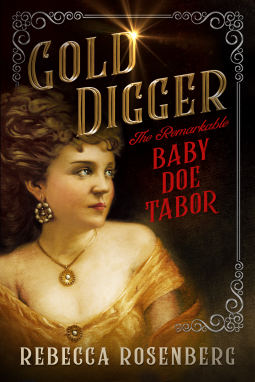
How working with the IBPA boosted Rebecca Rosenberg’s historical novel, Gold Digger

On NetGalley Insights, we highlight the successes of NetGalley publishers and authors, and share some of their strategies. Today we’re talking to Rebecca Rosenberg, an independent author and member of the Independent Book Publishers Association (IBPA). She takes advantage of the IBPA’s NetGalley program, which manages her title on NetGalley on her behalf, giving her even more time to think strategically about her ongoing promotional efforts.

What was your experience like working with the IBPA to list your title on NetGalley?

I enjoyed working with the IBPA to list my title on NetGalley and I appreciated their help and guidance. Their response time was great for sending me monthly reports, submitting promotions, forwarding reviews and posting featured reviews. When I was worried I was not getting enough reviews on Gold Digger, they gave me knowledgeable input that Gold Digger was doing quite well!

It is very helpful that IBPA handles all of the technical aspects of posting my book and making updates to the page so that I don’t have to do it myself. I feel that having my book listed under the IBPA umbrella offers prestige for my book.

Tell us why listing the book on NetGalley through the IBPA program was the right choice for you.

I learned from my first novel, The Secret Life of Mrs. London, that NetGalley is the professional hub of bloggers, librarians, Goodreads, Bookbub and Amazon reviewers, and avid readers who love to share their reviews. The more buzz the better when launching a novel, and NetGalley makes that possible.

We encourage professional reviewers to use the NetGalley link as well as bloggers, Facebook group moderators, Goodreads and Bookbub reviewers. In my opinion, if a reviewer gets the book from NetGalley, they are readers who take the reviewing experience seriously. They usually share the review in at least five places: NetGalley, Goodreads, Bookbub, Amazon, Facebook Groups, Twitter, Instagram, and their own blogs. NetGalley reviewers are connected and powerful influencers. I often use reviews in my marketing, and I feel that NetGalley reviewers carry more credibility.

You ran several marketing campaigns with NetGalley – a Category Spotlight in February and a Featured Title placement in March. Tell us about your strategy and unique goals around these promotions.

First of all, I took a six-month run on NetGalley (instead of three-months) before my launch date in order to reach as many reviewers as possible. When I saw the great marketing opportunities NetGalley offered, it made sense to support my listing with the Category Spotlight and Featured Title placement early on to get attention.

I am hoping to reach different segments of readers in different months with different promotions.

There are many marketing opportunities available through NetGalley, and (if I had the budget) I would use them all throughout the six-month listing! I ran a Category Spotlight in the “Historical Fiction” category, in February, and Featured Placement for “Women’s Fiction” in March and again in May. I did another Featured Placement for “Summer Reads” in June, and am waiting to hear if Gold Digger will be included in an upcoming Cover Love post.

How have you been leveraging your NetGalley listing and reviews to increase discoverability?

To expand the reach of my NetGalley listing, I posted the NetGalley link to my book on my Facebook page, Facebook reading groups, Bookbub, LinkedIn, Goodreads and to my mailing list.

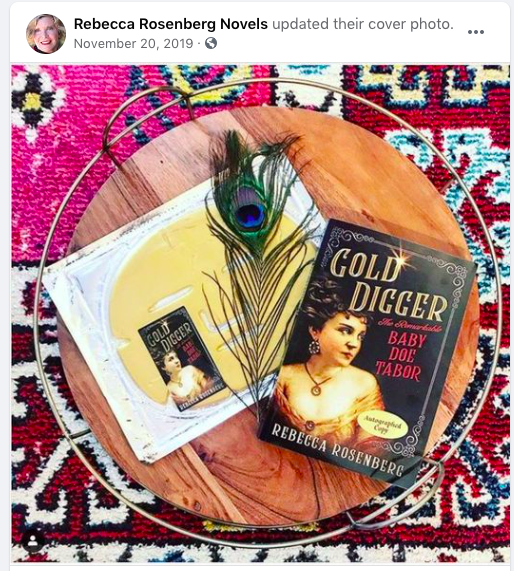
I’ve also featured some great NetGalley reviews for Gold Digger on Facebook, Instagram, in my newsletter, and with my Review Crew. I use these reviews in my newsletters and social media to whet readers’ interest and add credibility for my books. We take 5-star reviews and make colorful, eye catching posts.

We love the blog on your website. You’ve been posting lots of great supplementary information about Baby Doe Tabor. Tell us a bit more about how your blog fits into your strategy as an author.

My blog serves to interest readers in my books, whether they’ve read my books or not. As with The Secret Life of Mrs. London, I like to use my two decades of research by creating background stories and character sketches and trying to interest readers in different aspects of the story. I share my blog across all platforms, from Facebook, Amazon, Goodreads, and newsletters, and guest hosting other blogs.

What are some tips you have for other independent authors?

Get involved with readers and other authors of your genre by joining Facebook Reader groups, Goodreads groups, Bookbub, Instagram, your creating own blog and newsletters. My specific Facebook groups would not work for everyone–authors need to search Facebook groups for those that discuss books in their genre. It is important to read the group rules and observe them. For example, a group may only allow promotion on certain days. Become a contributing member first and contribute to the group as a reader of other books, before posting about your own book. Review other books similar to yours and become an information source for great books.

Often, a person posting about your book will tag you. When that happens, be sure to thank them, or engage in an appropriate way. There are also companies that track mentions of your book on social media: Google Alerts, Talk Walkers, Mention. Find out who is talking about your book and thank them for spreading the word. Enthusiastic readers spread the word about your books! In addition to thanking them, ALWAYS ask readers to: “Please read and review Gold Digger on NetGalley!”

Bio: California native Rebecca Rosenberg lives on a lavender farm with her family in Sonoma, the Valley of the Moon, where she and her husband founded the largest lavender product company in America, Sonoma Lavender. Rosenberg is a graduate of the Stanford Writing Certificate Program. Her upcoming novel is Gold Digger, The Remarkable Baby Doe Tabor. Other works include: The Secret Life of Mrs. London, her debut novel and her non-fiction, Lavender Fields of America.

Rebecca Rosenberg’s next novel is Champagne Widows, the story behind Veuve Clicquot and Lily Bollinger.

Find and follow Rebecca on her website, Amazon, Bookbub, Facebook, and Goodreads.


IBPA’s MISSION is to lead and serve the independent publishing community through advocacy, education, and tools for success. Learn more about how IBPA can can meet your specific needs here.

Interviews have been edited for clarity and length.

Divider

Pre-Publication Tips for Authors: Choosing a Marketing Service

Independent authors have the option to sign up for a huge number of services to help them get their books out into the world. Authors can work with companies on jacket design, promotion, editing, distribution, and more.

While each individual author’s goals and budget will determine which services are most important to invest in,there are still some best practices for authors to figure out which company or service is worth their investment.

Before signing up for any service, ask plenty of questions. Feel free to request case studies or examples of previous work the service has rendered. Then you’ll be able to get a better sense of what you can expect for yourself.

Read online reviews. If it’s a well-known company, other authors will be talking about their experiences using it somewhere online. While there are always going to be some outliers, you will be able to see broad trends or early warning signs from these reviews.

Before hiring services to help manage certain parts of your book’s publication, think about your skills and your network. Maybe you don’t need to hire a company to run social media for you, for example. You might find that you can do it yourself, or that you already have someone in your personal or professional network who you can work with. However, remember to think strategically about your time.

Consider your bandwidth. While you might have the ability to manage your own social media accounts, will the time it takes be time better spent on other tasks?

And finally, remember that no publishing or marketing service is a magic bullet. No single service will turn your book into a bestseller or land it a movie deal, but it will hopefully make it a better product available to a greater number of readers.

Divider