Using authentic, creative enthusiasm to connect with new audiences
Having previously published nonfiction, Chelsea Fagan knew she’d need to tap into a new audience with her novel. Creating an author platform is no easy feat, and in this interview Chelsea shares more about how she pivoted to reach fiction audiences with organic, authentic efforts.
What were your initial goals in listing A Perfect Vintage on NetGalley? Did those goals change or evolve over time, and if so, how?
My initial goal was to reach a wider audience with my novel – since my previous books and current platforms are in the nonfiction space, I wanted to find new readers in my new genre (romance) in an organic and mutually beneficial way. This didn’t particularly change with time.
A Perfect Vintage is your debut novel, but it’s not your first book. How did your prior experience inform your independent publication process this time around?
I’m very familiar with the publishing process, and have always been extremely hands-on with my other books, even when traditionally published. So I basically knew how I wanted to do everything, and really enjoyed the ability to have control over the creative and marketing decisions.
A Perfect Vintage was named a 2023 Harper’s Bazaar Best Beach Read, received praise from bestselling authors like Ashley C. Ford and ST Gibson, and was covered in BookRiot and The Skimm, among others! What role did you as an independent author play in securing media coverage for A Perfect Vintage?
I’m lucky that I’ve worked in media essentially my entire career, and I have a fabulous marketing partner with whom I’m profit sharing on the book, so between the two of us we were able to secure a lot of really organic, authentic media coverage between people we knew or had worked with over the years. I took a lot of care in sending out galley mailers with personalized notes and ribbons, even doing themed gift boxes for some recipients – and though that whole process took a lot of time and energy (and standing in line at the post office), it was hugely worth it. People respond to authentic creative enthusiasm.
What strategies, tools, or features in your NetGalley client account did you find most useful in turning NetGalley members’ impressions and requests into Feedback and reviews?
I found it to be quite seamless all around, but I did like being able to see a bit about the profiles of people requesting – if they’re someone who doesn’t at all read my genre typically, that person might be a lower priority than someone who is a big fan of the space.
Now that A Perfect Vintage is published and out in the world, do you have new or additional goals while you continue using NetGalley as your title is still active on the platform?
Making sure it has as wide a level of visibility as possible with booksellers and librarians!
As we alluded to earlier, in addition to your work as a novelist, you are the founder and CEO of The Financial Diet. How did founding and running your own business prepare you for your debut novel’s publication?
I’m very organized, thorough, and single-minded when it comes to pursuing professional and creative projects I’m passionate about. I understand media, I understand creating healthy business models, and I know what I can afford to invest (both in terms of time and money). I also enjoy a four-day workweek at my primary job, so I was able to dedicate regular time to this project without overwhelming myself.
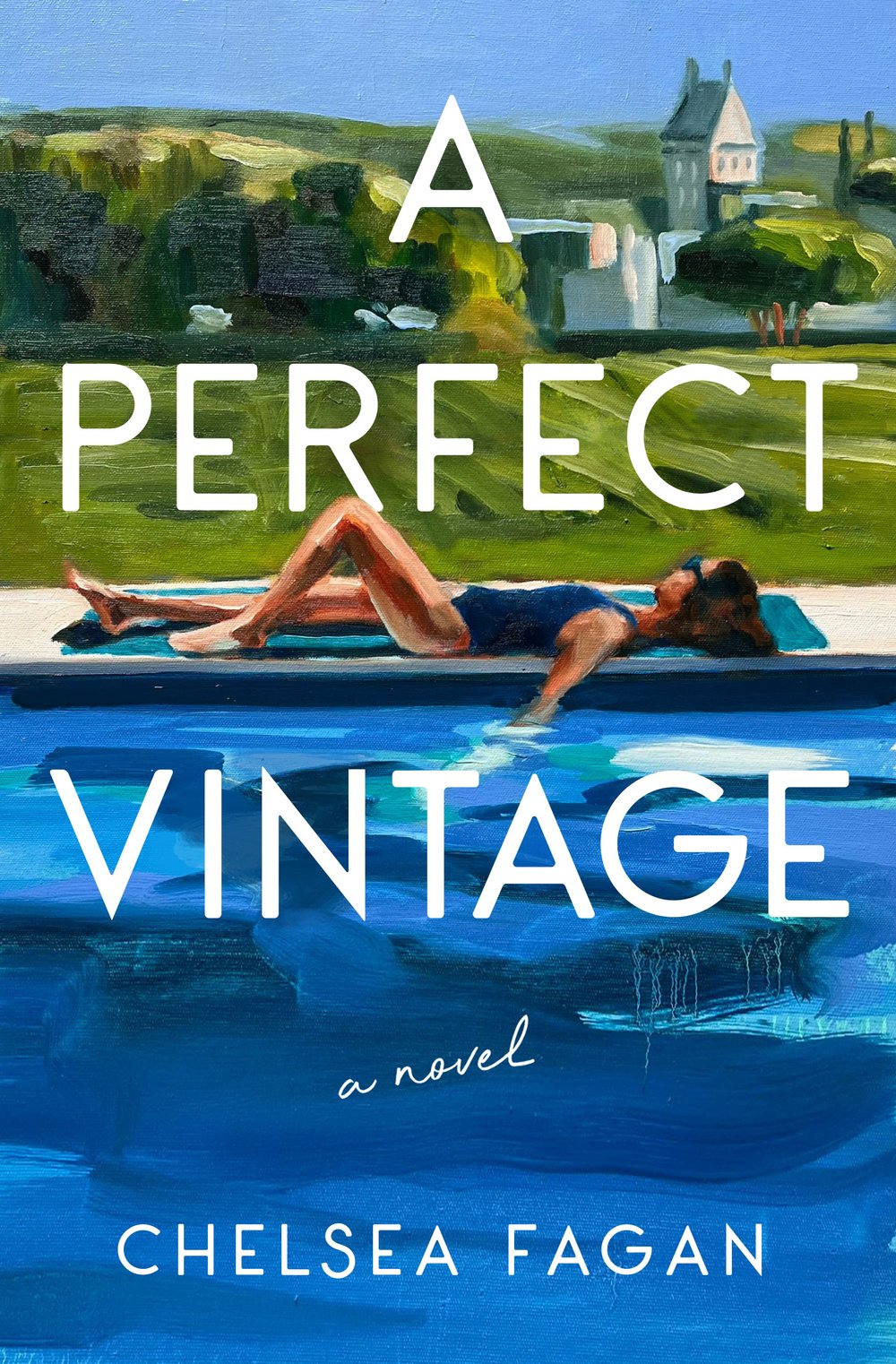
On a personal note, I am obsessed with your cover image! Could you tell us a bit about it? Who was the artist? Did you go through multiple drafts?
Thank you! It’s an original oil painting that I commissioned from the artist Elizabeth Lennie (whose work I love, and whose paintings have previously been licensed for books such as Every Summer After). I hope to continue working with her throughout my romance career, as the cover has been such an integral part of this book’s success!
A Perfect Vintage was selected for free Homepage Placement on NetGalley about a month and a half before its publication. Two weeks later, it was a Featured Title on NetGalley in the Beach Reads (Fiction) theme. What effect did NetGalley Promotions have on your book’s performance?
It automatically reached a much wider audience – when I began this process, I was very reliant on my own platforms, which luckily are sizable. But those features especially allowed me to meet readers who weren’t previously aware of my work.
I understand music was a key influence for A Perfect Vintage — it has its own playlist! How has music shaped your writing?
In every way! As my primary work is more serious, educational content about finance, I want my romance work to be purely about vibes! Enjoying myself while writing is of the utmost importance, and having a fabulous playlist to accompany the process is essential to maximizing the joy. (And people have really loved it, about 1,500 people have saved it on Spotify alone and a lot of people have told me it’s been their favorite summer playlist – I’m honored!)
What’s next for you? What do your readers have to look forward to?
Really exciting things are happening over at The Financial Diet – a fall tour (the theme will be money & love, tying together my two big focuses this year), a totally revamped video series, etc – and then I’m starting work on my next summer romance, which I’m excited to place on NetGalley as soon as it’s ready!
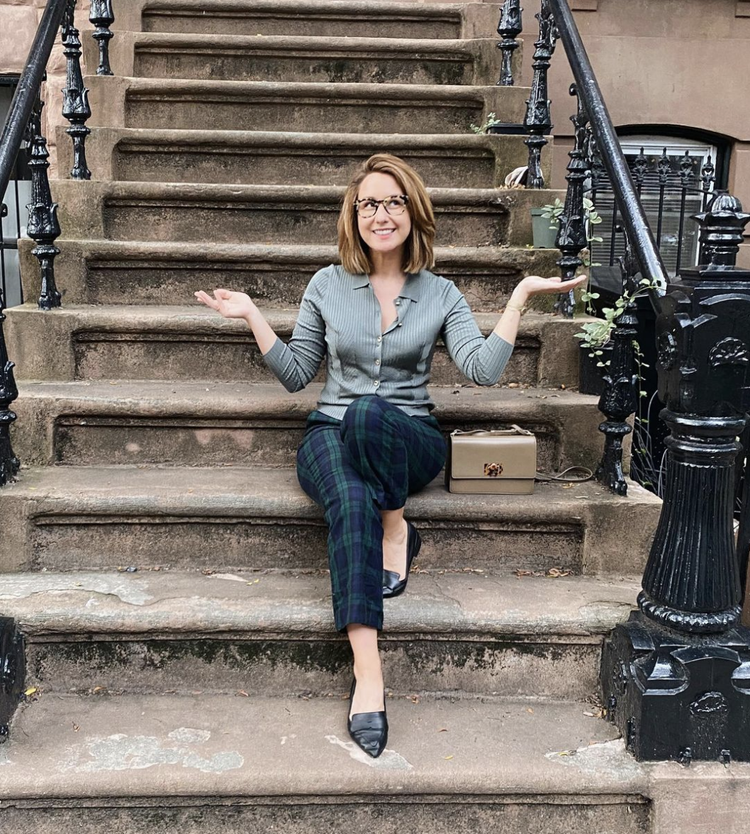
Chelsea Fagan, author of A Perfect Vintage
Chelsea Fagan is a writer, home cook, and the co-founder and CEO of The Financial Diet. She lives in Manhattan with her husband and dog.
Why a self-published, New York Times bestselling author didn’t tell her audience her latest book was on NetGalley
Author of the New York Times bestselling Hearts series, Claire Contreras, had never considered using NetGalley until she was getting ready to share the first book of her new series, Half Truths. When most authors use NetGalley, they use it to broaden their reach to new audiences and engage more deeply with the readers who are already following their work. Claire Contreras did something completely different. She didn’t make any announcements to her social following or newsletter subscribers about her latest book being on NetGalley – instead, she’s using it exclusively to find new readers.
In this case study, Contreras shares her unique NetGalley strategy, plus her perspectives on self-publishing versus traditional publishing and how she uses social media to connect with her audience.
I’d seen my friends who are published traditionally on NetGalley in the past and figured the publishing houses must have a good reason for using NetGalley, I just didn’t think it was something available to me. I spoke to a friend of mine who’s hybrid (traditionally and self-published) and she told me a lot of librarians read her books via NetGalley and that sold me on it. Before that conversation, I didn’t know how to reach librarians. Once I got on [NetGalley], I realized it wasn’t only librarians, but also media and educators as well as bloggers I wouldn’t normally have reached. That was when I realized NetGalley was a brilliant concept.
I spoke to a friend of mine who’s hybrid (traditionally and self-published) and she told me a lot of librarians read her books via NetGalley and that sold me on it. Before that conversation, I didn’t know how to reach librarians.
How did you get the word out to your audience about your NetGalley listing?
I didn’t. I used NetGalley solely for people I couldn’t reach myself. I feel it really puts the book in front of people who otherwise wouldn’t have seen it. I wanted to get more attention from librarians, media specialists, editors, and [other] people who don’t normally read me.
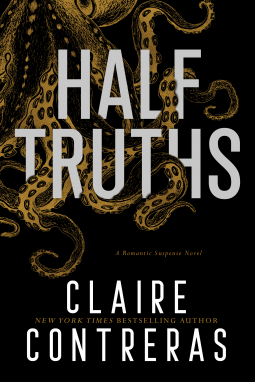
One of the reasons I didn’t announce to my readers that my book was on NetGalley was that I wanted to see how many new readers I would gain from the site. I was pleasantly surprised that a lot of the members had never read me before, as that was one of my initial reasons for turning to NetGalley. I have incredible readers, but there’s always room for more. I think in this particular case, the cover drew a lot of attention.
[I was most surprised by] the amount of people that requested the book. I was in complete shock to see Half Truths on the front page of most requested for weeks!
Half Truths is going to be part of a series. How are you using NetGalley to build anticipation?
With Half Truths specifically, I knew from the start that I would turn it into a series of standalones (standalone books in the same “world” – academia, different secret societies).
Because I’m using it as a promotion tool for the series, I’m approving a specific group of people. When I get closer to releasing information about book two, I’ll give away a lot more copies to readers (non-librarians/media) for reviews. I like to test things out and give it time to settle so I can see what’s working and what’s not.
I [also] have a mailing list – a snail mail list – that I put together when I was promoting the first book and I fully intend to use it again to send clues out in the mail to my readers as to what they can expect.
I believe pre-marketing and post-marketing are both powerful. However, I hope to have my next book in this series up on NetGalley a lot sooner than the first.
You are both a self-published and a NYT-bestselling author. Tell us a bit about why self-publishing is right for you.
When I first decided to publish, I fully intended to go the traditional route. My college professors and mentors were completely against me self-publishing, and I understood why. It was frowned upon and not something we completely understood. I decided to take a chance and self-publish my first book on a whim, just to see what happened. I figured if no one read the book, I could always take it down and query agents. The book did better than I anticipated and I gained a pretty steady readership, so I stuck to it. It was unexpected, but so far the control and freedom [I’ve gotten from] being self-published has been great. That’s not to say I wouldn’t go the traditional route. I would definitely love to work with traditional editors and be with a traditional publisher when the time is right.
The control and freedom [I’ve gotten from] being self-published has been great. That’s not to say I wouldn’t go the traditional route. I would definitely love to work with traditional editors and be with a traditional publisher when the time is right.
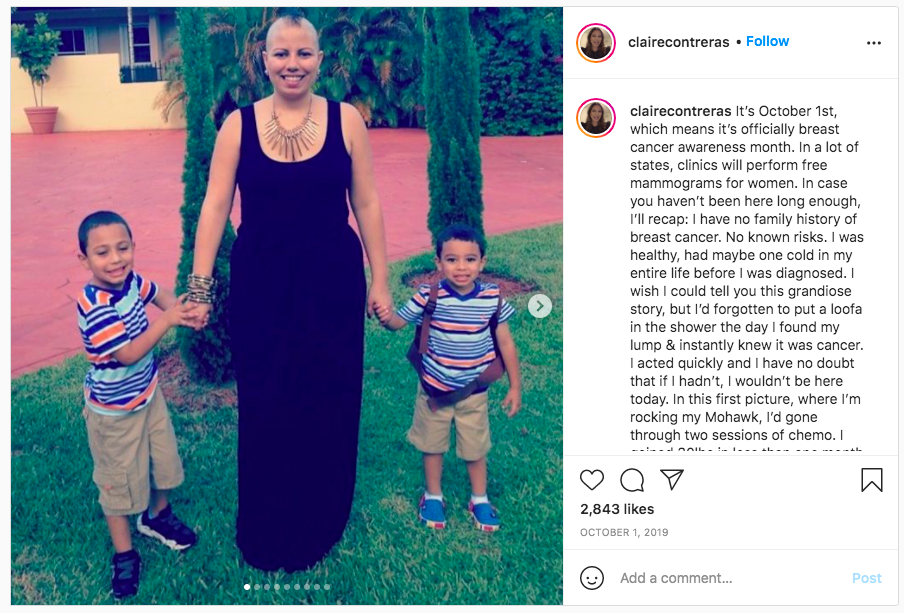
I use social media as a get-to-know-me tool. I find that a lot of people follow me there because they want to know what I’m doing or what my thoughts are on certain things (as random as they may be). I’ve also built a following from my cancer journey, which I shared from the time I was diagnosed in 2014 to today. I keep them up to date with my health and some of my personal life because I think it’s important for people to know that they’re not alone. Sometimes it’s hard to conceive that others are going through struggles when you see them smiling all the time in pictures, so I keep it real with them.
What (or who) are the resources you go to to keep up with industry trends and to make your books as polished and professional as possible without the infrastructure of a traditional publishing house?
I don’t follow trends. I write things that I can’t stop thinking about and try to package them in a way that’s appealing to the masses, but as far as trends go, they are constantly changing and I can’t keep up with most of them so I try not to pay attention to them. I pay attention to the things I can control, which means making sure I have good editors, proofreaders, and cover designers.
When can members expect to see the next book in the series on NetGalley?
I don’t want to say much because I don’t want to spoil it, but I will say . . . You’ve been summoned 😉
Claire Contreras is a New York Times bestselling author who
traded her psychology degree to write fiction. Don’t worry, she still
uses her knowledge on every single one of her characters. She’s a breast
cancer survivor (x2), who was born in the Dominican Republic, raised in
Florida, and currently resides in Charlotte, NC with her husband, two
adorable boys, and French bulldog.
*Interviews have been edited for clarity and length.
As a self-published author, you might think that the hardest part is over once the book is complete. But once a book is ready to go out into the world, it still deserves the same level of attention and care that you gave it throughout the writing, revising, proofreading, and design process. As an author, you might not have formal marketing or publicity training, or the budget to hire someone who does have that kind of experience. But you can still give your book a professional launch.
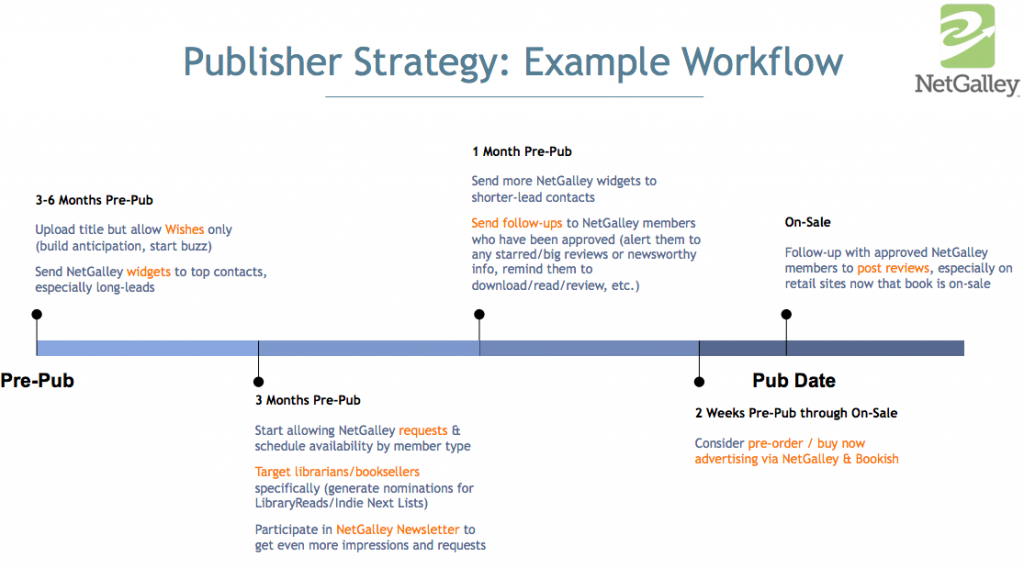
While every book is unique and will have slightly different goals and timelines, we’ve used our experience working with everyone from indie authors to the largest publishing houses to develop a framework that you can use to guide your own unique launch strategy. You can also download this launch schedule.
The most important takeaway from this timeline is to plan your promotions a few months before your pub date to create ongoing and increasing excitement for your book.
Different contacts should be given access to your book at different times, according to their needs. For example, any major media contacts will need a much longer lead time than a Goodreads reviewer or BookTuber. Plus, if you can secure early media attention, it’ll be easier to get interest from those consumer reviewers. Work towards getting some early blurbs, and then use those blurbs to bring in new readers, on NetGalley or elsewhere.
And once you have made initial contact with these different kinds of readers – consumer reviewers, digital influencers, librarians, media, and booksellers – be sure to follow up with them right before pub date. Put your book back on their radar, encourage them to share their reviews on retail sites and with their audience, where applicable.
When you put your book out into the world you are hoping to find its biggest champions and most devoted fans. But, of course, no one book will appeal to everyone. Especially for first-time authors, receiving critical reviews and feedback can be frustrating and disheartening. It never feels great to read a critical review of your work, but there are some important things to keep in mind to help you consider critical reviews in a constructive and level-headed way.
Look at reviews for similar titles
Photo via Upsplash
If you want to get a sense of what kind of feedback you can expect for your book, take a look at how NetGalley members and consumer reviewers have responded to similar books. Browse the catalog to find these and you’ll start to get a qualitative idea of the spread of opinions when looking at comparative titles to your book. Make sure that when you are looking at reviews of comp titles – either on NetGalley or elsewhere – that you are looking at books in a similar genre and from a similar author or publisher. For example, if you are a debut thriller author working with an indie publisher, try looking at thrillers from other indie publishers rather than books written by well-established authors at the biggest publishing houses. Plus, for an extra reminder that even the most beloved books still get critical reviews, check out these one star reviews of The Great Gatsby.
Remember that star ratings are relative
Star ratings are entirely subjective. For some reviewers, a 5 star review might be reserved for their absolute favorite books – the ones they’d bring to a desert island and the ones that they give as gifts to friends year after year. For others, the same star rating might that a book was an enjoyable afternoon diversion. The same general principle should be applied to lower star ratings, as well. A 3-star review might be a positive review in the eyes of the reviewer, full of thoughtful and useful observations about your work.
We know it’s hard not to get hung up on these numbers when ratings may affect algorithms for discovery on certain platforms (this is not the case on NetGalley), but keep in mind that reviews and ratings are not something you can police. Since they are subjective, each reviewer has to make this decision for themselves.
Resist the urge to respond
When you read reviews, you might be itching to reach out the reviewer and tell them why their interpretation is misguided or to defend your book. This is a perfectly natural desire, but we recommend resisting the impulse. We all know that tagging authors in critical reviews is poor internet etiquette, but it does happen. If you get tagged in a negative review on social media, the reviewer who is tagging you is more likely to be looking for some social media attention rather than providing you with meaningful feedback. Don’t feed the trolls. Plus, when authors try to defend their work on social media, it often ends up reflecting poorly on the author, rather than prompt a thoughtful consideration from the reviewer. This urge affects established authors as well as debut authors. Even Zoë Heller, author of Notes on a Scandalwrote in the New York Times that she has mentally composed replies to the critics who she feels have slighted her. But, crucially, she has never sent them.
Glean valuable data in critical reviews
Sometimes critical reviews can help you better target the right kinds of readers, or tweak your marketing copy. For example, if you have been promoting your book as YA, but critical reviews are saying that it’s too young for a teen audience, consider positioning it as a Middle Grade book instead. Or, if reviewers are expressing surprise at the content, consider revising the way you are describing your book. You want to entice readers, but you also want to find the readers who are most likely to enjoy your book as it is.
DNF reviews contain valid feedback
NetGalley Sales Associate Katie Versluis works with our community of self-published authors. She has seen first-hand how authors have responded to DNF reviews (Did Not Finish reviews). She told NetGalley Insights that while DNF reviews “may sting after the years of work you just put into this book, they can actually be quite useful to you as you position yourself in the book world.” She advises authors to think about why a reviewer decided not to finish their book. “[Your book] may simply not have been their cup of tea, but [a DNF review] may also bring an entirely new understanding to your book that you hadn’t thought of yourself. In the past, I’ve worked with an author who did a complete re-editing on their book because an early DNF review alerted them to language they didn’t realize was offensive. The review certainly wasn’t “nice” to receive, but it became a blessing in disguise.”
At NetGalley, we recognize that DNF reviews can be valuable, but that they don’t always provide the same kinds of intel as regular, full reviews. That’s why if a NetGalley member does not finish a book, they can close the feedback loop by selecting the Will Not Give Feedback option. This allows them to move a title off their Shelf and give authors and publishers the reasons why they did not finish a given book.
Give yourself time to develop a thick skin
Receiving critical reviews are always challenging, but it will get easier over time. Be patient with yourself when you find yourself dwelling on critical reviews. Talk to your editor, agent, publicist, and fellow authors to get tips on how they recommend handling critical reviews, and learn from their experiences. Remember, you are looking to build a community of readers who love your work, not convincing people that their opinions are mistaken. Try to focus on the positive reviews!
Stuart Evers, author and Assistant Director of NetGalley UK keeps in mind a quote from Yann Martel, author of Life of Pi. Martel made a distinction between good-bad reviews and bad-bad reviews. Good-bad reviews point out genuine flaws and can be useful, if uncomfortable to receive.
Evers told NetGalley Insights, ”I found this very helpful when dealing with negative reviews – and also helpful when reading any review I receive. A good bad review essentially says, I understand what the author was trying to achieve, but I don’t think they managed it. These can be difficult to read, but ultimately they can offer some insight into your work you hadn’t seen before. Use this to improve your writing; don’t sit there and mope about it. Better a good-bad review than a bad-bad review…A Bad-bad review is when a critic doesn’t get what you are trying to achieve, measures it against the wrong criteria, or fundamentally doesn’t engage with the text. You’re going to get some of these, and these are the most hurtful. However, they can be dismissed precisely because your book is not at fault. It might seem unfair, it might seem vindictive, but you just have to remind yourself: this is a bad bad review and I can dismiss it.”
Above all, professionalism is key
Remember to treat anyone you encounter during the publication process as a fellow publishing-industry professional. This includes the editors, designers, and beta readers you work with before your book is finished, as well as any reviewers or media who you encounter in the pre-pub or post-pub phases. Reagan Rothe of Black Rose Writing works with over 500 authors and shared this framework, “Try to take a professional approach and keep your choice of words constructive. Think about how you would speak to a coworker, your boss, an employee, or even a respected family member.”
Even if you are frustrated or feel that you have been treated unprofessionally, keep an even tone in any communication you have about your book. As an author, you have now joined the publishing industry as a whole, which means that everyone from your publicist to book reviewers and even booksellers are, in a sense, colleagues. Be sure that all of your communication with them reflects that understanding.
How have you learned how to handle critical reviews? Did you receive some crucial advice early in your career that has helped you? Share your strategies with us at insights@netgalley.com.
For independent authors who are publishing your own work, it can be hard to know how much to spend, and where to spend. Can you publish a book using only free tools and services? Do you need to make a serious dent in your savings account to get your book into the world?
NetGalley and the IBPA worked together to gather information from an engaged and thoughtful group of authors about how much they budget for their books, where that budget gets allocated, and where they find the most value. We hope that this information can help other authors strategize for their own books, getting the most value out of their budgets.
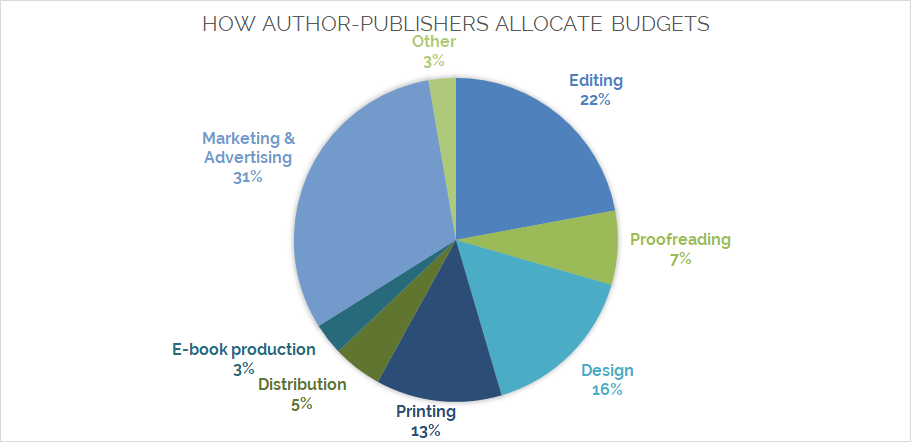
These authors understand that they need to invest in their book, and that the biggest and most valuable expenses will be editing, design, and advertising & marketing in order to give their books the most professional launch possible.
Thank you to the thoughtful authors who shared their budgets, strategies, and lessons learned about the finances of independent book publishing.
Only 11% of respondents reported spending less than $1,000 on their books, indicating that the most active authors understand that they need to invest at least a bit in their books. The majority of authors spent between $1,000 – $6,000 on their books, with the $1,000 – $3,000 bracket accounting for 28% of the overall responses.
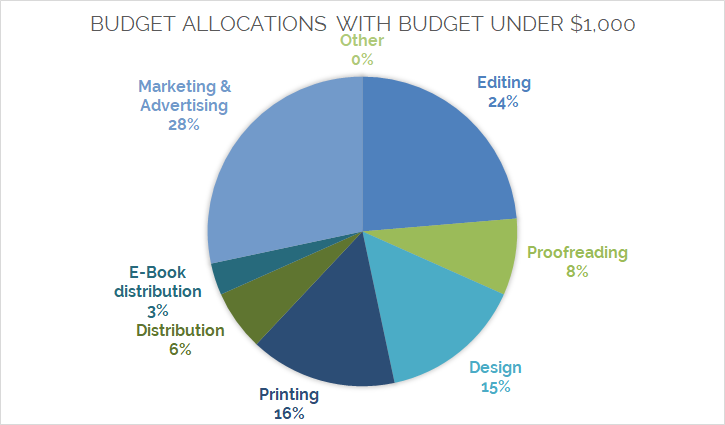
Across budgets, most authors spend the bulk of their budgets on a combination of marketing & advertising, editing, and design.
You can see how authors allocated budgets within different budgeting ranges here:
As authors’ budgets went up, they increased the amount that they spent on marketing and advertising. Other line items – print distribution, proofreading, and ebook distribution – stayed relatively stable across budget brackets.
Editing was the most valuable line item to 41% of respondents, followed by marketing and advertising (26%), then design (21%). We’ve broken down how they valued these three categories by budget spend below.
Editing was the most valuable line item to 41% of respondents, followed by marketing and advertising (26%), then design (21%). We’ve broken down how they valued these three categories by budget spend below.
As an author’s budget goes up, marketing & advertising became more valuable to them. And for the respondents with more limited budgets, they found the most value in first editing, then design.
We also asked how authors determined what made a line item valuable to them. Surprisingly, it wasn’t always sales. Only 17% of respondents used sales as their primary marker of value. Instead, 31% of respondents found value when they could see that an expense had made their book a higher quality product. We can see this correlated to the value found in design and editing. Authors were most interested in making their book look – both inside and out – professional and polished, and then putting eyes on it.
When asked what they would spend less money on in the future, 17% or respondents said marketing & advertising and 15% said printing. But, even in a question about spending less, 12% responded to a question about lowering their budget by saying it would stay the same, 7% said they would spend more. We see again that authors understand that they will need to invest in their books in order to make them the best product that they can be, and to then help their books find readers.
NetGalley and the IBPA are both dedicated to helping author-publishers. Through NetGalley’s partnership with the IBPA, as well as through direct work with independent authors, we help author-publishers reach our engaged NetGalley community. Plus, authors find many tips and author-focused case studies here on NetGalley Insights. The IBPA has programs, events, webinars, and resources for author-publishers, as well as other segments of the industry. Learn more about the IBPA here, including special NetGalley packages available to IBPA members.
Survey collection: NetGalley and the IBPA collected survey responses from 137 author-publishers between May-June 2019.
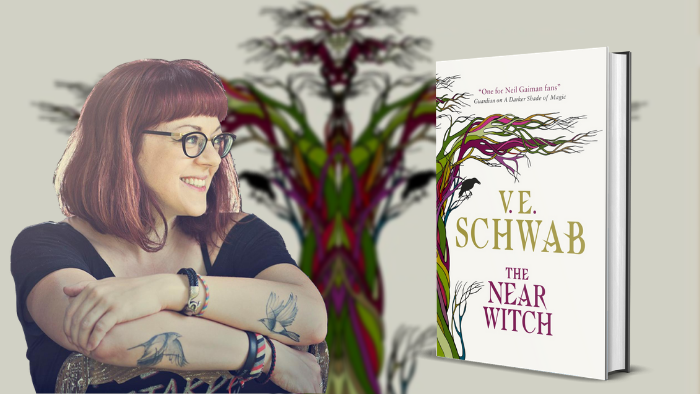
Earlier this year, V.E. Schwab’s debut novel The Near Witch was republished with a brand new cover and bonus short story. For the readers who have flocked to Schwab’s Shades of Magic and Villians series, it’s been an exciting opportunity to visit their favorite author’s first book after falling in love with her other work. For Schwab, it’s been a time to reflect on The Near Witch’s initial run and how it ultimately impacted the way she told stories. Here, Schwab opens up about finding her readership, writing for herself, and the advice she gives to all debut authors.
Bookish: Your debut novel The Near Witch was recently rereleased with a brand new cover. What’s the rerelease been like for you?
V.E. Schwab: It has definitely made me more introspective. I’m proud of how far I’ve come. A decade has passed between writing that book and my work on my next novel, The Invisible Life of Addie La Rue.
I assumed that The Near Witch was going to roll out very quietly back into the world. Instead, Titan, my UK publisher, took a book that never really had a fair chance and they’ve given it everything debut me would’ve dreamed of. They treated it like a new release and gave it so much attention and fanfare. I’m elated.
This is, of course, the great paradox. Debut me never would’ve gotten any of these things.
I’m very honest about that to aspiring writers. Nothing about this book changed. Everything about the way this book was treated changed.
Bookish: In the book, the Near Witch rises up after being buried. It seems to mirror this book’s journey.
VS: I’m calling this book tour the resurrection tour. It’s very weird and surreal. It’s hard for me to talk about with any objectivity. I’m so grateful.
I’ve come a long way but it wasn’t a straight line. The Near Witch is a quiet book that originally came out at a time in publishing when everything that was being touted was very loud and it wasn’t finding an audience. I now have a weird, dark, morbid audience and I’m very fortunate to have found it, but it took time.
Readerships take time to build and publishing isn’t always great at the long con. After The Near Witch and the two books in The Archived came out, I was very jaded. I was falling out of love with writing because writing is beautiful and publishing is not. I said, “I’m doing everything I can to make other people happy and it’s not working. I don’t know if I have a future in publishing but I’m not going to go down on someone else’s ship. I’m going to write what I want to read. Audience of one.” What happened was Vicious, a book that was never supposed to be read by anyone. Because of that I didn’t pull any punches. I made it weird, mildly sadistic, and as morally complicated as I wanted… and that book found its readers. What I discovered is that in writing for myself I found my readership, my dark, devoted readership. My rule from then on was I write for an audience of one first, I write what I want to read. If I do that and it appeals to other people, that’s wonderful. It it doesn’t, I will not feel like I wasted any time. I never looked back after Vicious.
My rule from then on was I write for an audience of one first, I write what I want to read. If I do that and it appeals to other people, that’s wonderful.
Bookish: Are there any elements of The Near Witch that you now recognize as a hallmark of your work?
VS: In The Near Witch, you can see the motifs I would go on to explore a decade later. I was on a panel several years ago with Melissa de la Cruz
and she said that she had been told that writers tell one story. That
no matter how many books you write, you as a writer are exploring one
story. If you look at all of my books, they’re about insider/outsider
culture and feeling like you don’t belong. That motif is in every single
one of my stories. It’s interesting to look back at something like The Near Witch
and see that 21-year-old me had a very tentative touch. I was just
starting to learn and just starting to push. The difference between
Lexie in The Near Witch and Marcella in Vengeful is the difference between 21-year-old me pushing back against society and 31-year-old me burning society down.
Bookish: This rerelease of The Near Witch is going to introduce some of your readership to your debut novel, while other readers may be picking it up without having read your other work. For new readers, where do you recommend they go next?
VS: It’s so hard. There’s the Marvel velocity where I’m like go in order: The Near Witch is the first one and none of the other books would have happened without it. I also have a tweet that says if these are things that appeal to you read this—it’s like a choose your own adventure game.
It’s also hard because books are static and people are not. If someone reads my work at 20 versus 30 they’re going to come to it with a different set of life experiences. I have to be the right version of myself to write a book, someone has to be the right version of themselves when they read it. As a writer, I will only ever bring half of the equation, the reader brings the other half. Everything the reader brings will determine if they enjoy one of my books. I want everyone to try everything knowing they’re not going to love everything and equally that something might surprise them.
Bookish: You have some stellar first lines. What do you think makes a good first line and how do you go about crafting yours?
VS: I spend a lot of time on first lines. I think it goes back to my poetry background. I don’t judge books by their covers, their titles, or their jacket copy because authors usually don’t have a say in any of those. As a reader, the first thing you encounter that an author has complete control over is the first line. I judge books very strongly by their first page because I want to get a sense of the voice. The first line needs to tell me not only something interesting, kind of like the opening line of a joke, but it also needs to tell me the tone of the book.
I will agonize over a first line. I’ve tried very hard to make the first line in each of my books be a microcosm of the first page in that I want them to tell you what kind of book you’re stepping into. The first line of Addie La Rue is “This is how it starts” and that becomes the first line for each of the sections of that book until we reach “This is how it ends.” I’ve always really wanted to begin a book with that line.
Bookish: Out of all of the characters in your other books, who do you think The Near Witch‘s Lexi would get along best with? What about Cole?
VS: Oh god. Let me think. I always joke that I make female Slytherins and male Hufflepuffs.
I tend to write this female transition: You watch Lexi become Mackenzie from The Archived and Mackenzie grows up a little bit and becomes Kate from This Savage Song, Kate evolves into Delilah Bard from Shades of Magic. I’d like to put Lexi with Delilah Bard. I feel like Delilah Bard would show Lexi her next evolution.
In the same way, This Savage Song’s August is the Super Saiyan version of Cole. He’s the glow up. But not in a pretty way, he’s a glow up of feelings. Cole was my first shot at the very emotionally aware boy and August takes that to 11.
Bookish: Is there any piece of advice that you don’t see being given to debut authors that you wish you could give them?
My advice is to work on your next book and remember that for the vast majority of us, careers are not made by a single novel but by a body of work…You can’t predict which book is going to blow up.
VS: My advice is to work on your next book and remember that for the vast majority of us, careers are not made by a single novel but by a body of work. The more pressure you put on a single novel, a debut especially, the worse it is going to be for you. You can’t predict which book is going to blow up. Shades of Magic, my most popular series, starts with my eighth novel. The seven books that came before that were instrumental in building my career. Every single one of those books was a brick in the wall.
Publishing has a really high mortality rate and you need to develop healthy habits. I’m an ancient veteran now. My debut year had 196 young adult and middle grade debuts, and there are fewer than a dozen of us publishing now. Only three of us are bestsellers. The curve is not in your favor as a creative. I think it’s best for everyone to have more information, more balance, more support across publishing generations.
You have to go in armed with knowledge. Publishing is very short-term minded and that’s very often to the detriment of books. It’s the nature of the industry to only be interested in the shiny and the new. As a reader, I find things that are five, ten, 20 years old. I don’t come to them when they’re brand new. We’re missing out on a lot of really great things in the interest of always trying to chase the new. It’s unfair because nine times out of ten the books that don’t get a chance are by diverse authors. It’s becoming even more vital to have passionate bloggers, reviews, and sites that are devoted to finding really good stories whether that story is a day old or a decade.
Bookish: On social media, you’re open about the challenges of being a writer and the demands of the industry. How did you get to a place where you felt comfortable sharing that?
The problem with not being honest and open in a creative industry is that when you begin to struggle, and we all do, you take it as a reflection of you, not of the fact that creating is hard.
VS: I’m very fortunate that I’m still in this industry and can have that kind of retrospective. Transparency and openness have always been my policies because I started out so young. When I wrote The Near Witch at 21, it was a time when no one was being honest. The problem with not being honest and open in a creative industry is that when you begin to struggle, and we all do, you take it as a reflection of you, not of the fact that creating is hard.
That’s what was happening very early on when The Near Witch wasn’t going well. I thought it must be me. Then I went to a writing retreat and all of these authors who were only talking about the positives online were sitting around talking about how hard everything was. I remember thinking that if I had known these other authors were also struggling, I would have felt so much less alone.
I meet a huge number of aspiring authors and authors new to the industry who come up to me and say thank you for making me feel less alone in how hard this is. And that’s really the only reason that I do it. There’s this pressure to romanticize the creative process. I didn’t want to perpetuate this myth. I wasn’t going to let anyone else come up feeling as alone as I felt.
Bookish: You’re currently working on a book called The Invisible Life of Addie La Rue. How’s it going?
VS: It’s trying to kill me on a daily basis. I hit this point in every single one of my book processes where I want to delete the book and move to Iceland to raise goats. But Addie is a really specific beast in that I’ve been working on it for so long and it’s lived in my head for so long. I needed to wait to write it until I was emotionally and craft ready, and I am those things now, but it’s the longest a story has ever sat with me. When you’ve had the first draft in your head for eight years, you want to do it right the first time which is not possible.
The internal pressure to do it right is way higher than with any of my other books. I’m trying to smooth the concrete before I pour it. As a writer, I revise as I go. I will work on each chapter until it’s ready. As a result, what I turn in to an editor looks very polished, but the story isn’t flawless. I’m very fortunate to have editors who can see past the polish, and while it sucks to have to tear things down to studs even when there’s really nice wallpaper, I think it is important to have strong editors who can see through that.
Bookish: Are there any books you’ve read that were quietly released into the world that you wish received more attention?
VS: Certain Dark Things by Silvia Moreno-Garcia.
It’s wonderful and I want the world for it. It flew under the radar but
I love everything about it. I recommend it constantly.
Victoria “V.E.” Schwab is the #1 NYT, USA, and Indie bestselling author of more than a dozen books, including Vicious, the Shades of Magic series, and This Savage Song. Her work has received critical acclaim, been featured by EW and the New York Times, been translated into more than a dozen languages, and been optioned for TV and Film. The Independent calls her the “natural successor to Diana Wynne Jones” and touts her “enviable, almost Gaimanesque ability to switch between styles, genres, and tones.”