
Case Study: Pisces Hooks Taurus by Anyta Sunday

How Anyta Sunday incorporated NetGalley into her post-pub strategy to give her astrological romance a longer tail

On NetGalley Insights, we highlight the successes of NetGalley publishers and authors, and share some of their strategies. Today, we’re talking with Anyta Sunday about her 2018 MM romance Pisces Hooks Taurus, currently available on NetGalley.

Learn why Anyta Sunday lists her titles on NetGalley after they publish, how she generates keywords for her books, and why it’s important to tell romance readers exactly what kinds of tropes they can expect in one of her books.
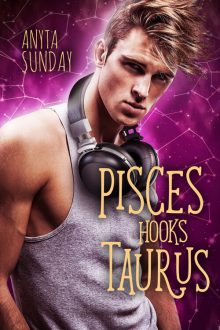
Our audience of publishers and authors is always eager to learn more about how others are planning their publicity and marketing efforts on NetGalley. Your current title listed on NetGalley, Pisces Hooks Taurus, began its lifecycle on NetGalley at its pub date. Tell us how you came to use NetGalley as a post-pub strategy and why it works for you.

I work with a PR agency to organize blog tours around the release of my books, also handling distribution of ARC copies to interested bloggers and reviewers. These bloggers typically already know me from previous books, while NetGalley allows me reach new audiences.

Using NetGalley starting with the pub date helps me to spread reviews and buzz over a longer time period. [Here are] two reviews [that came in] in over a month after release: Reviews for Those Who Love a Good Book and Amy’s MM Romance Reviews.

Which segments of the NetGalley community have been most important to you and why? How do you go about reaching them?

Most requests for my books come from Reviewers. I post about new titles available on NetGalley via social media and in my newsletter. [You can see an example of this] for my older release, Scorpio Hates Virgo and on my website.

On your Title Details page for Pisces Hooks Taurus, you list the tropes (friends-to-lovers, slow burn, will-they-or-won’t-they) and genres (new adult, light-hearted contemporary gay romance). It’s a great way to give prospective readers a quick snapshot into what the can expect from the book. Describe your strategies for your Title Details page to drive requests and reviews.

I try to optimize the NetGalley Title Details page in the same way as the sales page for my book on retail channels like Amazon; a snappy blurb in the same style and voice as the book, followed by a clear description of what the reader will get. This is particularly important in the romance genre where readers are often looking for specific tropes (and trying to avoid others). Romance is a big genre with many new publications, so communicating clearly what readers can expect helps a book to stand out. Also, if the book is part of a series, I mention whether you need to know the previous books or if it can be read as a standalone.

How did you engage with members who requested access? Did you follow up with them via email?

I make use of the Approval Email feature on NetGalley to engage with members who requested access. In this mail, I thank the reader and encourage them to crosspost their reviews. If the book is part of a series, I also offer the other books for review.

Tell us more about how you leverage your NetGalley listing outside the site.

I mention the availability of the NetGalley listing in my release publicity, and feature it on the book’s detail page on my website.
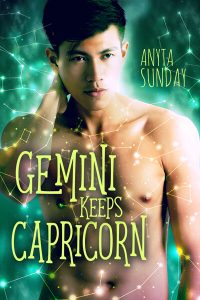

Your Signs of Love series, of which Pisces Hooks Taurus, is the fourth installment, taps into the current spike in public fascination with astrology. How do you use this to your advantage when finding new audiences?

I use astrology-related keywords in the advertising around the Signs of Love series to reach new audiences. I focus on Facebook and Amazon ads at the moment, and for both the targeting is key. Besides reaching fans of gay and MM romance by using related keywords, I do the same for astrology-related keywords.

What is your top tip for authors listing an individual title on NetGalley?

I find that customizing the approval email is a powerful way of following up with members requesting a book, so I would encourage using this to maximum effect: trying to connect with the reader, thanking them for requesting your book, and potentially offering other ARCs. For Pisces Hooks Taurus, I let readers that request the ARC know that there are three more books in the series and have received multiple requests for these older books as well.

Anyta Sunday is a BIG fan of slow-burn romances. She reads and writes characters who slowly fall in love. Some of her favorite tropes to read and write are: Enemies to Lovers, Friends to Lovers, Clueless Guys, Bisexual, Pansexual, Demisexual, Oblivious MCs, Everyone (Else) Can See It, Slow Burn, Love Has No Boundaries. She writes a variety of stories: Contemporary MM romances with a good dollop of angst, contemporary lighthearted MM romances, and even a splash of fantasy. Her books have been translated into German, Italian, French, Spanish, and Thai.

Follow Anyta Sunday on Twitter, Facebook, and Instagram

See all of her titles on her website, including purchase links.

Interviews have been edited for clarity and length.

Read the rest of our case studies, featuring authors, trade publishers, and academic publishers here.

Divider

Case Study: Glimmerglass Girl

How an indie author’s debut chapbook became one of the most requested poetry titles on NetGalley

On NetGalley Insights, we highlight the successes of NetGalley publishers and authors, and share some of their strategies. Today, we’re talking with Holly Lyn Walrath. She is a poet and author whose work has appeared in Strange Horizons, Fireside Fiction, Luna Station Quarterly, Liminality, and elsewhere. Glimmerglass Girl, published by Finishing Line Press, is her first chapbook, and is one of the most requested poetry titles on NetGalley.

Glimmerglass Girl is your debut book of poetry (on sale Aug. 3, 2018). Tell us a bit about your overall strategy for promoting your debut book. Some authors find it challenging to build a community of advocates and influencers before they are a well-established name.

When I set out to promote Glimmerglass Girl, my main goal was to get pre-orders, so my promotion period started sometime in April. I think that was very helpful because starting out that early meant I had plenty of time for outreach. Beyond reaching out to my existing network of friends and fellow writers, I spent a lot of time contacting poetry reviewers and booksellers. Since my book is short and illustrated, I focused on booksellers that were local to the Houston area or interested in indie and rare books or zines. Because my book is being published by a small press, they don’t have the resources bigger publishers have. It is quite a challenge when you’re just starting out. There were a few times when I felt overwhelmed by self-promotion! But, I was surprised by how kind and supportive the poetry community is.

How has your experience launching your own book differed from being published alongside other authors in collections?

When you’re publishing a poem or short story in a collection or anthology, you have the support of every author who’s been published alongside you. They all share the book with their network and that has an amplifying effect. But when you’re publishing your own book, it’s just you! (Or in my case, me and Finishing Line Press, my publisher.) You have to rely on yourself a lot more.

Our audience of publishers and authors is always eager to learn more about how others are planning their publicity and marketing efforts on NetGalley. Where does NetGalley fit into the overall strategy and timeline for Glimmerglass Girl?

At first I wasn’t sure what NetGalley would do for my book, but I decided to try it out anyway. I work as a freelance editor, so I’ve seen clients use NetGalley to varying degrees of success. For me, listing my book on NetGalley was an extra push to get the word out about my book and a bit of an experiment. But I think that experiment has really paid off. It’s also been so much easier to get ARCs into the hands of folks who want to read the book—I just send them a link to NetGalley.

Which segments of the NetGalley community were most important to you (ie. Reviewers, Librarians, Booksellers), and why? How did you go about reaching them?

The biggest reward has been in receiving reviews on Goodreads, Blogs, and Twitter. Because I started early, I have a good amount of ratings on Goodreads and my book isn’t even out yet! It’s also very useful to have a list of reviewers that I can contact when the book comes out and ask them to review on Amazon and other retailers.

How did you optimize your Title Details page to drive requests and reviews for your book?

I included a short description with a few blurbs and an excerpt from an early review of Glimmerglass Girl by VIDA: Women in Literary Arts. I was careful to link to my Instagram, Goodreads, and Twitter accounts with the #GlimmerglassGirl hashtag so readers could easily tag me online, allowing me to reshare their posts about the book. I also included a press kit from my publisher with additional information about the book.

We loved how you linked to Glimmerglass Girl’s Title Details page on Twitter, bringing attention to your title using NetGalley, for an audience that might not already be on NetGalley. Why was this audience important to you?

It’s pretty much ingrained in me that when I have news, I share it on Twitter (I’m addicted!). I noticed that any reviewers use the #NetGalley hashtag on Twitter when they review an ARC. So it made sense to me that that audience would also be scrolling through the hashtag to look for new books to check out. There’s also a fantastic audience of writers, readers, and fans of books on Twitter via the #amwriting, #amediting, and #amreading hashtags, who don’t know about NetGalley but would love to be a part of the community here.

*for more information about incorporating hashtags into your marketing strategy, check out this 3-minute video.

Tell us more about strategies you used to leverage your NetGalley listing outside the site.

One strategy that’s been super fun is reaching out to Instagram’s book community. There are readers who post beautiful, artful, enchanting posts with their current TBR pile or reading obsessions. I asked a few of them to check out my book on NetGalley and got a lot of responses back from people excited to be offered a free ARC. I think that’s a pretty unique way to reach readers. I’ve also added the NetGalley link to my website and Press Kit.

Which NetGalley marketing tools did you take advantage of, and how did you use them to leverage interest?

I’ll be ramping up my NetGalley marketing in August when the book comes out. Glimmerglass Girl was chosen as a featured title as part of the “debut authors” month so it will appear on the front page of NetGalley. I’m stoked for this opportunity and curious to see how it goes. I think this last burst of interest should help get the book in front of more readers.

How did you engage with members who requested access? Did you follow up with them via email?

I made sure to follow members who requested access to Glimmerglass Girl on Goodreads and Twitter and share any blog posts to my website. I plan on reaching out to all my members who requested access with an update when the book is live to let them know they can order it, review it on Amazon and other retailers, and thank them for reading. I’m grateful for this chance to get to know other lovers of poetry, but I didn’t want to bombard them with emails either.

How will NetGalley be incorporated into your post-pub strategy?

My book will be on NetGalley for about two months post-publication and my hope is that this will help garner some Amazon reviews . . . for the coveted algorithm! I’m also planning a Goodreads Giveaway during August and I’ll probably pair this with NetGalley to let anyone who enters know that they can also get a free copy while they wait (and vice-versa with members who’ve already requested my book and might want to enter the giveaway.)

What is your top tip for authors listing an individual title on NetGalley?

Make sure to check out the other titles in your category. Read their description and model your title page off the books that you love and that are successful. I think readers really rely on the description to know whether they’ll like a book, so having some comp titles (books similar to yours) is helpful. In the case of Glimmerglass Girl, I’d love to reach the audiences of authors like Rupi Kaur and Lang Leav—women readers who are sure of themselves and maybe a bit creative too. Don’t be afraid to name-drop similar authors!

Glimmerglass Girl comes out on August 3 from Finishing Line Press. You can pre-order it here.

*Interviews have been edited for clarity and length.

Divider