Case Study: Chilly da Vinci

How NorthSouth Books used timely subject matter, modern visuals, and Read Now availability to give pre-publication buzz to the story of an inventive penguin

On NetGalley Insights, we highlight the successes of NetGalley publishers and authors, and share some of their strategies. Today, we’re talking with Heather Lennon, managing director at NorthSouth Books.

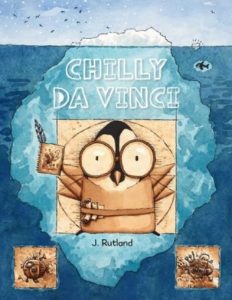
Below, learn about how she used NetGalley to gather over 100 pre-publication reviews for Chilly da Vinci by Jarrett Rutland. Chilly da Vinci tells the story about a young penguin inventor, tapping into current trends in STEM education for young readers, as well as the maker movement, all with a modern and appealing visual style.

The market for children’s books is especially hot right now. What do you think is unique about this particular segment of the publishing industry, as it relates to marketing and publicity?

Picture book publishing is very interesting in that it’s a visual medium, art and story together. We highlight the illustrations and the story in every book. Right now, I think that is a huge positive as far as coverage in blogs, Instagram, online and in print review journals. For Chilly Da Vinci, Jarrett Rutland’s artwork is so fun and striking–it just pops off the page, so I think it’s very appealing to reviewers.

Where does NetGalley fit into the overall strategy and timeline for Chilly da Vinci?

NetGalley is very important to NorthSouth Books! We always offer our lead titles on NetGalley. We aim to offer them 3-6 months in advance of publication. It’s really helped us reach readers, grow our brand recognition, and amass reviews online.

Which segments of the NetGalley community were most important to you? How did you go about reaching them?

Asking who is most important is like asking my mom to name her favorite child! We love them all. I will say….librarians have been a big part of our publishing program forever. Booksellers are enormously important in the life of a book–we are small enough that we never take a book being in-store for granted. Bloggers, tweeters, instagrammers help us get out the word!  This is our world, and we’re lucky to be a part of it.

Chilly da Vinci is a Read Now title. Tell us why that was the right decision for making the title available widely to NetGalley members.

I don’t set a lot of hoops to jump through to get to our titles on Netgalley. I am thrilled that NetGalley members want to open the book. I truly believe, if you read our books, you will enjoy them, you will recommend them and review them. So Read Now is always my preference.

Most NetGalley members who clicked to read Chilly da Vinci listed the cover and the description as the reason for their interest. It comes as no surprise, given that the author is also the illustrator! Tell us about how you created compelling copy for the Title Details page.

It was important to everyone at NorthSouth that we convey that Chilly is a do-er, that this book would appeal to the maker movement. And that Chilly never gives up. And then in general, I think one of the most important things is clean, readable copy, especially online. It’s so basic, but it’s important to make sure that your info has uploaded correctly–not doubled or tripled or cut off in some weird way!

Tell us more about strategies you used to leverage your NetGalley listing outside the site.

Every book has a tip sheet that is fed out online. The sales reps use it to sell the book, and it gets uploaded to Edelweiss–which lots of bookstore buyers use for their job. Whenever we upload one of our books on to NetGalley that is a sales bullet that’s fed out to the world.

How will NetGalley be incorporated into your post-pub strategy?

We will be following up with everyone who reviewed Chilly with  a pre-on-sale newsletter with activities and info about Jarrett Rutland’s events. The book launch will be held at an ice cream shop in Asheville on Saturday, Dec. 8. We hope that NetGalley members who loved the book will attend.

What is your top tip for publishers to use NetGalley to its full potential?

Download the reviews and keep those members in mind as you work on future books. It’s not just seeing what people think about this book, it’s being able to reach out to them for the next book as well.*

*NetGalley recommends using the Detailed Activity Report or the Feedback Report to see which NetGalley members are requesting, reading, and reviewing your titles.

Heather Lennon is the managing director of NorthSouth Books.

Chilly da Vinci goes on sale Dec. 4. You can preorder it here.

Interviews have been edited for clarity and length.

Divider

BookTube Basics for Marketers

What is BookTube?

BookTube is the segment of the YouTube community dedicated to reading and reviewing books. Like any other community on YouTube (like gamers or beauty bloggers), BookTube has its own celebrities, norms, and unique quirks. The bulk of BookTubers read primarily YA novels, although not exclusively. BookTubers are enthusiastic, and tend to be quite high-energy.

According to YouTube, the BookTube community has over 200 million views of videos, and engagement is growing. Comparing July 2017 to 2018, engagement with BookTube videos is up 40%. This demonstrates both the reach of BookTube, and its effectiveness. Because of the intimate nature of these videos, reviews feel like recommendations from a friend rather than from an impersonal cultural gatekeeper.

Who are BookTubers and their audience?

Most BookTubers are millennials, and, like the rest of the trade fiction and YA market, skew female. The BookTube audience comprises primarily millennial and teen book enthusiasts. Marketing teams at children’s or YA publishers and imprints work with BookTubers to gain access to an audience of enthusiastic young readers who are already active on YouTube, as opposed to other media outlets, or even other social media platforms (i.e. Facebook or Twitter).

What is a BookTube video?

There are many different kinds of BookTube videos. Here are a few of the most common:

  • Book Haul: The BookTuber will go through the pile of books that they recently received, or purchased. It’s a roundup of what titles they are most excited to read.
  • Book Tag: Book Tag videos are centered around a specific theme or challenge, for example “Out of My Comfort Zone.” A BookTuber will respond to all questions in the tag, and then tag other BookTubers to participate as well to keep the conversation going.
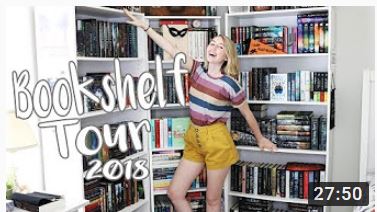
  • Bookshelf Tour: BookTubers show their own collections of books. These videos show how a BookTuber organizes their books; by color, genre, To Be Read, and more.
  • Readathon: Readathons are interactive reading marathons hosted by one or more BookTubers. Often they have special challenges and rules, and integrations with other platforms, like Goodreads and Twitter. These readathons take place over set period of time The BookTubeAThon is an annual readathon hosted by multiple BookTubers.
  • Reviews: BookTubers give their impressions of a book, including a summary. Similar to any other kind of book review.
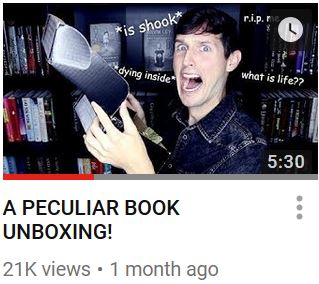
  • Unboxing: A popular style of YouTube video even outside of the BookTube community. BookTubers will open boxes of books, often sent to them either by a publisher or by a book subscription service.
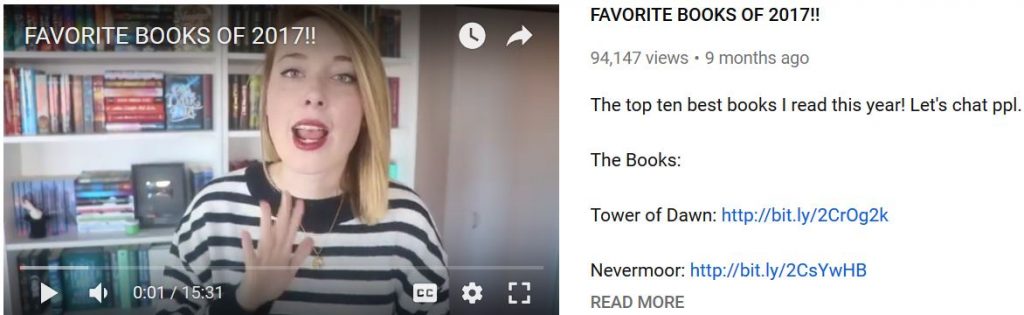
  • Wrap Up: Wrap up videos are recaps of books that BookTubers have read during a given set of time. Often, these will be annual. They can function as a BookTuber’s “Best of” list.

How do I find the most relevant BookTubers for my titles?

Research BookTubers the same way that you can find relevant influencers on other platforms. Searching hashtags like #BookTube or #BookReview will give you a good overview of the community, but might be too broad for truly targeted searching. If you are publishing a YA dystopian title with a Latinx protagonist, try searching for BookTubers who have engaged with similar titles, or searching #YADystopia or #OwnVoices. Then, see who has high counts of followers and strong engagement from their audience in the comments section.

Once you have identified a few key BookTubers for your needs, consider looking at who they have listed under “My Favs” on their profile. Or, keep an eye on who BookTubers are tagging in their Tag videos. Learn who BookTubers are following and communicating with to gain a better grasp of the community landscape.

How can I engage with BookTubers to reach their audience?

Many major book publishers are already working with BookTubers to meet an enthusiastic market of young readers where they already are, with popular BookTubers receiving many requests from publishers and authors. WhittyNovels offered some tips about how publishers and authors can increase their chances of having their titles reviewed by a BookTuber.

Publishers should send print or digital galleys to BookTubers as they would to any other influencer (most BookTubers post contact information in the About section of their page) but the video format does offer some unique opportunities that publishers can take advantage of to drive creative strategic marketing decisions.

Publishers (or retailers) can also work with BookTubers to sponsor unique content. For example, Barnes and Noble sponsored a book haul with Linh Truong. Publishers can send galleys in special packaging to encourage BookTubers to feature their titles in unboxing videos, as Simon & Schuster did for the release of Lady Midnight. Or, work with BookTubers directly to create an unboxing video, as Penguin Teen did with JesseTheReader for A Map of Days (see right). Consider asking BookTubers to feature your titles for a readathon to boost awareness and enthusiasm, or work with multiple BookTubers to create a themed Tag video around your upcoming title. BookTubers grow their audience by consistently providing entertaining and creative content. Offer something new and exciting that will keep their fans engaged, and build a mutually beneficial partnership.

Stay tuned for more BookTube coverage!

Divider

Up Your Instagram Game with Stories

Most publishers already know that they need to be on Instagram. It is a thriving platform for businesses. There are 1 billion active accounts on the site, per month. And of those accounts, 80% follow at least one business.

After you’ve mastered the basics of the perfectly arranged photo of your book surrounded by aesthetically pleasing and thematically appropriate props, #bookfacefriday, and engaging your followers by asking questions for them to answer in the comments, it’s time to use some of Instagram’s other features to engage your audience and build enthusiasm for your list and for your brand as a whole.

Instagram Stories let users post disappearing slideshows of both photos and videos. Stories are visible on a profile for only 24 hours, unless the user decides to pin them to their profile as a “highlight,” in which case they will be available indefinitely. In a story, a user can create a temporary post, ask a question, create a poll, and more.

Many brands and companies are already using Instagram Stories as part of their overall strategy. According to Instagram, 50% of businesses on the site create a story within a typical month. And members are engaging with these stories. Over 400 million members use stories every day and 1/3 of the most viewed stories on Instagram are from businesses.

Take a look at some creative ways publishers (and a library!) are using Instagram stories to share updates, highlight their offerings, and grow their brand.

Engage your audience with quizzes and questions

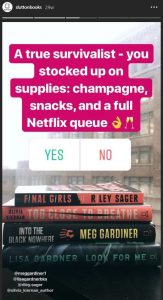
Dutton took advantage of some nasty winter weather to post a timely quiz as a story, featuring their titles. They asked their audience what kind of survivalist personality they identified as, and showed stacks of books with the different character archetypes represented. Quick yes or no quizzes are low-impact ways for your followers to engage with you. Ask questions, and post the results! Posting responses signals that your audience is engaged. The audience will instantly see the results of the poll once they have responded. You can see who has responded and how by swiping up on your story post.

Grow your newsletter list

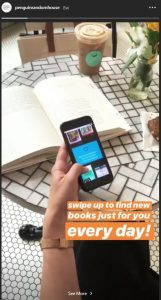
Penguin Random House uses stories to invite their audience to receive customized book recommendations from their list. Followers who click for recommendations are brought to Penguin Random House’s website and invited to fill out a brief profile with genre preferences. They are given recommendations by genre and added to Penguin Random House’s newsletters. It’s a quick way for PRH to move their audience from Instagram to their website and to put them on their mailing lists for relevant releases, all the while offering something of interest to their followers.

Offer a sneak peek

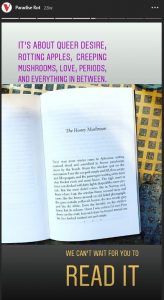
Verso Books teases new releases, like Jenny Hval’s forthcoming Paradise Rot, in their stories. They give followers a little taste within the Instagram story itself, and also a link to read a fuller excerpt on Verso’s website. Like Penguin Random House, they are using stories to drive traffic to their website by providing interesting content.

You can also consider taking a page out of New York Public Library’s book and post whole texts (or maybe just a chapter). Consider using this as a special time-based promotion. For example, read the first few chapters of an upcoming title for one week only.

Share your list

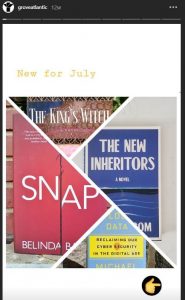
Grove Atlantic uses their stories to showcase their most current titles. Followers can click through their highlighted stories to see what titles are currently or recently pubbed. Effectively, it’s a catalog on Instagram, full of well-composed photos, reveal videos, and blurbs. For your audience who might not spend the time to go to your website to look at your most current releases, Instagram stories is a great way to keep them informed about your most important titles.

Use stories to highlight events without distracting from your grid

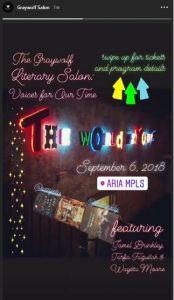
One of our favorite publisher Instagram accounts, Graywolf Press, has a visually pleasing grid full of bright colors and clean lines. They use their highlighted stories to keep their audience aware of upcoming events while maintaining their Instagram’s overall aesthetic.


How have you used Instagram stories? Let us know in the comments. We hope to feature your success stories in future posts.

Divider
Divider

Intern Survival Guide

One of the most common ways to gain experience in publishing–to get a foot in the door, learn what “querying” means, and figure out exactly what an editor does–is to intern. Internships help students and early career professionals determine which aspects of the publishing industry are the best matches for their interests and aptitudes and develop relationships with mentors across the industry.

Olivia Loggia, currently an intern at BookEnds Literary Agency, has been giving tips for interns in an #internsurvivalguide on Instagram.

Today, she’s sharing some advice about how to find an internship, stand out in the application process, and make the most of it both during and after.

Before you started your internship at BookEnds Literary Agency, what was your process like while searching for a position?

Truthfully, I was hungry for any opportunity I could get, and so my search for an internship was extensive. I wasn’t (and still am not) set on just one career path, and so I applied widely, both at literary agencies, and other companies that deal with creativity and entertainment. I knew I wanted exposure to publishing, and potentially a career in publishing in the future, and the only way I thought I’d have a chance at breaking into the industry was an internship. What specifically excited me about BookEnds was its close-knit, yet simultaneously far-reaching team. I knew that in-office I would be working closely with James and Jessica F., which would give me the opportunity to learn from them directly, and develop the skills necessary in a small team. But outside the main office, BookEnds actually has a big team, something that I think sets it apart from other literary agencies. Taking on a diverse range of genres and a wide audience, I knew that BookEnds would give me the opportunity to gain a holistic sense of the agenting world. Since I wasn’t exactly sure what I wanted to do in the future yet, this was especially important to me.

What did you do to stand out in your application or interview? Research. With BookEnds’s application, I spent time looking at their website, reading about their agents, and scrolling through their social media. Even though I hadn’t been in their office yet , research helped give me a sense of the type of work environment it was, and the types of people they were looking for. BookEnds makes it especially easy to do this type of research, since the agency has an active blog, as well as Facebook, Instagram, Twitter, and Youtube accounts. I considered the way the agency seemed to operate, how my own skills and experiences would fit into their operation, and then did my best to convey this in both my cover letter and interview. This included classroom experiences, previous internships, leadership roles, and interests of mine that were relevant to the type of work I would be doing at BookEnds.

What advice do you have for other young people looking for internships in publishing?

If you’re not sure what you want to do in publishing, an agency is a great place to start. Not only is it more intimate than a large publishing house, and therefore easier to form relationships, but it’s also great exposure to a number of sides of publishing. As an agent, you work with writers, illustrators, and editors, and so as the intern, you still get exposure to all of these other careers. One thing I discovered during my internship is that agents are sort of like the businessmen of publishing. If you’re less creatively inclined, and more business-minded, this might be an excellent path for you to consider.

As far as general pieces of advice for interns, I would say to say YES more often! If you’re asked to try something, even if you aren’t sure you’ll like it, say yes anyway. You don’t know what you don’t know. So try new things, and find out from experience if you like it or not. Your internship is going to fly by, so take advantage of the opportunity to actually be a part of a well-respected team of working professionals.

Ask questions. Think of questions that you genuinely want to know the answer to, don’t fall into the trap of asking questions just to ask questions. Ask questions that will get you to the place you want to be in several years; utilize the incredible resources you have available to you (at BookEnds, this was an entire team of fabulous literary agents!).

We saw your #internsurvivalguide on Instagram, which includes some really great tips. How did you come up with it and what do you hope it accomplishes?

Thank you! To come up with the tips, I thought about the strategies that worked well for me, both during this internship and previous internships, in addition to taking into account tips my parents and advisors at Bucknell University had given me. It started out as a way for me to have more of a presence on BookEnds’s social media, in addition to serving as a resource for other young people. BookEnds is committed to making the agenting world more accessible and “user-friendly” for authors, agents, interns, etc., whether or not they’re part of the BookEnds team. Through platforms like their blog, Instagram, Twitter, and Youtube, the agency strives to teach a wide audience about the agenting world. My #internsurvivalguide on Instagram was just one more outlet for this type of teaching.
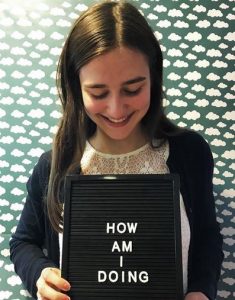
Tell us the story behind some of the lessons you’ve included in the Intern Survival Guide. Was there a specific experience that prompted a particular tip?

One tip that was especially prompted by my experiences at BookEnds was “ask for feedback.” Early on during my time at BookEnds, I was surprised by how regularly James, who I reported to, checked in with me to ask how he was doing as my mentor. I was the intern, I didn’t expect to be giving my boss feedback! But that’s just how BookEnds operates. During our weekly meetings, agents would share things that went well that week, and things that didn’t go as well, always asking for advice for how to move forward with the latter. I even received an evaluation, which identified both strengths and areas for growth. This was such a valuable reflection, and one that I know will benefit me moving forward in my professional life—it’s certainly easier to just assume (or hope!) you’re doing well, but taking the initiative and demonstrating self awareness is ultimately the most beneficial. At BookEnds, whether you’re the founder, or the summer intern, the mentality is that you can improve. And that’s a team mentality that I think is rare.

What specific goals do you hope to achieve through this internship?

One goal I had with this internship was to become a better reader, part of which included expanding the types of things I read. As someone who generally gravitates towards YA and contemporary fiction, interning at BookEnds challenged me to read many new genres: Cozy mysteries, adult suspense, and picture books. Although I wasn’t as familiar with them, I found that with an open mind, and by learning from example (I often looked at how agents critiqued former projects in the same genres), that I would be met with success. Another goal that I had was simply to develop confidence in a professional workplace! It’s one thing to be in class, critiquing your peers’ work, and quite another to be reviewing actual authors’ work. Early on, I spent a lot of time listening to the way the BookEnds agents interacted with one another and their clients, and then did my best to match their enthusiasm and insight in my own commentary. I pushed myself to participate in the meetings each week, and was very thorough in all of my writing assignments. I knew how lucky I was to be interning at a place where the intern’s voice was so highly regarded, so I made a commitment to myself to fully give my very best work each time—I was not going to miss an opportunity like this one.

What has been the most valuable part of this internship (or of interning overall?)

Having the opportunity to be fully integrated into a team of successful, working, professionals was easily the most valuable part of this internship experience. Not only was I regularly asked for my opinion, but I was able to sit in and participate in meetings, and have one-on-one conversations with agents and clients, and play an active role during brainstorm sessions. Yes, I was the intern. But at BookEnds, the intern is treated like an important resource, and respected team member. The communication, reading, time management, collaborative, and initiative skills I developed through this internship are skills I know will benefit me for the rest of my life.

How do you plan on making the most of this internship even after it ends?

My biggest takeaways from this internship have been: listening is equally important to speaking when working with others, how to give and receive feedback, and the importance of having faith in your convictions. I know these lessons will translate into any workplace, as well as in my classes, or even on my dance team. Beyond these lessons, I also plan to stay in touch with everyone at BookEnds! Throughout my time there, they stressed the importance of reaching out to them, and maintaining my relationship with the agency. I think this is important with any internship/job, and something I plan to continue doing with future work experiences.

Do you have any plans on the horizon you can share with us?

For now, heading back to Bucknell. As a rising junior, I’ve become increasingly aware of how close I am to graduation (make it stop!), and so I’m really excited to just go back to school, keep taking classes I’m interested in, being extracurricularly involved, and spending time with my friends. This spring semester I’ll be studying in Granada, Spain, so that’s something else to look forward to!

As for the more distant future, who knows! BookEnds has been great exposure to the publishing world. I love how the work is different each day, the creative component to agenting, the flexibility the job allows for, and the opportunity to work with many different people. Moving forward, I’m still very interested in publishing, but am also curious about careers in advertising, marketing, and media companies. I am hopeful that no matter where I end up, I have the chance to work with a team as passionate, dedicated, and driven as the one at BookEnds!

*Interviews have been edited for clarity and length.

Bio: Olivia Loggia is a rising junior at Bucknell University. She’s majoring in creative writing and Spanish, along with a dance minor. This summer, she had the privilege to intern at BookEnds Literary Agency, providing feedback on submissions through reader reports, writing revision letters, offering critiques on book proposals, assisting with the social media, and more.
BookEnds Literary Agency

BookEnds is a literary agency representing bestselling, award-winning, and internationally published authors. Representing fiction and nonfiction for adults and children alike, BookEnds agents continue to live their dreams while helping authors achieve theirs since 1999.

Divider

The Librarian Twitterverse

Librarians are an enthusiastic and digitally savvy bunch, which means that many of them are on Twitter, talking about their libraries, and talking to each other. They tweet about their favorite new titles, and about the daily life of working in a library. Librarians on Twitter highlight their community programming, while publishers’ library marketing teams announce their new releases and chat with individual librarians directly or via hashtag conversations. Pay attention to the vibrant librarian Twitterverse to get a better sense of what librarians are looking for, what resources they’re using to find new books, and to gain inspiration for new ways to connect with these important influencers.

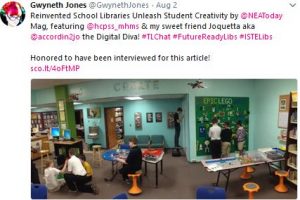
Follow individual librarians on Twitter. Some librarians, like Gwyneth Jones and Shannon Miller are vocal, enthusiastic, and plugged into the wider world of pop culture and media. This kind of librarian recommends titles not only to their own library patrons, but to the rest of their digital community as well. Take note of who they are retweeting and which media sources they are linking to to get a sense of which authors they are reading, and whose opinions they trust. If they’re not already on your radar, add those media sources to your pitch list! Looking at these accounts will give you a more personal understanding of who these librarians are and what they are looking for.

Follow trade organizations and publications that librarians use to stay on top of news and trends. The ALA is a great resource for librarians, and for you, to stay up-to-date with national legislation, funding opportunities, and trends that impact the librarians across the country. Review journals like School Library Journal or Booklist offer insight into which kinds of stories librarians are hankering after, and can give ideas about how to most successfully position your titles for librarians.

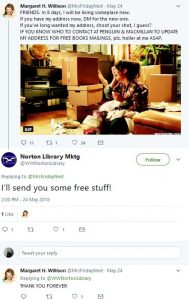
Many publishers have dedicated library marketing teams who are focused on serving this specific community. Pay attention to publishers’ library marketing presence and see how they are engaging with libraries and librarians on the platform. For example, W.W. Norton’s library marketing department reached out directly to librarian and pop culture critic, Margaret H. Willison, to ensure that Norton would still send her galleys after she changed addresses. It was a casual, friendly, and mutually beneficial interaction. Penguin Random House periodically runs a Twitter chat, #AskALibrarian to engage multiple segments of their audience. Librarians get to champion their favorite books across a range of interests, and readers get personalized recommendations from highly trained and enthusiastic professionals.

Look at hashtags to see conversations around different topics that are important to librarians. Librarians use hashtags like #libraryreads and #readersadvisory to talk about what they are reading at their libraries and what they are recommending to their community. Get a sense of what kinds of stories librarians are excited to read and recommend. #librariesareforeveryone lets librarians demonstrate the diverse programming available at their libraries, for different ages, demographics, and reader types. You can use it to used to keep up with how librarians are thinking about  inclusivity, diversity, and representation in the library space. Use these hashtags to see what kinds of books different librarians’ communities are craving, and use that information to shape the way you market your titles to individual librarians.

How have you interacted with librarians on Twitter? Who do you follow on social media to keep up with new library trends? Email us at insights@netgalley.com. We hope to feature your success stories in future posts!

Divider