
How Indie Author M. Kevin Hayden used Booktrovert to Generate Visibility

When it comes to early adoption of new tools for audience engagement, independent authors are often the first to experiment, and the first to see what works! For author M. Kevin Hayden, Booktrovert.com has become a key part of that journey. As one of Booktrovert’s earliest adopters, Kevin has used nearly every campaign type the platform offers—Giveaways, Sweepstakes, and Buy Now CTAs—to reach new readers and drive ongoing visibility for his work.

In this Q&A, Kevin shares how he approaches each campaign type with a different goal in mind, what he’s learned about building momentum, and why Booktrovert has become an important part of his marketing strategy as an author.

Tell us a little bit about yourself and your books!

Certainly. I’m originally from the South Side of Chicago. An Old Soul is my debut novel and my first published work of fiction. It follows a young man who feels quietly displaced in his own life and in the world around him. The story is set in my old neighborhood of Gresham in 1996… or is it? It blends grounded realism with elements of synchronicity and speculative fiction.

Willow Rose is my sophomore novel and is also now available. It leans into literary cosmic horror and follows a doctor who flees his past for rural northern Minnesota. A strange knock at his door one night sets off a chain of events that pulls him and others into a fight for survival against a malevolent monster, all in the wake of a comet that appears from nowhere.

You’ve been part of Booktrovert since it launched! What helped you decide to take the leap with a brand-new platform?

I’ve always been an early adopter. I’m naturally drawn to the new thing. I get excited about previously unknown possibilities and love being among the first to explore what something can become. Since NetGalley already has such a wide reach in the bookish community, I was genuinely excited to see how Booktrovert might build on that and help me connect with new readers in a different way.

And honestly, I’ll probably be among the first in line for whatever you all come up with next—because why not?

“Since NetGalley already has such a wide reach in the bookish community, I was genuinely excited to see how Booktrovert might build on that and help me connect with new readers in a different way.”

– M. Kevin Hayden

Your recent Sweepstakes for Willow Rose had a mysterious, cinematic hook. How did you approach writing the campaign title and description to capture readers’ attention?

Honestly, I wasn’t sure how it would land. I just put myself in the reader’s shoes and asked, “What would make me click?”

Willow Rose is intentionally a mysterious story, and some of the early reviews were very critical of the unanswered questions. In a way, the campaign was also my way of signaling what kind of experience the book offers — so the right reader would be more likely to lean in. I’ve learned the hard way how important that match really is.

Our goal is to reach as many of those right readers as possible. To do that, you have to hang the appropriate sign.

You’ve also used Booktrovert for a Buy Now campaign, promoting a punchy limited time sale. How are your goals different when considering these various CTAs? When and why would you run a Sweepstakes versus a campaign that drives to retailers?

My goal early on was to reach more readers. I needed to gather early reviews — get the story in front of more eyes — and the giveaways helped with this. Booktrovert has proven an invaluable tool for overall visibility. I found that interest had a slight bump during those campaigns in the way of follows and Goodreads shelvings. I found that the new sweepstakes seemed to pull more interest than the earlier first-come giveaways from Booktrovert

As far as the “Buy Now” CTA campaigns, I plan to utilize those also to help buoy dips in sales.

Of note, as I work through this Q&A, I feel it’s time to setup a CTA campaign on Booktrovert.com now as my sales and visibility are dipping slightly. 

The goal is to be seen. There are multiple shouting towers out there and it’s best to use as many as possible to avoid vanishing in a crowd. Millions of books are published a year and that crowd is dense.
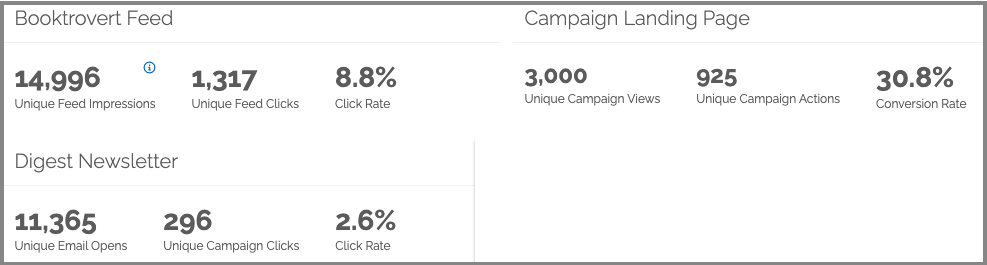
Willow Rose sweepstakes campaign stats as of Dec. 2, 2025

As an independent author, what do you think is the most valuable outcome of running an ebook giveaway, whether that’s exposure, engagement, or something else entirely?

As an Indie author, it cannot be understated that you have to make yourself findable. At baseline, we are all invisible. There isn’t a cadre of marketers, promoters or word of mouth spreaders working on our behalf. Usually, it’s only the author themselves. Even with well placed ads, campaigns, and giveaways, we are still relatively unseen. Even when visible, we can be looked over for traditionally published titles. Giveaways are a way to get the book in front of more eyes, pique interest, and gather reviews. Sometimes, you run into gold just because someone influential just happens to win a title. 

For me, those are my main reasons for running the giveaways. To gather more potential reviews and increase visibility.

“Booktrovert has proven an invaluable tool for overall visibility.”

How does Booktrovert compare to other giveaway platforms you’ve tried? 

Booktrovert is a very user-friendly and efficient tool. I can set up a campaign with minimal friction and get it live quickly, similar to NetGalley. Some other giveaway platforms require more data entry and have longer approval timelines. That said, I use Booktrovert in conjunction with other platforms. Visibility across multiple services is important because different readers prefer different ecosystems. Also, seeing the same title appear across platforms seems to increase interest and engagement.

“Booktrovert is a very user-friendly and efficient tool. I can set up a campaign with minimal friction and get it live quickly, similar to NetGalley. Some other giveaway platforms require more data entry and have longer approval timelines.”

What’s next for you?

I recently completed a prequel short story for Willow Rose that will be available on my website and linked by QR code in future printings of the novel. I’m excited to gift more story to readers, and I hope it answers a few lingering questions while still preserving the intended mystery of Willow Rose.

For those knocking at the door — remember the password: stay together 

I’m also deep into a new project called Locked-In, a speculative dystopian novel set in the same universe as An Old Soul. There are several other stories brewing as well, and I’m hoping to finish Locked-In before they hijack my attention. Other storytellers know exactly what I mean. Ideas never wait their turn.

Divider

10 Common Questions

NetGalley is a vital promotional service hundreds of publishers and authors use to enhance their marketing and publicity campaigns, but with so many ways to use NetGalley we know you may be wondering where to start! From widgets to wishes, promotions and reports, NetGalley offers tons of features to ensure your books get the enthusiastic launch they deserve. Whether you’ve just started with us or you’re a longtime user in need of a refresher: Hello, welcome, and read on for some NetGalley publisher must-have information!

1.  How do I invite contacts to view my title?

Seamlessly send pre-approved digital copies of your books to your own trusted contacts using the NetGalley widget. The widget can be used anywhere a link is used—just copy and paste it into an email with your custom pitch. YOU retain your personal connection with the recipient, while ensuring they can easily access the book on their preferred device.

Secure widgets use an email address or a list of emails to secure your title. Only recipients who log in to a NetGalley account with this pre-approved email address are authorized to use that widget.

You can also choose to create an Open widget, which is not assigned to any email addresses, and can be used by anyone who receives the link. We recommend sending open widgets to trusted contacts, like an editor who will assign the title to a reviewer. No matter what, you can always see who has accessed your titles in your NetGalley publisher account. 

Here’s some suggested language to use, which includes a link to our Device Guide and support team. We encourage publishers to customize the template language, but this should give you a strong foundation!

NetGalley Widget FAQs

2. How can I tell who has accessed my book?

Find this information by navigating to the Title Details page of your book and clicking on Approval History in the left-hand sidebar. This will take you to the Members with Access page, which breaks down these members into various categories—Approved, Auto-Approved, Read Now, Widget Invites, and Wishes Granted. You can see if a member has clicked to read or listen to your book. You can also find this information on your Detailed Activity report.

Request History FAQ

3. What is the difference between Private, Read Now, Available for Request? 

Publishers have complete control over who can access their books on NetGalley. You have a few different options: Private, Read Now, and Available for Request. 

Private: NetGalley members won’t know your title is available on the site unless you invite them to view that book using the widget, or if you use the book’s link to collect wishes.

Read Now: Members will have instant approval, so it’s best to use this option when you want to approve all requests automatically. Publishers often use the Read Now option for special promotions—like making a title available to Read Now for a limited time or number of downloads—or for special content like samplers, excerpts, catalogs, or backlist titles.

Available for Request: You will make the decision to approve or decline each member’s request to access that specific title. You can also allow requests from only certain member types for specific time periods—for more information, click here.

Title Availability FAQ

4. What does auto-approving a member do?

Many publishers have a VIP list of readers, like ALA-member librarians, trusted reviewers at media outlets, and bloggers who reliably provide great reviews for your titles. You can make their day by auto-approving them! Once a member is on your Auto Approved List, any requests they make for your titles will be automatically approved, so they don’t have to wait for you to see and approve them manually.

Auto-Approved Members FAQs

5. What file types are best to upload to NetGalley? 

 NetGalley publishers can upload 3 different file types for digital review copies: ePub, mobi, and PDFs. Audio publishers can upload zipped MP3 files.

An ePub file is preferable for most books on NetGalley and, if an ePub is uploaded, there’s no need to upload a PDF– the ePub will always take precedence over a PDF file, because it provides a better reading experience for our readers. Our file recommendations can be found here.

Content File Troubleshooting and Optimization FAQs

6. How can I test my own files?

Testing files on your computer is simple; you can do so directly from your publisher account! 

To test the NetGalley Shelf app and Kindle app, you can begin by using the widget to grant yourself access to the book. Be sure you have a member account to test with! First, create the widget in your publisher account, then paste the link into a new window or tab. Please note that before navigating to the widget URL, you must sign out from your publisher account—or you may want to use a private/incognito window. Once you click the link, simply sign in to your member account and follow the next steps:

Recommended: To test on the NetGalley Shelf App, first download the app to your iOS or Android device, sign into your NetGalley reader account, and you’re done! If you’ve already accepted the widget you sent yourself, the book will automatically appear in your NetGalley Shelf App!

On a Kindle device: First, ensure that your Kindle email address is on your NetGalley member account in Settings, under Reading Preferences. Also be sure that kindle at NetGalley dot com is approved to send to your Kindle. You’ll only need to do this once.

After you’ve accepted the widget you sent yourself,  simply click “Send to Kindle” from the title details page for the book in question.

If you prefer to download to your computer or another Adobe-supported device, you will need to download Adobe Digital Editions on your computer and sign in using your Adobe ID. Afterward, go to the Title Details page of your book, where you’ll want to click the orange arrow next to Upload/Preview Files in the left sidebar. Click the file type you’d like to test (PDF or ePub), and your file will download.

Previewing Your Files FAQ

7. How can I use the NetGalley reports?

NetGalley reports are an incredibly useful tool for a publisher using the site. You can find them by navigating to a title’s Feedback page or by clicking the purple gear icon on the right-hand side of the Manage Titles page. We have five reports available on NetGalley: Detailed Activity Reports, Feedback Reports, Snapshot PDF Reports, Opinions Reports, and Active Title Reports. Whether you’re looking for consolidated information about reviews submitted for a title (try the Feedback Report!); want to see a summary of the activity for all your titles that are not archived (we’d recommend the Active Title Report!); or if you need to know about every interaction between a title and the NetGalley community (the Detailed Activity Report is perfect for this!), we’ve got you covered. Our reports can help you understand trends, identify media contacts interested in connecting with an author, and even show what your readers are most excited about regarding your titles.

Reporting FAQs and NetGalley Advanced Reports

8. How can I book additional marketing promotions?

NetGalley’s marketing promotions are extremely effective tools to highlight your titles on the site and to access our member community. There are many creative promotions you can book through NetGalley US, with options for any budget and type of book. View the 2021 Media Kit here.  (Our UK promotions are available here!) We encourage publishers to book promotions early, since dates are often booked months in advance. Please note: In order to participate in our promotions, your title must first be listed on NetGalley.

NetGalley Marketing FAQs

9. How do I receive/change email notifications?
To change the email address that receives all alerts, simply navigate to your account Settings, by clicking your publisher name at the top right of your dashboard. In the Email Alerts section, you can change the frequency of these email alerts, as well as who receives them.

If you’d like a colleague to receive the email notifications for a specific title, just go to the Title Details page of the book, scroll down to Settings in the sidebar, and look for “Email Alerts.” The email address you add here will receive request and feedback notifications for that title only.

Email Notifications for publishers FAQ

10. Can I override an approval/decline?

We—or our cats—all click something we didn’t mean to every once in a while! Though there is no way to undo an approval once it’s been made, you can override a decline. If you decline a request by accident, or if you change your mind, you can send the member a widget inviting them to view the title.

More in-depth answers to these, and more, questions can be found on our Publisher Knowledge Base. Pro tip: use the search bar to find the relevant articles to answer your specific questions!

Divider

Case Study: Half Truths by Claire Contreras

Why a self-published, New York Times bestselling author didn’t tell her audience her latest book was on NetGalley

Author of the New York Times bestselling Hearts series, Claire Contreras, had never considered using NetGalley until she was getting ready to share the first book of her new series, Half Truths. When most authors use NetGalley, they use it to broaden their reach to new audiences and engage more deeply with the readers who are already following their work. Claire Contreras did something completely different. She didn’t make any announcements to her social following or newsletter subscribers about her latest book being on NetGalley – instead, she’s using it exclusively to find new readers. 

In this case study, Contreras shares her unique NetGalley strategy, plus her perspectives on self-publishing versus traditional publishing and how she uses social media to connect with her audience.

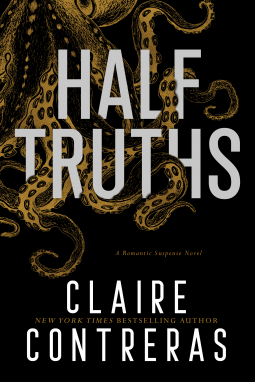
Half Truths
by Claire Contreras

This is the first time you’ve listed a book on NetGalley. What inspired you to list Half Truths on NetGalley

I’d seen my friends who are published traditionally on NetGalley in the past and figured the publishing houses must have a good reason for using NetGalley, I just didn’t think it was something available to me. I spoke to a friend of mine who’s hybrid (traditionally and self-published) and she told me a lot of librarians read her books via NetGalley and that sold me on it. Before that conversation, I didn’t know how to reach librarians. Once I got on [NetGalley], I realized it wasn’t only librarians, but also media and educators as well as bloggers I wouldn’t normally have reached. That was when I realized NetGalley was a brilliant concept.

I spoke to a friend of mine who’s hybrid (traditionally and self-published) and she told me a lot of librarians read her books via NetGalley and that sold me on it. Before that conversation, I didn’t know how to reach librarians.

How did you get the word out to your audience about your NetGalley listing?

I didn’t. I used NetGalley solely for people I couldn’t reach myself. I feel it really puts the book in front of people who otherwise wouldn’t have seen it. I wanted to get more attention from librarians, media specialists, editors, and [other] people who don’t normally read me.

One of the reasons I didn’t announce to my readers that my book was on NetGalley was that I wanted to see how many new readers I would gain from the site. I was pleasantly surprised that a lot of the members had never read me before, as that was one of my initial reasons for turning to NetGalley. I have incredible readers, but there’s always room for more. I think in this particular case, the cover drew a lot of attention.

[I was most surprised by] the amount of people that requested the book. I was in complete shock to see Half Truths on the front page of most requested for weeks!

Half Truths is going to be part of a series. How are you using NetGalley to build anticipation?

With Half Truths specifically, I knew from the start that I would turn it into a series of standalones (standalone books in the same “world” – academia, different secret societies).

Because I’m using it as a promotion tool for the series, I’m approving a specific group of people. When I get closer to releasing information about book two, I’ll give away a lot more copies to readers (non-librarians/media) for reviews. I like to test things out and give it time to settle so I can see what’s working and what’s not.

I [also] have a mailing list – a snail mail list – that I put together when I was promoting the first book and I fully intend to use it again to send clues out in the mail to my readers as to what they can expect.

I believe pre-marketing and post-marketing are both powerful. However, I hope to have my next book in this series up on NetGalley a lot sooner than the first.

You are both a self-published and a NYT-bestselling author. Tell us a bit about why self-publishing is right for you. 

When I first decided to publish, I fully intended to go the traditional route. My college professors and mentors were completely against me self-publishing, and I understood why. It was frowned upon and not something we completely understood. I decided to take a chance and self-publish my first book on a whim, just to see what happened. I figured if no one read the book, I could always take it down and query agents. The book did better than I anticipated and I gained a pretty steady readership, so I stuck to it. It was unexpected, but so far the control and freedom [I’ve gotten from] being self-published has been great. That’s not to say I wouldn’t go the traditional route. I would definitely love to work with traditional editors and be with a traditional publisher when the time is right.

The control and freedom [I’ve gotten from] being self-published has been great. That’s not to say I wouldn’t go the traditional route. I would definitely love to work with traditional editors and be with a traditional publisher when the time is right.

You have a very active social media presence with 11k+ followers on Twitter and almost 22k followers on Instagram. How do you use social media? 

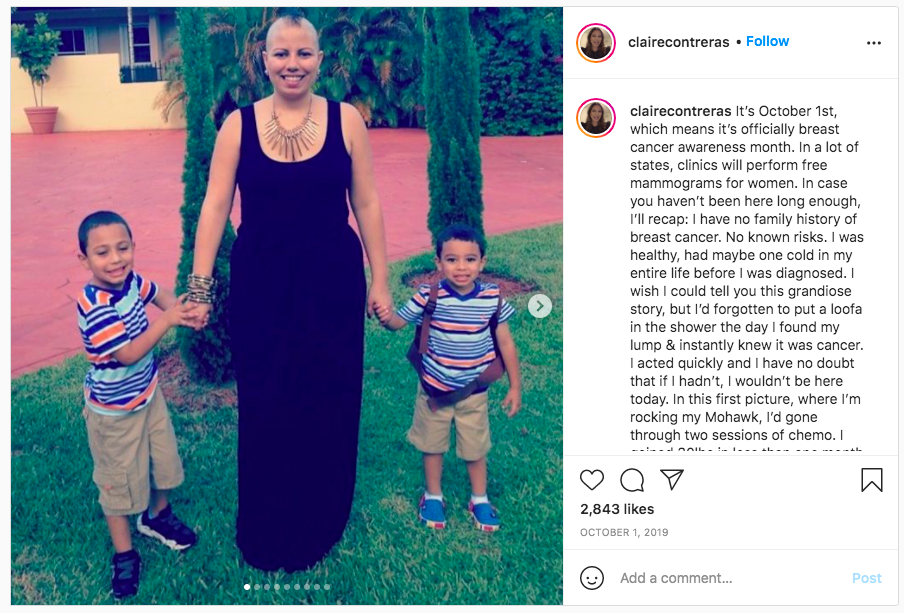
I use social media as a get-to-know-me tool. I find that a lot of people follow me there because they want to know what I’m doing or what my thoughts are on certain things (as random as they may be). I’ve also built a following from my cancer journey, which I shared from the time I was diagnosed in 2014 to today. I keep them up to date with my health and some of my personal life because I think it’s important for people to know that they’re not alone. Sometimes it’s hard to conceive that others are going through struggles when you see them smiling all the time in pictures, so I keep it real with them.

https://www.instagram.com/p/B3FeTOOnHtZ/

What (or who) are the resources you go to to keep up with industry trends and to make your books as polished and professional as possible without the infrastructure of a traditional publishing house? 

I don’t follow trends. I write things that I can’t stop thinking about and try to package them in a way that’s appealing to the masses, but as far as trends go, they are constantly changing and I can’t keep up with most of them so I try not to pay attention to them. I pay attention to the things I can control, which means making sure I have good editors, proofreaders, and cover designers.

When can members expect to see the next book in the series on NetGalley? 

I don’t want to say much because I don’t want to spoil it, but I will say . . . You’ve been summoned 😉


Claire Contreras is a New York Times bestselling author who traded her psychology degree to write fiction. Don’t worry, she still uses her knowledge on every single one of her characters. She’s a breast cancer survivor (x2), who was born in the Dominican Republic, raised in Florida, and currently resides in Charlotte, NC with her husband, two adorable boys, and French bulldog.

*Interviews have been edited for clarity and length.

Divider

Pre-Publication Launch Schedule for Authors

As a self-published author, you might think that the hardest part is over once the book is complete. But once a book is ready to go out into the world, it still deserves the same level of attention and care that you gave it throughout the writing, revising, proofreading, and design process. As an author, you might not have formal marketing or publicity training, or the budget to hire someone who does have that kind of experience. But you can still give your book a professional launch.

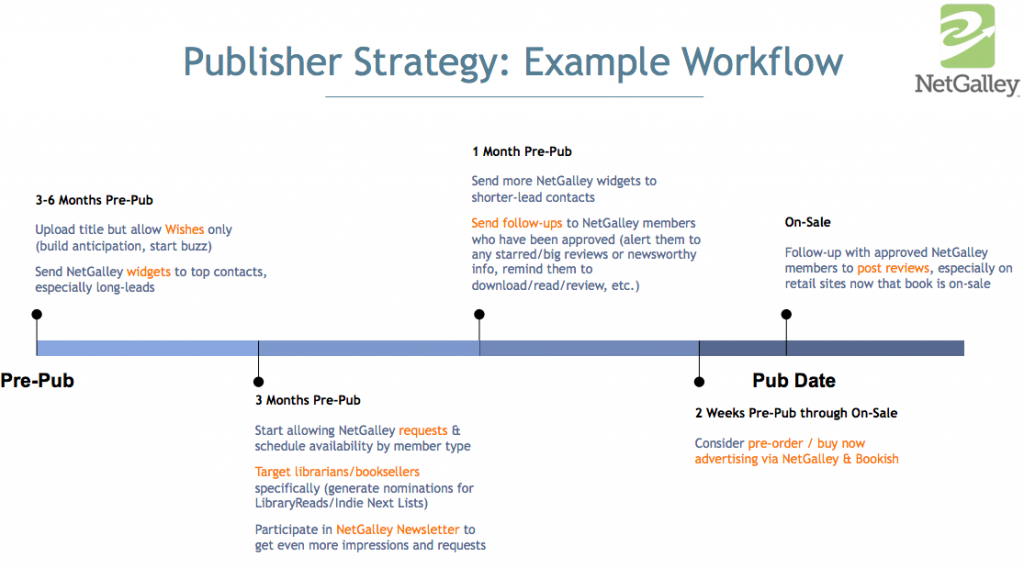
While every book is unique and will have slightly different goals and timelines, we’ve used our experience working with everyone from indie authors to the largest publishing houses to develop a framework that you can use to guide your own unique launch strategy. You can also download this launch schedule.

The most important takeaway from this timeline is to plan your promotions a few months before your pub date to create ongoing and increasing excitement for your book. 

Different contacts should be given access to your book at different times, according to their needs. For example, any major media contacts will need a much longer lead time than a Goodreads reviewer or BookTuber. Plus, if you can secure early media attention, it’ll be easier to get interest from those consumer reviewers. Work towards getting some early blurbs, and then use those blurbs to bring in new readers, on NetGalley or elsewhere. 

And once you have made initial contact with these different kinds of readers – consumer reviewers, digital influencers, librarians, media, and booksellers – be sure to follow up with them right before pub date. Put your book back on their radar, encourage them to share their reviews on retail sites and with their audience, where applicable. 

For more  from the NetGalley team, check out our Proven Strategies series, plus our Author Case Studies. And be sure to subscribe to the NetGalley Insights newsletter!

Divider

Coping with Critical Reviews

When you put your book out into the world you are hoping to find its biggest champions and most devoted fans. But, of course, no one book will appeal to everyone. Especially for first-time authors, receiving critical reviews and feedback can be frustrating and disheartening. It never feels great to read a critical review of your work, but there are some important things to keep in mind to help you consider critical reviews in a constructive and level-headed way.

Look at reviews for similar titles

Photo via Upsplash

If you want to get a sense of what kind of feedback you can expect for your book, take a look at how NetGalley members and consumer reviewers have responded to similar books. Browse the catalog to find these and you’ll start to get a qualitative idea of the spread of opinions when looking at comparative titles to your book. Make sure that when you are looking at reviews of comp titles – either on NetGalley or elsewhere – that you are looking at books in a similar genre and from a similar author or publisher. For example, if you are a debut thriller author working with an indie publisher, try looking at thrillers from other indie publishers rather than books written by well-established authors at the biggest publishing houses. Plus, for an extra reminder that even the most beloved books still get critical reviews, check out these one star reviews of The Great Gatsby

Remember that star ratings are relative

Star ratings are entirely subjective. For some reviewers, a 5 star review might be reserved for their absolute favorite books – the ones they’d bring to a desert island and the ones that they give as gifts to friends year after year. For others, the same star rating might that a book was an enjoyable afternoon diversion. The same general principle should be applied to lower star ratings, as well. A 3-star review might be a positive review in the eyes of the reviewer, full of thoughtful and useful observations about your work. 

We know it’s hard not to get hung up on these numbers when ratings may affect algorithms for discovery on certain platforms (this is not the case on NetGalley), but keep in mind that reviews and ratings are not something you can police. Since they are subjective, each reviewer has to make this decision for themselves. 

Resist the urge to respond

When you read reviews, you might be itching to reach out the reviewer and tell them why their interpretation is misguided or to defend your book. This is a perfectly natural desire, but we recommend resisting the impulse. We all know that tagging authors in critical reviews is poor internet etiquette, but it does happen. If you get tagged in a negative review on social media, the reviewer who is tagging you is more likely to be looking for some social media attention rather than providing you with meaningful feedback. Don’t feed the trolls. Plus, when authors try to defend their work on social media, it often ends up reflecting poorly on the author, rather than prompt a thoughtful consideration from the reviewer. This urge affects established authors as well as debut authors. Even Zoë Heller, author of Notes on a Scandal wrote in the New York Times that she has mentally composed replies to the critics who she feels have slighted her. But, crucially, she has never sent them. 

Glean valuable data in critical reviews

Sometimes critical reviews can help you better target the right kinds of readers, or tweak your marketing copy. For example, if you have been promoting your book as YA, but critical reviews are saying that it’s too young for a teen audience, consider positioning it as a Middle Grade book instead. Or, if reviewers are expressing surprise at the content, consider revising the way you are describing your book. You want to entice readers, but you also want to find the readers who are most likely to enjoy your book as it is. 

DNF reviews contain valid feedback

NetGalley Sales Associate Katie Versluis works with our community of self-published authors. She has seen first-hand how authors have responded to DNF reviews (Did Not Finish reviews). She told NetGalley Insights that while DNF reviews “may sting after the years of work you just put into this book, they can actually be quite useful to you as you position yourself in the book world.” She advises authors to think about why a reviewer decided not to finish their book. “[Your book] may simply not have been their cup of tea, but [a DNF review] may also bring an entirely new understanding to your book that you hadn’t thought of yourself. In the past, I’ve worked with an author who did a complete re-editing on their book because an early DNF review alerted them to language they didn’t realize was offensive. The review certainly wasn’t “nice” to receive, but it became a blessing in disguise.”

At NetGalley, we recognize that DNF reviews can be valuable, but that they don’t always provide the same kinds of intel as regular, full reviews. That’s why if a NetGalley member does not finish a book, they can close the feedback loop by selecting the Will Not Give Feedback option. This allows them to move a title off their Shelf and give authors and publishers the reasons why they did not finish a given book.

Give yourself time to develop a thick skin

Receiving critical reviews are always challenging, but it will get easier over time. Be patient with yourself when you find yourself dwelling on critical reviews. Talk to your editor, agent, publicist, and fellow authors to get tips on how they recommend handling critical reviews, and learn from their experiences. Remember, you are looking to build a community of readers who love your work, not convincing people that their opinions are mistaken. Try to focus on the positive reviews!

Stuart Evers, author and Assistant Director of NetGalley UK keeps in mind a quote from Yann Martel, author of Life of Pi. Martel made a distinction between good-bad reviews and bad-bad reviews. Good-bad reviews point out genuine flaws and can be useful, if uncomfortable to receive. 

Evers told NetGalley Insights, ”I found this very helpful when dealing with negative reviews – and also helpful when reading any review I receive. A good bad review essentially says, I understand what the author was trying to achieve, but I don’t think they managed it. These can be difficult to read, but ultimately they can offer some insight into your work you hadn’t seen before. Use this to improve your writing; don’t sit there and mope about it. Better a good-bad review than a bad-bad review…A Bad-bad review is when a critic doesn’t get what you are trying to achieve, measures it against the wrong criteria, or fundamentally doesn’t engage with the text. You’re going to get some of these, and these are the most hurtful. However, they can be dismissed precisely because your book is not at fault. It might seem unfair, it might seem vindictive, but you just have to remind yourself: this is a bad bad review and I can dismiss it.”

Above all, professionalism is key

Remember to treat anyone you encounter during the publication process as a fellow publishing-industry professional. This includes the editors, designers, and beta readers you work with before your book is finished, as well as any reviewers or media who you encounter in the pre-pub or post-pub phases. Reagan Rothe of Black Rose Writing works with over 500 authors and shared this framework, “Try to take a professional approach and keep your choice of words constructive. Think about how you would speak to a coworker, your boss, an employee, or even a respected family member.” 

Even if you are frustrated or feel that you have been treated unprofessionally, keep an even tone in any communication you have about your book. As an author, you have now joined the publishing industry as a whole, which means that everyone from your publicist to book reviewers and even booksellers are, in a sense, colleagues. Be sure that all of your communication with them reflects that understanding.


How have you learned how to handle critical reviews? Did you receive some crucial advice early in your career that has helped you? Share your strategies with us at insights@netgalley.com.

Divider

How Authors Budget for Their Books

Results from a NetGalley & IBPA joint survey

For independent authors who are publishing your own work, it can be hard to know how much to spend, and where to spend. Can you publish a book using only free tools and services? Do you need to make a serious dent in your savings account to get your book into the world? 

NetGalley and the IBPA worked together to gather information from an engaged and thoughtful group of authors about how much they budget for their books, where that budget gets allocated, and where they find the most value. We hope that this information can help other authors strategize for their own books, getting the most value out of their budgets.

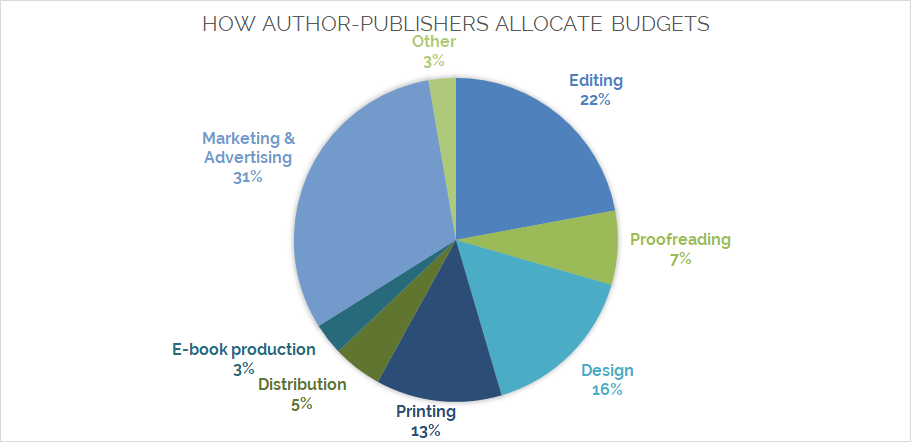
These authors understand that they need to invest in their book, and that the biggest and most valuable expenses will be editing, design, and advertising & marketing in order to give their books the most professional launch possible. 

Thank you to the thoughtful authors who shared their budgets, strategies, and lessons learned about the finances of independent book publishing. 

Only 11% of respondents reported spending less than $1,000 on their books, indicating that the most active authors understand that they need to invest at least a bit in their books. The majority of authors spent between $1,000 – $6,000 on their books, with the $1,000 – $3,000 bracket accounting for 28% of the overall responses. 

Across budgets, most authors spend the bulk of their budgets on a combination of marketing & advertising, editing, and design. 

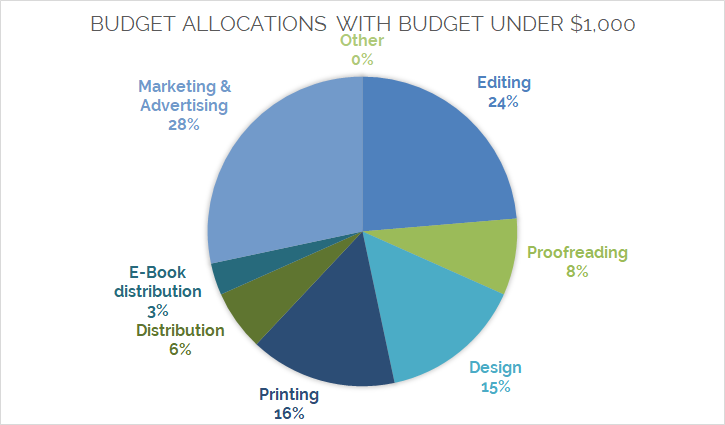
You can see how authors allocated budgets within different budgeting ranges here: 

As authors’ budgets went up, they increased the amount that they spent on marketing and advertising. Other line items – print distribution, proofreading, and ebook distribution – stayed relatively stable across budget brackets. 

Editing was the most valuable line item to 41% of respondents, followed by marketing and advertising (26%), then design (21%). We’ve broken down how they valued these three categories by budget spend below. 

Editing was the most valuable line item to 41% of respondents, followed by marketing and advertising (26%), then design (21%). We’ve broken down how they valued these three categories by budget spend below. 

As an author’s budget goes up, marketing & advertising became more valuable to them. And for the respondents with more limited budgets, they found the most value in first editing, then design

We also asked how authors determined what made a line item valuable to them. Surprisingly, it wasn’t always sales. Only 17% of respondents used sales as their primary marker of value. Instead, 31% of respondents found value when they could see that an expense had made their book a higher quality product. We can see this correlated to the value found in design and editing. Authors were most interested in making their book look – both inside and out – professional and polished, and then putting eyes on it. 

When asked what they would spend less money on in the future, 17% or respondents said marketing & advertising and 15% said printing. But, even in a question about spending less, 12% responded to a question about lowering their budget by saying it would stay the same, 7% said they would spend more. We see again that authors understand that they will need to invest in their books in order to make them the best product that they can be, and to then help their books find readers.   

NetGalley and the IBPA are both dedicated to helping author-publishers. Through NetGalley’s partnership with the IBPA, as well as through direct work with independent authors, we help author-publishers reach our engaged NetGalley community. Plus, authors find many tips and author-focused case studies here on NetGalley Insights. The IBPA has programs, events, webinars, and resources for author-publishers, as well as other segments of the industry. Learn more about the IBPA here, including special NetGalley packages available to IBPA members.

Survey collection: NetGalley and the IBPA collected survey responses from 137 author-publishers between May-June 2019. 

Divider