In the book marketing world, getting your name out there is crucial. If someone casually browsing for their next read recognizes your name, they’re far more likely to take a closer look, and hopefully purchase.
Since writing is your craft, one of the best ways to get your name noticed is to write. So, write! It’s natural to want to write exclusively about your book as a way to promote it, but you should also consider writing about topics related to your book. For example, if you write Civil War romances, pitch a column on a women’s cultural interest website about the hidden histories of women in the United States in the 19th century. You can access a wider audience than you could otherwise, and demonstrate your expertise about your chosen field of interest.
You can also write in more casual settings; like a blog or a newsletter. Many authors and cultural critics send out periodic newsletters that describe what they are reading, listening to, and thinking about. Newsletters and blogs are a way to stay top-of-mind for your audience, and to help your readers develop a more personal relationship with you and your work.
This kind of tactical writing can increase your visibility and the visibility of your titles in the marketplace. But, as with all kinds of marketing efforts, quality is more meaningful than quantity. First and foremost you should write and pitch content that you would be interested in reading, and the readership will follow.
The Internet is a social place. It’s where readers find their next book, where authors stay connected to readers, where publishers keep abreast of new voices, and industry newbies hunt for their first jobs in the field. “How to use…if you’re…” breaks down best practices for literary social corners of the Internet for different players in the publishing industry.
At BookExpo, we sat in on the panel discussion “Industry Disruption and the Future of Finding Rising Stars.” During that panel, Lindsay Summers, Wattpad star, discussed how she used Wattpad first as a way to read new stories, then a creative outlet for her own storytelling, and eventually as a vehicle for a book deal.
So, today we’ll be looking at how independent authors can use Wattpad to sharpen their own storytelling skills, connect with other authors, and grow a community of dedicated readers.
Using Wattpad as an Author
Wattpad is a great place for authors to experiment with serial storytelling, and to connect with passionate readers from all over the world. Authors can use it to hone their voice, get immediate feedback from readers, and expand their audience.
What is Wattpad?
Wattpad is a socially engaged and enthusiastic community of writers and readers. With a global community of 70 million members, and over 565 million story uploads, the platform is a vibrant place full of passionate readers and emerging writers. Most of the stories on Wattpad are geared toward young women and tend toward YA, Romance, Sci-Fi, and Fantasy, although other genres have devoted followings as well. The website is free to use, for both writers and readers.
Some Wattpad authors have even transitioned their Wattpad stories into traditionally published novels, or turned into TV shows or movies. Others have worked with companies to create branded content on the site. Huge successes like this may be outliers, but even if Wattpad doesn’t turn into a star-making vehicle for you, it is a place to grow as a writer, and to connect with an audience that is invested in your voice.
Hone your voice
Because Wattpad writers publish their stories serially, you have some flexibility to play around with your style. If you realize after a few chapters that the way you’ve been formatting dialogues is clunky, shift gears. If you intended your story to end with the heroine falling for her shy best friend, but realize that the femme fatale is a better fit for the story arc, you can reshape the plot as you write. Wattpad lets you change direction without having to rewrite your whole story.
But as you experiment, don’t forget about the reader! If a reader is clicking through several chapters at a time, they will likely be frustrated if you are making huge structural changes, like switching from third person to first person or turning your dystopian YA story into a sweet teen romance. If you do decide that your story needs a dramatic change, try starting a new one entirely.
Be sure to check out Wattpad’s Writer’s Portal, for both inspiration and practical advice.
Get feedback from readers
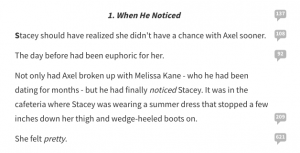
One of Wattpad’s most exciting social features is the line by line commenting. Readers leave comments on Wattpad stories, and can even comment on a particular sentence, showing precisely where they are having an intense reaction. You can see what readers are loving and what is drawing them in. You can also learn if your writing is registering with readers in a way that you don’t intend.
Grow your audience
With Wattpad’s huge global community, you can find kindred spirits, both as readers and fellow writers. Joining message boards, called Clubs, can help you become more involved in the Wattpad community. Industry Insider is geared specifically towards authors, and full of threads about the nuts and bolts of the publishing industry (from copyright to cover art) and general community encouragement. You can also join communities of readers who are reading stories similar to the ones you write, or the ones you like to read. See what readers are saying, and jump in on the conversation!
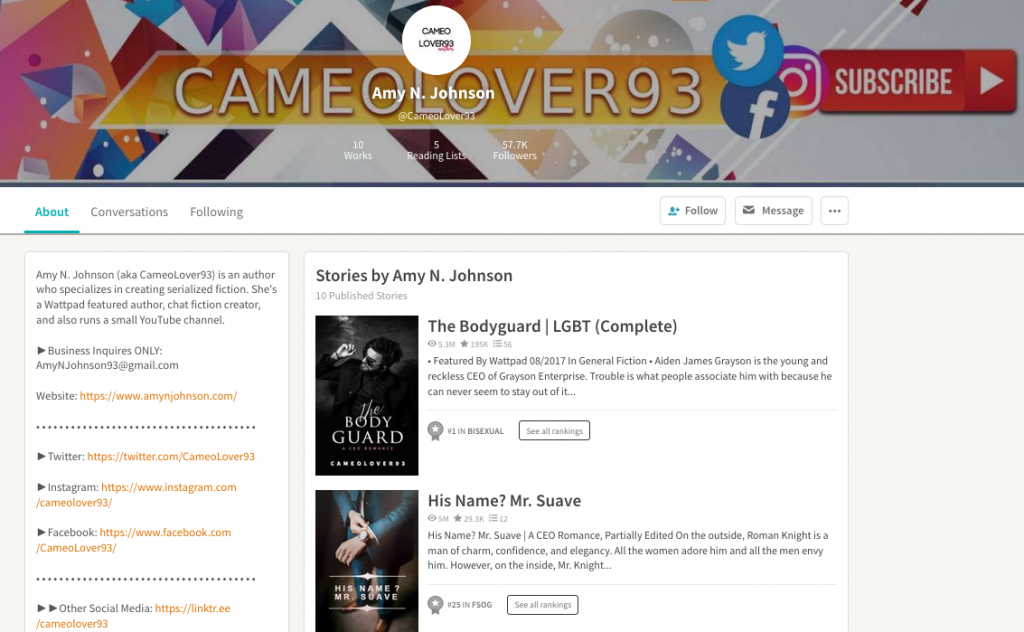
You can also engage with readers and other writers on profile pages. All member profiles, both writers and authors, include a Conversation section for members to chat with each other. Get to know writers whose work you admire by commenting and striking up a conversation. And when readers comment on your profile, make sure to respond! It’s a great way to cultivate a dedicated community of readers.
Check out more tips and strategies for independent authors here, and be sure to subscribe to NetGalley Insights so that you don’t miss a post!
Getting your book sold into a bookstore can be one of the most daunting parts about being an independent author, but also potentially the most gratifying. Seeing your book in a brick-and-mortar store, next to a curated inventory of other books is an accomplishment for any author.
Booksellers are pitched thousands of titles per year, so the competition to get your book carried by a store can be fierce. But, with some forethought, you can set yourself up to meet this challenge head-on.
Make sure to schedule an appointment with a book buyer rather than showing up to a bookstore unannounced, with copies in hand. Booksellers will appreciate your professionalism and the respect for their time. Plus, it gives you both an opportunity to prepare. These meetings tend to be short, so prepare a succinct pitch for your title. Give a quick introduction to your book (no need to give a full synopsis, just enough to pique their interest), and three good reasons why your title is a good fit for their bookstore and clientele.
Let the bookseller know what kinds of promotions you are doing, either in your local area or online. If you have reviews or feedback, be sure to leverage that as an indicator of enthusiasm for your work.
Hopefully, the bookseller will be impressed and take a few copies of your title to sell in their shop. But, if not, gracefully accept their decision. You’ll want to leave a positive impression on them so that you can hopefully build a strong working relationship in the future.
In addition to selling your title to bookstores, consider other places who might be interested in buying some copies of your book. Local museums, libraries, archives, and record stores are great places to start. Be creative!
Personal connection is a huge part of any successful marketing campaign. To build a personal connection between author and reader, it’s important for authors to meet face to face with their audience and to use live events as a way to grow that audience. We know that it can be daunting, especially for authors who are introverted or just starting out, but it can make all the difference.
Look for reading groups, book clubs, literary open mics, and library events in your local area. See if you can connect with these groups by giving a reading or participating in a Q&A. And be sure to think broadly–if you write historical fiction, look for a historical society that might be interested in your research methods. If you write political thrillers, pair up with a film group to discuss some classic films in the genre and how they influenced your work. Spend some time researching what kinds of special interest groups and literary clubs exist in your city or town, and connect with them!
You can also look for other authors who are publishing a book around the same time you are, or who are also just starting out. Think about how you can support each other, perhaps by joining forces for a combined book tour. Use connections you have to authors in other cities and towns, perhaps authors you are friendly with on social media, to help organize a small book tour. Ask where you should read, and see if your far-flung author friends would be interested in interviewing you at their local bookstore. And, of course, offer to return the favor!
Finding ways to engage with new audiences, both in your local community and beyond, is crucial to building a dedicated and connected community of readers.
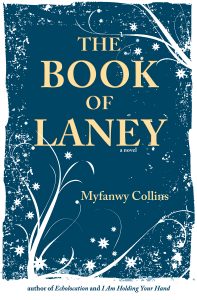
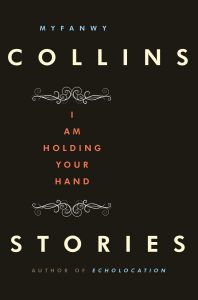
Today we’re talking to Myfanwy Collins. Over the past 25 years, Myfanwy Collins has written and published three books, numerous freelance articles, advertorial, web content, newsletters, blog posts, book reviews, short fiction, and essays. She has also worked as a ghost writer, editor, and creative writing teacher to continuing education students. And, Myfanwy just happens to be the office manager at Firebrand Technologies, NetGalley’s parent company.
How do you set your goals?
I’ve always been goal oriented so I truly like to make goals and stick to them. I have different goals for large projects than for small ones. For instance, I will say to myself that I’m going to finish a draft of this manuscript by x date, which is usually something that corresponds with my Astrologyzone monthly horoscope. Not even joking. One time I told myself I could not watch the latest season of Game of Thrones until I finished my manuscript. If it’s a quick project, I will tell myself I can’t have a glass of wine or piece of chocolate or whatever until I finish. Basically, my jam is a mixture of astrology and denial and treats. I guess I’m sort of like my dog that way.
Photo Credit: Myfanwy Collins
Describe your routines as a writer and how they help you stay on track with your goals:
I got divorced two years ago which sort of blew my routines to smithereens. I’m just now beginning to reclaim and rework them. With that said, I’ve never been a sit at my desk every day and write person. I will do that if I have a project I’m working on and excited about and then I tend to blast through the first draft pretty quickly. After the first draft, I put the manuscript away for a period of time (weeks or sometimes months) and then come back and revise and then put away again and revise until I feel it is ready for other readers. At that point, I pull in my trusted readers and gather their feedback. My trusted readers are my friends who write. They don’t all write the same types of things, but they all know and understand my work and what I am trying to achieve and aren’t afraid to ask me hard questions or tell me when something’s off. Also, they know how I like to receive feedback. Once their feedback is incorporated and I feel like I have done all I can do, I send the manuscript to my agent and wait for her feedback. After her feedback, I revise and return it to her and repeat this until the manuscript is as good as we think it can be.
As for shorter work, one new routine I am really enjoying is that my fiance Evan (also a writer!) and I taking part in #submissionsunday on Twitter each week. We submit at least one piece of work to a venue each Sunday. Doing this is actually making me eager to work on new pieces.
How did you develop your writing routines?
Photo Credit: Myfanwy Collins
I have been writing professionally for nearly 30 years at this point and so my routines have been established over time as I worked. When I was younger, I was more impatient to get work out there when it really wasn’t ready to be seen. I was essentially giving all editors an opportunity to say no to my work. After several years of that I began to learn about the importance of taking my time during revision. I learned this also through years of being a reader for various literary journals. When you read submissions you tend to read a lot of work that could have used more time and more revision. Reading submissions is something I cannot recommend highly enough to writers. It really does help you understand your own shortcomings as a writer.
Ask journals if they need help. You can also look on their websites and see if they have any openings listed. Another place to look is on Twitter. If you follow a lot of writers and journals (as I do) you will often see calls for readers or interns. Finally, I think Submittable probably posts some openings. Pretty much all reader positions are unpaid (mine were) and they do require quite a bit of work but I promise you they pay off is that your own writing will improve.
What routines have you tried that didn’t work for you? Why didn’t they work?
I’ve tried to use writing prompts in the past in order to get myself writing more but they generally don’t work for me because I’m a bit of a rebel.
Photo Credit: Myfanwy Collins
What do you do when you feel stuck?
I do a couple of things:
I read (I do this all the time anyway but I do it more so when stuck).
I force myself to sit at the page and I set a timer for myself for 20 or 30 minutes and tell myself I must write during that time. It helps me get past the anxiety of the blank page. This is something I recommend to my writing students as well and it’s been very helpful to them.
I go back to Julia Cameron’s The Artist’s Way and work the program. The book is a 12-step program for creative people and it is so immensely helpful. In fact, I think I’m past due for another session.
Describe the balance between having a full-time job, family, and writing. How do you manage both?
This is the hardest balance. It was hard when I was a part-time working married mother and It’s hard now as a full-time working divorced mother. My child and family come first in all things and so writing becomes secondary when I am momming. Since I am divorced, there are times when my son is with his dad and so I could be writing but am often sad and missing my kid which gets in the way of writing. But the good news is that I have a really great therapist! I’m starting to listen to her about using my time more wisely instead of allowing myself to be mired in grief.
How do you think about finding a job that supports you financially and supports your writing? Do you need something that leaves room in your mind for creative work, something that keeps you in the habit of deep thinking and frequent writing, something else altogether?
Financial support is key to me and so that is always my first priority. With that said, it is wonderful to have a part of my current job that feeds me creatively. I think if my job were writing all day, I might not pay any attention to my own creative writing. So right now I have a job that is one part business oriented, one part process oriented, and one part creative. It’s a really nice mix.
For more perspectives on creating a successful schedule as a writer, check out our interview with Stuart Evers!
Personal branding is an important part of the success of any author, and social media is a strong place to develop and grow that brand. Your tone as an author, your field of interests, and how you communicate with the world should all be considered as your develop your voice on the Internet. While Instagram, Facebook, and Twitter might not be for every author, savvy users of these sites can grow your community of dedicated fans. So, how to begin building a successful social media presence?
Start by looking at social media as a way to connect with your potential audience, not as a marketing tool. Authenticity will help you genuinely connect with the kinds of readers who will be your be among your best advocates and fans, which will also help your online presence grow organically.
Think about which platforms are best suited to your own instincts and talents. Have a knack for funny or insightful quick turns of phrase? Try Twitter. Are you a visual thinker? Get on Instagram. Once you’ve established which platform(s) you will use, make sure that your tone fits with your audience. If you are a middle-grade author, it’s best to avoid filling every tweet with the most colorful swear words you know. On social media, you are your brand and everything you put online goes toward building that brand.
Be a part of larger conversations and get yourself noticed online by using hashtags, sharing articles, replying to other authors, and engaging with your followers. Communicating directly with your followers is a great way to strengthen your online presence and bond you to your audience. Engaging in conversations that relate to specific topics in your book will attract a like-minded social media following. If you as an author are posting about something that’s interesting to a community, the community will take notice.