Booknet Canada’s Tech Forum: Data, diversity, and collaboration

Each year, Booknet Canada hosts Tech Forum, the largest tech-focused professional development event in the Canadian publishing industry. Like the other conferences and industry events we’ve been attending, panelists were thinking about diversity, inclusion, data, and collaboration. Here are some of our takeaways from Tech Forum 2019’s speakers discussing top-of-mind challenges and trends.

Moving from Diversity to Inclusion

The Canadian publishing industry is no stranger to the conversation around diversity and inclusion in the book world. Tech Forum’s keynote speaker Ritu Bhasin of bhasin consulting inc., addressed this in her presentation, “Disrupting Bias: Overcoming our Discomfort with Differences.”

Diversity, she said, is only one step toward inclusion. Despite best intentions, diversity is a numbers game – counting how many different “kinds” of people are in an institution. Diversity doesn’t ensure that individuals who have been marginalized in the publishing industry and elsewhere are encouraged to be their authentic selves or given the same opportunities as others. For example, diversity means advertising that a certain percentage of a publisher’s list is written by women or POC authors. Inclusion means ensuring that a publisher spends equal resources (or greater resources) to market its diverse list to give those books a better shot in the market.

Bhasin also mentioned that in 15 years Canada’s population is projected to be 35-40% POC and 6% indigenous. So, not only is it an ethical and social imperative to make a more inclusive industry, it is also best business practices.

We also saw questions of inclusion and diversity addressed at London Book Fair. Read our recap here.

Tools for Data-Driven Decisions

Jordyn Martinez, sales representative at Simon & Schuster Canada, explained how to use data to encourage more book sales in her talk, “Finding the Kernel: Data Driven Sales Tactics to Really Sell Your Book.”

She suggested that publishers use Google Trends, which analyzes the top search queries across customizable topics or categories. This useful tool can be used to discover data that can have a major impact on the marketing of your book, especially when it comes to advertising.

Take, for example, regional trends. If you’re hoping to sell your summer beach read, you can use Google Trends to discover which state or province is most likely to be searching for this term. This can help you hone in on how to spend your advertising dollars and get the most bang for your buck. With Google Trends, you can learn that Floridians are much more likely to be searching for beach reads than people living in Alaska, making it a far more sensible decision to start a beach-focused ad campaign in Florida.

Google Trends can also help you pick the optimal publication date for a title, as well. If you’re wondering when you should publish a steamy romance, Google Trends can tell you that the week after Valentine’s Day is the most popular for these types of searches.

Building Bridges Between Publishers and Booksellers

While publishers and booksellers are aligned in goal, we learned during “Building Bridges, Not Walls: Successful Publishing & Retailing Collaborations,” that they do run into issues executing their shared goal of helping books find their audiences.

Laura Ash from Another Story Bookshop told us that as a bookseller, she sometimes has a hard time restocking bestsellers, causing a critical gap between when the book is at its most popular and when they actually have it in stock. If books are out of stock, today’s readers aren’t willing to wait until the bookstore has it again. Instead, they’ll turn to Amazon or a convenient big box store.

Chris Hall of McNally Robinson said that he’s finding it more and more difficult to spot best sellers. But, he noted that for him, a bookseller’s job to generate their own bestsellers. He suggested using engaging displays, interesting newsletters, and targeting the local demographic to set a book up for success. For example, at his own branch in The Forks in Winnipeg, which has a rich history as an early Aboriginal settlement, they’ve worked extra hard to devote shelf space and hand-sell titles by local indigenous authors.


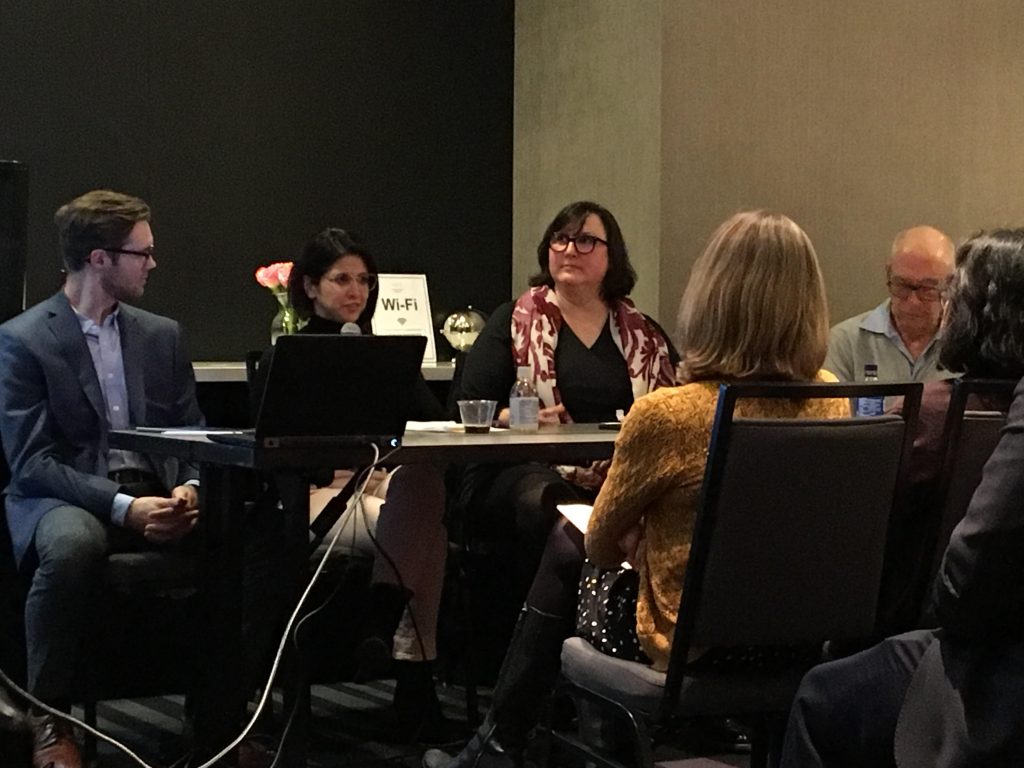
For more of our conference season coverage, check out our recap of London Book Fair and Livre Paris, as well as recent events from BIGNY and the Future of Media. And, keep up with NetGalley Insights conference coverage by signing up for our weekly newsletter!


Divider

Trends at Livre Paris: The power of self-publishing, the global audio market, and keeping young readers’ attention

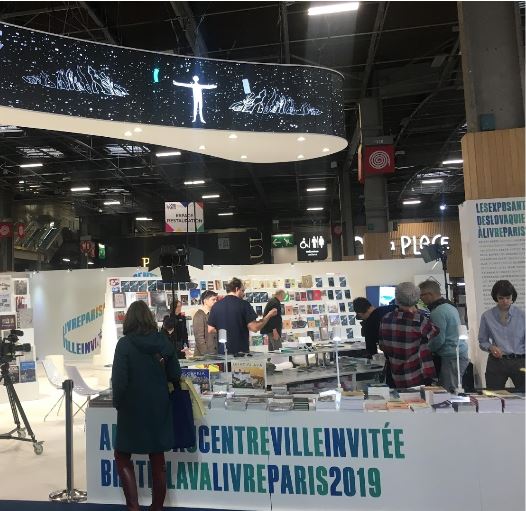
With conference season in full force around the world, NetGalley France’s Astrid Pourbaix attended Livre Paris, or Paris Book Fair. In its 39th year, Livre Paris gives visitors a grasp on global book trends. 1,200 exhibitors from 45 countries displayed their services, products, and titles. The 160,000 attendees could sit in on one of 800 conference sessions or wait in line for an author signing from one of the 3,000 authors in attendance.

Whereas London Book Fair focused on the Indonesian book market, Livre Paris honored several different global regions. Primarily, the festival focused on Europe as a whole. Speakers including Livre Paris director Sébastien Fresneau discussed Europe’s rich and diverse cultural history as well as issues that affect the whole continent’s book market, such as the EU copyright directive legislation. Additionally, both Bratislava – the capital of Slovakia – and Oman were invited as special honorees.

A major takeaway from Livre Paris, like London Book Fair, was the growing children’s market. School visits to the fair have increased, and Livre Paris has responded by providing more programming designed for younger readers. Students, young influencers, and authors of children’s and YA books appeared on panels and in programs.

One challenge noted during the fair is that young readers’ attention is volatile. Publishing needs to do more to enliven young reading communities and keep them engaged.

Audio was in the air. 2 out of every 10 French people listened to an audiobook in 2018, doubled from 2017. For the first time, there was a prize awarded for audiobooks. Plus, writers and comedians were invited to record audio at the fair.

Like the US market, we are seeing the power of self-publishing in France. Both Amazon Direct Publishing and Books on Demand presented at the fair, indicating that self-publishing is an established part of the French book industry. Attendees also saw the Gutenberg One robot, a print-on-demand solution that can print books in less than 5 minutes. A recent survey saw that 80% of French people enjoy writing and 53% already wrote or would like to write a book one day, indicating that self-publishing is likely to keep growing in the French market. Check out our coverage of London Book Fair, as well as recent events from BIGNY and the Future of Media. And, keep up with NetGalley Insights conference coverage by signing up for our weekly newsletter!
Divider
Divider

London Book Fair: Making a more inclusive book industry

The London Book Fair is one of the largest annual gatherings for the book industry, particularly for agents and publishers looking to trade in international rights. Between March 12 – March 14, attendees who were not sitting in the Rights Hall or dashing to meetings sat in on seminars, strolled the booths, and met colleagues from around the globe who also made the trip to Olympia London.

Where the Book World Comes to Meet

Each year, the London Book Fair focuses on a particular market from around the world. This year the spotlight was on Indonesia. Made up of thousands of islands and religiously diverse, Indonesia was able to showcase their books and culture to a global audience. The Indonesian book market is as diverse as its many thousands of islands, titles are produced in many different languages, and few are translated into English. Theirs is a growing market, with an increasing international presence. Fiction – short stories, in particular – are popular in Indonesia. Indonesian readers read across a broad number of topics, but myths, spirituality and beliefs seem to be at the forefront of Indonesian publishing.

Throughout the Fair, we found that the most prevalent theme was inclusivity. Genres and formats that are growing in the industry are the ones best able to connect with a diverse audience. By making the publishing industry more diverse, it takes steps to become more inclusive.

Diversity refers to the different kinds of people who are involved in an industry, or the different kinds of stories that are told. Inclusion refers to an overall atmosphere that is welcoming to different kinds of people, including those who have been traditionally marginalized within the industry.

Diversity

One of the biggest aims of the publishing industry over the last few years has been that of creating books with more diverse characters, written by more diverse authors. Whilst the industry is heading towards having greater diversity, there is more that needs to be done. Actor, author, and TV presenter Cerrie Burnell highlighted, during the Diversity: Where’s the Issue panel, that diversity within books, children’s books in particular, needs to be more normalized. She said it should be as “normal as observing it when living and walking around London.” Author and illustrator Rose Robins took a similar stance, suggesting that neurodiverse characters should be included more in literature, rather than treated as plot devices. (That’s one of the reasons we loved The Kiss Quotient – check out our recent case study here!)

To connect with audiences from different backgrounds, the publishing industry needs to become more diverse as a profession, in addition to publishing more books with more diverse characters. Speakers from HarperCollins, SAGE Publishing, and EW Group touched on this in their panel on building a more diverse and inclusive industry. Efforts to make publishing houses more diverse need to start from the recruitment stage to keep the industry vibrant.

Poetry

At LBF19, we saw that poetry is on the rise. Poetry sales in January 2019 were at an all-time high, growing by 12% according to Nielsen Bookscan. The recent success of poetry has been attributed to its being more inclusive and diverse than other book genres, with more young people than ever buying and engaging with poetry. The success of Rupi Kaur, writing about her experience as a woman and as a daughter of immigrants, as well as Charly Cox, indicates that there is a huge audience eager to see themselves reflected in the books that they read. And with platforms like Instagram, poets have new ways of reaching younger, digitally engaged audiences. More traditional forms have also found a new audience, with Robin Robertson’s The Long Take the first work of poetry to be nominated for the Man Booker Prize. Sales of poetry have been building for the past few years, and it looks like 2019 will continue to see an upsurge of interest  in the popularity of poetry.

Audiobooks

Unsurprisingly, of all the formats discussed at the London Book Fair audiobooks continues  to be on everyone’s radar. According to Nielsen figures the sales of audiobooks have increased by 87% in the UK since 2014. The popularity of audiobooks has been linked to the trend of podcasts and engaging young men in particular with a different format of reading. But audiobooks have seen a rise overall and the boom seems set to continue for 2019 and onwards. (Check out some of our podcast coverage here.)

Nonfiction

Nonfiction is also a hot topic, as both adult and children’s nonfiction sales have increased in the last year. For adult nonfiction, a large proportion of the success comes down to feminist titles and inspiring books such as Slay in Your Lane by Yomi Adegoke and Elizabeth Uviebenene, Bloody Brilliant Women by Cathy Newman and Dolly Alderton’s Everything I Know About Love. As nonfiction has become more diverse in its scope, it has drawn in new audiences.

We were encouraged to see the book industry slowly moving towards being more inclusive, with publishers and authors having great successes on more diverse books. Different formats and genres are reaching new audiences and encouraging a whole new generation of readers.Keep up with the rest of our conference season coverage by subscribing to NetGalley Insights!

Divider

Companion Audio Strategy for The Unwinding of the Miracle (Penguin Random House)

Julie Yip Williams, author of The Unwinding of the Miracle, knew she would never see whether readers liked her book. The Unwinding of the Miracle shares Yip Williams’s experiences and thoughts as she approached her death from colon cancer. Through the book she wonders about what the lives of her husband and daughters will look like, and finds the miraculous in the most universal human experience — death. Published posthumously on Feb. 5 by Random House, The Unwinding of the Miracle is a New York Times bestseller.

The team at Random House helped raise the memoir’s profile through a unique audio strategy. Beyond typical plans to advertise on podcasts, they decided to take it a step further for the release of The Unwinding of the Miracle. In collaboration with Pineapple Street Media, Random House created a 4-episode companion podcast, Julie: The Unwinding of the Miracle.

The podcast featured audio interviews with Yip Williams as well as audio from some of the last visits her family had with her before her death. Listeners could hear Yip Williams talking about how she decorated her bedroom so that she’d have somewhere beautiful to die and making plans to haunt her family members. In the final episode, the surviving family members and friends talk about the ways that they feel Yip Williams’s presence after her death.

As of February 27, 2 weeks after the final episode was released, the podcast ranks number 51 for all Health podcasts on iTunes, with over 600 reviews and an average of 4.5 stars. The podcast was featured on Call Yr Girlfriend through a sponsorship from Pineapple Street Media and on All Things Considered.

Investing in a collaboration with expert podcasters resulted in a well-paced and compelling narrative with high production values. Pineapple Street Media is a well-established podcasting company. They produce, among other shows, Still Processing from the New York Times and were behind the chart-topping Missing Richard Simmons. Julie: The Unwinding of the Miracle’s producer Eleanor Kagan comes from a well-established audio background, having worked previously for both NPR and Buzzfeed.

We chatted with Leigh Marchant, Director of Marketing & Business Development at Random House about Julie: The Unwinding of the Miracle and their companion audio strategy.

How did you decide to create a podcast for The Unwinding of the Miracle?

Our Random House Editor-in-Chief, Andy Ward, and I had been talking about doing a podcast with our mutual contact, Max Linsky, from Pineapple Street Media. As all great projects start, we pitched him a few ideas over lunch and decided that Julie’s story would make for an incredibly compelling podcast. We thought having Julie’s story told in both book form and via podcast would be a really interesting project—that instead of being restricted by only telling this story in one format, we could have them complement and inform each other.

What kinds of audiences were you hoping to access with the podcast?

We think that podcast listeners are readers, and readers are podcast listeners. We have seen some consumer insights reports that show media affinities for some of our authors and titles, and podcasts are definitely included in there. Of course, certain podcasts appear more frequently in our data than others but we do think there is listener/reader overlap.

So we were hoping to draw attention to the book through the podcast audience – and vice versa. The two projects – the podcast and the book – are meant to be complementary. In other words, if you read the book, you will want to hear more from Julie and her family and friends through the podcast. And if you listen to the podcast, you’ll want more in the book. Both the podcast and the reading experience deliver in such a strong way. The content of the two projects is actually different but together provides an incredible understanding of what Julie and those who are terminally ill are grappling with.

Both the podcast and the reading experience deliver in such a strong way. The content of the two projects is actually different but together provides an incredible understanding of what Julie and those who are terminally ill are grappling with.

How is that audience different from — or the same as — the audience you were connecting with through other parts of the campaign?

We are always looking to reach readers through our campaigns and one of the ways we do that is actually via podcast advertising! So creating the podcast was a great way to reach some of our target audience. We were hoping to reach readers of books like When Breath Becomes Air, The Middle Place and The Bright Hour. Also we targeted readers of medical memoirs, followers of Julie’s blog, as well as parents.

But of course the goal for any book is to reach the right readers and we knew that if we could capture an expanded audience via the podcast, they would likely be interested in the book as well.

How did you balance creating a rich and emotionally resonant podcast with leaving enough unanswered for the listener so that they would want to read the memoir?

That was a main concern at the start of the project. We didn’t want to cannibalize either project so we were careful to keep the content different enough, yet complementary. In the podcast, you hear from Julie’s family and friends. The book is just Julie’s words and thoughts. The two forms work so well together though. Each project is so powerful, so moving, so compelling. But together they offer such a complete portrait of Julie’s incredible life and, later, her battle with cancer.

How does companion audio fit into your strategies for other titles?

We are always looking for new ways to reach readers – on whatever platform they are consuming content. Podcasts are a great way to do that and we will continue to explore opportunities in that space – when it makes sense. We have a number of other podcasts through our corporate group coming. But we’re also exploring other multi-media platforms, as well. We also just launched an Alexa Skill called Good Vibes. Our goal is to connect readers (and listeners) to great books via the platforms where they are already consuming content.


Be sure to subscribe to NetGalley Insights for more strategies from successful marketing campaigns, audio coverage, and more!

Divider

Future of Publishing Panel Takeaways

Data-driven discovery and trend predictions, plus what success looks like for books in 2019

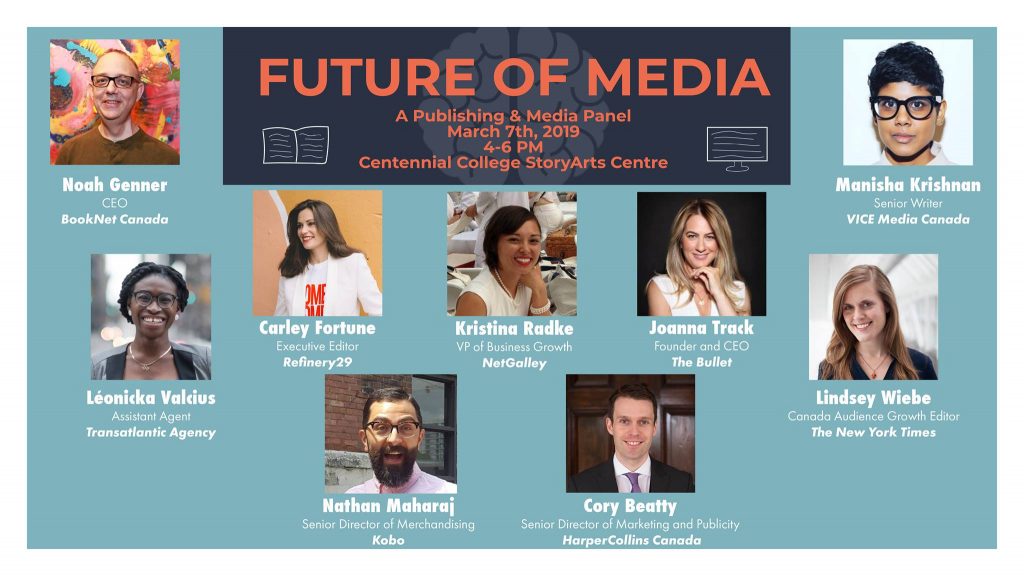
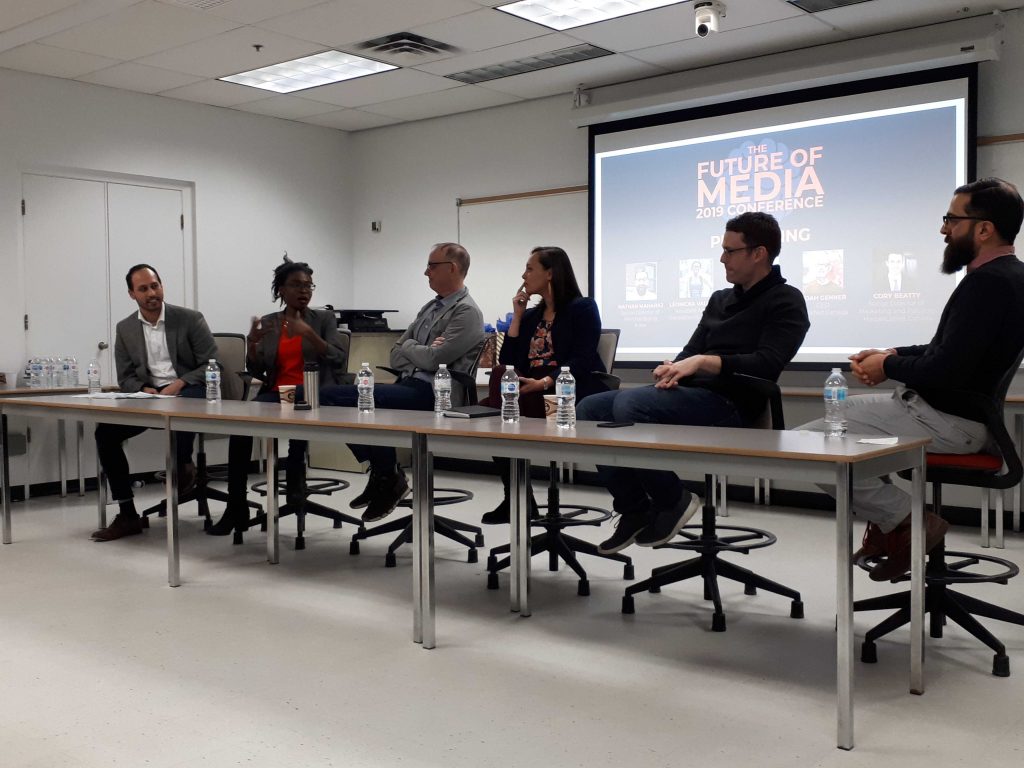
On Thursday, March 7, NetGalley attended Centennial College’s Future of Media panel in Toronto. This mini conference features a larger discussion about the media landscape, with a specific panel to focus on publishing. With moderator Manu Vishwanath of Harlequin, the Future of Publishing panelists talked about how to incorporate data into decision-making and how to think about gaining the attention of an audience with limited time and budgets in an oversaturated media landscape. Here are some of the takeaways that we’re bringing with us into the future.

Panelists

  • Cory Beatty, Senior Director of Marketing and Publicity at HarperCollins Canada
  • Noah Genner, Director of BookNet Canada
  • Nathan Maharaj, Senior Director of Merchandising at Kobo
  • Kristina Radke, VP of Business Growth and Development at NetGalley
  • Léonicka Valcius, Assistant Agent at the Transatlantic Agency

The Future of Discovery

At NetGalley, discovery is one of our favorite words. Connecting readers with new books and new authors is the name of our game, and the panelists were just as passionate about this topic as we are.

While discovering the “next big thing” has always been a publisher’s dream, the reality of this actually happening seems to be getting slimmer every year. Not only are there more publishers who are publishing more books, there are hundreds of thousands of books being self published, and the global marketplace seems to promise that anyone with a talent for writing can make big on their own under the right circumstances. But publishers and authors need to work extra hard to retain a reader’s attention. The panelists discussed the pressing question: How?

Director of BookNet Canada Noah Genner opened up this conversation with data. He noted that leisure spending has not gone up and neither has the rate of leisure reading. This means that readers are struggling to prioritize enormous amounts of content without the time or money to spend on it.

To combat this, Genner told the audience that it’s more important than ever for publishers to have a voice and a brand that stands above the rest. Whether this means developing a niche, like Second Story Press, whose books with strong female leads and themes of social justice sets them apart, or running a smart and snappy Twitter account like Coach House Books, it’s your brand–not necessarily the next blockbuster book–that keeps readers returning for more.

Kristina Radke, VP of Business Growth and Development here at NetGalley, added that in order to make your book succeed, it’s crucial to not just look at a variety of KPI’s and early data, but to actually make time to understand it. There will always be multiple points of data that can be collected pre-publication–like the information on NetGalley’s Title Feedback Activity Page–but without taking the time to understand that data and change your plans based on what you learned, it’s never going to make an impact on the success of your book.

Focusing on the end users, Senior Director of Merchandising at Kobo Nathan Maharaj said that publishers should focus more clearly on appealing to readers who don’t have time to sit down for focused reading, through audio. Audiobooks can help rope in customers that don’t necessarily have the leisure time, but are still interested in the story format and do have the leisure money to spend on books.

The Future of Book Trends

On a panel predicting the future of publishing, it’s only natural that the conversation steered toward predicting future trends. Léonicka Valcius, Assistant Agent at the Transatlantic Agency, said that books are a cultural artifact that reflects society as a whole, and by reflecting on the events of today we can predict what trends will pop up in the next few years.

Take, for example, the dystopias of yesterday which became popular as the world experienced great political and economic upheaval. Now, we’re seeing a surge of “up-lit”, which emphasizes kindness, empathy, and happy endings. As consumers, we’re now looking for books that show us the light at the end of a long, dark tunnel.

Valcius also praised the data when trying to hone in on the trends of tomorrow. With all of the data that’s available to us digitally, finding what works is the challenge–but also the opportunity. While we may have a book that will only sell 200 copies throughout its lifecycle, with that data we can now predict what type of reader will buy those 200 copies and market accordingly.

The Future of Success

It is, of course, every publisher’s and author’s goal to see their books succeed. However, as Noah Genner was quick to point out, there are different  kinds of success, and it’s important for anyone in the publishing industry to evaluate their standard for what success means.

Senior Director of Marketing and Publicity at HarperCollins Canada Cory Beatty said that he regularly needs to set expectations with the authors he works with. Sometimes authors may be frustrated that their books aren’t immediately being buzzed about in major newspapers, and yet the marketing team for said book has been celebrating for weeks at the successes it has seen, whether hitting modest sales goals or generating consumer interest on Goodreads.

Kristina Radke returned to the data conversation, piggy-backing on the ideas about anticipating trends. Modern capabilities are making it easier for new players to join the game. For instance, Wattpad Books is launching a new imprint that will use machine learning to help predict the next hit story and further develop content from their site.


Keep up with the rest NetGalley Insights coverage of industry events, plus publishing trends and interviews, by subscribing to our weekly newsletter!

Divider