Proven Strategies: Compelling eBlast Copy and Design

Tips and success stories from NetGalley’s marketing experts

The NetGalley marketing team loves collaborating closely with our clients.  We’re working with publishers and authors every day to help put their books directly in front of the NetGalley members who are most likely to read, review, and advocate for them. Since our clients are so diverse (from the “Big 5” houses to self-published authors, and publishers of all kinds of books—bestselling fiction to nonfiction and academic, religious, graphic novels, children’s and YA, cookbooks, and beyond) our marketing team has seen first-hand which strategies have worked to engage many different kinds of readers. 

Our first Proven Strategies post covered how to grab a reader’s attention with a strategic subject line. Now, our marketing team is sharing tips for the next step: optimizing the design and content of a dedicated eBlast, one of NetGalley’s most popular promotions. 

Design

Not every publisher or author has the budget or bandwidth to create unique eBlast designs in-house. That’s ok! You don’t have to design an eBlast in order for an eBlast to succeed. NetGalley’s marketing team has a standard eBlast template that can easily incorporate any art or assets. For example,  images you’ve used as Facebook or Twitter covers (like The Bromance Book Club), or graphics from your website or from the jacket art itself, to match the book’s overall branding and achieve a more cohesive look.

The call to action (CTA) should clearly tell the recipient what to do next—and should fit your goal for that campaign. Before creating your eBlast, think about what you want from the recipient: requests, limited-time downloads, wishes, reviews, pre-orders, purchases? Highlight the CTA with color, placement and text treatment. We use standard “button” images that mirror the recognizable action buttons of the NetGalley site, so that recipients can easily spot where to click in the email. 

Plus, make sure to preview your email design across multiple devices and email clients, so you know how it will render for recipients who are reading your email on mobile devices, on their computers, or elsewhere. Our team will help test, too!

Content

Remember that, like all of us, the recipients of your eBlast are busy and have short attention spans. It is highly likely that they won’t spend very long on your email, so it’s key to design that email with efficiency and readability in mind. Keep the CTA “above the fold” so the recipient can see it without having to scroll too much. Can the recipient answer what, why, and how after just a few seconds of looking at the email?

And, be sure to include the book’s pub date prominently so they know the best time to submit and post their review. We Are Bookish Executive Editor Kelly Gallucci told NetGalley Insights: “My pet peeve is definitely when emails don’t contain enough information. It’s most helpful for me when the author, book title, genre, and pub date are as up-front and clear as possible.”

When writing the content of your eBlast, keep in mind that less is more. Including an entire book description will likely overwhelm a reader, or increase the chance they will lose interest before taking action. Readers scan emails quickly for info that is relevant to them, so divide text into short paragraphs. And remember that a prominent headline (at the top or center of your eBlast) is your second chance at a strong first impression (after the email subject line). Is your headline clear, impactful, intriguing?

Don’t forget to leverage high-profile relationships. Highlight if your author is already a bestseller, or if there are any exciting crossovers into television or film. And if you have quotes from industry professionals or big-name authors, include those but keep blurbs brief

We also recommend considering your secondary goals for the campaign, in addition to the main CTA. For instance, in addition to driving requests on NetGalley, do you also want the book to get more nominations for LibraryReads and the Indie Next List? Include a nomination reminder with deadlines (but only if the eBlast is being targeted to librarians and booksellers). Or, in addition to driving Pre-Orders, do you also want to build an author’s brand and social following? Consider including a short author bio, plus a photo and social media links. Do you want to increase brand awareness for your company or imprint? Make sure to highlight your logo and link to your publisher page on NetGalley so members can “favorite” you. 


Have questions or need advice? Ask NetGalley’s marketing team – marketing@netgalley.com! We’re here to help, and want to help your book succeed. And, be sure to subscribe to NetGalley Insights so that you don’t miss our next Proven Strategies post.

Divider

Stephen Sposato: Curating for 1.7 million patrons at Chicago Public Libraries

Anyone who works in the book industry is, in a sense, a content curator. But a curatorial eye looks different for different segments of the industry: for agents, marketing departments, booksellers, critics, and influencers. 


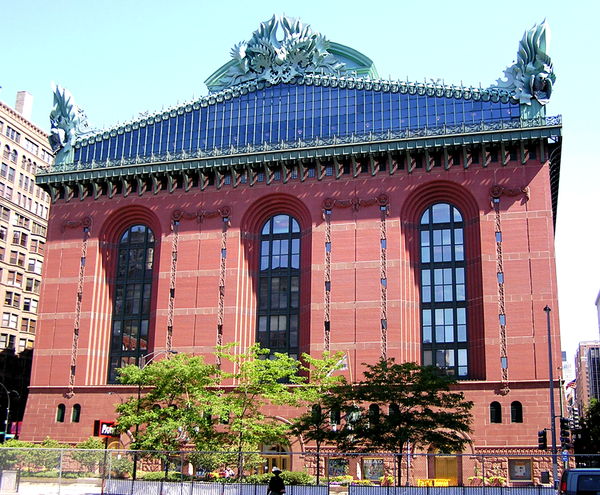
Chicago Public Library – Harold Washington Library Center

Stephen Sposato, Manager of Content Curation at Chicago Public Libraries told NetGalley Insights how he and his team think about their roles as curators for their community, and which resources they use to make sure that they are best meeting their patrons’ needs. 

Unlike an independent bookstore, which caters to the current interests of a neighborhood, librarians need to consider a wider demographic and a different set of needs. With 80 locations, over 2.6 million books in circulation, and 1.7 million patrons, Sposato and his team are curating for a massive and diverse community.  

Sposato told Insights, “We’re expected to provide access to books for a lot longer (sometimes even after they’re out of print). We also tend to offer materials people need for short term help but don’t particularly want to own, such as resume books, SAT prep books, or books on dieting and fitness. The public expects us to offer access to all books in perpetuity, but the reality is we have limited resources and must make choices every day about the collection, and so librarians are curators in this sense.”

Here are the resources that Sposato and his team use to curate the offerings for Chicago Public Libraries.

Data

“We actually order most new mainstream books because we serve a large city and we can count on wide demand. For us the trick is to correctly anticipate the level of demand and to order the right number of copies. We check the previous track record of the authors of new books and look at the performance of similar books. We are committed to stocking a collection that is “current, diverse and responsive,” as it states in our library’s most recent strategic plan, and at the same time we need to be fiscally responsible with our funding.”

Industry recommendations

“We stay on top of the coverage of forthcoming and new books pretty well. Aside from the opportunities I just mentioned, publishers work with library distributors like Ingram and Baker & Taylor who helpfully create lists of forthcoming titles each month. And librarians across the country also discuss forthcoming titles on social media and contribute to the monthly LibraryReads list of the top 10 titles recommended for readers each month.”

*Librarians from NetGalley can nominate books for LibraryReads directly within their account!

Library Marketing teams 

“We don’t have as much direct contact as we could ideally, but the bigger publishing houses and some of the mid-size publishers have staff devoted to library marketing, and we receive regular email newsletters from them, as well as notices about forthcoming books, including some access to advance copies. When we can attend professional conferences, there are often opportunities to see them present forthcoming books in person and meet with them in exhibitor booths. We also receive some catalogs by mail. Our publisher reps also tend to be extremely helpful when we contact them with requests by email.

We’ve had great success with publishers sponsoring author visits, and we’ve even started experimenting with “book buzz” events for the public as when Penguin Random House came and pitched new books directly to our patrons or we invited smaller local publishers to showcase their newest titles. We also had the opportunity to partner with Macmillan recently who worked with a mystery book club at one of our branches to promote some new mystery titles.”

Sposato hopes to expand his collaborations with publishers. “With the demise of some big [bookstore] chains over the last couple decades, there are fewer physical places for people to discover new books, movies and music.  We see libraries playing an increasing role in discovery, and we think that’s of long-term benefit to publishers, so more dialogue would be great. I’d also like to see more proactive inclusion of libraries when launching books of local appeal: we need to know about big Chicago books before anyone else. And while book stores tend to be found in the wealthiest neighborhoods in order to have the best chance of survival, we have a presence in more diverse neighborhoods. We love it when publishers are open to discussing the needs we see throughout our entire society.”


How do you or your marketing team work with regional librarians? Email us at insights@netgalley.com. We’d love to feature your strategies!

Stephen Sposato is the manager of Content Curation at Chicago Public Library, overseeing selection and readers’ advisory. He has over fifteen years of experience in collection development and readers’ advisory. He has written for Library Journal as a reviewer and as a contributor to the Reader’s Shelf column. He has provided extensive RA training, given presentations at BookExpo, the Illinois Library Association and the American Library Association, and currently serves as a member of the Board of Directors for LibraryReads. You can find him on Twitter at @stephensposato.

Divider

Sourcebooks Shares 7 Strategies for Successfully Redesigning Books

Repackaging books with new covers, new back cover copy, or even a new titles is  one of the tools in a publisher’s arsenal to give a book more life. Whether making decisions about the trade paperback design after the hardcover has been on sale, or discussing changes to a backlist title that’s been acquired from another publisher, Sourcebooks uses a lot of data to support their repackaging efforts. 

Sarah Cardillo, Director of Publishing Operations at Sourcebooks shares how she and her team use sales numbers, comp titles, and audience responses to guide their redesign strategy.

1. Consider a book’s total positioning, in addition to sales

When we are looking at the trade paper edition of a hardcover release, we start by looking at sales – how many [books] did we actually sell, what percentage of the inventory sold through within the first 6-8 weeks, and did it sell at the level we had expected it to sell? We look at retail sales [as well as] library sales. Sometimes a book might not sell at our expectations at retail, but may have landed very strongly with the library markets.

If we are looking at the cover for a book that was previously published by another publisher, or perhaps self-published, we look at how the book was positioned as a whole. So, we start even further back than the cover. We think about the title, the story hook, or positioning, and the category the book will be shelved in. Even if the book had relatively strong sales, some of these other factors may give us insight into how to launch the book at a new level for Sourcebooks.

Hardcover
Repackaged as a trade paperback

2. Involve everyone in the process

Since we start by looking at sales, the decision begins with the sales department and the marketing team. The marketing team weighs in with what they were seeing at the point of launch. Did they get the reviews they’d hoped for, the media placement they’d planned? Do they think the media had an impact on the sales (or lack thereof)? We may also discuss what the consumer reviews look like. Sometimes we see that consumers are most excited about a particular aspect of the book that we did not position against – that we didn’t address on the cover or with the back cover copy. 

If this was a previously published book by another publisher or self-published, then the conversation may start with editorial – again though the editorial team starts with how they want to publish the book for their list – once they determine that positioning, the art director will review and make a recommendation on the cover direction.

In most instances, the design team is brought into the conversation when there’s already a recommendation on the table to repackage.

3. Pay attention to comp title performance 

We rely heavily on data – and comp titles provide data. We may see that a design trend has faded or taken off and so we rethink our packaging to fit into that trend. We research the categories and subcategories in depth to provide expertise on what works (and what doesn’t) when positioning a book into a certain category. We want to make sure that the consumer who reads a particular type of book knows at immediate glance that this book is for him or her. We want to make sure that our cover fits within the design space of similar books, but also stands out or stands above the other books. That the consumer sees it and knows it’s what they like to read, and that they care enough to pick it up.

4. Listen to your audience

I would say most repackages are driven by external market considerations. If we believe the current cover didn’t help sell the book, a new cover has the chance to reach a different audience – where your hardcover may have been packaged more like a romance, but your reviewers really like the mystery in the story – a repackage could lean toward the mystery aspect. So it’s still based on content, but now external factors are telling us to reposition against other aspects of the content.

A good example within the romance space was a repackage we did for a book that we published as a trade paperback title – The Curl Up & Dye by Sharon Sala.  Sharon Sala is a New York Times bestselling author in the romance space, but this trade paperback did not land the way we had hoped. But when we released her second Blessings, Georgia book, I’ll Stand By You as a mass market romance, we saw that her numbers were very strong in the mass market space and that people really loved her Blessings, Georgia setting. So we then repackaged The Curl Up & Dye as a mass market romance with a new title, You & Only You. It was already set in Blessings, Georgia, but we did not market it that way for the original trade paperback release. When we put it in mass market we made sure to communicate to the consumer via the packaging that this was set in Blessings. The one thing about mass market books and authors is that they often write within a “world” and the consumer is trained to look for copy on the cover (or in online metadata) that indicates a particular book is part of a particular series, or world. The success of I’ll Stand By You showed opportunity and a market – but more specifically that her customers were in that space already – she had success with other publishers in the mass market space, and keeping her where her customers were but then also packaging her new titles in a cheaper format allowed her to grow her reach both with existing customers but also with customers who read similar mass market titles by other authors. Plus, the lower price presented less of a barrier for entry for new customers. 

Trade paperback
Mass market romance

5. Remember your deep backlist

Sometimes we look at titles that were published 5-10 years ago (or more) and think about bringing them back out with new covers as a way to boost sales.  Especially in the young adult and the romance space. Since those audiences (especially Young Adult) turn over to new people so regularly and trends change so quickly, a successful book with a fresh cover can easily find new readers, and the accounts are happy to take the book because it was successful in the past with the previous audience. We are seeing a lot of illustrated covers in the young adult space right now. 10 years ago covers were all photographic. So we are looking at our backlist right now and seeing what books sold well but could get new life with an illustrated cover direction.

Photographic cover
Illustrated cover

6. Capitalize on the success of a repackaging campaign

If the sales increase, we can attribute part of that to the cover, of course, but we know other factors may play a part, too. The change to a more affordable format and the repositioning of the back cover copy are also important. When we see a repackage working really well, we’ll consider what we did and if there were elements that we can use from that repackage to guide the cover for the author’s next book or similar books in the same genre.

7. Think about repackaging at all stages of the publishing lifecycle, including acquisitions

Our goal in repackaging the Poisoned Pen Press backlist titles [which Sourcebooks acquired in 2018] was to give them a more cohesive look across authors and series and to have more immediate recognition for consumers.  We wanted to make sure that the consumers who devour mystery titles but have never heard of Poisoned Pen would recognize the books as mysteries that they’d want to read. We felt that, while there were many strong covers on the books, there was room to help drive consumer awareness even more. To use our experience designing for this market to increase sales.


Sarah Cardillo is the Director of Publishing Operations at Sourcebooks, one of the 10th largest publishers and the largest woman-owned trade book publisher in North America. She began her career as a production editor with Publications International (now Phoenix International Publications) but since joining Sourcebooks twelve years ago, she has grown her professional reach exponentially. As director of publishing operations, Sarah oversees numerous key departments, including the award-winning art and design department, and the production, manufacturing, and editorial production departments. She utilizes her project management and change management knowledge to build workflows and increase efficiencies across publishing operations. At the onset of the digital transformation, she rebuilt the standard bookmaking process to seamlessly integrate ebook production into the workflow. Her passion for organization and process has transformed the way departments communicate within Sourcebooks. Sarah has both a bachelor’s degree in written communication and a master’s degree in corporate communication and change management. 

Divider

V.E. Schwab Reflects on Her Publishing Journey: “In Writing for Myself I Found My Readership”

Originally published on Bookish.com.

Earlier this year, V.E. Schwab’s debut novel The Near Witch was republished with a brand new cover and bonus short story. For the readers who have flocked to Schwab’s Shades of Magic and Villians series, it’s been an exciting opportunity to visit their favorite author’s first book after falling in love with her other work. For Schwab, it’s been a time to reflect on The Near Witch’s initial run and how it ultimately impacted the way she told stories. Here, Schwab opens up about finding her readership, writing for herself, and the advice she gives to all debut authors.

Bookish: Your debut novel The Near Witch was recently rereleased with a brand new cover. What’s the rerelease been like for you?

V.E. Schwab: It has definitely made me more introspective. I’m proud of how far I’ve come. A decade has passed between writing that book and my work on my next novel, The Invisible Life of Addie La Rue.

I assumed that The Near Witch was going to roll out very quietly back into the world. Instead, Titan, my UK publisher, took a book that never really had a fair chance and they’ve given it everything debut me would’ve dreamed of. They treated it like a new release and gave it so much attention and fanfare. I’m elated.

This is, of course, the great paradox. Debut me never would’ve gotten any of these things.

I’m very honest about that to aspiring writers. Nothing about this book changed. Everything about the way this book was treated changed.

Bookish: In the book, the Near Witch rises up after being buried. It seems to mirror this book’s journey.

VS: I’m calling this book tour the resurrection tour. It’s very weird and surreal. It’s hard for me to talk about with any objectivity. I’m so grateful.

I’ve come a long way but it wasn’t a straight line. The Near Witch is a quiet book that originally came out at a time in publishing when everything that was being touted was very loud and it wasn’t finding an audience. I now have a weird, dark, morbid audience and I’m very fortunate to have found it, but it took time.

Readerships take time to build and publishing isn’t always great at the long con. After The Near Witch and the two books in The Archived came out, I was very jaded. I was falling out of love with writing because writing is beautiful and publishing is not. I said, “I’m doing everything I can to make other people happy and it’s not working. I don’t know if I have a future in publishing but I’m not going to go down on someone else’s ship. I’m going to write what I want to read. Audience of one.” What happened was Vicious, a book that was never supposed to be read by anyone. Because of that I didn’t pull any punches. I made it weird, mildly sadistic, and as morally complicated as I wanted… and that book found its readers. What I discovered is that in writing for myself I found my readership, my dark, devoted readership. My rule from then on was I write for an audience of one first, I write what I want to read. If I do that and it appeals to other people, that’s wonderful. It it doesn’t, I will not feel like I wasted any time. I never looked back after Vicious.

My rule from then on was I write for an audience of one first, I write what I want to read. If I do that and it appeals to other people, that’s wonderful.

Bookish: Are there any elements of The Near Witch that you now recognize as a hallmark of your work?

VS: In The Near Witch, you can see the motifs I would go on to explore a decade later. I was on a panel several years ago with Melissa de la Cruz and she said that she had been told that writers tell one story. That no matter how many books you write, you as a writer are exploring one story. If you look at all of my books, they’re about insider/outsider culture and feeling like you don’t belong. That motif is in every single one of my stories. It’s interesting to look back at something like The Near Witch and see that 21-year-old me had a very tentative touch. I was just starting to learn and just starting to push. The difference between Lexie in The Near Witch and Marcella in Vengeful is the difference between 21-year-old me pushing back against society and 31-year-old me burning society down.

Bookish: This rerelease of The Near Witch is going to introduce some of your readership to your debut novel, while other readers may be picking it up without having read your other work. For new readers, where do you recommend they go next?

VS: It’s so hard. There’s the Marvel velocity where I’m like go in order: The Near Witch is the first one and none of the other books would have happened without it. I also have a tweet that says if these are things that appeal to you read this—it’s like a choose your own adventure game.

It’s also hard because books are static and people are not. If someone reads my work at 20 versus 30 they’re going to come to it with a different set of life experiences. I have to be the right version of myself to write a book, someone has to be the right version of themselves when they read it. As a writer, I will only ever bring half of the equation, the reader brings the other half. Everything the reader brings will determine if they enjoy one of my books. I want everyone to try everything knowing they’re not going to love everything and equally that something might surprise them.

Bookish: You have some stellar first lines. What do you think makes a good first line and how do you go about crafting yours?

VS: I spend a lot of time on first lines. I think it goes back to my poetry background. I don’t judge books by their covers, their titles, or their jacket copy because authors usually don’t have a say in any of those. As a reader, the first thing you encounter that an author has complete control over is the first line. I judge books very strongly by their first page because I want to get a sense of the voice. The first line needs to tell me not only something interesting, kind of like the opening line of a joke, but it also needs to tell me the tone of the book.

I will agonize over a first line. I’ve tried very hard to make the first line in each of my books be a microcosm of the first page in that I want them to tell you what kind of book you’re stepping into. The first line of Addie La Rue is “This is how it starts” and that becomes the first line for each of the sections of that book until we reach “This is how it ends.” I’ve always really wanted to begin a book with that line.

Bookish: Out of all of the characters in your other books, who do you think The Near Witch‘s Lexi would get along best with? What about Cole?

VS: Oh god. Let me think. I always joke that I make female Slytherins and male Hufflepuffs.

I tend to write this female transition: You watch Lexi become Mackenzie from The Archived and Mackenzie grows up a little bit and becomes Kate from This Savage Song, Kate evolves into Delilah Bard from Shades of Magic. I’d like to put Lexi with Delilah Bard. I feel like Delilah Bard would show Lexi her next evolution.

In the same way, This Savage Song’s August is the Super Saiyan version of Cole. He’s the glow up. But not in a pretty way, he’s a glow up of feelings. Cole was my first shot at the very emotionally aware boy and August takes that to 11.

Bookish: Is there any piece of advice that you don’t see being given to debut authors that you wish you could give them?

My advice is to work on your next book and remember that for the vast majority of us, careers are not made by a single novel but by a body of work…You can’t predict which book is going to blow up.

VS: My advice is to work on your next book and remember that for the vast majority of us, careers are not made by a single novel but by a body of work. The more pressure you put on a single novel, a debut especially, the worse it is going to be for you. You can’t predict which book is going to blow up. Shades of Magic, my most popular series, starts with my eighth novel. The seven books that came before that were instrumental in building my career. Every single one of those books was a brick in the wall.

Publishing has a really high mortality rate and you need to develop healthy habits. I’m an ancient veteran now. My debut year had 196 young adult and middle grade debuts, and there are fewer than a dozen of us publishing now. Only three of us are bestsellers. The curve is not in your favor as a creative. I think it’s best for everyone to have more information, more balance, more support across publishing generations.

You have to go in armed with knowledge. Publishing is very short-term minded and that’s very often to the detriment of books. It’s the nature of the industry to only be interested in the shiny and the new. As a reader, I find things that are five, ten, 20 years old. I don’t come to them when they’re brand new. We’re missing out on a lot of really great things in the interest of always trying to chase the new. It’s unfair because nine times out of ten the books that don’t get a chance are by diverse authors. It’s becoming even more vital to have passionate bloggers, reviews, and sites that are devoted to finding really good stories whether that story is a day old or a decade.

Bookish: On social media, you’re open about the challenges of being a writer and the demands of the industry. How did you get to a place where you felt comfortable sharing that?

The problem with not being honest and open in a creative industry is that when you begin to struggle, and we all do, you take it as a reflection of you, not of the fact that creating is hard.

VS: I’m very fortunate that I’m still in this industry and can have that kind of retrospective. Transparency and openness have always been my policies because I started out so young. When I wrote The Near Witch at 21, it was a time when no one was being honest. The problem with not being honest and open in a creative industry is that when you begin to struggle, and we all do, you take it as a reflection of you, not of the fact that creating is hard.

That’s what was happening very early on when The Near Witch wasn’t going well. I thought it must be me. Then I went to a writing retreat and all of these authors who were only talking about the positives online were sitting around talking about how hard everything was. I remember thinking that if I had known these other authors were also struggling, I would have felt so much less alone.

I meet a huge number of aspiring authors and authors new to the industry who come up to me and say thank you for making me feel less alone in how hard this is. And that’s really the only reason that I do it. There’s this pressure to romanticize the creative process. I didn’t want to perpetuate this myth. I wasn’t going to let anyone else come up feeling as alone as I felt.

Bookish: You’re currently working on a book called The Invisible Life of Addie La Rue. How’s it going?

VS: It’s trying to kill me on a daily basis. I hit this point in every single one of my book processes where I want to delete the book and move to Iceland to raise goats. But Addie is a really specific beast in that I’ve been working on it for so long and it’s lived in my head for so long. I needed to wait to write it until I was emotionally and craft ready, and I am those things now, but it’s the longest a story has ever sat with me. When you’ve had the first draft in your head for eight years, you want to do it right the first time which is not possible.

The internal pressure to do it right is way higher than with any of my other books. I’m trying to smooth the concrete before I pour it. As a writer, I revise as I go. I will work on each chapter until it’s ready. As a result, what I turn in to an editor looks very polished, but the story isn’t flawless. I’m very fortunate to have editors who can see past the polish, and while it sucks to have to tear things down to studs even when there’s really nice wallpaper, I think it is important to have strong editors who can see through that.

Bookish: Are there any books you’ve read that were quietly released into the world that you wish received more attention?

VS: Certain Dark Things by Silvia Moreno-Garcia. It’s wonderful and I want the world for it. It flew under the radar but I love everything about it. I recommend it constantly.


Victoria “V.E.” Schwab is the #1 NYT, USA, and Indie bestselling author of more than a dozen books, including Vicious, the Shades of Magic series, and This Savage Song. Her work has received critical acclaim, been featured by EW and the New York Times, been translated into more than a dozen languages, and been optioned for TV and Film. The Independent calls her the “natural successor to Diana Wynne Jones” and touts her “enviable, almost Gaimanesque ability to switch between styles, genres, and tones.”

Divider

5 Tips for Newly Signed Authors from a Senior Literary Agent

Literary agents bridge the space between editors and authors, working with both to shepherd great books into the world. Because they work closely with both editors and authors, they have a unique vantage point within the industry. They know what editors expect, and how authors can best set themselves up for a successful working relationship. Here’s what the Nancy Yost Literary Agency’s Senior Agent Sarah Younger wishes every newly signed author knew:

1. You don’t have to be on every social media platform known to man

In fact, for fiction, you don’t have to be on social media at all. Sometimes publishers like to see authors supporting their book publishing efforts through social media, but you don’t need to have a robust following while you’re in the querying stage. You may not even need to have a big social media footprint when or even after your book is sold. Social media can become overwhelming, take away from writing time, and be a source of frustration to authors who aren’t innately inclined to visit the platforms. This is okay. However, social media can be a place where you find community and friendship. It can also be a way to communicate with your fans and readers, not to mention a fun way to support your books. Ultimately, when it comes to social media you have to find your own personal comfort level. If it doesn’t feel natural, don’t force it.

2. Get ready for edits

Yes, the author has the final say on their story, and their writing, and their book. But you should be prepared to work with your agent on possible revisions before manuscript submissions and know you’ll eventually get feedback and edits from an editor, copy editor, possible beta readers, and critique partners. They all want to help make your work stronger. And help you tell the story you want to tell. I know that the first response writers have when faced with revisions is not always LET’S GET TO WORK, but having a good attitude about those revisions will go a long way in establishing and preserving a great working relationship with the enthusiastic team behind you.

3. Create an author website

While you don’t need to be on social media, I do think it’s a good idea for authors to have an author website. It doesn’t have to be fancy or expensive, but having a place with your pen name, or your real name, and a bit about your books or your works in progress will be helpful when your readers want to find out more about you, your books, and your future projects. Before you shell out money for a website domain though, be sure that it is the name you really want to use. I advise using your name or pen name as your domain name. But, if that name is already taken, think about adding book-related words to the end. For example, if my name was taken, I would try adding “books” or “novels” or “author” or “writer” on the end to see if that domain is available instead, like this: sarahyoungerwriter[.]com  

4. Explore professional organizations.

Joining a professional organization could be a great way to find community and educational resources. However, membership fees are typically involved with these organizations, so know that this isn’t a requirement for your success. But, if the budget’s there, I advise authors to look into professional organizations in their genre of choice. (If they’re writing across genres, it can be helpful to be part of multiple organizations.) For example, I work with a lot of romance authors, so RWA (Romance Writers of America) is a helpful professional organization for romance writers, both published and unpublished.

5. Expect and prepare for rejection. This industry is not for the faint of heart. An author and agent will see and experience many more rejections than offers and success stories, particularly when they are starting out. However, receiving a rejection, or multiple rejections, doesn’t mean that this career isn’t for you. Just keep swimming! (Yes, I appropriated that quote from Dori.) But it’s true, just keep moving forward. Just keep writing. Just keep going. It only takes one YES!

Sarah Younger is a Senior Agent at the Nancy Yost Literary Agency. You can find out more about the projects she’s sold and the genres she represents here. Additionally, you can find her on Twitter.

Divider

Giving Publishers the Data They Need: Developing Eloquence on Alert

Firebrand Technologies’s newest service, Eloquence on Alert, gives publishers more access to data about their titles across retail sites than ever before. Through EoA, publishers can keep tabs on any changes to their title information, including changes to sale price, product pages, buy buttons, and third-party seller activity.

Catherine Toolan, Director of Eloquence Services at Firebrand, gave us an inside look at how Eloquence on Alert developed, and some of the surprising ways that publishers are already using it.

What were the origins of EoA?

Eloquence on Alert came out of a simple need for publishers to determine if and how their products were being displayed on retail and reviewer sites. Publishers send out metadata to trading partners and there is very little feedback from those trading partners once the metadata is received. This simple mission planted the seed and from there we have discovered that there is a lot more information we can provide to make it easier for publishers to help their products succeed.

A lot of the impetus for EoA came from Eloquence on Demand users. Many of our clients were sending out the very best metadata that they could on the industry recommended schedule but they were still having issues with the data or the timing of updates on some sites. They also encountered situations where their titles did not appear on some sites at all. As you can imagine, publishers with a large list cannot check retail sites daily for the presence or absence of their titles. Eloquence on Alert grew out of a need to help publishers tackle these and similar problems.

Eloquence on Alert was conceived in 2016, with the first data collection in July of that year.  We released an “alpha” Title Management-dependent version of EoA in 2017 and quickly realized that we needed to pivot and build a SaaS model (software as a service) that would allow for independent product growth.

How does EoA interact with other Firebrand products like Title Management and Eloquence on Demand?

Eloquence on Alert is a standalone product and does not require the use of any other Firebrand products. We will be working to integrate EoA with Eloquence on Demand and NetGalley in the future.

How does EoA fit in with Firebrand’s overall vision around publishing and data?

Firebrand’s flagship products, Title Management and Eloquence on Demand encourage publishers to develop workflows and data management practices that help them to provide some of the best metadata in the industry. Eloquence on Alert takes this a step further and helps publishers fine-tune their practices by drawing attention to trading partner behavior in relation to their metadata content and delivery schedule. The best metadata in the world does not do much for you if your partners are not using it.    

What need does EoA meet for publishers?

Eloquence on Alert monitors critical factors such as fluctuating list and sale prices, changes in sales rank, missing product pages, missing buy buttons, third-party seller activity, marketing assets, review count growth, and audience sentiment. EoA is committed to continued product development and enhancement to meet emerging industry needs.

We know that a select group of publishers have been using EoA in beta. How have you seen them use EoA?

Each of our beta customers is using EoA in a different way. This was somewhat of a surprise! Some are using it primarily to monitor third-party seller activity, some are using it to track missing product pages or price data fluctuation, and some are using the data in their own Business Intelligence systems to augment their internal data analysis.

Did any of them use it in ways that surprised you?

Yes, there are several uses that have surprised me. One that seems obvious to me now but did not initially is the use of EoA to track products that should not appear on certain sites. When certain products appear for sale on a specific site it is a violation and their product management team is alerted so that they can contact the site to have the product(s) removed.

How do you hope publishers will use EoA now that it’s more widely available?

I hope that EoA will become a “first thing in the morning” activity. The EoA results can be used to let you know if there will be any burning issues to deal with today, if any of your products are on the move, or if all is status quo for the day. A simple check-in with EoA can do a lot to inform your priorities.

Where can readers learn more about EoA or see if it’s a good fit for their goals?

The best way to learn more about Eloquence on Alert is to see it in action – words cannot really describe it! Readers can contact our Sales and Marketing department at info@firebrandtech.com to schedule a demo.

Divider