2026 U.S. Book Show Recap

NetGalley + Enchantress Marketing: Mastering Perpetual Discovery for Backlist

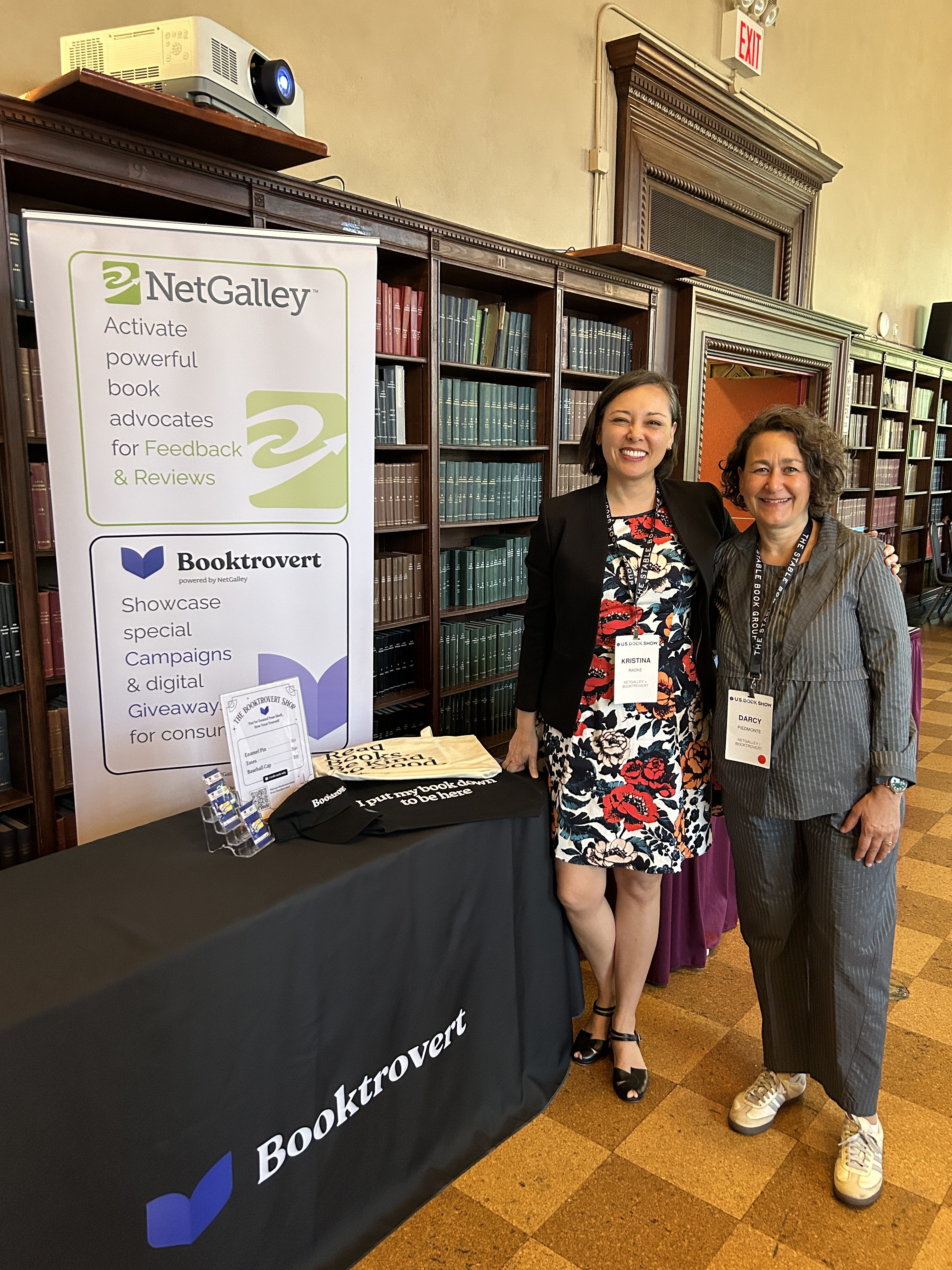
Last week we had the pleasure of sponsoring the U.S. Book Show, where we attended many excellent panels focused on how data, modern discoverability, and emerging technologies are shifting the landscape and addressing industry-wide challenges. Topics ranged from shaping trends by leveraging data for strategic acquisitions to reacting to trends using social listening tools and surfacing backlist, and, of course, experimenting with AI to streamline workflows. It was within this context that we took the stage with our session: “Beyond Launch: Mastering Perpetual Discovery for Backlist.” 

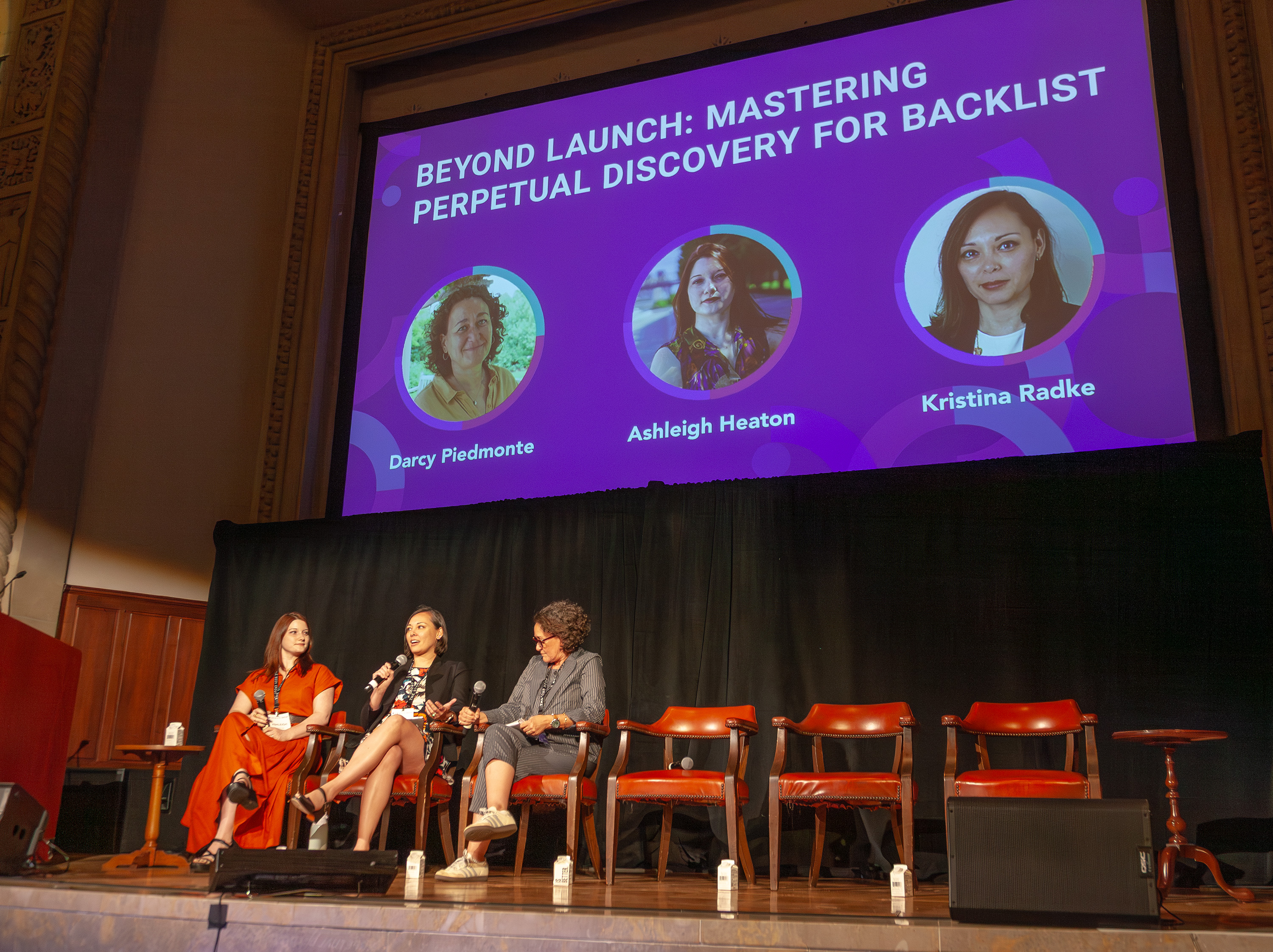
Moderated by Darcy Piedmonte (Director, NetGalley + Booktrovert), and including Kristina Radke (SVP, NetGalley + Booktrovert) and Ashleigh Heaton (Founder, Enchantress Marketing), we focused in on ideas for how to maintain sales velocity once the initial launch budget is spent. Here are a few highlights and takeaways from our conversation:

Photo: Enchantress Marketing

1. Marketing is Applied Human Psychology 

Ashleigh said it beautifully, “Marketing is applied human psychology. It is both an art and a science.” As with all science, robust data is essential. Marketers often rely on intuition and emotional connection with a project to fuel campaign decisions, which should always be the throughline of that work. And rich audience data can confirm intuitions or point out potential internalized bias or assumptions.

To get at the data, social listening tools can help publishers identify social media influencers, understand the online conversation for a brand or book, highlight top-performing platforms/accounts, and offer a big-picture summary of an audience or trend. Ashleigh specifically mentioned Brandwatch or Meltwater for deep consumer insights. And other social scheduling tools that also offer social monitoring for your owned channels: Sprout, Metricool, Hootsuite.

2. Reviews as the Cornerstone

Overlapping with social listening, Ashleigh recommended digging into consumer reviews to understand consumer sentiment. These reviews are dynamic data that help publishers identify common themes, keywords, descriptors, tropes, tags, and comps. Kristina reinforced the idea that publishers should leverage data from reviews to ensure the best positioning for backlist titles. For instance, ensuring that a trending trope is explicitly mentioned in the book description, or adding new words, like “romantasy”, to your metadata. That is the type of information that may not have been relevant 10 years ago, but will ensure better discoverability today.

Sentiment has always been among the most important things that marketers need to understand about their readers, and now it also matters for online search and discovery. Sentiment signals are one way that AI search models (like the “AI Overview” in your Google search, now powered by Gemini) understand how to answer a particular question that readers ask. These AI models synthesize information from online sources, including book reviews, to learn how to talk about your book. Reviews give these tools a more nuanced understanding of which books to mention when someone asks for a “standalone romantasy book”, for instance.

3. Leveraging All Your Data

There were many sessions about AI throughout the conference, and Kristina called forth a number of points made in other sessions related to context, clarity, and intent (Cameron Lennon’s session on GEO) and the opportunity to use data across all parts of the publishing workflow to create “superdiscoverability” (Brooke Dobson & Keith Riegert’s lunchtime session). 

Kristina emphasized that AI now makes it possible to surface backlist in a more nuanced way than before. Where publishers once relied on institutional knowledge and keywords to search for backlist books that might match a hot trend, now they can connect data across title management, social listening, and consumer analytics tools to prompt a more specific search: “Look at books published 5 or more years ago, identify the top 10 titles to be included in a Pride Month marketing campaign, filter based on LGBTQ+ main characters and openly LGBTQ authors, with high lifetime sales that have slowed in the last 12 months, and focus on currently-trending themes like queer joy or found family.” 

This relies on publishers doing the work to connect these databases (ask your technologists about “Model Context Protocol”), and to fully understand what types of robust searches they want to do. Kristina encouraged managers to ask team members to deliver specific questions like the example above to share with technologists as an example of what they want to achieve.

In Conclusion

What this all points to is a future where data supercharges marketers’ intuition. By treating reviews as dynamic data and utilizing advanced search, publishers can move past the initial launch hype and establish an ongoing ROI for the true backbone of their business: the backlist.  The conversations we had both on and off the stage reminded us that while technology continues to change rapidly, our core mission as an industry – helping readers find the most relevant books for them, whether newly launched or deep in the backlist – remains the same. Beyond the excellent programming, the U.S. Book Show remains one of the best places to meet our clients and partners who share this dedication to driving discoverability. 

Want to dive deeper? Check out NetGalley’s article: Discoverability in the age of AI.

Divider

Case Study: Leveraging Two Communities for Audience Building, Engagement, and Sales

What happens when you combine the targeted reach of NetGalley with the broad appeal of a consumer giveaway?

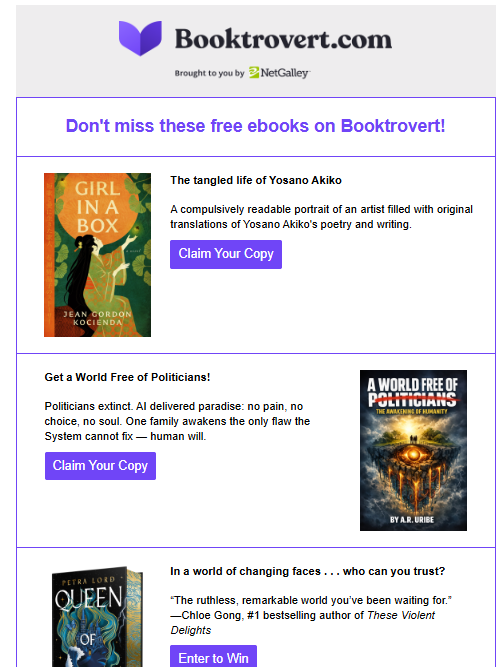
In March, NetGalley explored this question by sending a special newsletter featuring 11 Booktrovert giveaway and sweepstakes campaigns. The newsletter encouraged 53,000+ highly engaged NetGalley members to claim an eBook from any of the giveaways, or enter to win the sweepstakes.

By pairing the direct-to-consumer Booktrovert campaigns with the trade reach of a NetGalley newsletter, publishers were able to create new opportunities for both professional reader discovery and consumer engagement. 

NetGalley and Booktrovert work together to extend marketing reach to any audience. 

NetGalley helps publishers generate reviews and nominations, reach trade professionals and influencers, and drive buzz. Booktrovert creates excitement among consumers via urgency-driven giveaways, increases sales and pre-orders, and grows the author’s mailing list.

Together, they create a full-funnel approach to book promotion. NetGalley plants the seeds of interest and advocacy pre-publication, and Booktrovert nurtures the growth at and beyond launch by expanding awareness and engagement. Then, both platforms can be used to keep the momentum flourishing as a book moves into the backlist. 

The results of the newsletter reinforce just how effective this combined approach can be:

The special NetGalley newsletter resulted in more than 8,700 unique clicks to the featured Booktrovert campaigns. In fact, in all 11 cases, engagement with the Booktrovert campaigns experienced noticeable lifts in activity immediately following the newsletter, with some seeing the number of entries increase by more than double after the newsletter was sent out. 

Day one has organic discovery via the Booktrovert Feed and Digest Newsletter, and then a second spike with the added NetGalley Newsletter.

What makes this especially impactful is the context in which these readers are discovering the campaigns. NetGalley members are already primed for book discovery as tastemakers; they’re actively seeking new titles, exploring upcoming releases, and making decisions about what to read or buy next. By introducing giveaways with a lower barrier to entry via newsletter (especially for those who weren’t approved or may have missed the original request window) they now have a second, immediate way to engage. Plus, the reach has also expanded to consumers via the Booktrovert feed and daily digest email. These are readers who may be hearing about your book for the first time.

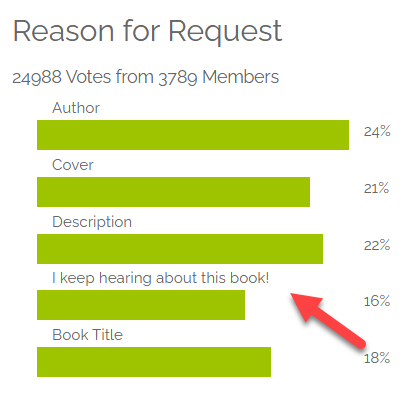
You might also be familiar with the “I keep hearing about this book!” metric that we collect on NetGalley, and we are firm believers in this principle. The more often an audience hears about a book or sees a creative marketing effort by the publisher, the more likely they are to engage with it. Seeing your book in more than one bookish space increases the likelihood that you’ll convert that person into a buyer!

Ultimately, the multi-pronged approach works because it reflects how readers actually discover books. 

It’s rarely a single moment—it’s a series of reinforcing actions  that create sales velocity and success.

Having your book on NetGalley organically introduces a book to industry professionals and early advocates. A newsletter brings that same title back into focus. Adding a Booktrovert campaign demonstrates ongoing marketing effort to these trade audiences, and offers them an easy way to both act on their own interest and share the opportunity with their own audiences. Each step builds on the last!

By connecting these touchpoints, publishers and authors can create a better path from discovery to engagement to sales.

Divider

How Independent Authors Can Maximize the Benefits of NetGalley

Independent author M.J. Etkind recently shared her experience on Reddit about using NetGalley for her books — including landing a feature in the The New York Times and generating meaningful library sales. Her biggest takeaway? NetGalley is far more than a review tool. When used strategically, it’s a professional marketing platform designed to connect authors with booksellers, librarians, media, and industry professionals.

Here’s what indie authors can learn from her approach.

Remember Who NetGalley Is For

Many independent authors view NetGalley as a way to collect reviews on Goodreads or StoryGraph. And yes — reviews in these places absolutely matter, but M.J. believes they’re not the only thing that matters! 

NetGalley was built primarily to serve industry professionals, ranging from booksellers, librarians, media, reviewers and educators. But  M.J. has found that if your only goal is consumer reviews (meaning reviews shared on retail sites like Amazon or social sites like TikTok), you may be underutilizing the platform. Authors can, and should, think bigger! Trade visibility, library discovery, and retail relationships are all within reach when using NetGalley. M.J. discovered that one of her biggest long-term values came from focusing on professional audiences, particularly within libraries and bookstores.

Budget Conscious? You Have Options. 

For budget-conscious indie authors, M.J. recommends working with a NetGalley reseller to reduce the cost of the investment.

For independent authors, you have options:

  • Work with NetGalley directly: You have full control over your own account and title listing, with instant access to data. Plus, participating in NetGalley’s built-in promotions and Booktrovert are just a click away!
  • Work with a NetGalley reseller: Resellers may provide some discounts and/or shorter time commitments. Some even have marketing and PR options bundled into their offerings, which can benefit authors looking for a bit of extra help!

M.J. has used Victory Editing Co-Op, one of the longest-standing NetGalley co-ops/resellers available. Additional experienced resellers can be found here.

How to choose?

Authors who want full control, detailed data access, and the ability to actively manage and scale their campaigns may prefer working directly with NetGalley. Those looking for a lower upfront cost, shorter listing durations, or a more hands-off experience may find a reseller to be the better fit.

Anne Victory, owner of Victory Editing and facilitator of the Victory Editing Co-op, says, “My co-op gives authors maximum control while making NetGalley far more accessible. I focus on removing friction so authors can spend their energy where it matters—reaching readers.”

Know the Communication Rules

To maintain member privacy and trust, NetGalley has important guidelines regarding member contact. Based on her experience, M.J. recommends following these two lines of outreach to ensure broad engagement and relationship-building with readers: 

  • Send a gentle email to past ARC readers notifying them of a new book
  • Send reminders to approved members encouraging them to download and review

In fact, NetGalley offers template language to help you get started with outreach like this!

Plan your communication strategy carefully to ensure you’re following best practices that will help you stay on the right side of GDPR, CCPA, and other privacy-related regulations. 

Have Your Retail Infrastructure Ready

Timing matters. M.J. emphasizes making sure pre-order links are live everywhere, especially on Amazon, Goodreads, and through IngramSpark. This will ensure your retail links are available by the time your NetGalley listing gains traction! Metadata distribution through Ingram can take over a week from file approval to bookstore visibility, so plan ahead.

If industry professionals discover your book on NetGalley but can’t easily order it, you risk losing momentum.

Invest in Your Cover

M.J. saw a dramatic difference in performance between books with strong covers and books with weak ones.

On a platform like NetGalley where books are browsed quickly and feedback on the cover art is encouraged, cover quality directly impacts request rates. This is especially true of cover images that were generated by AI. While many indie authors are understandably conscious of budget, your cover image is not the area that you should scrimp on!

Include Industry-Focused Materials

In addition to the book file,  M.J. ensures that all of her developed marketing materials have been added to her NetGalley listing, so that industry professionals know how and where to reach her. She includes:

  • A sell sheet
  • Ordering information for bookstores and librarians
  • Contact details
  • Backlist catalog information
  • Direct links to social and retail sites for reviewers to cross-post reviews

This reinforces NetGalley’s professional purpose and makes it easier for industry members to act, as well as helping more casual consumer reviewers share their reviews widely! 

Integrate NetGalley into Your Bookstore Marketing Plan

For M.J., NetGalley isn’t a standalone tactic — it’s part of her broader bookstore outreach system. She includes her NetGalley link when pitching bookstores, giving them a frictionless way to preview the book in order to help them decide to carry it in their store, hand pitch to readers, and enhance sales. In this context, NetGalley serves not only as a review tool, but as a professional access point within a more comprehensive marketing strategy.

M.J. Etkind, author of the New York Times Featured book, The Witch of Wall Street.

M.J. Etkind lives a double life. By day, she is a corporate girly with a business degree. By night, she writes romance novels in a cozy book filled apartment in Boston. M.J. Etkind’s most favorite fun fact is that she once took an entire vacation to visit a bookstore. Etkind has previously published two romance novels. Dishwasher Safe (2024) and The Witch of Wall Street (2025) which was featured in The New York Times Book Review.

Divider

Interview: Michelle Halket, Publisher, Central Avenue Publishing

Michelle Halket, Publisher of Central Avenue, occupies a unique position in an unpredictable book market. Michelle is a Canadian publisher, but the vast majority of sales come from the U.S. owing in large part to their authors’ expansive reach on social media and with the help of her distributor, Simon & Schuster.

We’re excited to share Michelle’s expertise about what works best for Central Avenue titles on NetGalley.


Michelle, you strike us as a publisher who is small and nimble enough to be creative, but data-savvy enough to never be reckless. What brings you to NetGalley with your books, even after trying different marketing strategies?

As any company will tell you, marketing is one of those difficult places to spend money because it’s nearly impossible to determine the actual ROI. I’ve been around long enough to have tried everything: print and digital advertising in trade journals, paid social posts, author tours (both in person and online), trade show booths, festivals. But the reason I have kept my NetGalley account active every year after I’ve pulled the plug on so many other avenues is because I can see the actual results. There’s three main areas:

  • 📊 Metrics: NetGalley shares with me so much data on who accessed the book, ratings of content and covers, impressions, review incidence, etc. These are the hard data that give me an idea of how widely the book was seen, read, and shared. 
  • ✍🏼 Reviews: Not only do I get those data points mentioned above, I get actual readers telling me their thoughts that get posted online in so many places. They all start with “Thank you to NetGalley and the publisher…” so I am not guessing where they got the book. I know that the money I spend every month is reaching readers who then share their reviews on socials and on bookstores. And the algorithms that favor customer interaction now favor our books because of how robust those reviews make our book pages. (For NetGalley’s take on the power of reviews, read here!)
  • 📨 Direct Consumer Relationships: I get to be able to contact each and every reviewer in a very targeted way – I can identify the ones who loved a book and let them know an author has a new one coming. Or I can ask people to join our newsletter where they can get even more freebies. All this goes so far in building reader relationships.

At NetGalley, we like to say our website is pretty easy to navigate and use. Can you speak about efficiency and ease of use while also addressing what it is that keeps you coming back?

The UX is simple, intuitive and attractive – from the colors, typeface and generous use of white space to how every aspect you might need links to each other. I can be on a book’s page setting up metadata and with one click access reviews, and then from there, set a custom outgoing message, or determine who I want to have auto-approval. Kudos to your designers for taking a complex and integrated ecosystem and making it easy to use.

You champion fiction—often literary—and poetry. This is not necessarily the “consumer literature” that follows trends, but rather a conscious decision to, in your words, “move readers, challenge perspectives, and leave a meaningful impression.” What do you look for when considering requests from the NetGalley community?

With nearly every request, we click through and take a look at the person requesting. I like knowing if they actually leave reviews, and when they do, are they honest and fair, or are they just there for the free books? I very much appreciate current and fleshed out bios with specific details, such as knowing they like to champion queer books. I always check out their approval rating as this tells me how my peers see that reviewer. And it was a great addition to be able to make notations on users as we often see the same users request our books. By making those notes, it feels like we have gotten to know them and then other people at our press can read our thoughts when they are answering requests.

You’ve shared that NetGalley data and reporting is vital to you and the success of your books. What are the marketing KPIs you’re looking at, and what ROI are you aiming for? 

We are realistic and have different metrics for each book, for example, a romance novel will garner more requests than poetry titles. Generally, with a poetry book, I’m looking for dozens of requests. With romance or upmarket fiction, I’m expecting hundreds of requests. While the review rates vary quite a bit, it’s the ability to reach out to reviewers to remind them for a review or to post it on socials or bookstores. I also pay attention to the thumbs up/down of the cover. Given how trends change in cover styles, it gives me an idea if we hit the mark, or missed it?

We are realistic and have different metrics for each book… Given how trends change… it gives me an idea if we hit the mark or missed it.

In addition to the number of requests, I’m looking at the people requesting. I don’t often auto-approve because we approve on a regular basis, and I like seeing the names and organizations. Knowing that booksellers from Germany are requesting a particular book helps us with selling foreign rights as I can bring this information to my agent. A request from a popular creator, or journalist means a possible huge reach and now I have that person’s email address to reach out with a more personal message.

My ROI is solidly founded on the contacts I’ve made and the relationships that have come from them. When I compare the cost of our NetGalley account to any other advertising or marketing initiative, I quickly see how much value I’m getting. This isn’t just a list of emails – these are people that I know asked for and liked what we do here.

When I compare the cost of our NetGalley account to any other advertising or marketing initiative, I quickly see how much value I’m getting.

Can you share specific examples of how your books have performed on our site? And how those results might compare to other tools you’ve used in the market?

I took a look at a group of titles across genres – each of which were posted to different galley sites at the same time. In every case, the number of requests on NetGalley exceeded the others – varying by a factor of 1.5x to 10x. In addition, the average review/request ratio on others was around 6%. On NetGalley it was 18%. My marketing dollars seem to work harder and are more efficient on NetGalley.

The number of requests on NetGalley exceeded the others — varying by a factor of 1.5x to 10x. In addition, the average review/request ratio on others was around 6%. On NetGalley it was 18%.

What books do you decide to list on NetGalley? How do you approach backlist?

Every frontlist book gets a stint on NetGalley, usually starting about 4 months pre-pub. We only have an account that allows for 5 titles at a time, so we don’t get much opportunity to list our older books. That said, I might have to look at this strategy a little more closely! 

When you think about a B2B community, who do you include? We know publishers need booksellers and librarians who will purchase and champion your books. Is your definition of B2B larger than this? 

Oh for sure! As I mentioned before, we often get requests from journalists, creators, media, rights acquisition editors at other publishers, and film/tv professionals. These groups are important as well and I love that I get access to all types of businesses here.

And, finally, please tell us a bit more about your motivation to create The Poetry Shelf on your website. It’s been a wonderful service to the industry and to readers. We congratulate you on its success!

Wow, thank you for asking about it! It came about after Winter Institute in 2025 when so many booksellers said they just didn’t know what to do with their poetry sections. Before my career in publishing I spent an equal amount of time in market research – much of that advising grocery and drug retailers how to optimize their sections. I decided to use these same principles of good assortment and shelf planning that large booksellers and other retailers use and adapt it for independent booksellers who don’t have a poetry expert on staff. It’s based on how consumers buy poetry (the same buyer doesn’t usually purchase a TikTok star’s book and Chaucer). It’s then coupled with data from the Bookscan bestseller list, and then I add in a bit of research on a feature section for the month. For example, March was Women and Spring, featuring books by great women poets about renewal and feminine energy. It’s been a huge hit and I’m honored to share it for free every month with booksellers via our website and an ongoing feature in Shelf Awareness. 

About Central Avenue Publishing

Central Avenue Publishing is a home for fiction and poetry about us at our worst – and best.

We are proud to publish books that have resonated widely—appearing on bestseller lists, earning awards, drawing support from literary heroes and celebrities, and finding readers around the world.

At Central Avenue Publishing, our mission is to publish fiction and poetry that reflect the best and worst of the human condition—stories that move readers, challenge perspectives, and leave a meaningful impression.

Divider

NetGalley Community Spotlight: Audiobooks

In our 2026 Community Update, we shared that over 304,000 NetGalley members are interested in audiobooks. Plus, those members are submitting over 20,000 reviews on average each month! We love a deep-dive, so here’s even more information about these audiobook lovers.

📈 Audiobook Engagement at a Glance (Updated for 2026)

Recent site data and survey results highlight the continued surge in audiobook interest. Over the past year (Feb 1, 2025 – Jan 31, 2026), we’ve seen:

  • Member Interest: Over 304,000 NetGalley members (a 25% increase over last year) have expressed interest in the audio format as of January 2026.
  • Monthly Feedback: Approved members submitted approximately 20,430 reviews and feedback for audiobooks on average each month, growth of about 45%.
  • Feedback Rate: There is a whopping 57% average monthly feedback rate for audiobooks.
  • UK Growth: In the UK specifically, there are over 32,000 members interested in audio, with a 68% feedback rate for the format.
Average monthly numbers from February 2025 – January 2026 on NetGalley.com

💡 New Insights from the 2026 Community Update

The 2026 survey revealed deeper trends among our “Avid Listeners”. Nearly 12,000 respondents told us:

  • Daily Habits: Among members who listen to audiobooks, 45% listen daily, and 75% listen at least weekly.
  • Discovery Platforms: NetGalley (56%) is the top source for members to hear about new audiobooks, followed by Libby (55%), Goodreads (51%), and Instagram (50%).
  • Narrator Influence: Narrators remain a powerful draw—62% of listeners have selected an audiobook solely because of the narrator.
  • Multitasking Appeal: Among NetGalley members, the primary reason for choosing audio is the ability to multitask (80%), followed by the ability to listen while traveling (73%).
  • Opportunity for Discoverability: Members told us that they wish there were more audiobooks to choose from. They’re hoping audiobook publishers will add even more titles, particularly in niche genres!
  • AI Transparency: This year, NetGalley’s audiobook listeners have expressed a fierce demand for transparency regarding AI. 77% of members say it is “Extremely Important” to know if content (covers, voices, or text) is AI-generated.

Members told us that they wish there were more audiobooks to choose from. They’re hoping audiobook publishers will add even more titles, particularly in niche genres!

📣 Expanded Promotional Opportunities

Audiobook reach has expanded in 2026 to help your titles stand out:

  • Audiobook Newsletter: Our audio-dedicated newsletters now reach over 176,000 listeners (as of March 2026). Space is limited in the upcoming Audiobook Month newsletter (June 8), so secure your spot now to tap into this powerful community!
  • Participate in any Promotion: Audiobooks aren’t limited to format-specific promotions! You can submit your audiobooks to any NetGalley promotion, including category- or member type-based newsletters, on-site features, banner ads, and more!
  • Booktrovert: Since its successful launch, Booktrovert.com now has nearly 57,000 registered users. Audiobook publishers can run pre-order or buy now retail ad campaigns. It’s a great place to offer special pricing deals, or bundles.

🎧 APAC – March 30, 2026

Don’t miss the Audio Publishers Association Conference (APAC) on June 30, 2026! We’re thrilled to help present the session: Models and Methods—Adapting to Trends and Change in Audiobook Marketing

Every audiobook is created differently, and so is every marketing campaign. This session will include a deep dive into 3 case studies in audiobook marketing including a big 5 publisher, an audiobook-specific publisher, and a hybrid publisher focusing on micro marketing campaigns.

Divider

How Book Reviews Power Discovery in the Age of AI Search

From SEO to generative engines, real reader reviews help books surface where modern audiences look for recommendations.

In a world of marketing acronyms, SEO has reigned supreme for many, many years. Search Engine Optimization remains important to help improve appearance in results from traditional search engines like Google and Bing. But now in the age of artificial intelligence, GEO (Generative Engine Optimization) and AEO (Answer Engine Optimization) are taking the reins. GEO helps with AI-generated responses like ChatGPT or Google’s AI Overviews, and AEO helps your content appear in direct-answer formats like featured snippets, AI summaries, and voice search.

Having trouble keeping all the acronyms straight? Us too, but here’s an easy overview.

The main thing to know is that the goals we’ve always had for increasing book discoverability have not changed. The work you do as a marketer continues to be in service of connecting the people who will most love your books with your books… no matter where or how they’re searching for them on the web. Now, however, we have to think beyond keywords because the discoverability infrastructure has changed. Your marketing copy and metadata needs to be easy for AI search assistants to understand, summarize, and recommend, ensuring that your content shows up in AI answer engines. While traditional SEO helps your book or website appear (ideally) at the top of a search index, GEO & AEO help ensure that there’s enough information about your book out in the world to be able to answer a more complexly-worded question.

Natural Language

AI feels scary to a lot of us. But a reassuring truth remains: Humans are still at the center of this conversation. We humans have been typing complex questions into search bars since the beginning of search bars. In marketing, we love to say “meet your readers where they are” and the reality is that people have already been using natural language to search for a long time. Now, AI is helping to return more nuanced results.

The training ground for AI is created by humans: the marketer who’s writing the book description, keywords, and other metadata; real readers describing that book on social platforms; and book reviews in media and on retail sites.  If hundreds of readers describe a book as a “slow-burn enemies-to-lovers romance with sharp banter” this language will become part of how search results are returned.

We know that book reviews have always been highly valued in search algorithms. The number of reviews, how recently the reviews were posted, the star ratings, and more have all gone into helping platforms surface books that they believe are relevant to a particular reader’s search. Book reviews containing natural language and sincere reactions from real readers continue to play a foundational role in strengthening a book’s discoverability. 

The Growing Importance of Reviews

Now, the very quality of reviews’ natural-language content helps AI understand a book at an even deeper level. Every review adds descriptive keywords, genre signals, comparable titles, and thematic language around a book, often phrased the same way readers search or ask for recommendations. This creates a dense layer of searchable context across the web, helping titles appear more frequently in traditional search results and recommendation queries.

Reviews also expand a book’s digital footprint across multiple platforms. When reviews from sources like NetGalley are shared to retailer pages, reader communities, independent blogs, or even transcripts of podcasts, they create a network of references that search engines like Google interpret as signals of relevance and authority. This widely distributed presence increases the likelihood that readers encounter the book across different discovery pathways from retail searches to recommendation lists and genre-based browsing.

Plus, reviews help establish early consensus and descriptive clarity around a book. When hundreds of readers consistently identify themes, tone, and audience (“slow-burn romance,” “twisty thriller,” “perfect for fans of…”), those repeated signals help both search algorithms and AI-driven recommendation systems categorize the book more accurately. The result is stronger placement in search results, recommendation engines, and AI-generated reading suggestions—making reviews one of the most effective ways to ensure a book can be found by the right readers, even (and especially) in this age of GEO and AEO.

The Good News for Book Marketers

If GEO and AEO sound intimidating, the good news is that authors, publishers and marketers are already doing much of the work required to support them. Writing clear book descriptions, developing thoughtful metadata, and encouraging reader reviews have long been core parts of book marketing. In many ways, AI-driven discovery simply rewards the same best practices the industry has always valued: rich descriptions, authentic reader responses, and widespread conversation about books online.

The goal is not what’s changing… it’s the ecosystem in which discovery happens. Search engines and AI tools are becoming better at understanding natural language and identifying patterns in how people talk about books. When marketers provide clear metadata and readers contribute thoughtful reviews, they collectively create the descriptive landscape that helps these systems understand what a book is about and who will love it. GEO and AEO aren’t entirely new challenges to solve. They’re the next evolution of discoverability—and one that builds directly on the power of reader voices. 

Additional Resources from the Firebrand Group

Learn more about marketing in the age of AI with
the Firebrand Group at London Book Fair 2026!

Divider