Ask a Podcaster: Books & Boba

Podcasts are an important part of the cultural criticism and influencer ecosystem for books, and beyond. And because audio is such an intimate medium, with hosts speaking directly into the ears of their audience, podcasts develop particularly dedicated fan bases and engaged communities. In Ask a Podcaster, we hear directly from different book-related podcast hosts to help you learn more about their community, what they are interested in featuring on their podcasts, and how they find their next book picks.

Name: Reera Yoo & Marvin Yuen

Show: Books & Boba

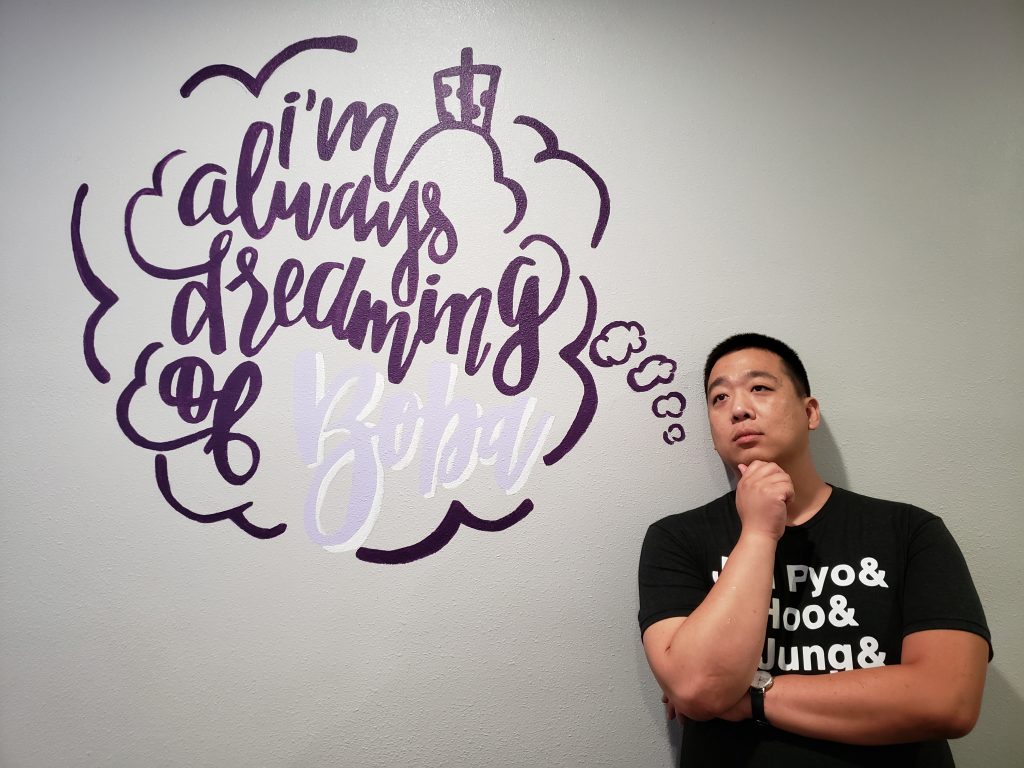
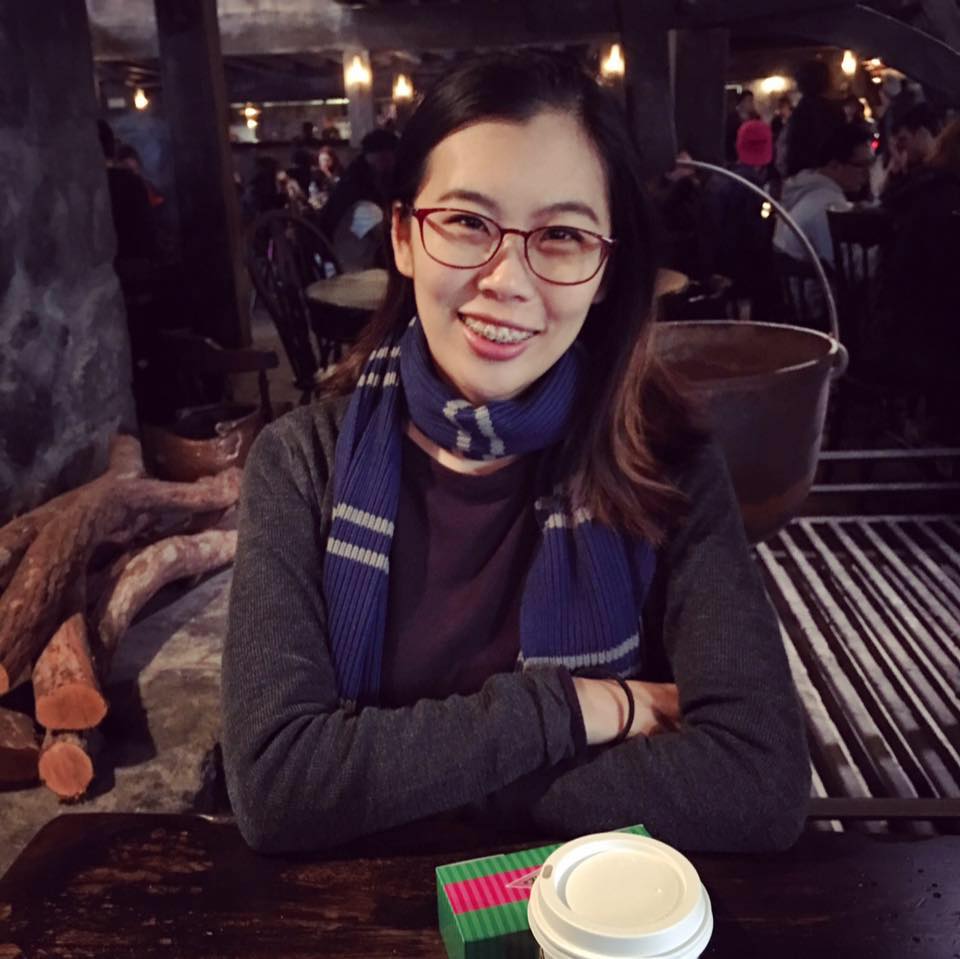
Books & Boba is a book club and podcast dedicated to spotlighting books written by authors of Asian descent. Every month, hosts Marvin Yueh and Reera Yoo pick a book by an Asian or Asian American author to read and discuss on the podcast. In addition to book discussions, they also interview authors and cover publishing news, including book deals and new releases.

What should book publishers know about your audience?

Marvin: They are a diverse group of readers, and not necessarily all Asian-American. Our listeners range from Asians from across the diaspora (including the UK, Oceana, and expats) and non-Asian readers who are interested in different perspectives in the books they read. Those that follow us are generally interested in our focus on Asian authors, representation in media, and own-voices narratives.

How do you pick books and authors to feature on your podcast?

Reera: We have a Goodreads list of books that our audience recommend us. We try our best to alternate genres and feature different representatives of the Asian diaspora experience.

Marvin: We make it pretty clear in our podcast opening that we focus on books written by Asian and Asian diaspora writers. We have been more flexible in terms of the genres we cover and have read both fiction and non-fiction novels, and everything from contemporary thrillers to regent-era historical fantasy.

What do you love best about your audience?

Reera: I love their passion and enthusiasm for Asian and Asian American literature. Many of our listeners are avid readers who have felt frustrated by the lack of diverse representation in publishing. Some are from countries where it is particularly difficult to find books by authors of color. So, it’s always wonderful to see their excitement in learning about upcoming and undiscovered books by Asian and Asian American authors.

Marvin: It’s always great to see new listeners who discover new books through our podcast, but I’m especially excited when our members engage with us on our Goodreads forums. Part of what we want to build at Books & Boba is a community of readers who are excited about the breadth of narratives coming from Asian authors.

What do you think is unique about podcasting as a medium for book lovers and for cultural commentary?

Reera: Reading is often a solitary activity. When you finish a book and feel your outlook on the world shift, it can be disappointing when you don’t have anyone to share your experience with. I think literature podcasts make the reading experience more intimate and less lonely. It’s like being in a book club with your friends, only you don’t have to go through the hassle of scheduling.

Marvin: I think podcasts in general are a great medium because listening can be a passive activity, so our listeners can listen to us discuss books while driving or working on something else, so you can be productive and learn stuff. Podcasts maximize efficiency!

If you use NetGalley, what strategies do you use to find books to request?

Reera: We often look through our list of forthcoming books by authors of Asian descent and search on NetGalley if they are available. We also consult [NetGalley newsletters] to see if there are any new books we might be interested in reading for our book club.

What trends in the book industry are you most excited by?

Reera: We’re very excited by the surge of sci-fi and fantasy novels by marginalized authors. It’s fascinating to see how these authors are injecting their heritage and changing how we see race, gender, and sexuality in sci-fi and fantasy.

Marvin: Like Reera, I’m excited in the emergence of speculative fiction from Asian and other authors from traditionally marginalized communities. Don’t get me wrong, I still enjoy the classics and family dramas about intergenerational issues and immigrant struggles, but seeing fantasy inspired by the Three Kingdoms era and science fiction that uses Eastern concepts as more than just window dressing will always bring a tear to my eye.

What podcasts are you listening to?

Reera: Since we are a part of the Potuck Podcast Collective, we listen to a lot of our fellow members’ podcasts, which include Good Muslims, Bad Muslims, They Call Us Bruce, Korean Drama Podcast, and KollabCast.

Some book-related podcasts we like to listen to are First Draft, Book Riot, Minorities in Publishing, and 88 Cups of Tea.

Marvin: In addition to producing several podcasts (including Books & Boba), I also listen to a lot of (too many really) podcasts! Speaking of book clubs, I follow the granddaddy of book club podcasts Sword & Laser, I also listen to pop culture discussion podcasts like Pop Rocket and Pop Culture Happy Hour, comedy podcasts like Hello from the Magic Tavern, and anything from the McElroy family, and of course our fellow podcasts from the Potluck Podcast Collective!

Follow Books & Boba on their website, Twitter, Instagram, Facebook, and Goodreads.

And be sure to check out our whole Ask a Podcaster series!

*Interviews have been edited for clarity and length

Divider

The Importance of Publisher Podcasting with Candlewick Press Presents

For Candlewick Press’s 25th anniversary, they decided to make a podcast that gave listeners a peek behind the curtain of the house that gave them Judy Moody, Because of Winn-Dixie, Where’s Waldo? and more. Candlewick Press Presents gained thousands of listeners during its limited run in 2017, and it’s still getting plays from industry hopefuls as well as book lovers.

In this guest post, Ally Russell from Candlewick Press describes how a traditional publisher got into the podcasting game and how it benefited from connecting with its audience in a new way.

A Learning Experience

Publishing is a fairly small and exclusive community, and many people want to know how others broke into the industry. Some readers just want an answer to a simpler but equally complicated question: How are books made? Giving people insight into the journeys of successful book creators and providing them with details on the publication of particular books gives them tools to use on their own publishing paths and a deeper appreciation of what goes on behind the scenes.

One of the most exciting pieces of information we’ve come across since the release of Candlewick Press Presents is that our podcast has been used in college classrooms as a teaching tool. At least two college instructors have required their students to listen to episodes of the show to gain a better understanding of the book publication process. We’ve always aimed to help educators use our books in the classroom, so having the podcast used as a supplementary teaching material was a huge measure of success for Candlewick.

We use the Candlewick podcast to give our readers insight and entertainment. We tell new stories — stories that wouldn’t work in a traditional book format. It’s true that the Internet has forced publishers to adapt and find new ways of putting books into the hands of readers, but it has also allowed us to broadcast stories into the heads and hearts of millions of listeners.

We’re still book people, but now we’re also in the business of oral storytelling.

Initially, we weren’t sure if our readers would be receptive to a different kind of storytelling from Candlewick Press. However, the publishing industry has had to adapt to the digital age, and reaching readers beyond bookstores is something that we feel passionately about. So we dipped our metaphorical toes into the world of podcasting. We could only hope that our listeners would enjoy the stories from behind the scenes as much as they enjoy reading the stories printed on the pages.

We’re book people. We spend our days looking closely at text and illustrations, but we had to learn to listen closely to audio recordings to eliminate extraneous noises (which were almost always children from the daycare next door pattering their tiny hands on our windows during their afternoon walks). We know how to produce and market beautiful books, but we had to learn how to present and promote the creators of those books. We know how to tell stories on paper, but we had to figure out how to tell them in a podcast.

We spent months completing logistical work: Choosing a podcast name, purchasing a domain name, designing a logo, and testing recording equipment in our “studio” (which is really just a small conference room named after one of our most beloved book characters, Maisy).

Creating and Launching Candlewick Press Presents

For the launch of the podcast, we had to curate a list of locals from our roster of brilliant talent who would be willing to help us on our journey into the world of nonfiction audio storytelling. The task was particularly difficult because we wanted to choose authors and illustrators who represent the broad spectrum of books we publish. We brought in picture book illustrators Ekua Holmes and Scott Magoon and wordless picture book storytellers Aaron Becker and Ethan and Vita Murrow. We included board book and interactive activity book creator Jannie Ho and middle-grade fiction author Teresa Flavin. We also invited nonfiction storyteller Martin W. Sandler as well as two creators who are skilled at spinning tales of both fiction and nonfiction for various ages, author/illustrator Annette LeBlanc Cate and author/poet Lesléa Newman. Annie Cardi and anthology editors Kelly Link and Gavin J. Grant covered YA books. Finally, we rounded out the list with picture book creator Matt Tavares and YA author M. T. Anderson, who have been publishing with Candlewick Press for almost as long as our doors have been open.

In May 2017, after months of research, interviewing, and editing, Candlewick Press Presents launched! The podcast aired weekly between June 8 and August 31. The show was available on iTunes, Stitcher, and Google Play. During its first week, the podcast picked up almost 500  downloads. Within its first month, almost 2,000 downloads. As the weeks went on and with each new episode, the program gained steam.

Within six months of airing, our podcast was picked up by Spotify. At the time, Spotify was relatively selective about their podcast content, so it was an honor to be included in their offering of shows. Red Tricycle’s website — which has 1 million unique visitors per month — named Candlewick Press Presents one of 5 Cool Podcasts to Try on Your Next Road Trip. In addition to other media outlets taking notice of our show, we learned that our podcast was being listened to all over the world, including in Australia, Canada, the U.K., Singapore, Japan, and Argentina.

The biggest hurdle for any podcast is acquiring ratings and reviews, and we haven’t been able to gauge the success of the show based on those. However, we know it has been a success because we’ve managed to hit 10k downloads in just over one year, even with an irregular, somewhat unpredictable schedule in 2018.

Value of Candlewick Press Presents

Here’s why we think readers will continue to seek out and listen to Candlewick Press Presents:

Behind-the-Scenes Peeks at Candlewick Press:

Isn’t it every reader’s dream to see where and how their favorite books were created? We’ve had local readers stop by our office and ask for a tour. There’s a reason that some of our most popular social media posts are photos that feature our office and staff: readers want to know! Candlewick Press Presents throws back the curtain and gives readers a glimpse into the world of publishing. The show is recorded right in our office in Somerville, MA, and it invites readers to join the experience that Candlewick employees and book creators are part of every day.

Background Information on Celebrated Authors and Illustrators:

Many of the guests on Candlewick Press Presents have been interviewed by other media outlets, but what makes the Candlewick podcast so engaging is the wealth of background information that we’re able to collect about our authors and illustrators and the publishing process of each book. We thread each discussion with funny anecdotes about the guests and interesting facts about the publication of certain books — information that only our staff could provide. Without background information from editors, book designers, and publicists, our listeners wouldn’t know about Scott Magoon’s impeccable singing voice or the story behind M. T. Anderson’s first manuscript.

Ally Russell is the consumer outreach specialist at Candlewick Press. She works to develop long-lasting, impactful relationships with organizations, and connect with consumers. She is the host of Candlewick Press Presents.

Divider

How to Pitch: Kelly Gallucci, Executive Editor of Bookish.com

Kelly Gallucci is the Executive Editor of Bookish.com, where she oversees Bookish’s editorial content, offers book recommendations, and interviews authors like Colleen Hoover, Leigh Bardugo, V.E. Schwab, and Julie C. Dao.

As the editor of this popular site, she gets pitched a lot of books to consider for features, interviews, inclusion in lists, and the like. Below, she shares some tips about how to approach pitches, based on her experience receiving them.

Give us a sense of the volume of pitch emails you receive. How do these fit into your overall workflow and help you build your editorial calendar?

My inbox is my personal Everest. I’d estimate that I receive roughly 100 emails a day, give or take, though not all of those are pitches. There’s definitely an ebb and flow depending on the day of the week and the season of the year.

Our editorial calendar is first shaped by recurring features (such as our book club recommendations, monthly Bookish bingo, and our seasonal roundups). The next step is to fill in any features that our team wants to work on. While writing those in, we leave room for articles inspired by publicity pitches, such as interviews and author guest posts.

Sometimes books pitched to us will fit into features we’re already crafting (a romance book pitched while we’re writing a holiday romance listicle), or they’ll inspire features we want to work on in the future. I also like to leave room for author guest posts, where authors share a short essay or a list of book recommendations. This gives our readers more insight into the author and their work, and lets us profile their book more directly.

What are the most successful ways that people have contacted you with a pitch? What are pitfalls that might make a pitch less successful with you? Feel free to include specifics.

The best pitch emails are the ones where a publicist shares an idea for an author guest post or predicts the kind of content the book would be best suited for. This makes it easier to envision where the article would fit into our calendar.

As for pitfalls, the big one is pitching us for content we don’t feature. For example, I receive a lot of pitches asking for us to review a book, but we don’t do book reviews on Bookish. Similarly, I receive a lot of requests for interviews. Interviewing authors is one of my personal favorite parts of my job, but they can be tricky for our audience. You have to work twice as hard to motivate a reader to click into an interview with an author they’re unfamiliar with. If an author has a strong online community, we can tap into that. If not, I’ll often see if the author is available for a different type of feature instead. A lot of this depends on the author’s availability, but I always appreciate publicists who are willing to think outside of the box with me when it comes to how to feature books.

Describe the relationships you have built with publicists and authors who regularly pitch you. How have publicists been able to earn your ear and your trust?

I’ve had the pleasure of working with so many brilliant and talented publicists over the years. Their creativity and drive never cease to amaze me.

The ones I rely on most are the ones who take the time to truly understand Bookish. They read our articles. They know the content we do and do not cover. They pay attention to the genres we feature most frequently. Basically, they do their homework. As a result, their pitches are refined and reflective of the content that does well for Bookish. When I see an email from them in my inbox, I know the book they’re pitching will be a good fit for us.

I also always appreciate the publicists who ask questions, especially if we haven’t had the opportunity to work together for long. I’m always happy to hop on the phone or fire off an email that can explore in detail the kind of content we cover, what does and doesn’t perform well, who our audience is, and more. When I receive a pitch, I’m never just thinking about the book. I’m considering all of those other factors too.

When digging through your inbox, what kinds of subject lines catch your eye? What details are important right up front?

I think the best subject lines are concise and direct. In my inbox right now, there’s an email with the subject “Cover Reveal for Bookish.” That’s excellent. I know exactly what I’m clicking into, and it alerts me to the fact that this is a more time-sensitive email. Another one I’ve spotted is “February’s Most-Anticipated Read” followed by the book title and author name. I now know the book, the time frame, and the angle.

On the other hand, I see a lot of emails that try to offer too much information upfront. An example from my inbox at the moment would be “New Standalone Novel From NYT Bestselling Historical Fiction Author” and the rest of the subject (the book title, author’s name) are cut off. The lede is buried here, and at first glance all I really know is the genre.

How do you feel about follow-ups from publicists? Is there a timeframe that works well for you if they haven’t heard back? What is important to you in a follow-up from a publicist?

My inbox is a dragon and it hoards emails like they’re gold. Follow-ups often work really well for me because they help to bring the email back to the top of my inbox.

The ideal timing varies. I don’t mind if a publicist follows up on a time-sensitive email the following day. For general pitches, following up a week or even weeks later is helpful, particularly if the pub date is still a healthy distance away.

A longer time between follow-ups also means that there’s more potential for new information to have come out, and that’s something I’m always looking for in those emails. Has anything changed since the first pitch (news, reviews, blurbs, etc.)?

What is one pet peeve (or pet pleasure!) that you have about pitch emails?

My pet peeve is definitely when emails don’t contain enough information. It’s most helpful for me when the author, book title, genre, and pub date are as up-front and clear as possible.

I’ll also add, and this isn’t related to pitches, that it’s extremely helpful when authors list their publicist on their website. It’s one of the places we check if we’re looking to contact a publicist we haven’t worked with before, but most authors only list an agent.

As for pet pleasure, it’s always a joy to open an email where a publicist references projects we’ve worked on in the past, books I’ve enjoyed from them, and other personal touches. To be clear, I’m all for form emails. Publicists are juggling multiple books and authors, and I support anything that makes their lives a bit easier. But personal touches at the beginning of those emails are always just a nice thing to see during my day.

Follow Bookish on their website, and on Facebook, Twitter, and Instagram.

Divider

Ask a Book Club: Anne Haag

Book clubs are full of passionate readers who go out and buy books throughout the year. They are always on the hunt for new titles to read, and are recommendation engines for the family and friends outside of the club. In Ask A Book Club, we help you better understand how book clubs find the books they read, and where they talk about books beyond their club. We look at individual book clubs to learn more about what they look for in a book and how groups of passionate readers come together to choose their titles.

Today, we’re talking to Anne Haag about her globe-trotting book club.

About the book club

A friend decided she wanted to start a book club in the model of her grandfather’s group, which meets monthly and reads a book focusing on a different country each time. So, she invited a few friends to join, and it webbed out from there. Quite a few of our members were born or raised in other countries. We have members from Indonesia, Spain, Canada, England, and Ireland, so we have a variety of international perspectives present at each meeting. There are about 10 of us, all in our mid-20s. We live in Chicago and meet once a month.

Reading scope

We try to read a book by an author from a different country each month. A lot of the books we read involve some kind of historical conflict or element tied to a certain place – for example, the slave trade’s impact on Ghana in Yaa Gyasi’s Homegoing, or religious fundamentalism as it manifests in Pakistan in Mohsin Hamid’s The Reluctant Fundamentalist. By focusing on a different country each time, we are able to expand our understanding of global conflicts, and how they influence our world today. We do occasionally indulge in lighter works when we need a break. Last summer, for example, we read Crazy Rich Asians by Kevin Kwan.

We read quite a few works in translation. We skew towards fiction, but have read nonfiction, like Caitlin Doughty’s exploration of death across different cultures, From Here to Eternity. Most of the titles we’ve read were published within the last 20 years. We try to stick to shorter books; usually around 200 pages. I am guilty of not finishing more than one book when it lost my interest. We read The Double by Jose Saramago, and quite a few others joined me in the “easily disinterested” ranks.   

Finding new titles

I always look for ideas in the New Yorker, specifically the short reviews they publish at the end of each issue’s featured book review. That has come up previously as a source others have used as well. In fact, two of us recommended Memoirs of a Polar Bear by Yoko Tawada after reading about in the New Yorker. Book reviews in the New York Times are another common source, as well as Goodreads. Sometimes our ideas come from reading about current events and seeking out related literature, often just by Googling.

Nominating titles

Members bring up titles they’re interested in reading at the end of each meeting. Typically, there’s a title that stands out as interesting to the group as a whole, so we pick that one. If more than one sounds interesting, we typically just agree to read them in following months. We aren’t particularly organized – we have a group email thread, and that’s about it. Really, we don’t even keep a list of books we’ve read.

Recent reads

Interviews have been edited for clarity and length.

Divider

Meet the German Booksphere!

Facts & Figures for Europe’s largest book market


NetGalley operates all over the world, serving the needs of global publishers. With dedicated NetGalley sites for Germany, France, and Japan, as well as the U.K., we are proud to support many different publishing ecosystems, all with their own unique characteristics. Today, we’re hearing from Karina Elm, who heads up customer relations and community management for NetGalley Germany. Below, she gives an overview of the German publishing landscape and book market.

Germany, well known to some for its great poets and thinkers (to others for its sausages, beer, football and the Autobahn), owns the largest book market in Europe. Struggling – just like in many other countries – with the rise of strong competitors called Netflix, Facebook, Instagram and others, the book is not yet forgotten. On the contrary: Even though the number of people buying books has decreased, individual people actually read more and the amount of titles published per year is still rising. Let’s have a closer look at some facts and figures from the year 2017 as well as some specialties of the German book market!


Source: Source: MVB-online.com, “Buch und Buchhandel in Zahlen.” 2017.

Bookselling: Bookstores and Fixed Prices


6,000 bookstores are selling books to readers, employing a total of 27,800 booksellers. 3,500 are small independent bookshops and 1,200 are part of bookstore chains. Berlin has the most bookstores in German – 236 stores for its 3.5 million inhabitants.

Many bookstores meet the challenge to compete with online sales platforms by selling coffee, hosting events (like public readings) and turning their shops into cultural meeting points. Since 2015, the German Ministry of Culture honors the most innovative bookshops with the German Bookshop Award.

2018’s three best bookshops are Krumulus, Lessing und Kompanie, and Bittner-Buch.

Germany has fixed book prices. This means that publishers set a price for each book which is then mandatory for retailers. Only a limited number of discounts are allowed. Publishers can change the price, and the price for a different edition may vary. The tradition of fixed book prices goes back to the 19th century, the current law was introduced in 2002. Fixed prices are widely seen as a strong advantage of the German book market since they have benefits for both the industry as well as from a cultural perspective.

Booksellers of all sizes profit from a calculable margin on bestsellers, retailers compete not just with their prices but also with their service. It is beneficial for brick & mortar booksellers in the often destructive competition with online retailers and vendors outside the book industry. For publishers it means that they can cross-subsidise bestselling books with other works, allowing publishing decisions to be made on other aspects than just the selling potential sometimes. This helps support the work of lesser-known authors, as well as titles with complicated or expensive layouts.  For readers, the fixed price system results in a large variety of books as well as publishing houses with different profiles. It also allows for a very efficient distribution system: If you order any book at your favorite bookstore you’d most likely be able to pick it up the next day. Last but not least, a strong network of bookshops offering a diverse and colorful range of books is an important part of a diverse and colorful society!


German Readers: Who they are and how they read


Source: MVB-online.com, “Buch und Buchhandel in Zahlen.” 2017.

Just like in many countries, book bloggers are on the rise in Germany. By 2018, thousands of blogs about books, reviews and other bookish topics can be found online – the actual number is difficult to establish. The blogosphere is very active, well connected and spanning all genres and formats. Booktubers and Bookstagrammers are on a strong rise, too. By now, many publishers are working closely with individual bloggers, some even launched unique platforms for bloggers to read and review their titles. In 2017, the first German Book Blog Award was initiated by NetGalley Germany in cooperation with the German Publishers & Booksellers Association and rewarded the best German-language literary blogger as well as one booktuber. In 2018, the prize was given out in 9 categories, among them Romance, Literary Fiction, Suspense, Children’s Literature, Newcomers and Other Formats.

German Book Blog Award Ceremony 2018

The Tolino is Germany’s own reading device for ebooks, competing with Amazon’s Kindle – and rising above it with a market share of 40% in 2017. Tolino is a strategic alliance between biggest German retailers to offer and produce e-readers and tablets. In January 2017, the Japanese Rakuten Kobo took over the shares of their former technical partner Deutsche Telekom. 2,000 bookstores sell books through the Tolino system and many independent booksellers are connected to it as well. Contrary to the Kindle, Tolino is an open system which means ebooks can be bought at any participating shop and read on any other device as well.

Book Industry Events, Awards, and Associations


Two book fairs are the German publishing industry’s yearly highlights and every book lover counts the days between them. The big one, Frankfurt Book Fair, is actually the world’s largest trade fair for books and has a long tradition, rooting back to 1454. Every year in mid-October, publishers, agents, tech companies, and content providers meet for business, trading, and international rights deals. Over the weekend, the fair opens for the public. More than 7,300 exhibitors from over 100 countries and more than 286,000 visitors took part in 2017.

In comparison to this, Leipzig Bookfair and it’s 208,000 visitors in 2017 is like a younger sister. It’s history goes back to the 17th century and it is a fair for the public: Visitors can attend all 4 days in order to discover new books and meet their favorite authors. There are hundreds of public readings at the fair but also throughout the whole city of Leipzig which transforms into a huge festival of reading during this time in March.

Frankfurt Book Fair 2018

Germany has numerous literary awards for books and authors. The most famous of them is probably the German Book Prize which can be compared to the Man Booker Prize. Launched in 2005, it honors the best novel written in German in each publishing year and is awarded at the Frankfurt Book Fair in October. Most of its winners have already been translated into English, you can find a list here.

The most prestigious literary award in Germany is the Georg Büchner Prize which honors an author’s lifetime of work and was, for example, given to later Nobel Prize winners Günter Grass, Heinrich Böll, Elias Canetti and Elfriede Jelinek. A very atypical literary award is the Ingeborg Bachmann Prize. It honors an author for an unpublished literary excerpt only and is very publicly awarded during the Festival of German-Language Literature where the texts are read out loud and the jury comments directly, often very critical, while the audience watches in the room as well as in front of the TV across the whole county.

The German Publishers and Booksellers Association (Börsenverein des Deutschen Buchhandels), founded in Leipzig in 1825, represents all sectors of the book industry: Publishers, Retail Booksellers, Antiquarians and Wholesalers. They also organize – among other things – the Frankfurt Book Fair and the German Book Prize, and they are custodian of the fixed price system.


NetGalley Germany


NetGalley.de was launched in March 2016 (just in time for the Leipzig Book Fair!) and by now has more than 11,500 members, The first ones to adopt the platform were of course book bloggers who had already used NetGalley.com and were very excited to finally also find German publishers and titles available for them.

German publishers by then were working with their own bloggers already and saw NetGalley as a platform to use it in their communication with those bloggers, and to widen th

NetGalley Germany

eir network.  However, a few adventurous German publishers started sending the NetGalley widget to their network of booksellers, as well. It was a big transformation of workflows that have existed for many, many years (and we all know

how painful this can be) but it was worth it: We now receive excited and very happy feedback from both publishers who followed this example, as well as from booksellers, telling us how much easier their daily work has become.

The growing implementation of NetGalley in publishers’ work with booksellers has resulted in the following division of member types, very special for the German market: As of October 2018, 47% of the German speaking members are reviewers, 43% booksellers, 5% media and 5% librarians and educators. Their favorite genres are Fiction (45%), Teens and YA (40%), Thrillers & Crime (37%), Fantasy & Sci-Fi (35%) and Romance (25%). During an average month in 2018, more than 26,000 galleys were sent out through NetGalley.de, and members provided over 5,000 pieces of Feedback.

Do you publish in German? Use NetGalley.de to reach out to our avid community of professional readers, promoting your tiles to German readers! I would be very happy to hear from you via karina.elm@netgalley.com.


Karina Elm is Customer Relations and Community Manager at NetGalley Germany – and a huge bookaholic. After studying Comparative Literature, she worked for Ullstein Publishers as part of the team around digital imprints Midnight and Forever, and as the online marketing manager at Clear Canvas, an online marketing agency in Berlin. Karina Elm is initiator and driving force behind the German Book Blog Award which launched in 2017 and has been teaching a class at the Free University of Berlin about online reading communities in 2018.

Divider

Case Study: Chilly da Vinci

How NorthSouth Books used timely subject matter, modern visuals, and Read Now availability to give pre-publication buzz to the story of an inventive penguin

On NetGalley Insights, we highlight the successes of NetGalley publishers and authors, and share some of their strategies. Today, we’re talking with Heather Lennon, managing director at NorthSouth Books.

Below, learn about how she used NetGalley to gather over 100 pre-publication reviews for Chilly da Vinci by Jarrett Rutland. Chilly da Vinci tells the story about a young penguin inventor, tapping into current trends in STEM education for young readers, as well as the maker movement, all with a modern and appealing visual style.

The market for children’s books is especially hot right now. What do you think is unique about this particular segment of the publishing industry, as it relates to marketing and publicity?

Picture book publishing is very interesting in that it’s a visual medium, art and story together. We highlight the illustrations and the story in every book. Right now, I think that is a huge positive as far as coverage in blogs, Instagram, online and in print review journals. For Chilly Da Vinci, Jarrett Rutland’s artwork is so fun and striking–it just pops off the page, so I think it’s very appealing to reviewers.

Where does NetGalley fit into the overall strategy and timeline for Chilly da Vinci?

NetGalley is very important to NorthSouth Books! We always offer our lead titles on NetGalley. We aim to offer them 3-6 months in advance of publication. It’s really helped us reach readers, grow our brand recognition, and amass reviews online.

Which segments of the NetGalley community were most important to you? How did you go about reaching them?

Asking who is most important is like asking my mom to name her favorite child! We love them all. I will say….librarians have been a big part of our publishing program forever. Booksellers are enormously important in the life of a book–we are small enough that we never take a book being in-store for granted. Bloggers, tweeters, instagrammers help us get out the word!  This is our world, and we’re lucky to be a part of it.

Chilly da Vinci is a Read Now title. Tell us why that was the right decision for making the title available widely to NetGalley members.

I don’t set a lot of hoops to jump through to get to our titles on Netgalley. I am thrilled that NetGalley members want to open the book. I truly believe, if you read our books, you will enjoy them, you will recommend them and review them. So Read Now is always my preference.

Most NetGalley members who clicked to read Chilly da Vinci listed the cover and the description as the reason for their interest. It comes as no surprise, given that the author is also the illustrator! Tell us about how you created compelling copy for the Title Details page.

It was important to everyone at NorthSouth that we convey that Chilly is a do-er, that this book would appeal to the maker movement. And that Chilly never gives up. And then in general, I think one of the most important things is clean, readable copy, especially online. It’s so basic, but it’s important to make sure that your info has uploaded correctly–not doubled or tripled or cut off in some weird way!

Tell us more about strategies you used to leverage your NetGalley listing outside the site.

Every book has a tip sheet that is fed out online. The sales reps use it to sell the book, and it gets uploaded to Edelweiss–which lots of bookstore buyers use for their job. Whenever we upload one of our books on to NetGalley that is a sales bullet that’s fed out to the world.

How will NetGalley be incorporated into your post-pub strategy?

We will be following up with everyone who reviewed Chilly with  a pre-on-sale newsletter with activities and info about Jarrett Rutland’s events. The book launch will be held at an ice cream shop in Asheville on Saturday, Dec. 8. We hope that NetGalley members who loved the book will attend.

What is your top tip for publishers to use NetGalley to its full potential?

Download the reviews and keep those members in mind as you work on future books. It’s not just seeing what people think about this book, it’s being able to reach out to them for the next book as well.*

*NetGalley recommends using the Detailed Activity Report or the Feedback Report to see which NetGalley members are requesting, reading, and reviewing your titles.

Heather Lennon is the managing director of NorthSouth Books.

Chilly da Vinci goes on sale Dec. 4. You can preorder it here.

Interviews have been edited for clarity and length.

Divider