NetGalley Marketing is Holistic

NetGalley’s new promotions support publishers’ goals throughout a book’s lifecycle, including backlist and audio 

At NetGalley we always strive to meet publishers where they need us. We love listening to our customers and learning from their ever-evolving needs–from secure digital galley files, to marketing promotions that reach targeted audiences, to a desire for more data and reporting, and even into new formats like audiobooks.

Publishers often adapt NetGalley’s tools for their unique goals and, based on trends we see across all of our clients, we work to expand the breadth of the NetGalley service. In 2020 you’ll notice greater emphasis on a holistic approach to promoting books, across formats and beyond the pub date. As we continue to expand our offerings, we’re emphasizing a more comprehensive approach to book promotions across format and lifecycle.

NetGalley was originally designed to predominantly support books in the pre-publication stage, but our tools and promotions are flexible enough to help publishers and authors achieve a variety of goals throughout a book’s lifecycle. Publishers are increasingly taking advantage of that flexibility! While 44% of titles on NetGalley in 2019 were archived within 1 week of their pub date, 29% were available on NetGalley for at least 2 months after pub. 

Lately, our marketing team has received more questions and interest from publishers about promoting their books to members in new ways–and during new times: close to on-sale to drive pre-orders specifically, or post-pub to reignite activity for backlist titles.

We’re supporting this pivot by launching brand-new marketing promotions in our 2020 Media Kit, flexible enough to encompass a variety of goals, timelines, and formats.

Book Club Kits

Book clubs are a crucial audience for publishers, as they are often interested in backlist titles (especially when available in paperback, or have a movie tie-in). We’ve heard from many clients that they wish to interact more directly with book clubs, but don’t always have the bandwidth to create marketing assets in-house.  That’s why we’re introducing custom Book Club Kits: created especially for your book and promoted directly to book club members in the NetGalley community.

Each bespoke kit is crafted by our editorial team to be unique and fitting for the particular book. Book Club Kits contain, at a minimum, an Author Interview, Discussion Guide, Readalikes, Printables (such as bookmarks, decorations, etc.). Possible additions include quizzes, food and drink recipes, playlists, and more. See page 17 in our Media Kit for more info.

Dashboard Spotlight

The NetGalley member Dashboard receives an average of over 36,000 unique impressions each week, offering huge exposure for your book! Publishers can now showcase their books on all member Dashboards with the new Dashboard Spotlight promotion. The CTA is up to you, so consider using this placement to drive pre-orders, promote retail offers, or to boost a backlist title. See page 5 in our Media Kit for more info.

Sponsored Social

Our community engagement team has built a loyal and engaged following of book advocates across social media platforms: Instagram, Twitter, Facebook, and Pinterest. We are now offering publishers the opportunity take advantage of NetGalley’s influence to promote your book in a relevant, valuable way to our social audience. 

Audio Excerpts

With the introduction of Audio Excerpts on NetGalley, there are many opportunities to showcase these clips to our community across the site. Members will see a new, additional Featured carousel on the main Find Titles landing page which will highlight books with Audio Excerpts–free for publishers! Our marketing team can also include the audio icon in NetGalley Newsletters and Category Spotlights for books with Audio Excerpts.

And this is just the beginning: by BookExpo 2020, we will support full audiobooks in addition to Audio Excerpts! We’re thrilled to help audio publishers benefit from early feedback from the NetGalley community, and we aren’t the only ones… NetGalley members are already excited! We asked, they answered: check out hundreds of comments on our Twitter, Facebook, and Instagram posts. 

As publishers start experimenting with these new promotions, we’ll be sharing their successes here on NetGalley Insights. Stay tuned!

If you’re looking for more detail about post-pub strategies, check out our Case Studies on NetGalley Insights. Jayne Allen shared how listing Black Girls Must Die Exhausted on NetGalley after its pub date actually improved its sales numbers. She said, “Allowing the book to be offered for sale during the NetGalley window worked best for me because it allowed NetGalley reviewers to post directly on the Amazon sales page as a consumer review…At first, I was concerned that being on NetGalley might somehow erode sales, but the simultaneous window actually served to increase sales and start Black Girls moving up the charts much more quickly.”

If you want to discuss your own campaigns, please email marketing@netgalley.com. Our dedicated marketing team would be happy to help you strategize and find the right plan for your timing, budget, and goals. 

Divider

Introducing Audio Excerpts on NetGalley!

“Promoting all book formats is good for all books”

The audio boom is finally coming to NetGalley! 

We are thrilled to announce that NetGalley is now supporting Audio Excerpts. 

Right now, publishers can add Audio Excerpts for any books listed on the site, regardless of publication date. 

“This is just the first step in our audio strategy,” says Kristina Radke, VP Business Growth and Engagement. “By summer 2020 NetGalley will also support full audiobook files so publishers can share their audiobooks with important publicity contacts, reach new, influential audiences who provide feedback and reviews, as well as track and report on access granted, feedback received, and trends in activity. Promoting all book formats is good for all books, and now audio publishers will have the same powerful tools that their print and digital counterparts have had for years.”

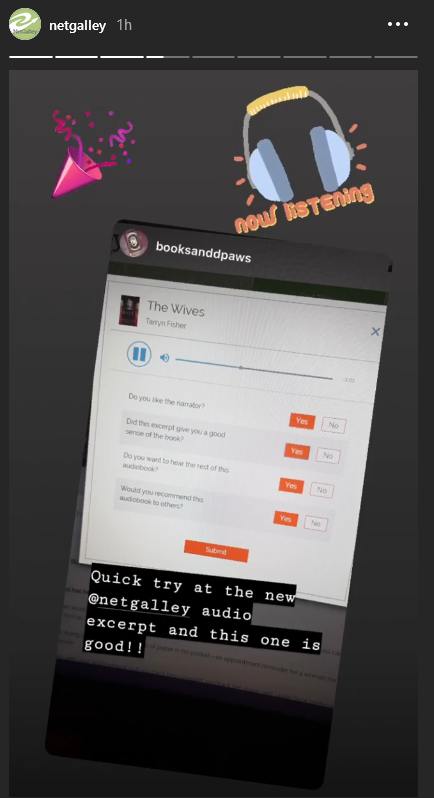
NetGalley members can browse for Audio Excerpts in the catalog and listen to them through an on-site, streaming player. As they listen to the Excerpt, they are then prompted to submit early feedback by responding to questions about their experiences. Publishers receive these aggregated responses, plus number of listens and average listening time, as part of the reports that already exist in their account. 

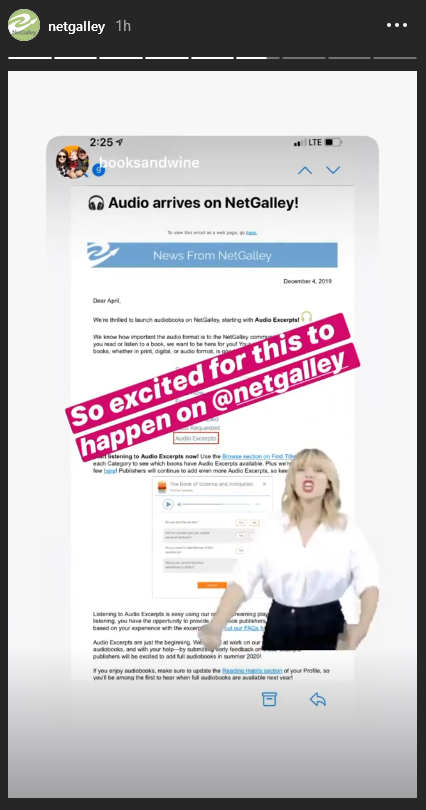
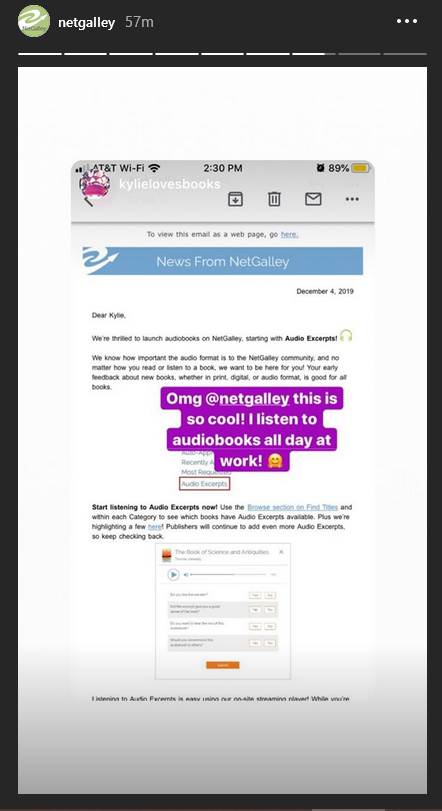
Members are just as excited as we are; they’ve been anxiously awaiting audio on NetGalley as much as publishers! Before launching Audio Excerpts, we asked our members via social media about their audio listening habits. Some of them hoped and guessed that we were going to be supporting audio soon. And once we announced the launch of Audio Excerpts on NetGalley, they weren’t shy when sharing their excitement. 

NetGalley clients can add their Audio Excerpts during this free trial period (until May 15, 2020). Just click “Upload/Preview Files” on any Title Details page. 

According to the Audio Publishers Association’s 2018 annual survey, audio is continuing to grow. And we’re happy to support that growth on NetGalley.

Image: Audio Publishers Association 2018 annual survey, illustration by Findaway

To see the new marketing programs designed to highlight audio on NetGalley, check out the 2020 Media Kit.

We look forward to promoting even more books, in every format!

Divider

Books of the Year for NetGalley UK – and what you can learn from them!

At the end of each year, NetGalley UK puts forward our Books of the Year – the titles that have moved us, the books that have been at the forefront of our minds over the course of the last twelve months. It’s a great way for us to highlight the breadth of books on NetGalley UK and this year, for the first time, we’re going to be lifting the lid – exclusively on NetGalley Insights – on NetGalley UK’s Books of the Year, by the numbers. 

The following statistics are based on data for all books uploaded to NetGalley.co.uk in 2019.

Most Requested

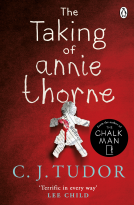
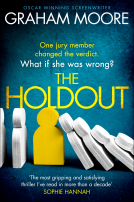
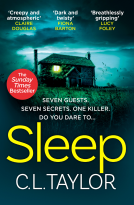
Mystery & Thrillers dominated the most requested titles on NetGalley UK in 2019. Interestingly, these titles are not just the ‘you’ll never guess the twist’, or domestic terror genres that have been so prevalent over the last few years. The Holdout, The Chain and The Passengers, are a return to the classic thrillers, influenced by the early work of such writers as John Grisham, Michael Crichton and Thomas Harris.

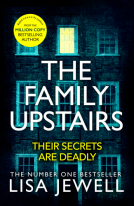
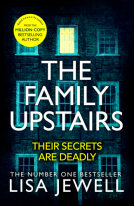
Lisa Jewell had the most requested title this year with The Family Upstairs; while C.J. Tudor has made that much-vaunted supernatural thriller genre her own with The Other People.

At number 6, we see Our Stop – one of the books making the rom-com roar again. It’s been a while since this genre was pushing at the top of the charts but its success, and the success of other books like The Flatshare, shows that members are gravitating towards its undeniable charms.

Most Impressions

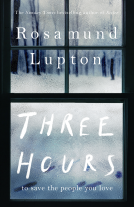
This category belongs to Rosamund Lipton’s Three Hours, which had more impressions than the second and third placed titles combined. This was a long campaign – Three Hours has been on NetGalley for the whole year! – but one that had a long-term strategy, well-adhered to by the publisher. Sustaining such a long campaign takes time, so if you’re considering it, do let us know in advance!

Most Reviewed

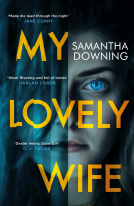
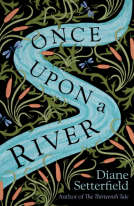
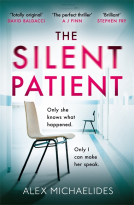
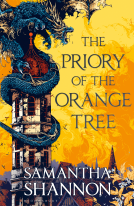
Unsurprisingly, a lot of familiar covers here! What really leaps out here, however, is how integral widgets were to the campaign for these titles. Widgets made up between 30 and 50% of approvals for the top five most reviewed titles, so do remember this important tool when you’re planning your NetGalley strategy.

Predictions for 2020

From our meetings with publishers over the last few months, and observing the levels of activity surrounding 2020 titles already, it seems clear that the coming year is going to be hugely competitive – with high expectations for so many books. Whether it’s debut authors, big brand names, or emerging talent, it seems readers will be spoilt for choice in all genres. 

And what do we see emerging as the themes of the new year? Well, the return of the rom-com, we believe, will continue into the new year; while historical fiction with a hint of the sinister (think Daphne Du Maurier or Patricia Highsmith) will again be hugely popular. The diversity of writers will also be a key development, with both fiction and nonfiction shining light on backgrounds and experiences that have been overlooked. This also means that literary fiction in 2020 will be about much more than just the final part of Hilary Mantel’s trilogy…

We hope you’ve enjoyed this little delve into the past and the future – and we’d like to take this opportunity to thank you for being NetGalley customers. Have a wonderful festive break and we’ll see you in the New Year. 

Divider

The Grand Workflow

The lifecycle of a book, taking advantage of Firebrand and NetGalley

In every department in a publishing house, teams are working as hard as they can to publish books that they believe in. But sometimes we can get lost in the day-to-day and lose sight of the big picture. It can be hard to connect your daily work to the work your colleagues are doing, and to see yourselves as fitting into the same overall efforts. 

To refocus our attention on the big picture, Director of Sales and Education at Firebrand Joshua Tallent and VP of Business Growth and Engagement at NetGalley Kristina Radke gave a presentation at the Firebrand Odd Year Community Conference that demonstrates an overall workflow for a book through various Firebrand services, including NetGalley.

The goal of this workflow is to demonstrate departmental interconnectedness; how acquisitions, production, and promotion are linked — how one informs the other.

Tallent told the audience that he sees clients come to NetGalley and Firebrand to solve specific problems: To help them send metadata more effectively, to get more control over printing specs, to track P&Ls, to build pre-publication buzz. And while NetGalley and Firebrand can certainly provide tools and processes to fix these pain points, focusing on the individual issues can be limiting. 

“I’ve seen many clients lose the institutional awareness over time about the many ways we can help them solve new problems. That has led to companies looking at other solutions, not even knowing that the software they’re already using can do what they need.” 

Using Simon & Schuster imprint Gallery Books’s The Book Charmer by Karen Hawkins, Radke and Tallent showed how a title might move through Firebrand and NetGalley services most effectively, from acquisition through publication, and even rejuvenate the backlist. Gallery used a number of these tools in their actual launch of The Book Charmer, and graciously allowed us to use their book to demonstrate how all of the Firebrand services can link together. This example includes recommended use of the Firebrand and NetGalley tools.
During the Acquisition phase of a project, Title Management provides publishers with robust tracking functionality, helping them manage submissions and ideas and plan for each project’s success. Title Management can help with budget planning utilizing a powerful Profit & Loss system and production planning templates.

For The Book Charmer, the Gallery team could create contracts and contract templates within Title Management and, once the acquisition was complete, use Title Management to start collecting metadata and assigning tasks across various teams. Getting the details right in Title Management is critical to everything that follows!

Around 5-6 months in advance of pub date, the team could send initial metadata feeds through Eloquence on Demand. 

Before the data was sent, Eloquence Verification ensured that the metadata met industry requirements. These metadata feeds ensure that the details consumers see about the book are consistent and correct.

Once the book was a few months away from its pub date, Gallery Books made it active on NetGalley, using metadata sent through Eloquence on Demand. This made title setup a breeze. NetGalley was used to garner early reviews and buzz, and generally raise the visibility of the book before it went on sale. Gallery Books could add NetGalley as a Marketing Campaign in Title Management, too, allowing them to keep track of this among the other efforts they were putting forth for this book.

Once the book was live in NetGalley, Gallery Books received requests and feedback, plus early data. To get the most out of NetGalley, Gallery Books used targeted marketing to drive requests. They made particular efforts to target librarians and booksellers through inclusion in the ABA Digital Whitebox and the Librarian newsletter. 

The Gallery team used consumer-facing platform, BookishFirst, to entice avid readers with a First Look at The Book Charmer, building pre-publication excitement through the use of a giveaway and gaining access to in-depth reporting through BookishFirst.

Through the launch process, the Gallery team updated their metadata and their keywords in Title Management, ensuring that the feedback they were receiving through NetGalley and Bookish First was informing the marketing copy. 

Both Firebrand’s Keywords service and the NetGalley Advanced Word Cloud allow them to add keywords that repeatedly pop up in reviews on NetGalley and beyond.  These keywords are important to discoverability across all retailer platforms, and using real audience-generated words ensures they’re as effective as possible.

At the same time as publicity and marketing teams were promoting The Book Charmer on NetGalley and BookishFirst, feeding the data they learned back into metadata, the production team was hard at work. Using Title Management, they managed printing specs, planned production costs, and handled inventory management, sending out purchase orders to their printer—all very critical details that affect the finished product and the publisher’s bottom line.

As the ebook file approached completion, the production team could load the file into FlightDeck through the Title Management interface. FlightDeck lets publishers check for any lingering issues with their ebook files before they send them to retail partners for fulfillment. 

As The Book Charmer grew closer to its pub date, the Gallery team could continue to track marketing promotions, including social media campaigns and printed promotional postcards, within Title Management. They kept track of tasks, specs, and design details.

Once The Book Charmer hit its pub date, the Gallery team could use the contact information they had gathered in the pre-pub phase from NetGalley and BookishFirst to re-engage their audiences on those platforms. Letting people know that the book they reviewed is now on sale is a great way to get these early fans talking about the book and to boost sales and reviews.

Plus, in addition to using Eloquence on Demand to distribute their metadata, Gallery could take advantage of Eloquence on Alert to track changes happening to their titles across retailer sites, including alerts if cover images don’t match across different retailers, if list prices or sale prices change, if a title’s sales rank increases, if the number of reviews or star rankings change, or if they lose their buy button to a third party seller on Amazon.

Through the journey from pub date to the backlist, the Gallery team can continue to update The Book Charmer’s metadata and feed it out to retailers, ensuring that the data is always relevant. They can create new or updated Keywords to see how that might impact sales for a backlist title, and test updated EPUB files in FlightDeck. They can use Express Purchase Orders within Title Management to create a single purchase order for an entire list of reprints. They can re-activate its NetGalley listing for a limited time when they publish a sequel. 

Every tool can be used in different parts of the publishing process, and the insights gathered in each stage and through each tool can be used to inform the others. 

If you have any questions about how to best streamline your NetGalley or Firebrand workflow – how to keep a wide perspective – please reach out to concierge@netgalley.com or joshua@firebrandtech.com. 

Divider

Penguin Random House is Bringing Back the Book Fair

Remember the pure, bookish joy of a middle school book fair at PRH’s
Book Fair for Grownups

“We took a playful approach with this event format to inject a bit of that joy into all our lives and to celebrate book nerds everywhere”

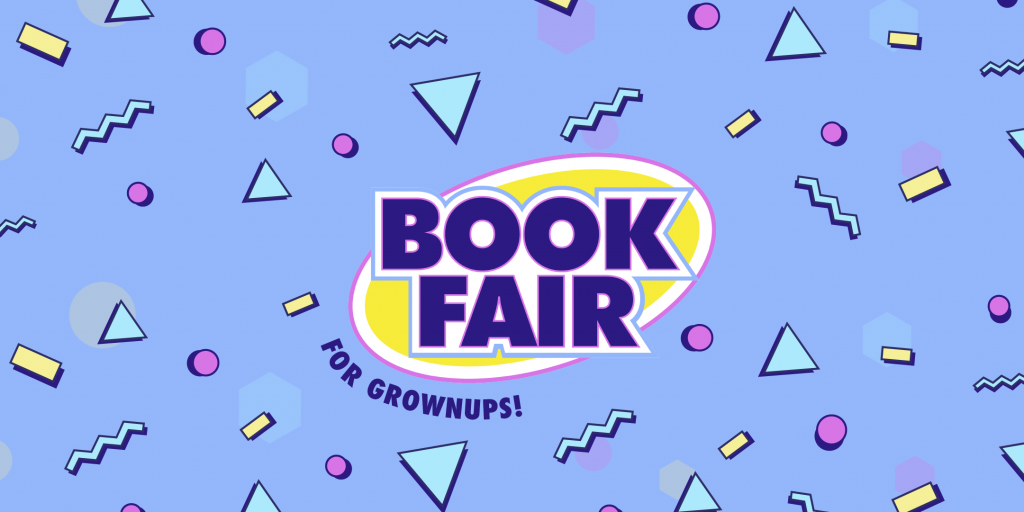
On Saturday, November 23, Penguin Random House is bringing bookish nostalgia to life in a Book Fair for Grownups. Attendees will be able to relive their school book fairs in the 80s and 90s, browse books curated by the PRH team, take pictures in a school photo booth, peruse retro crafts by Glue, and see special appearances from PRH authors.

Penguin Random House warns that attendees might experience “Severe middle school flashbacks! Tables stacked with books! Pencils! Mr. Sketch Markers! Erasers! Cubbies! Pins! Patches! Spin art! Snap bracelets! Custom Interactive Mad Libs!”

We heard from members of the cross-departmental team that created this Book Fair about how this event was born, how they are working with partners and sponsors like Belletrist, Urban Outfitters, and Out of Print, and how they are using it to connect with their readers. 

Thanks to Alison Rich & Rachael Perriello, PRH Author Platforms, and Carly Gorga, RH Events & Partnerships, who gave us an inside look at the creation of this event.

What’s the origin story behind the Book Fair for Grownups? 

The idea of Book Fair for Grownups has been floating around Penguin Random House for a while because for so many of us, the book fairs of our youth are what first got us excited about reading (not to mention all of the super cool pencils, markers, Trapper Keepers, etc). By the time this summer rolled around, we believed we had enough excitement among our staff that the time was right to make it happen for the fall.    

There’s been a lot of collaboration across various PRH teams including author platforms, consumer marketing, sales, events, and our publishing divisions to bring this event to life, which has been really fun.

Who is the audience for the Book Fair?

There is no one archetypal “student” at Book Fair. Whether you are a millennial, a mom, or a millennial mom – if you grew up loving book fairs, watching Reading Rainbow, and getting lost in the stacks, this event is for you.

Why this particular era of Book Fair? What are you hoping it evokes for the attendees?

“It made sense to us to try to capture some of that passion offline with an experiential format that would bring our childhood love of books to life, embrace the bookish lifestyle, and create a sense of community around our books and authors.” 

We focused on an 80s / 90s-era book fair because that’s when a lot of us were in school, and also because there’s a lot of nostalgia for that time. That’s definitely the feeling we’re hoping to evoke for guests – the magic of being back in school, shopping for books and school supplies, trading stickers, tie-dying t-shirts, wearing scrunchies, doing Mad Libs. Life gets complicated as you get older and we want to bring people back to a lighter, less complicated time in their lives . . . if only for an afternoon.

How does this event fit into PRH’s larger strategy for reader outreach?

Penguin Random House’s mission is to foster a universal passion for reading by partnering with authors to create stories that inform, entertain, and inspire, and connect them with readers everywhere. Given that reading is such a passion point, it made sense to us to try to capture some of that passion offline with an experiential format that would bring our childhood love of books to life, embrace the bookish lifestyle, and create a sense of community around our books and authors.  

It’s unique for a publisher to have public-facing events like this. Most consumers tend to think about buying books from bookstores or online retailers. How are you hoping this event will influence consumer perception of PRH?

Our booksellers and online retailers are invaluable partners. Consumer-facing events like Book Fair (among many others hosted by various divisions of Penguin Random House) are simply one of the many ways we can connect directly with readers: To meet them. To talk to them. To hear directly from them what they’re loving, what they’re reading, and how we can better serve them. It’s important for us as a business to know our audience, and events like Comic Cons, book festivals, and now Book Fair make that possible. Books serve so many purposes – they start dialogues, bridge gaps, connect individuals and communities, transform lives – but they also bring people so much joy. We took a playful approach with this event format to inject a bit of that joy into all our lives and to celebrate book nerds everywhere.

How did you decide what kinds of activities or giveaway items the audience would be most interested in?

“It’s important for us as a business to know our audience, and events like Comic Cons, book festivals, and now Book Fair make that possible.”

This was really a collaborative effort from our team. We have a Book Fair brain trust of folks from across Penguin Random House, and we did a lot of brainstorming, reminiscing and laughing, and that’s where we came up with most of the ideas and activations you’ll find at Book Fair. We also worked with a host of amazing partners and sponsors including Office Depot, Urban Outfitters, Glue, Tiger Beat, Mrs. Grossman’s, Lip Smacker and our colleagues at Out of Print.

Tell us about the partnership with Belletrist for this event. Why did you choose to work with them and what does that partnership look like?

Belletrist has been a fantastic partner for PRH since its inception. When we realized we both had the same instinct to bring readers back to the book fairs of their youth we immediately knew we had to partner with them on it. They’ve had a hand in inspiration, in bringing in sponsors, in promotion, and sheer enthusiasm.

What kinds of books can we expect to see at the Book Fair?

Because this event is for those 21 and over, there will be a wide assortment of books for grownups for sale (including YA!). The title selection was curated by Abbe Wright from Read it Forward. Some tables of our titles you can expect to see are “Brand Spankin’ New,” “Munchies,” “Heartthrobs,” and “TBT,” to name a few.

Can you give us a hint about any of the authors who will be there?

Principal John Hodgman will be joined by Deb Perelman, Adam J. Kurtz, Mya Spalter, Summer Rayne Oakes, and others. But you’ll have to come see for yourself to find out more!


Tickets are available for the Book Fair for Grownups here.

*Interviews have been edited for clarity and length.

Divider

5 Ways to Optimize Your LinkedIn Profile

Tips to forge stronger connections on LinkedIn from the B2B Institute

On Tuesday, November 12, Women’s Media Group descended upon the LinkedIn offices for a brown bag lunch with Afiya Addison, Education Lead at the B2B Institute.

Addison works with both individuals and companies to help them get the most out of LinkedIn and shared some of her best practices with the members and guests of Women’s Media Group. And we’re happy to pass along a few of her tips!

Find the right photo

If you don’t currently have a photo associated with your LinkedIn, now is the time to change that! According to Addison, LinkedIn members with photos on their profile receive 9x more connection requests, 21x more profile views, and 36x more messages. And for everyone wondering exactly what kind of photo they should be using, it depends on your industry and your role. An investment banker will need to present a very different kind of professional image than a freelance children’s book illustrator. It also depends on your role. If your work is creative or visual in nature, let that shine through in your photo. And, finally, it depends on the kind of company that you work for or want to work for. Do you work for a fully remote tech company or a traditional corporation with over 100 years of storied history? Match the tone of your photo to the tone of the company you work for (or are hoping to work for).

If you’re not sure exactly what kind of photo is best for your industry or your position, you can always search for other people in your same industry or in your same role on LinkedIn to see how they are presenting themselves. 

Profile photos should show the human behind the resume. Use discretion, but don’t be afraid to be a bit playful. And, of course, make sure it actually looks like you!

Tell your story

LinkedIn allows you to fill in a brief “About” section in your profile. Second only to having a picture in your profile, Addison told the WMG audience that this section is the most important part of your profile. It is your opportunity to weave together your experience and interests into a coherent narrative; an elevator pitch for yourself. It’s where you can show off your individuality. If you’re actively searching for a new job or looking to change industries, the About section is the place to say so. And, especially important for the publishing industry, it’s where you prove your writing chops. Can you condense your whole work experience – plus indicate how you want to grow – into a handful of sentences?

Addison suggested a length of 1-2 short paragraphs and using the STAR format: Situation, Task, Action, Result. Be sure to hit what industries you’ve worked in (Situation), your responsibilities in those industries (Task), how you get your work accomplished (Action), and your successes (Result). She recommended including relevant metrics for your roles. For example, if you worked on the publicity team for 10+ bestsellers in the past 2 years, if you are a publishing industry veteran with over 15 years of experience, if you exceeded your growth goals for 5 consecutive quarters, etc. She did, however, note that while many industries value years of experience, ageism in the workplace is real and advised discretion when talking about how many years you’ve been in a field.  

Make it media rich

There are several opportunities within a LinkedIn profile to add media like photos, videos, articles, or your portfolio. After encouraging the audience to add in a profile photo, Addison also recommended adding in any other relevant links to make your profile more engaging and to give anyone looking at it a fuller picture of your work. This is most intuitive for professionals whose work is already visual; graphic designers, illustrators, etc. But, Addison reminded the audience that all kinds of professionals have materials that they can – and should! – add to their LinkedIn profile. For example, articles you’ve written, links to presentations you’ve given, big media coverage that you earned for a project, and more.

If you are sharing articles or writing articles on LinkedIn, include images or videos when applicable.

Give endorsements and recommendations to get them

LinkedIn connections can endorse one another for relevant skills, plus provide written recommendations that are available on their profile. Recommendations and endorsements are great ways to demonstrate that, not only do you think you’re a whiz at developing strategic partnerships, for example, but your peers and colleagues think so, too. The best way to encourage your contacts to endorse you or give you a recommendation is to first endorse or recommend them. Addison suggested first making your recommendation or endorsement for a contact, then reaching out to them to ask if they would be willing to do the same for you. She told the audience not to be shy about asking colleagues to cover specific topics or skills in a recommendation, especially if they are in a more senior position.

But, you’ll need to keep these skill endorsements fresh. Your skillset when you first got a LinkedIn account might have changed as your career has grown and changed. You’ll want these endorsements to reflect your current skills. Addison recommended going through your LinkedIn connections every six months or so to endorse them for the most relevant skills to their current positions and asking them to do the same for you.

Share your voice, build your audience

LinkedIn is a powerful platform for building your voice as a thought leader in your chosen field. The simplest way to start sharing your perspective on LinkedIn is to share articles, links, or quotes on your profile as status updates. But, whenever you do post content you find elsewhere, make sure that you’re making it clear to your followers exactly why you’re posting it. Frame any shared quote, or article, or tip with your own viewpoint and your own voice so that everything you share becomes a part of your own branding on the site. The other option for sharing your opinions and building an audience on LinkedIn is through their in-site publishing platform. You can publish an article on LinkedIn directly, which will then be promoted to your followers as an update, rather than just as an item in their newsfeed if they happen to be scrolling. These articles are opportunities for you to reflect more deeply on something you’re interested in. For example, Addison wrote an article called “Silent Reflection” about losing her voice. It was more personal than professional, but positioned her as someone who thinks deeply about communication, accessibility, and interpersonal skills needed to succeed at work.

Use your posts to start conversations – if someone comments, respond! This is how you demonstrate that you are engaged in a conversation and invested in moving discussions forward. Engaging actively in the comments on posts – yours or others – creates an opportunity for reciprocity between you and whoever you are in communication with.

Use hashtags to reach a broader audience. Hashtagging is still relatively new on the platform, so some of the more general hashtags (#marketing, #professionaldevelopment, etc.) are able to broaden your reach without getting entirely lost in the shuffle. Once you’ve started to share content on your profile, start to think about scheduling it so that your followers know when to expect regular updates from you. For example, every Tuesday afternoon. It’s best to stay away from posting on Fridays, but a surprising number of people are active on LinkedIn during the weekend, so feel free to post on Saturday or Sunday! The whole audience was surprised to learn that LinkedIn is not just for Monday-Friday, but Addison explained that because so many people are using LinkedIn to find a new job, they might not want to be on it while at their current job.

Bonus tips

  • Check in on your security preferences in case you want to be able to look at other members’ profiles without them being notified. Check this by going to your Account, then Privacy, then How Others See Your LinkedIn Activity.
  • Unless you are in a very public-facing role or give lots of workshops or talks where you are meeting new people and inviting them to connect with you, Addison recommends keeping your LinkedIn contacts just to people you’ve actually met or corresponded with.
  • Include your Volunteer experience. It’s a great way to show who you are holistically. Plus, you might find that you share non-career interests with a hiring manager or recruiter.  
  • Use the first person in your profile. Third person tends to read as awkward and too formal for the platform.

Learn more about Women’s Media Group here, and check out our recap of their Beyond the Book panel last spring.

Divider