Discover How the NYPL Listens to its Patrons, from Branch to Operations

How the biggest library system in the country meets patron needs, and how publishers can better connect with libraries at all levels

The more that publishers know about their audience and their industry partners, the better able you are to meet their needs and build lasting and mutually beneficial relationships. That’s why NetGalley Insights recently spoke with New York Public Library staffers from the branch level to operations.

We heard from

  • Lynn Lobash: Associate Director, Readers Services
  • Brandy McNeil: Associate Director of Technology, Education & Training
  • Brian Stokes: Library Manager, Mulberry Street Branch

They gave us an inside look at how they learn about their patrons’ interests and needs, how librarians find out about new books, and how publishers can best engage with their librarians and community, and more. 

After hearing from Lobash, McNeil, and Stokes, we encourage you to consider that in the bigger library systems, you should consider reaching out to various departments and outreach should look different for different types of contacts you’re talking to. Consider reaching branch librarians through social media influencers (for example, the vibrant Librarian Twitterverse) or pitching author visits. For the more technologically-minded publishers, consider a workshop partnership. And be sure to share larger trends you’re seeing across the industry with your library partners at the operations levels!

Branch librarians in the NYPL system are plugged in to their patrons’ interests, even though collection development happens through the BookOps team. At the branch level, staffers tend to use anecdotal experience and personal relationships as their data points. Brian Stokes, Library Manager at the Mulberry Street Branch told NetGalley Insights, “Most of our awareness of what’s new and popular simply comes through personal interest and observation of what’s circulating.” To see first-hand what the patrons at the Mulberry branch are interested in, Stokes spends a few hours each day at the public desk. 

To see first-hand what the patrons at the Mulberry branch are interested in, Stokes spends a few hours each day at the public desk.

The staff at Mulberry Street are, unsurprisingly, book-centric people. According to Stokes, they are already accessing publisher resources about new releases or industry tools without any prompting or encouragement from management. 

For example, the YA librarian at Mulberry Street uses NetGalley to submit LibraryReads nominations. And Stokes relied heavily on NetGalley and Edelweiss when he co-chaired the NYPL’s Best Books for Teens committee in 2017 and 2018.

Most of his direct communication with publishers comes from organizing author talks, which he considers to be one of the most effective ways to engage his librarians and the community of patrons. Librarians are hungry for more author visits!

In between individual library branches and the BookOps team is Reader Services, who often act as liaisons. They train staff to think about the needs of their particular communities and to provide readers advisory, both in-person and through displays and shelf-talkers. They hear from branch librarians and pass recommendations to the selection teams. Reader Services also recommends books directly to patrons via Twitter, Facebook, email, and best-of lists

Lynn Lobash, Associate Director of Readers Services, told NetGalley Insights that she thinks of her job as “raising the profile of librarians as book experts.”

She works more directly with publishers, bringing her staff together for publisher book buzzes several times a year. Lobash appreciates publishers’ willingness to provide galleys and their contact information during these buzzes. She emphasizes that librarians are proud to work on behalf of all their books, not just the biggest and buzziest. 

“I’d like them to know how hard librarians work to get their books into the hands of patrons who will love them, and not just the big literary fiction books they are putting money behind, but all the books from DIY to urban romance. Some people in publishing feel that libraries are a detriment to book sales and that is a shame.”

“I’d like them to know how hard librarians work to get their books into the hands of patrons who will love them, and not just the big literary fiction books they are putting money behind, but all the books from DIY to urban romance. Some people in publishing feel that libraries are a detriment to book sales and that is a shame. They show this resentment in their mark-up on ebooks in particular.”

Lobash is also open to more industry-centric communication from publishers. She’s interested to hear what trends publishers are seeing in the overall market so that she and her team can build more engaging displays and collections to help patrons find what they want.

While the Readers Services team doesn’t provide their internal data to publishers, she considers purchase orders to be the best indicator of what the NYPL is interested in.

In addition to responding to patron needs in collection development, the NYPL is dedicated to making sure that its patrons have access to digital tools that are increasingly required in jobs and to accomplish basic necessities of life. Brandy McNeil, Associate Director of Technology, Education & Training counts this as the library’s biggest asset, but acknowledges that encouraging technological education can be tricky because patrons don’t always know which skills they need. 

One of the ways that the library system addresses these needs is through innovative pilot programs. These programs introduce patrons to new skills while also gauging general interest in these topics to see which should be expanded more broadly. McNeil told NetGalley Insights that every workshop or class starts out as a pilot, whose success is measured by attendance and patron assessment scores via surveys. Some recent pilot programs have included Project Code, Make It Print It Sell It and Office Readiness. While they do not share this information with publishers as a default, they are open to sharing attendance numbers and relevant demographic information with publishers on a case-by-case basis. 

“The challenge is remaining present in the minds of people who are fortunate enough to not need the library that other people do need us. As such, we are still vital.”

The biggest challenge libraries face is to demonstrate to patrons that they are relevant and vital. That’s why McNeil and her team are staying up to date with AI and VR. “It will help show patrons that we are staying current with the technological changes they are experiencing…that we are readily equipped to answer their questions and guide them forward, proving that libraries will always be a need for communities.” 

NYPL is uniquely positioned as a free community resource within a huge and expensive city. Brian Stokes told NetGalley Insights, “It’s virtually impossible to find somewhere in New York that doesn’t require any money from you to spend the day there. In any given week a parent could bring their baby to a professionally-run story time, check out a copy of Normal People, pick up a DVD to watch for Saturday night and send a few important work emails while their kids plays in our children’s room in 72 degree air conditioning while it’s 95 degrees outside. For free! That’s huge and something that’s definitely a rarity in 2019 Manhattan. The challenge is remaining present in the minds of people who are fortunate enough to not need the library that other people do need us. As such, we are still vital.”

Divider

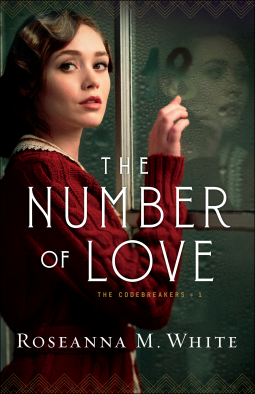
Case Study: The Number of Love by Roseanna M. White

Bethany House curates an engaged community of faith-based and general readers on NetGalley, earning impressive review counts and social share numbers

Sometimes at NetGalley, we field concerns from faith-based publishers that books with religious themes won’t perform well in our catalog. Publishers aren’t always sure that their books will find their readers if they have religious or spiritual underpinnings. But Bethany House demonstrates that with strategic use of NetGalley’s tools, faith-based books can become major successes on the site. Their contemporary romance Falling For You received over 75 5-star reviews and was named a 2019 Christy Award winner by the ECPA. The Number of Love by Roseanna M. White, historical fiction set in the world of WWII’s British code-breakers, earned 150 reviews, a 4.6 average star rating, and over 300 social shares.

Amy Green, Senior Fiction Publicist at Bethany House, shares how she used tools like the widget and the Auto-Approved list to build pre-publication buzz for the latest historical fiction from Roseanna M. White. Plus, how she thinks about the intersection between a faith-based readership and a general one.

The Number of Love
by Roseanna M. White

As a Christian publisher, how do you think about promoting your titles to a general audience, as well as a faith-based one? 

“I don’t usually read Christian fiction, but this book was amazing…” You’d be surprised how often we hear that sort of thing.

One of my favorite things to see as a publicist is a NetGalley review that starts something like, “I don’t usually read Christian fiction, but this book was amazing…” You’d be surprised how often we hear that sort of thing. Readers who might never wander into a specific genre’s section of a bookstore or library will see a stunning cover or compelling plot description on NetGalley and request to read it. The barrier to entry is pretty low, and oftentimes they end up loving the book and seeking out more from that author. Christian fiction (also called inspirational fiction) has changed a lot over the years, and many readers outside of a faith background tell us that the spiritual aspects of the stories feel natural to the characters and the development of the plot. We love granting requests from people outside of our usual readership!

How do you use NetGalley marketing? 

We’ve used placement in NetGalley newsletters to launch debut authors in particular, especially ones with striking covers like The House on Foster Hill by Jaime Jo Wright and Whose Waves These Are by Amanda Dykes, which we had featured in the Mystery/Thriller and Summer Reads newsletters respectively. It’s a great way to get the names and work of authors just starting out in front of a wide range of influential readers.

What kinds of members are you most interested in connecting with  on NetGalley? 

We love the connections we’re able to make through NetGalley with collection-development librarians, bloggers, and media. The ability to zip a NetGalley widget off to a reviewer has made it much easier for me to schedule interviews and blog tours. Some contest coordinators even request NetGalley to send copies of entrants’ books to judges, giving them additional time to read and choose finalists—and eliminating the worry of copies getting lost in the mail. Most recently, we sent widgets to judges for the Realm Awards, a competition for speculative fiction books written by Christian authors.

162 members from your Auto-Approved List accessed The Number of Love. How do you build this list and engage with its members? 

We want our Auto-Approved list to be a targeted group of readers and influencers with a high capacity for reading across multiple genres. These are the folks who aren’t just interested in the latest release from one favorite author, but who want to promote all subcategories of inspirational fiction. One way that we do that is by accepting applications from interested readers. They answer a few questions, like “Send us a link to a review you’re most proud of” or “What’s something unique you do to promote authors and their books?” If we like what we see, we’ll invite them to join the team. Other cases are even more specific. I saw a Bookstagrammer gushing online about being Auto-Approved for Bethany House—”It’s like I just won the reading lottery!” It was great to see someone excited about reviewing our books…and I took note of a few of the influencers who commented on that post to message them about joining our team of reviewers as well.

Some of the members of the Auto-Approved list are just added without much ongoing maintenance required (a reviewer for an online publication, for example). But we have a newsletter list for about 200 of the top influencers we’ve identified and Auto-Approved. We send them updates about new books added to NetGalley on a monthly basis along with our recommendations. 

How did you incorporate the widget into your launch strategy for The Number of Love?

In our initial marketing strategy calls with authors, we always mention that their book will be available on NetGalley as soon as editorial approves a manuscript for us to use, often four to five months before release. That way, both the author and our marketing team can plan to have a standardized e-copy of their book ready to use for any initiatives where that would make sense. For The Number of Love, we planned to use the widget to send to advance endorsers, launch team members, and blog tour participants who preferred an ebook copy.

Tell us how you used NetGalley for The Number of Love‘s blog tour and to support Ms. White’s launch team? 

By using NetGalley, we’re able to catch that early “buzz” from some of the author’s biggest fans and make sure other readers think, “What’s this new novel we’re hearing about everywhere?” during pre-order season.

Several of our authors, including Roseanna White, love to send physical books to launch team members, sometimes with notes and goodies. However, that takes time for shipping and packing, and often readers on their launch team want to read the book long before we can actually get a package to their doorstep. By using NetGalley, we’re able to catch that early “buzz” from some of the author’s biggest fans and make sure other readers think, “What’s this new novel we’re hearing about everywhere?” during pre-order season. It also helps the launch team members, many of whom juggle busy lives with their book blogging, podcasting, or Instagramming, to be able to work ahead of schedule and have a review ready by or before the release date of the book.

NetGalley members shared feedback for The Number of Love over 300 times. How did you encourage them to share their influence so widely?

Something I’ve been doing recently is reminding bloggers and influencers who use NetGalley that, at Bethany House, we often notice and pass along especially glowing reviews to our authors. It can be a huge incentive to review a book if the reviewers genuinely feel that their words aren’t just increasing their chances of being approved for future books (although that is true), but could also be encouraging to a writer who might be discouraged and under deadline for a future project.


Amy Green is the Senior Fiction Publicist at Bethany House Publishers, where she connects authors with readers by arranging interviews, sending out review copies, answering social media questions, and occasionally serving cake at authors’ launch parties. You can find her writing about all things bookish at bethanyfiction.com, or check out Bethany House Fiction on Facebook or Instagram.

*Interviews have been edited for clarity and length.

Read the rest of the NetGalley case studies and subscribe to the NetGalley Insights weekly newsletter so that you never miss a post!

Divider

Case Study: Fleishman is in Trouble by Taffy Brodesser-Akner

How Random House used NetGalley data to refine their marketing messaging and proactively find engaged readers for a big summer debut

Taffy Brodesser-Akner is by no means an unknown writer. As a staff writer for the New York Times magazine with a prolific Twitter account, she already has an audience. But when launching her debut novel, Fleishman is in Trouble, the Random House team treated her book just like they would for any debut novelist coming out with a big summer book. 

They dug into NetGalley data to see what was resonating with readers about her book , used NetGalley reporting to find fans of comp titles, and targeted book club leaders and readers. Plus, they leaned on Brodesser-Akner’s own self-promotion efforts via social media.

Jess Bonet, Marketing Manager at Random House, shares how she helped turn Fleishman is in Trouble into one of the hottest summer reads, and a New York Times bestseller. 

How did Taffy Brodesser-Akner’s unique position as an established writer and debut author guide your campaign strategy for Fleishman

For Fleishman, we pulled out all the stops as we would for a debut author: Heavy consumer-reads push on platforms like NetGalley and GoodReads and major book club leader outreach. Random House has a built-in book club platform called The Random House Reader’s Circle. Using that platform, I was able to reach book club leaders through the RHRC newsletter, social media and physical mailing address lists. I also targeted Instagram book clubs like Pure Wow that ran pre-pub giveaways to engage their fans. I provided book club leaders with eCards featuring blurbs and media praise for Fleishman is in Trouble.

Fleishman is in Trouble
by Taffy Brodesser-Akner

But what was unique about this project is that we were also able to use Taffy’s strong platform (she is a natural on social) to drum up excitement in the months leading up to publication. s. 

We also ran advertising on the New York Times website to convert fans of her journalism into fans of her new novel.

Plus, we ran advertising in Shelf Awareness and included a link to NetGalley on the landing page for easy bookseller access.

How did you involve Brodesser-Akner in launch campaign? 

Brodesser-Akner played an integral role in the launch campaign for Fleishman is in Trouble. She did a fantastic job promoting the book on social and making her fans aware that her debut novel was coming soon, even though she did not specifically promote its NetGalley listing on her own channels.

How did you proactively engage NetGalley members and communicate with them? 

We shared NetGalley widgets with reviewers of other Random House titles in the same category. I pulled Feedback Reports for users who requested similar Random House fiction titles, and gave access to people who rated the comparative titles 4 stars or higher.

I pulled Feedback Reports for users who requested similar Random House fiction titles, and gave access to people who rated the comparative titles 4 stars or higher.

We also emailed all reviewers [who submitted Feedback for Fleishman] and provided them with social assets on publication date to push reviews to retailer platforms and get the book in as many social feeds as possible. Social buzz was one of the major drivers of this campaign, and it continues to grow which is wonderful to see. 

You included Fleishman in two different NetGalley newsletters in March 2019 – Women’s Fiction and Debut Authors. Why were these newsletters and this timing the right marketing choice for you? What impact did you see?

For the blasts, we knew we wanted to capture both audiences: Women’s Fiction readers and the spotlight for Debut Authors. The fact that they were both in the same month was a great benefit to us, because it drove more awareness on the site, creating a snowball effect that led to increased number of requests driving to publication. For members subscribed to both newsletters, it’s always great to hit that audience again and make the reader feel like this is a book of the moment and read because they are seeing it everywhere.


We came to realize that readers were really responding to Taffy’s raw honesty about dating and marriage in the 21st century, so we played that up in our ad copy and our copy feeding to retailers. 

How did you go about managing requests for such a popular title? 

We were liberal with accepting requests for this title because we wanted to saturate different segments at the same time. We wanted to get engage booksellers, Instagram influencers and bloggers, as well as librarians.   

Which NetGalley reports or analytics are most important to you and your team? How do you use them?

The Feedback Report is the tool we most commonly use. It’s so helpful to see what’s resonating with readers before a book goes on sale, so we can adjust our messaging accordingly. Around 3 months before a book goes on sale, our team will meet and discuss review feedback, largely from NetGalley, and adjust copy as necessary. 

That’s truly my favorite part of using NetGalley: being able to see feedback in real-time about what readers are actually responding to, versus our messaging. We came to realize that readers were really responding to Taffy’s raw honesty about dating and marriage in the 21st century, so we played that up in our ad copy and our copy feeding to retailers. 


Jess Bonet is a Marketing Manager at Random House, working on campaign planning and marketing strategy for authors including Chelsea Handler, Brené Brown, George Saunders, Jia Tolentino, Téa Obreht, Salman Rushdie and more. In her spare time she writes and produces an upcoming comedy-horror web series, Are You Afraid to Adult?

Interviews have been edited for clarity and length.

Read the rest of the NetGalley case studies here!

Divider

NetGalley Advanced, providing in-depth data insights and productivity tools, launches in Europe

FOR IMMEDIATE RELEASE 

October 1, 2019—NetGalley LLC, the industry-standard provider of secure digital review copies and marketing solutions to readers of influence, today launched NetGalley Advanced for UK, French, and German publishers. Available in the United States since January, the premier level of service helps publishers track and analyze NetGalley trends across divisions, and make strategic decisions earlier. 

NetGalley continues to dovetail with publishers’ current marketing, publicity, and sales strategies, while expanding their pre-publication reach to new audiences. Called “NetGalley Premier” in France and Germany, NetGalley Advanced gives marketers and publicists access to tools that will help them spend less time executing strategies and more time refining them. Plus, new charts and customizable reports help publishers understand how their strategies are working, and if they’re reaching their engagement goals. New insights about audience, correlations between promotions and activity, and simplified title management ensure that employees at various levels of a publisher’s organization have what they need to make the most of pre-publication efforts.

“NetGalley Advanced has been well-received by publishers in the U.S.,” says Kristina Radke, VP, Business Growth and Engagement. “We’ve continued to introduce new and expanded features every month since the launch in January, and now feel that this powerful tool is ready for European publishers. I’m excited to see how publishers in these markets will use the early insights about their strategies, title activity, and audiences.”

Learn more about NetGalley Advanced by watching the most recent demo here

Interested publishers should contact your local representative: 

UK: stuart.evers@netgalley.com

France: maria.bodmer@netgalley.com

Germany: karina.elm@netgalley.com

Divider

NetGalley LLC désormais l’unique propriétaire de NetGalley France

C’est avec plaisir que nous pouvons annoncer que NetGalley France, auparavant une coentreprise en partenariat avec le détaillant de livres numériques Feedbooks, fait désormais intégralement partie de NetGalley LLC, la structure en charge de NetGalley.com et NetGalley.co.uk !  

Lancée en 2015, NetGalley France est fière de travailler avec plus d’une trentaine d’éditeurs français, dont Hachette Livre, HarperCollins, divers pôles du groupe Editis et Actes Sud Junior, et d’atteindre une communauté de plus de 8 000 blogueurs, rédacteurs, libraires, professeurs et professionnels des médias. Lors de cette transition, les lecteurs et éditeurs utilisant www.netgalley.fr ne rencontreront aucun changement au niveau de la plateforme ou du service.

Maria Bodmer assure à présent, depuis Paris, la fonction de Community Manager & Chargée de Relations Éditeurs, prenant en charge les relations clients et la gestion quotidienne de NetGalley France. Maria reprend ainsi le rôle d’Astrid Pourbaix, qui a quitté l’entreprise pour poursuivre de nouveaux projets. Les éditeurs français peuvent contacter Maria à l’adresse suivante : contact-editeur@netgalley.com.

Veuillez lire l’intégralité du communiqué de presse pour plus d’informations. 


NetGalley France Now Fully Owned by NetGalley LLC

It is with excitement that we announce that NetGalley France, previously a joint venture in partnership with the French ebook retailer Feedbooks, is now wholly owned by NetGalley LLC–the team that runs NetGalley.com and NetGalley.co.uk!

NetGalley France launched in 2015 and is proud to work with over 30 publishers in the region, including Hachette Livre, HarperCollins, divisions of Editis, and Actes Sud Junior, to reach over 8,000 French bloggers, reviewers, booksellers, librarians, educators, and media. Publishers and members who use www.netgalley.fr will experience no changes in the service or platform as part of this transition.

Maria Bodmer, based in Paris, serves as the Community Manager & Chargée de Relations Éditeurs, supporting client relationships and daily management of NetGalley France. Maria replaces Astrid Pourbaix, who has left the company to pursue other endeavours. French publishers can reach Maria at contact-editeur@netgalley.com.

Read the full press release for more information.

Divider

Pre-Publication Launch Schedule for Authors

As a self-published author, you might think that the hardest part is over once the book is complete. But once a book is ready to go out into the world, it still deserves the same level of attention and care that you gave it throughout the writing, revising, proofreading, and design process. As an author, you might not have formal marketing or publicity training, or the budget to hire someone who does have that kind of experience. But you can still give your book a professional launch.

While every book is unique and will have slightly different goals and timelines, we’ve used our experience working with everyone from indie authors to the largest publishing houses to develop a framework that you can use to guide your own unique launch strategy. You can also download this launch schedule.

The most important takeaway from this timeline is to plan your promotions a few months before your pub date to create ongoing and increasing excitement for your book. 

Different contacts should be given access to your book at different times, according to their needs. For example, any major media contacts will need a much longer lead time than a Goodreads reviewer or BookTuber. Plus, if you can secure early media attention, it’ll be easier to get interest from those consumer reviewers. Work towards getting some early blurbs, and then use those blurbs to bring in new readers, on NetGalley or elsewhere. 

And once you have made initial contact with these different kinds of readers – consumer reviewers, digital influencers, librarians, media, and booksellers – be sure to follow up with them right before pub date. Put your book back on their radar, encourage them to share their reviews on retail sites and with their audience, where applicable. 

For more  from the NetGalley team, check out our Proven Strategies series, plus our Author Case Studies. And be sure to subscribe to the NetGalley Insights newsletter!

Divider