Freebies, FOMO, and Sales Funnels: The Secret Recipe for Selling More Books

Smart consumer marketing isn’t about selling harder—it’s about creating buzz, building trust, and turning browsers into buyers.


First, what is consumer marketing?

The primary goal of consumer marketing is to increase discoverability for your book, both within and outside of the known target audience. It may include a number of different tactics, like:

  • Advertising (increase visibility)
  • Incentives (discounts, bundles, special packaging, etc.)
  • Engagement campaigns (to encourage a flurry of activity that others want to join, like giveaways, limited-time offers, author interactions, etc.)

These efforts work together to put your book in front of the widest potential audience, with a goal of sales conversion. Consumer marketing tactics can and should effectively fill your sales funnel. 

Why does it work?

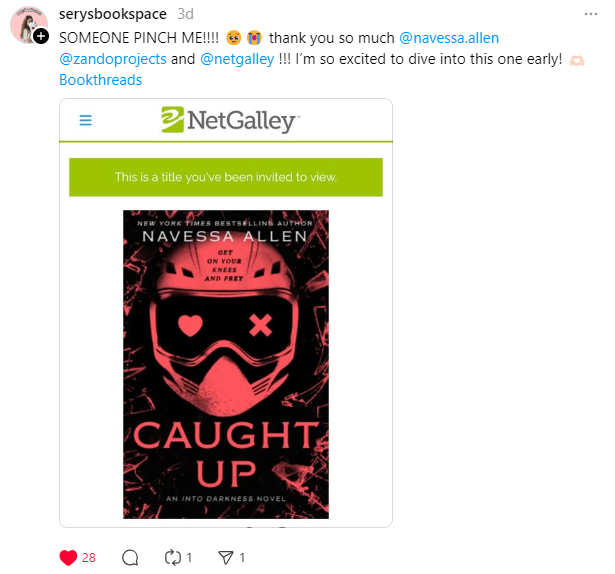
Well-planned consumer marketing fosters reader engagement in both the short and long-term. The more often consumers see a product, the more likely they are to follow through to purchase it. Add on a lot of organic online activity around that product (for example: likes and comments on posts featuring the book cover, excited chatter about winning a giveaway, emotional online responses to the moods a book evoked) and readers will buy and read the book to ensure they’re not left out of the conversation happening within their communities!

The ultimate goal of consumer marketing in book publishing is driving sales and fostering long-term reader engagement. Encouraging word-of-mouth recommendations, maintaining ongoing engagement through newsletters and social media, and offering special promotions or giveaways can help sustain book sales beyond the initial launch. By continuously nurturing reader relationships and filling the sales funnel with additional potential consumers, publishers and authors can fatten the curve ahead of the long tail dropoff of sales.

Image via “Should You Invest in the Long Tail” by Anita Elberse

Cannibalizing Sales: A False Assumption

There’s a long-standing myth that book giveaways will cannibalize sales. In reality, strategic efforts can ensure that the benefits of book giveaways far outweigh any potential lost sales. While giveaways provide free books upfront, they often lead to increased sales in the long run as new readers who enjoy the book recommend it to others, leave positive reviews, or purchase additional books from the same author or publisher. Often a reader will purchase the same book they got for free in a different format! (Hint: Digital giveaways are cost-effective, offer extensive reach, and help drive print sales!)  Here are some key strategies to ensure giveaways enhance sales rather than replace them:

1. Use Giveaways as a Lead Generation Tool

Build a direct marketing channel by collecting participants’ email addresses. This will allow you to offer exclusive discounts, pre-order bonuses, or future book recommendations, increasing the likelihood of future purchases. Do more with this list than just sell to them – practice empathetic marketing efforts to truly engage with these fans and, instead of replacing sales, giveaways will help establish a loyal customer base.

2. Offer Limited-Time or Exclusive Copies

To maintain perceived value, keep giveaways limited by time or quantity, or exclusive. This ensures giveaways act as promotional tools rather than permanent free alternatives to paid books. Consider:

  • Exclusive early access to members of your mailing list (or limit access to special book clubs, or the author’s street team)
  • Gift a copy of the book to readers who participate in online activities – posting a review, following the author on social media, sharing posts, tagging friends, etc.
  • Limited-edition bonuses like digital extras (a bonus short story, character art, playlist, etc.) that are only available to those who download the book during the giveaway window. This adds a sense of exclusivity even to a free item, and can drive urgency.
  • Run giveaways when certain community goals are met, for instance: “When we hit 2k Instagram followers, I’ll release a free novella!” This turns readers into active promoters to unlock free content.

3. Pair Giveaways with Paid Promotions

Instead of relying solely on giveaways, integrate them with paid marketing campaigns to boost overall sales. For example:

  • Running limited-time discounts alongside giveaways to encourage purchases from non-winners.
  • Upselling other books or merchandise after a giveaway.
  • Using retargeting ads to remind giveaway participants to buy related books.

4. Target the Right Audience

Instead of giving away books to general audiences, focus on specific groups that are likely to amplify sales by driving visibility. This includes:

  • Influencers, bloggers, and reviewers who will generate buzz.
  • Librarians and educators who may purchase copies for their institutions.
  • Book club members who may encourage group purchases.

5. Reach Outside the Target Audience 

Don’t be afraid to cast a wide net! A giveaway is a low-barrier entry point, making it a perfect opportunity to test new waters and attract unexpected fans. By broadening your efforts, you are likely to discover new audiences with their own spheres of influence.

  • Advertise in unlikely (but aligned) spaces. Instead of just running ads or promotions in bookish spaces (like BookBub or Goodreads), try platforms that are less saturated but still relevant to your book’s themes.
  • Create cross-interest appeal in your messaging. When promoting the giveaway outside your usual reader group, highlight elements that appeal to broader interests, for instance:  “Love stories with powerful women and epic travel? Snag this free adventure-romance before it’s gone!”

Rather than negatively impacting revenue, strategic giveaways can help you grow your audience, increase engagement, and drive long-term sales.

Tracking ROI (Return on Investment)

Any marketer or publicist will tell you that it can be tricky to tie one specific campaign directly to sales results. The path from visibility to conversion isn’t always linear. A potential customer might see a press mention, hear about a book from a friend, and then finally click on a digital ad weeks later before making a purchase. Because of this complexity, it’s more useful to think beyond just direct sales and instead focus on a broader set of performance indicators.

When organizing campaigns, be sure to set goals and plan to track metrics like audience engagement, website traffic, lead generation, or social media growth. These indicators provide a clearer picture of how your campaigns are influencing customer behavior over time. When evaluated together, they can help you understand the cumulative impact of your consumer marketing efforts, even if it’s difficult to pinpoint a single source of ROI.

Get Started Now!

Giveaways and other consumer marketing efforts are powerful tools not just for boosting immediate sales, but for cultivating long-term engagement and reader loyalty. Combine tactics to increase visibility with incentive-driven campaigns and smart audience targeting, to turn casual browsers into devoted fans. Strategic giveaways serve as catalysts for discovery and word-of-mouth momentum, especially when paired with paid promotions and authentic community engagement. And while ROI can be challenging to measure in a straight line, focusing on holistic performance metrics offers a clearer picture of sustained impact. Ultimately, successful consumer marketing is about more than just selling a book—it’s about building relationships that keep readers coming back for more.

NetGalley is here to help: Schedule a Booktrovert campaign now!

We’re thrilled to offer NetGalley clients a streamlined consumer marketing platform for the widest audiences, while leveraging and retaining the professional community that exists at NetGalley. Learn more here, and see how it compares to Goodreads!
Divider

NetGalley Announces Staff Reorganization Ahead of Standalone Consumer Marketing Platform Launch 


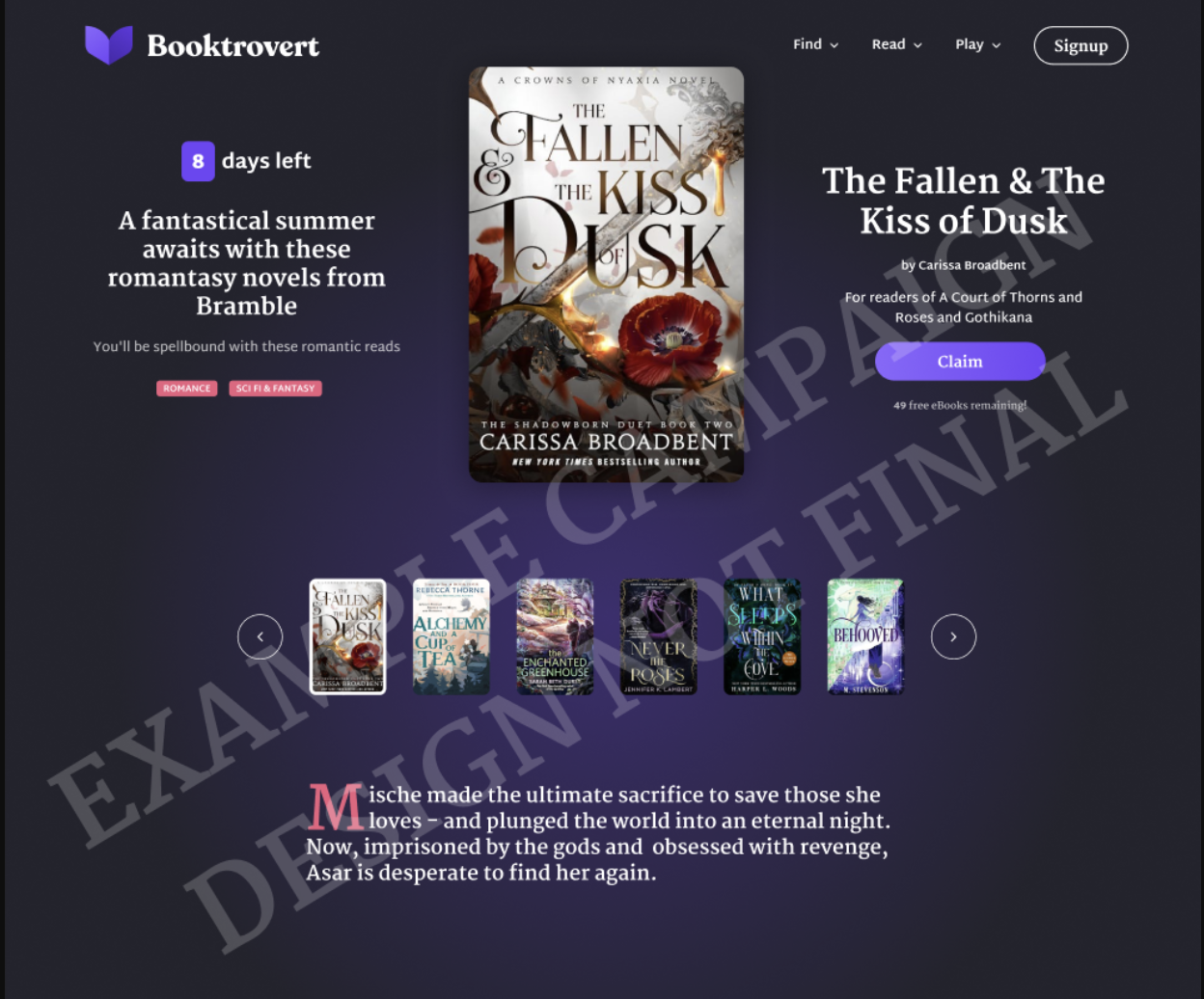
Newburyport, MA (March 10, 2025)—NetGalley, LLC—the recognized industry-standard for digital galley distribution and book marketing, and part of the Firebrand Group collection of companies owned by Media Do International (MD-i)—announced today a set of strategic initiatives intended to position the company for continued growth in the digital book market. The initiatives include a staff reorganization and the forthcoming launch of Booktrovert, a much anticipated standalone consumer marketing platform where readers can celebrate their love of books by participating in digital giveaways, special promotions, and fun bookish activities.

The staff reorganization, led by NetGalley Chief Executive Officer Angela Bole and newly appointed NetGalley President Lindsey Lochner, focused on the strategic alignment of job titles and responsibilities to produce a clearer understanding of the NetGalley team structure—internally and externally—ahead of the Booktrovert launch. The reorganization did not include layoffs or reductions in staff. All changes are effective as of March 1, 2025.

A highlight of the reorganization beyond Lochner’s promotion to the position of president includes the establishment of four distinct departments led by a set of vice presidents reporting directly to Lochner:

  • Business Growth & Engagement, US & International, led by Senior Vice President Kristina Radke, previously vice president of business growth & engagement; Radke also assumes new responsibility for NetGalley’s promotional team under the reorganization
  • Community Growth & Engagement, led by Vice President Tarah Theoret, previously senior director of community experience
  • Product Management, led by Vice President Mary Pratt, previously director of product management
  • Engineering, led by Vice President Darren Shifflett, previously engineering manager

In addition, Darcy Piedmonte, NetGalley’s senior sales manager since 2022, has been named director, customer acquisition & success, reporting to Radke. Bole remains NetGalley’s chief executive officer; Tom Shawver remains NetGalley’s chief technology officer.

“We expect the staff reorganization to enhance clarity and focus ahead of our eagerly anticipated Booktrovert launch,” said Bole. “The team has been working tirelessly to build something special with Booktrovert and we’re excited to strengthen our internal structure as we take final steps to launch the new product.”

Booktrovert will launch in the U.S. as a standalone consumer website in Q2 2025, but publishers, authors, and PR firms can start setting up book giveaways and other marketing campaigns in early April using a simple self-service interface built within the NetGalley.com platform. Campaigns can be created for one or more books, and each book can be designated a giveaway or available to pre-order or buy now. Furthering its flexibility, Booktrovert campaigns can be public or, if a publisher wants to limit access to exclusive audiences, private—expanding the Booktrovert use case to support event giveaways, book clubs, “street/launch team” copies, pre-order incentives, and more.

“Publishers have long asked how they can best utilize NetGalley’s tools for their consumer marketing efforts, and it’s no secret publishers, authors, and readers alike are seeking more options for secure ebook giveaways,” said Lochner. “We’re excited to answer the call with Booktrovert, opening up a significantly wider audience and connecting even more readers to more books.” 

Any NetGalley client—whether a subscription or pay-per-title client—can purchase Booktrovert campaigns, as well as optional add-ons for advertising and detailed analytics for giveaways. More information about Booktrovert will be announced in the coming months. Those with specific questions and those interested in more information sooner, can contact concierge@netgalley.com.

# # #

About NetGalley, LLC
NetGalley helps publishers and authors promote digital review copies and audiobooks to book advocates and industry professionals. Hundreds of thousands of members rely on NetGalley’s secure, sustainable, and easy-to-use platform to discover books, share reviews, and champion literacy. The NetGalley team coordinates closely with publishers on targeted promotions, and provides training, strategy, and consultation for incorporating NetGalley into overall marketing and publicity efforts. NetGalley is a strategic part of the Firebrand Group collection of companies owned by Media Do International (MD-i) which together provide leading software and services to help publishers succeed. To learn more, visit netgalley.com/tour.

About Media Do International (MD-i)
Media Do International (MD-i) owns the Firebrand Group, a collection of companies including Firebrand Technologies, NetGalley, LLC, and Supadu Ltd. that provide leading software and services to help publishers succeed. MD-i is itself the US-based subsidiary of Japan’s Media Do Co. Ltd, one of the largest ebook distribution companies in the world retaining the largest share of Japan’s ebook market. Media Do Co. Ltd.’s mission is to make more content available for more people. To learn more, visit mediado.jp/english.

# # # #

Divider

Book Communities and the Positive Emotional Loop

3 Easy Ways to Harness the Power of Dopamine

Readers bring books to life. The act of reading—taking in the words an author has written and translating them through the lens of our own unique understanding—creates a highly emotional connection between the reader and the book. Books teach us, challenge us, validate us, reflect our fantasies, help us understand our realities. When a reader truly connects with a book they cannot help but talk about it, and in sharing their experience they quickly find that every other reader knows this feeling. It creates a kick of dopamine—the neurotransmitter responsible for pleasure and motivation—that reinforces their desire to connect with others, encouraging people to continue to share their thoughts with friends, family, and strangers online. In the process, these readers increase the visibility for the books they’ve read and kick off a positive emotional loop: more people share more thoughts, which leads to more people sharing theirs as well. This looks like organic momentum (see: BookTok!), but there are ways to get the snowball rolling. So how do we harness this power?

First and foremost, remember that the book itself will create the initial emotional response in the reader. The suggestions below are ways to help readers continue living in the world of your book, whether fiction or nonfiction, to identify and share all the feelings the book generated in them.

1. Give them visual assets to share.

Make it easy for readers to post on the platforms they already use by creating easily-shareable, well-designed digital images or gifs. They should match the emotion or mood of the book and could be beautiful or scary, funny or serious. Everyone loves to answer the question of “what should I read to fit my mood?” and your assets can help define the mood visually for others who see it. Consider making them customizable or interactive (choose colors, add text, etc.) 

By giving readers something to share, you are helping them collect likes and comments, releasing little bursts of dopamine every time someone engages with their post. Plus, you are reinforcing the book’s branding through consistency of design, making it recognizable in its repetition across multiple readers’ posts.


2. Engage with readers, not trends.

Instead of chasing fleeting trends, trust your audience to engage with them naturally—just give them the right tools to do so. Online communities can quickly spot when brands force their way into trends, often labeling these attempts as “cringe.” Rather than trying to fit in, empower your audience to take the lead. Beyond providing assets (mentioned above), give them something worth sharing that sparks excitement and pride. Let them brag: I won a giveaway! I got this free sticker at my local bookstore! I  identified this easter egg online! I completed this challenge! I was asked to participate in this special event! These experiences encourage organic participation.

When people have something meaningful to share, they spread the message in an authentic way that resonates within their communities. Gamifying engagement through challenges, achievements, and interactive experiences keeps audiences invested and excited. These moments not only generate buzz but also tap into the brain’s reward system—triggering dopamine and reinforcing participation. By shifting the focus from forced brand participation to community-driven engagement, you create a more natural and lasting connection with your audience. 

3. Plug in to communities outside of the typical reader-centric communities. 

A sense of connection is a powerful way to release the brain’s reward chemicals, and one of the best ways to cultivate it is by engaging with established communities beyond reader-centric spaces. When people feel seen and included in something that aligns with their interests and values, they’re more likely to participate and share. For example, if you have a cookbook to promote, collaborate with a local cooking school to teach one of your recipes (and encourage them to share their photos of the dish with a hashtag). This not only creates excitement but also fosters real-world engagement. 

Similarly, if your book features a character who has their own hobbies (like surfing), run a book giveaway in an online surfer’s forum, or at a surfing competition. You can do this digitally very easily, without needing to worry about printing and shipping. A targeted giveaway like this taps into a passionate, built-in audience that already values the subject matter.

Be sure you’re practicing Empathetic Marketing to generate warm feelings of inclusion and recognition throughout the community, resulting in shared enthusiasm for your book. By meeting people where they already are and giving them something meaningful to engage with, you create authentic, lasting connections that go beyond just promoting content—they build genuine engagement and excitement.

Readers transform a solitary activity into a shared experience. By giving them the tools to do so, you’re not just marketing a book; you’re connecting with the individuals who make up a community.

At its core, book promotion isn’t about chasing trends or forcing engagement—it’s about nurturing the emotional connection readers naturally form with your content. When readers love a book, they want to talk about it, share it, and celebrate it with others. These readers are transforming a solitary activity into a shared experience. By giving them the tools to do so, you’re not just marketing a book; you’re connecting with the individuals who make up a community. When readers feel empowered to bring a book into their world and share it in a way that feels personal, the excitement grows organically, creating a ripple effect that keeps the book alive in conversations long after the final page is turned. 

Divider