ABA Winter Institute Wrap-Up 2025

The 2025 Winter Institute, presented by the American Booksellers Association, was one of the most high-energy, collaborative, and emotionally charged events we’ve attended. While we acknowledge the reports of a contentious community forum, the personal experience of the NetGalley team members who attended was one of optimism and hope. From booksellers eager to get started or learn how to utilize NetGalley even more to publishers discussing evolving industry trends, we found the gathering to be dynamic and insightful overall.

Booksellers: Learning, Listening, and Looking for Audiobooks 

Tarah Theoret (VP, Community Engagement) and Darcy Piedmonte (Director of Customer Acquisition & Success)

Winter Institute remains an incredible opportunity to connect with booksellers at all stages of their careers. This year, we met many new booksellers who were excited to learn how to utilize new tools available on NetGalley (like the NetGalley Reader) and confirm that their staff could sign up for their own NetGalley accounts and use the ABA store number. Education was a key theme for us, ensuring that booksellers understand widget invites, auto-approvals, feedback expectations, and how NetGalley can help streamline their workflows.

One persistent misconception we addressed was the belief that booksellers are required to maintain an 80% Feedback Ratio on NetGalley. While it is recommended that all member types submit Feedback, we recognize that writing a review may not be a priority for booksellers in the same way it is for a journalist or consumer reviewer. As NetGalley continues to evolve, we are exploring ways to further customize the Feedback process for booksellers and other member types.

A recurring theme in our conversations? Booksellers want more audiobooks! Several expressed that audiobooks help them keep up with their TBR lists and allow them to be more effective handsellers. Our response? “Tell your sales reps how important audiobooks are to you and your staff,” because booksellers really care about reading books before including them in their inventory and selling them. In other words, hand-selling is alive and well and distinguishes the indies from other retail spaces.

Publishers: Digital Expansion and Strategic Conversations 

A notable question from many publishers was, “Can you tell us more about NetGalley’s reach?” While the focus at Winter Institute remains the bookseller community, publishers are keen to hear how NetGalley connects them to independent booksellers, and also other member groups like librarians and journalists. They were interested in stats, reporting, and facilitation of communication with those who’ve interacted with their books, particularly when comp books, or additional titles by a given author are published. To learn more about NetGalley’s reach, check out our 2025 Community Update and Community Spotlight on Children’s and Middle Grade activity!

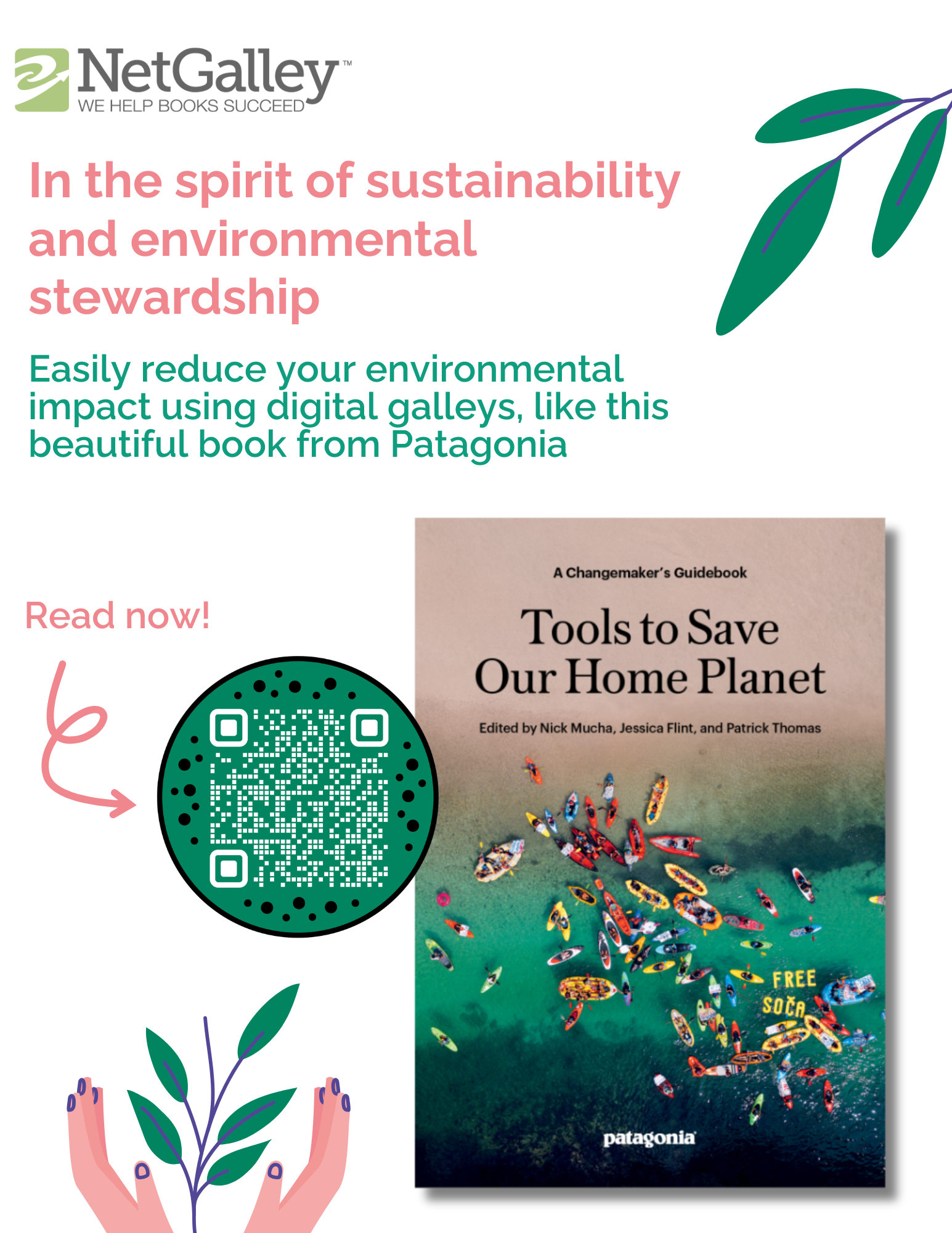
An additional trend in the Galley Room was the increasing use of QR codes for digital access. We were happy to show how easy and sustainable QR codes can be right at our table. A partnership with Patagonia Books allowed us to exclusively offer their book, Tools to Save Our Home Planet, via QR code. A number of other publishers incorporated QR codes alongside physical galleys in the Galley Room and we were thrilled by this interest in a growing digital shift. We encourage publishers to further streamline their processes by linking straight to NetGalley and ensure a seamless experience for booksellers. To that end, we also shared a QR code of our own Sustainability in Publishing post. 

We also planted seeds for NetGalley’s upcoming consumer marketing opportunity, Booktrovert, and the response was overwhelmingly positive. Publishers have long wanted to target both book trade professionals and consumers, but not necessarily in the same space. When they heard that “it’s coming,” excitement was palpable.


Looking Ahead: Opportunities & Next Steps 

Overall, Winter Institute 2025 was an energizing reminder of the passion, dedication, and resilience of the book industry. As booksellers, publishers, and industry professionals continue to adapt and innovate, NetGalley remains committed to supporting the connections that bring books into the hands of readers everywhere.

Divider

Sustainability 2025

Sustainability has long been a hot topic in the book industry. With an environmentally savvy consumer market and labor force composed of people who want to make the world a better place, it only makes sense that publishers would lead the charge on sustainable practices. Sadly, this has not always been the case. Now, with rising costs of production, looming tariffs, and much uncertainty in the market there is no better time to face challenges head on and look for solutions wherever they can be found.

Those solutions are often found globally. The Green Book Alliance (GBA), a collaboration across Book Industry Communication (BIC) in the U.K., BookNet Canada, and the Book Industry Study Group (BISG) in the U.S., has been sharing sustainability resources and findings for five years. Brian O’Leary, executive director of BISG, told us “Environmental issues don’t know borders. As the largest publishing market in the world, what happens in the U.S. has an outsized impact on the industry and the world.”

Photo by Katrin Bolovtsova

No doubt geographic and geopolitical disruptions will continue to impact the book world this year. Publishers and partners will be discussing ways in which they can reduce costs, speed up production, and align with environmental solutions. NetGalley will be tracking these discussions at conferences and, importantly, demonstrating at least one proven and reliable way to help publishers and book professionals reduce their carbon footprint: Digital Review Copies.

For a book community that has been hungry for strong voices and authentic commitments to save the planet, perhaps this is the year we are ready for real leadership. We’ve all seen the industry slip backward into pre-pandemic practices of sharing physical ARCs instead of digital or audiobooks, all while regarding conference galley rooms with a bit of dismay.

“We as publishers need to push them to realize that this is a problem not only for the environment, but for the supply chain as well… It is a not good for bookstores, publishers or authors (who don’t earn a royalty from third party sales) that these pre-market [print] copies are out there.”

Karla Olson, Patagonia Books

Karla Olson, Director of Patagonia Books, has long been a voice of reason and clarity in our industry. She aims to protect the planet, but also quickly meet the demands of a fickle and competitive market. In 2019, Karla and the team at Patagonia Books declared they would no longer print galleys for environmental reasons. “What’s the point of killing trees, using water, expending fossil fuel, and creating greenhouse gases for something that can easily be replaced by a digital version?” In 2025, she regrets to see publishers actually producing  increased quantities of disposable print copies since the pandemic. She writes,

“One of the most impactful ways to improve sustainability is to NOT print ARCs or galleys. Digital galleys are just fine, and in fact, better for the system overall. During the pandemic, many reviewers were accepting DRCs, and we were really hopeful that that would stick. Unfortunately, many reviewers are reverting to their old systems of stacks of ARCs on their desks or in the galley room, instead of cataloging DRCs. We as publishers need to push them to realize that this is a problem not only for the environment, but for the supply chain as well. Those printed ARCs get picked up by the third party sellers on Amazon, who sell them for less and win the buy button. It is not good for bookstores, publishers or authors (who don’t earn a royalty from third party sales) that these pre-market copies are out there.”

Environmental impact at various moments throughout the supply chain is urgent for publishers to continuously acknowledge and make effort to minimize. O’Leary points out, “BISG’s work helps show how actions in one part of the supply chain play out across the industry. Content creation has become fundamentally digital, but we’re not always taking advantage of the opportunities digital provides.”

With a proactive commitment to LCP, a brand new NetGalley Reader, and audiobook early-listening solutions, NetGalley is a proven alternative to print review copies. It’s not just about amplifying our own product. It’s about providing answers to practices that are not only out of fashion, but out of step with our industry’s values. Not only are book files safe and secure thanks to the most up-to-date technology, publishers also benefit from fast, easy tools to distribute digital review copies far beyond the typical reach of print.

Let’s take a chunk out of the galley room and replace tables lined with paper, ink, and cardboard boxes with QR codes and directions for how and where to access digital review copies and audiobooks. We’re here to help! 

With a proactive commitment to LCP, a brand new NetGalley Reader, and audiobook early-listening solutions, NetGalley is a proven alternative to print review copies. It’s not just about amplifying our own product. It’s about providing answers to practices that are not only out of fashion, but out of step with our industry’s values.

This article will be updated during the 2025 conference season with feedback from reviewers, publishers, and partners.

Divider

Sustainability in Book Publishing 2024

As Earth Month comes to a close, let’s all remember that meeting sustainability goals must be an ongoing effort. We’ve been excited to hear even more conversations with a focus on publishing’s impact on the environment at events around the world and, in particular, a shift toward action. 

At the London Book Fair this year, over 20 events were held in the dedicated Sustainability Hub, with topics meant to drive concrete action toward Sustainable Development Goals. Although we weren’t able to attend each session, the message was clear that publishers want to stop talking about the challenges that persist in transitioning towards greener publishing practices and start making more exponential progress.

In the session “Championing Climate Action: Authors as Agents of Change”, panelists discussed the impact of individual and collective action. Children’s author Jonathan Emmett expressed his no-fly policy, opting instead for virtual readings or traveling only within distances easy to access by train. The concept of “Climate Shadow” emerged as a powerful tool for authors to influence positive change – an individual’s potential impact on the climate is more than just our carbon footprint. By leveraging personal influence through conversations, behaviors, and speaking engagements, authors can significantly impact environmental awareness and action. Emmett’s advocacy for reducing air travel resonated deeply, highlighting the potential impact of even small lifestyle changes. With one flight from NYC to London equating to 2.2 tons of carbon emissions, convincing someone to reduce their flying by just one trip can make a meaningful difference.

Learn more about the Outdoors & Nature category on NetGalley!

Novelist Yara Rodrigues Fowler stressed the importance of collective action, calling on authors to hold their publishers accountable to their Sustainable Development Goals (SDGs). Martin Reed, Head of Communications at the Society of Authors, encouraged authors and publishers to sign Publishing Declares, a sustainability pledge launched by the Publishers Association, which now has 188 signatories. As The Guardian reports,  the pledge has sparked momentum within the industry; however, Siena Parker, social impact director at Penguin, emphasized that the next crucial step is supporting these signatories in actualizing their pledge.

By some estimates, one tree produces enough paper for only 25 books. Using that math, 3.5 million approvals means that publishers have saved about 140k trees by using NetGalley in the past year alone!

Here at NetGalley we are proud to help publishers supplement, and sometimes even fully replace, printed ARCs with a secure, digital solution. This empowers publishers to embrace sustainable practices while maintaining effective marketing and promotional strategies by minimizing paper waste and carbon emissions associated with printing and shipping. At conferences and events, we love to see publishers shifting toward a more sustainable approach by offering attendees access to their books digitally by including a QR code that allows them to Request or Read Now through NetGalley.

In the past 12 months, over 25,000 DRCs and Audiobooks were added to NetGalley, with 3.5 million requests approved. By some estimates, one tree produces enough paper for only 25 books. Using that math, 3.5 million approvals means that publishers have saved about 140,000 trees by using NetGalley in the past year alone!

We are proud that NetGalley’s climate shadow is helping the publishing industry achieve a more environmentally friendly path forward.

Divider

Sustainability in Book Publishing 2023

The call to address sustainability in the book publishing industry isn’t new. Yet ongoing news about the devastating effects of climate change has heightened the urgency for all industries to take action towards reducing their environmental impact. Last year, we wrote about challenges to publishers’ sustainability efforts that we heard at the London Book Fair. Last week they introduced a whole lounge dedicated to these conversations at this year’s Fair. And yet, has there been traction on reducing our industry’s carbon footprint? NetGalley recently surveyed our client publishers about their sustainability strategies.

More and more publishers are making commitments to reducing their carbon emissions. From reducing paper waste to decreasing carbon emissions, publishers are looking for ways to minimize their impact on the environment. And yet nearly half of our survey respondents told us that they are not sure whether their organization has a sustainability or carbon-reduction strategy. Even worse, 33% said their organization does not have a strategy.*

After ABA Midwinter earlier this year, Publishers Weekly pointed out, “Boxes stacked nearly to the ceiling, plus the resulting packaging, garbage, packing tape, and waste, prompted one bookseller to ask if there might be another way to manage all those tempting ARCs.” At NetGalley, we know there is a way—and we’re thrilled to be part of the solution.

Publishers have uploaded about 24,000 books and approved 3.3 million requests from members to read them digitally. That is 3.3 million books that were not printed, and yet still reached the intended, enthusiastic audience they deserve.

March 2022 – April 2023, NetGalley.com and NetGalley.co.uk

In the last 12 months alone, publishers have uploaded about 24,000 books to NetGalley.com and NetGalley.co.uk, and approved 3.3 million requests from members to read them digitally.** That is 3.3 million books, including review copies, that were not printed, and yet still reached the intended, enthusiastic audience they deserve. Booksellers, librarians, educators, reviewers, and media who want to make an impact have leaned into digital reading for their work, and over 300 publishers and hundreds of authors are using NetGalley to meet that demand. (In addition to helping to ‘green’ the publishing industry, we know NetGalley has the added benefit of reducing costs to the publisher, compared to printing and shipping all those ARCs!).

In further good news, companies like Springer Nature Group are leading the charge by reporting on their efforts. Their report, “Driven by Discovery: Sustainable Business Report 2022”, released earlier this month, looks beyond the supply chain, delving into employee engagement with their SDG Impact Challenge (saving 86 tonnes of CO2 and matched by Springer Nature), reporting on carbon offsetting and business travel (business flights remain low compared to pre-pandemic levels), and reduced resource use since they have moved to hybrid work. 

For more on the state of sustainability in the book publishing industry:

*NetGalley Sustainability Survey, April 2023
**April 2022 – March 2023

Divider

Sustainability – a challenge for all.

At the 2022 London Book Fair there were four separate sessions devoted to sustainability in the industry, making it one of LBF’s most debated topics. At the start of the second panel discussion, Stephen Lotinga, CEO of the Publishers Association, summed up the common theme that bound them all: “We want our industry to be around for as long as possible,” he said. “This is clearly the challenge of our time.” The question is, how do we all rise to meet it?

Open book with a tree growing from its pages

The answer, as those LBF panels attested, is complex, and comprises a huge range of potential initiatives and strategies. The one thing that everyone seems to agree on, however, is the importance of taking action now. As EJ Hurst and Julie Raddysh from New Society Publishers said in a recent interview, “It is imperative. Business will only thrive on a stable, healthy planet”.

Where once sustainability might have been primarily a moral or ethical consideration, or something multinationals might add to their Corporate Social Responsibility statements, it is now a commercial imperative too: consumers are demanding ‘greener’ products, just as much as environmental groups are urging root-and-branch changes to the way products are made and distributed. This means sustainability is no longer something to be deferred: everyone, from boutique house to corporate monolith, is implicated and impacted.

In software company knk’s Publishing and Sustainability 2022 whitepaper, two key areas of concern were identified: one, the polluting nature of physical book fulfilment; and two, the problem of power consumption from data centres. While the latter can be mitigated by using providers who provide more renewable energy and better systems, industry responses to how best to print, store and ship books will come to define how sustainable the publishing world really can be.

There are many disparate factors that need to be addressed here – from paper stock to print on demand; from where books are printed to more effective warehousing and distribution channels – but for many, the decisions taken on a daily basis are the ones which will ultimately shape the future. One of the most important of these is pre- and post-publication reading copies.

Exact figures are hard to come by, but, were publishers in the UK and US to produce the same number of physical ARCs as they made digital copies available on NetGalley, this would equate to around 3 million books*, the vast majority of which are packaged and mailed to individuals around the world. Notwithstanding the huge cost of printing, then sending these books, the ‘book miles’—the environmental impact of their shipping—accrued by this strategy are staggering. Reducing the number of ARCs produced and sent is a quick and easy way to increase sustainability—but at the same time, it requires a mindset shift from all stakeholders in the process. Publishers must reiterate to influencers that physical ARCs are not the norm, while authors will have to understand why only a small number of ARCs are being printed. Influencers might need to accept that they need to read at least some of a book digitally before requesting a physical ARC, while publicists might have to change the decades old practice of stuffing envelopes with books and press releases. It is a small part of the puzzle, but one that will reap huge benefits if taken seriously by all players.

*Total number of digital review copies approved on NetGalley.com and NetGalley.co.uk from March 2020 to February 2021

A former bookseller, editor and marketer, Stuart Evers is Director of NetGalley UK. He is also an award-winning writer of short fiction and novels. 


Divider