London Book Fair Wrap-Up 2026

It was with a mixture of nostalgia and anticipation that the publishing world met at Olympia for the last London Book Fair before its move to ExCel in 2027. Described by some in the media as “high energy” and “really busy”, despite the absence of a number of Middle East based companies, it certainly felt that way for NetGalley. Here are our takeaways:

The book world is cautiously upbeat…

Despite economic pressures, the fair felt energised. Publishers, agents, and booksellers reported steady deal‑making, but to me, it was more the sense of people being relaxed with one another, smiling in the sunshine. Kathleen Farrar, managing director of sales and marketing at Bloomsbury said that “books are a place where people have refuge”, against a “scary” global landscape and that sentiment I think you could see all over the fair.

But the reading ‘crisis’ needs addressing

The UK’s National Year of Reading was woven through the entire fair, with literacy charities and publishers stressing that declining reading rates pose a bigger long‑term threat than AI. Pan Macmillan CEO Joanna Prior warned that the industry must treat reading engagement as a structural priority, not a marketing campaign. It will be interesting to see whether this is something that is still at the forefront next year.

AI can still draw a crowd

Outside of our meetings, the highlight of the fair for me was the brilliant Firebrand Group  panel: How Metadata, SEO and GEO Can Help Sell More Books Worldwide. Joshua Tallent (Firebrand Technologies), Kristina Radke (NetGalley), Sarah Arbuthnot (Supadu), and moderated by Mary McAveney, CEO of Abrams, talked to a standing-room only International Stage and gave an absolutely fascinating and informative discussion. You can watch it here. Plus, take a look at the one-sheet attendees received during this talk, with articles from Firebrand Technologies, NetGalley, and Supadu on this topic!

Click to watch the panel:

Mary McAveney, CEO of Abrams, with the Firebrand Group: Joshua Tallent (Director of Sales & Education, Firebrand Technologies), Sarah Arbuthnot (President, Supadu), and Kristina Radke (SVP, Business Growth & Engagement)

As at the IPG Conference (our wrap-up here), the conversation around AI has subtly shifted from existential fear to practical integration: rights management, workflow automation, and ethical boundaries. It underscores the fact that we are still learning as an industry where we are headed.

The conversation around AI has subtly shifted from existential fear to practical integration: rights management, workflow automation, and ethical boundaries.

And rights are increasingly a battleground

The big Rights news of the fair was Bonnie “Lessons in Chemistry” Garmus moving from PRH to Bonnier. Any massive move like this is likely to cause gossip, but it was the reason for the switch that had people talking. Tom Weldon, CEO of PRH UK,  refused to purchase the new book as the author’s agents had already sold exclusive English-Language rights to the German publisher. This he considered to be a red line. Increasingly, UK and US publishers are hugely improving their revenues with their English-Language edition being sold into countries with a high density of (usually young) readers who want to read in English. This is one to watch!

Nonfiction is far from a spent force

Despite talk of fiction’s dominance, nonfiction is proving to be resilient, and there were strong showings in this genre in the rights centre. Narrative nonfiction, wellness, and politics/current affairs were the subjects gaining the most amount of traction.

Leaving Olympia is bittersweet

It’s cold when it’s cold and steaming when it’s hot; you can do a deal in the time it takes to get to the front of the queue for coffee (this actually happened). The WiFi is appalling; the bag search can take an eternity, but I couldn’t help but feel a touch of sadness leaving the Fair for the last time. We’ve had a lot of good times there, and it will be missed. As will our annual dinner at Ffiona’s Restaurant. But onwards and upwards. We can’t wait for 2027 at ExCel.
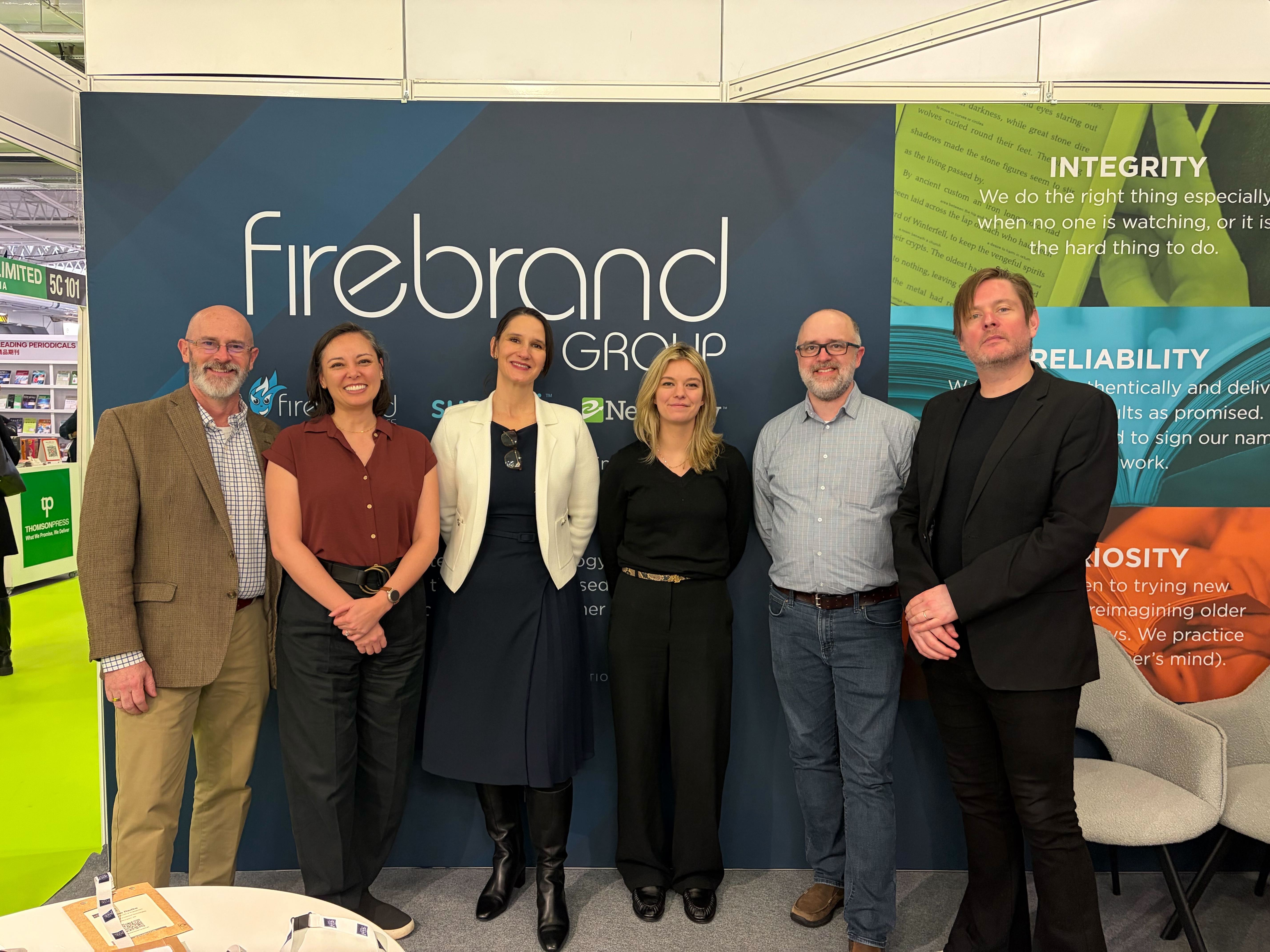
Members of the Firebrand Technologies and NetGalley teams: Rob Stevens, Kristina Radke, Angela Bole, Sidney Thompson, Joshua Tallent, & Stuart Evers.
Divider

How Book Reviews Power Discovery in the Age of AI Search

From SEO to generative engines, real reader reviews help books surface where modern audiences look for recommendations.

In a world of marketing acronyms, SEO has reigned supreme for many, many years. Search Engine Optimization remains important to help improve appearance in results from traditional search engines like Google and Bing. But now in the age of artificial intelligence, GEO (Generative Engine Optimization) and AEO (Answer Engine Optimization) are taking the reins. GEO helps with AI-generated responses like ChatGPT or Google’s AI Overviews, and AEO helps your content appear in direct-answer formats like featured snippets, AI summaries, and voice search.

Having trouble keeping all the acronyms straight? Us too, but here’s an easy overview.

The main thing to know is that the goals we’ve always had for increasing book discoverability have not changed. The work you do as a marketer continues to be in service of connecting the people who will most love your books with your books… no matter where or how they’re searching for them on the web. Now, however, we have to think beyond keywords because the discoverability infrastructure has changed. Your marketing copy and metadata needs to be easy for AI search assistants to understand, summarize, and recommend, ensuring that your content shows up in AI answer engines. While traditional SEO helps your book or website appear (ideally) at the top of a search index, GEO & AEO help ensure that there’s enough information about your book out in the world to be able to answer a more complexly-worded question.

Natural Language

AI feels scary to a lot of us. But a reassuring truth remains: Humans are still at the center of this conversation. We humans have been typing complex questions into search bars since the beginning of search bars. In marketing, we love to say “meet your readers where they are” and the reality is that people have already been using natural language to search for a long time. Now, AI is helping to return more nuanced results.

The training ground for AI is created by humans: the marketer who’s writing the book description, keywords, and other metadata; real readers describing that book on social platforms; and book reviews in media and on retail sites.  If hundreds of readers describe a book as a “slow-burn enemies-to-lovers romance with sharp banter” this language will become part of how search results are returned.

We know that book reviews have always been highly valued in search algorithms. The number of reviews, how recently the reviews were posted, the star ratings, and more have all gone into helping platforms surface books that they believe are relevant to a particular reader’s search. Book reviews containing natural language and sincere reactions from real readers continue to play a foundational role in strengthening a book’s discoverability. 

The Growing Importance of Reviews

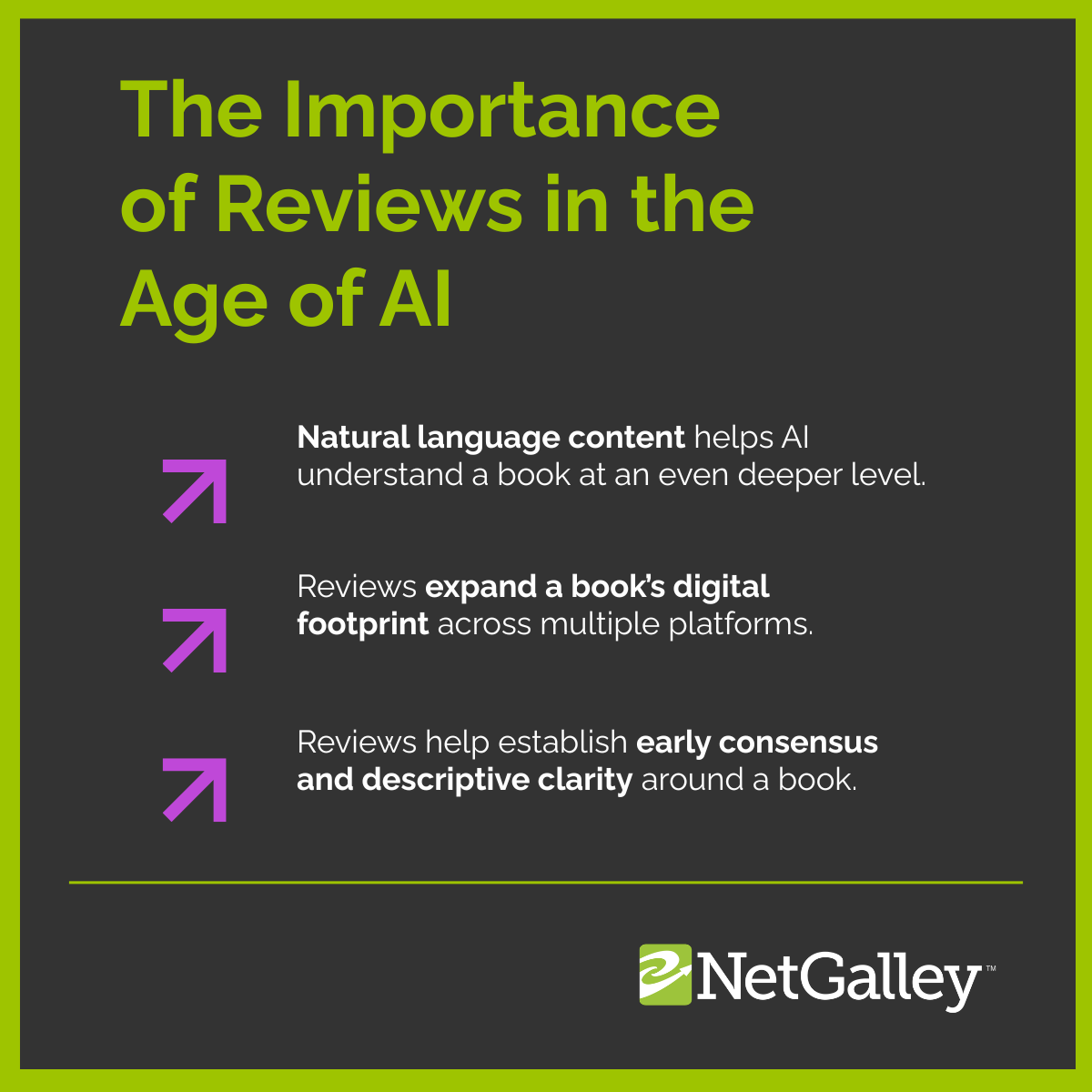
Now, the very quality of reviews’ natural-language content helps AI understand a book at an even deeper level. Every review adds descriptive keywords, genre signals, comparable titles, and thematic language around a book—often phrased the same way readers search or ask for recommendations. This creates a dense layer of searchable context across the web, helping titles appear more frequently in traditional search results and recommendation queries.

Reviews also expand a book’s digital footprint across multiple platforms. When reviews from sources like NetGalley are shared to retailer pages, reader communities, independent blogs, or even transcripts of podcasts, they create a network of references that search engines like Google interpret as signals of relevance and authority. This widely distributed presence increases the likelihood that readers encounter the book across different discovery pathways—from retail searches to recommendation lists and genre-based browsing.

Plus, reviews help establish early consensus and descriptive clarity around a book. When hundreds of readers consistently identify themes, tone, and audience (“slow-burn romance,” “twisty thriller,” “perfect for fans of…”), those repeated signals help both search algorithms and AI-driven recommendation systems categorize the book more accurately. The result is stronger placement in search results, recommendation engines, and AI-generated reading suggestions—making reviews one of the most effective ways to ensure a book can be found by the right readers, even (and especially) in this age of GEO and AEO.

The Good News for Book Marketers

If GEO and AEO sound intimidating, the good news is that authors, publishers and marketers are already doing much of the work required to support them. Writing clear book descriptions, developing thoughtful metadata, and encouraging reader reviews have long been core parts of book marketing. In many ways, AI-driven discovery simply rewards the same best practices the industry has always valued: rich descriptions, authentic reader responses, and widespread conversation about books online.

What’s changing isn’t the goal—it’s the ecosystem in which discovery happens. Search engines and AI tools are becoming better at understanding natural language and identifying patterns in how people talk about books. When marketers provide clear metadata and readers contribute thoughtful reviews, they collectively create the descriptive landscape that helps these systems understand what a book is about and who will love it. GEO and AEO aren’t entirely new challenges to solve. They’re the next evolution of discoverability—and one that builds directly on the power of reader voices. 

Additional Resources from the Firebrand Group

Learn more about marketing in the age of AI with
the Firebrand Group at London Book Fair 2026!

Divider

IBPA Publishing University, Conference Wrap Up, Part 4

Each year the Independent Book Publishers Association (IBPA) brings together its robust membership to share knowledge and resources, discuss challenges and opportunities facing indie publishers and authors, and network with like-minded professionals. This year we met in Denver, Colorado, and even a surprise snowstorm did nothing to dampen the excitement in the room!

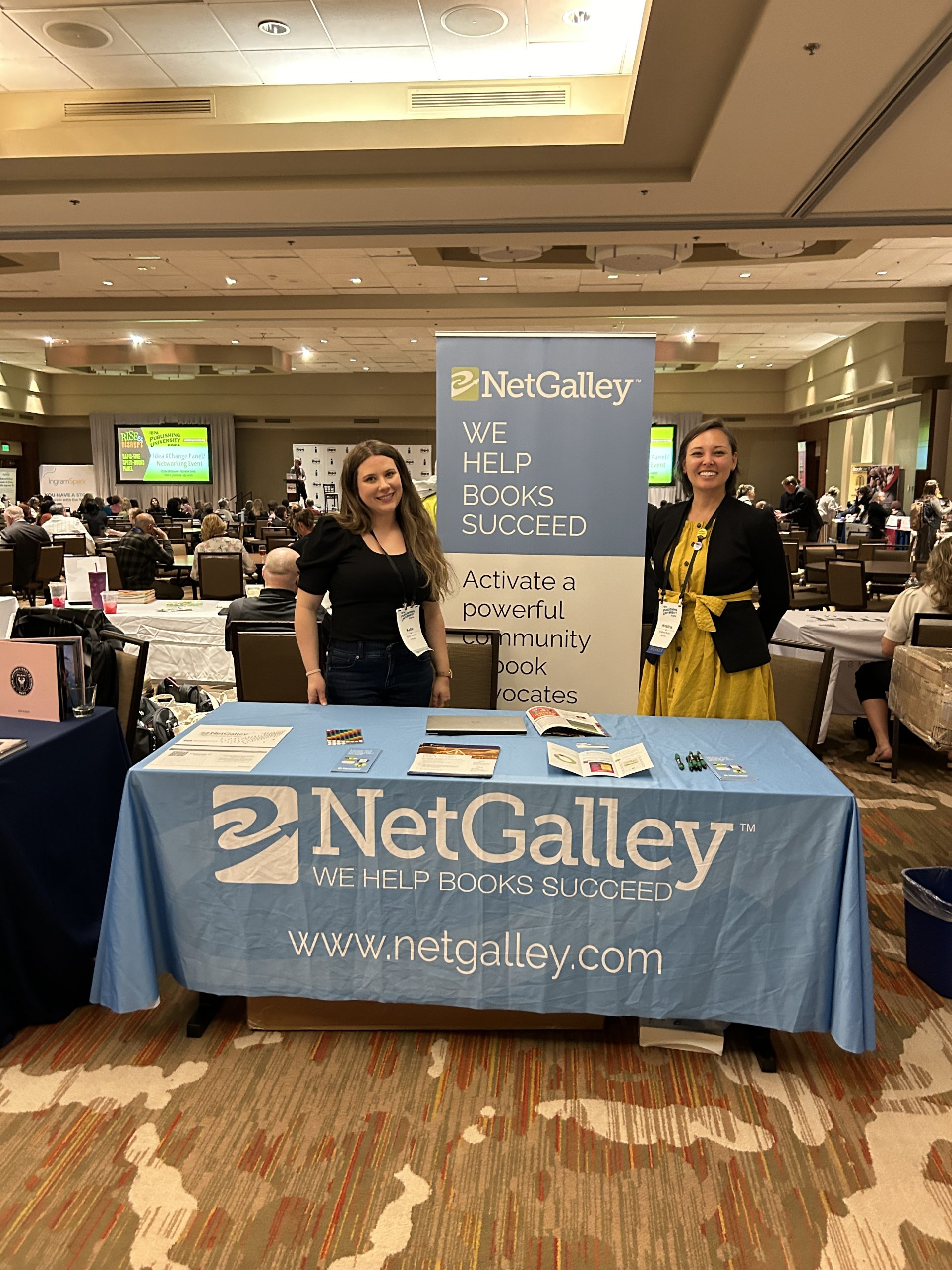
Katie Versluis and Kristina Radke at IBPA Publishing University in Denver

The theme of this year’s event, “Rise and Disrupt,” resonated deeply with attendees grappling with the challenges posed by consolidation in the industry, slowing sales, inflation, the rise of new AI technologies, and more. This is an event that does not shy away from the tough questions and conversations, and yet the energy is always inherently positive. This year was no different. The conference centered around the idea that innovation is inherently disruptive, energizing participants while also sparking discussions about the state of the industry.

Saturday’s keynote, “Rise and Disrupt,” featured Oriana Leckert (Kickstarter), Joe Biel (Microcosm Publishing), Dhonielle Clayton (Cake Literary & Electric Postcard Entertainment), and Brooke Warner (She Writes Press & SparkPress). Much was said about the benefits of hybrid publishing, which does not rely on the publisher to fund advances. 

Leckert shared many examples of Kickstarter campaigns (and not just the ones we all know about), focusing on what makes a good campaign: a strong project image, a compelling personal video, appealing and creative rewards at different price levels. For instance, we heard about an author who offered to kill off a character named after the fan if they supported the project for $666… or to kill them AND bring them back for $777. Additionally, Leckert emphasized that it’s always better to get the money up front to pay for things like marketing, book design, and more. She told the audience about another author who wanted pink-gilded edges on her romance novel, and found a backer who would fund it!

Dhonielle Clayton from Cake Creative discussed using her own intellectual property (IP) to fill in gaps in the industry that she sees, related to diverse story-telling. She uses her experience and knowledge to bring fully formed ideas to life by connecting with authors who will write the books based on her IP, and then sell it to publishers using data to back up that there’s an audience clamoring for it.

Joe Biel from Microcosm Publishing inspired attendees when Brooke Warner pointed out that he’s one of the only publishers she knows who has completely stopped selling books on Amazon. Biel was matter-of-fact when he expressed that this was not a moral stance, but a financial one—he had looked at what it cost to sell via Amazon, and decided to instead put that money toward their own sales and marketing efforts, with great success.

Another standout panel, “AI (Artificial Intelligence): How to Use It, and What IBPA Should Be Doing About It” highlighted the dual nature of AI as both a tool for efficiency and a potential disruptor in the industry. Thad McIlroy (The Future of Publishing) delivered a cautiously optimistic presentation, highlighting the foundational aspects of AI and emphasizing the importance of understanding its potential dangers. Torrey Sharp from Faceout Studio offered valuable insights into strategic AI utilization, emphasizing the need to define clear guidelines for its implementation within businesses. Faceout Studio’s approach, utilizing AI to analyze book content and create AI-generated mood boards, but not final book cover designs (they leave that to the humans) highlighted how AI technology and human creativity can co-exist.

Dave Davis of Calliope Networks provided a unique perspective, highlighting the potential for publishers to monetize their content by licensing it to LLMs (large language models), citing Wiley’s successful $23M content licensing deal. Overall, the consensus among panelists emphasized the need for oversight and careful integration of AI into publishing workflows.

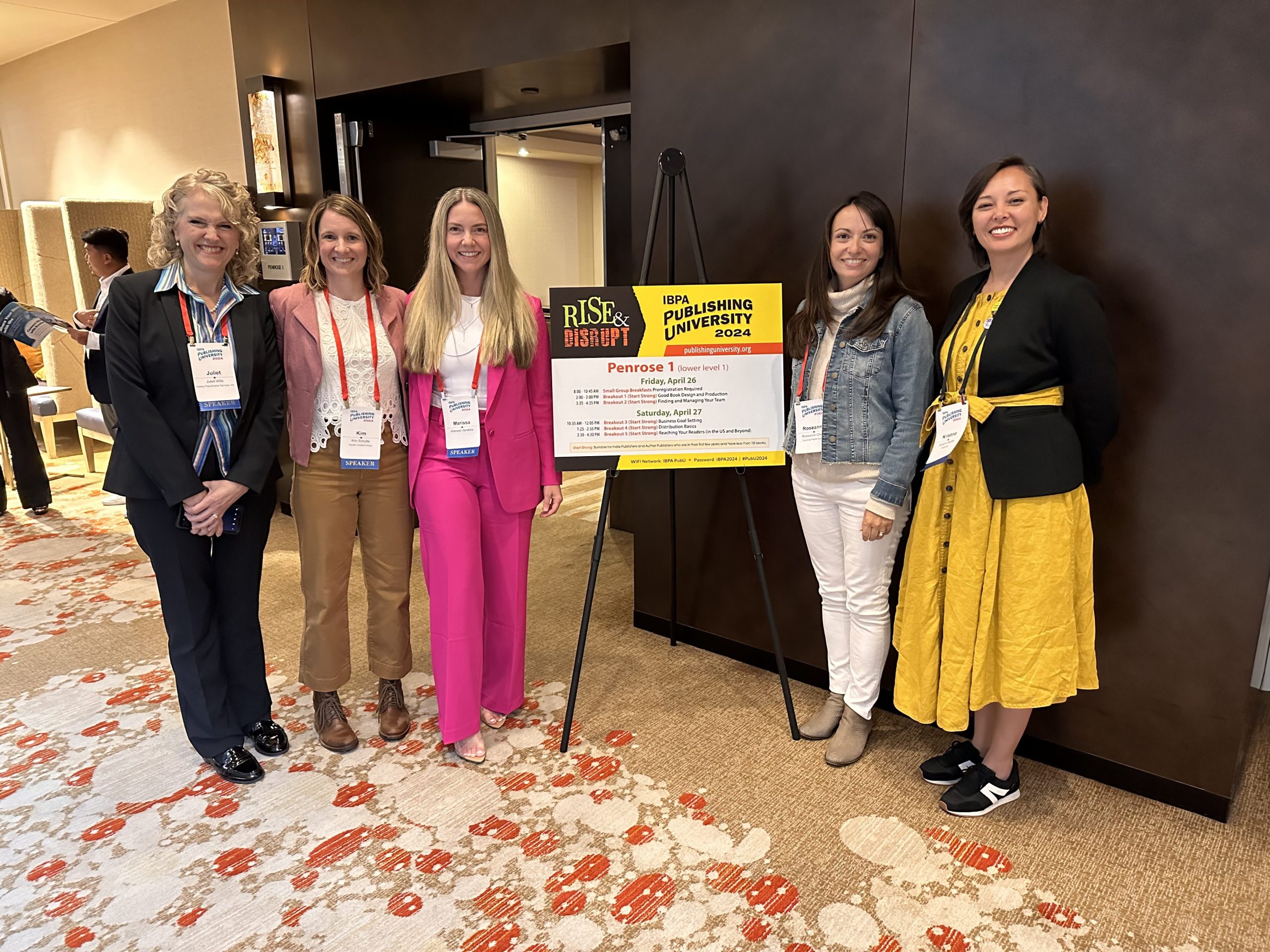
The “Reach Your Readers” panel, moderated by Kristina Radke (VP, Business Growth & Engagement at NetGalley, far right), addressed foundational questions for emerging publishers and authors. From the importance of early reviews to leveraging international rights, the panel offered diverse perspectives on connecting with readers from (l. to r.) Juliet Wills (VP Global Sales and Rights, Galaxy Press), Kim Schutte (Director of Consumer Marketing, Ingram Content Group), thriller author Marissa Vanskike, and Roseanne Cheng (Director of Business Development, DropCap Rights Agency).

IBPA Publishing University continues to honor the spirit of resilience and adaptability within the independent publishing community by hosting programs that are both informational and actionable, and creating a community that is open to learning, collaboration, and collective growth.

NetGalley is proud to partner with the IBPA and support independent publishers. Learn more about the NetGalley Member Benefits for IBPA members!

Read more of our 2024 conference wrap ups:

Divider

London Book Fair

2024 Conference Wrap Up, Part 3

London Book Fair 2024 was the busiest in recent memory, with the floors noticeably crowded well into the traditionally much quieter Thursday. The many sessions, seminars and talks were hugely popular, often resulting in standing room only. If there were presiding concerns, they were the effect of TikTok and the phenomenon of the books it has amplified most successfully, as well as the applications, perils and possibilities of AI. 

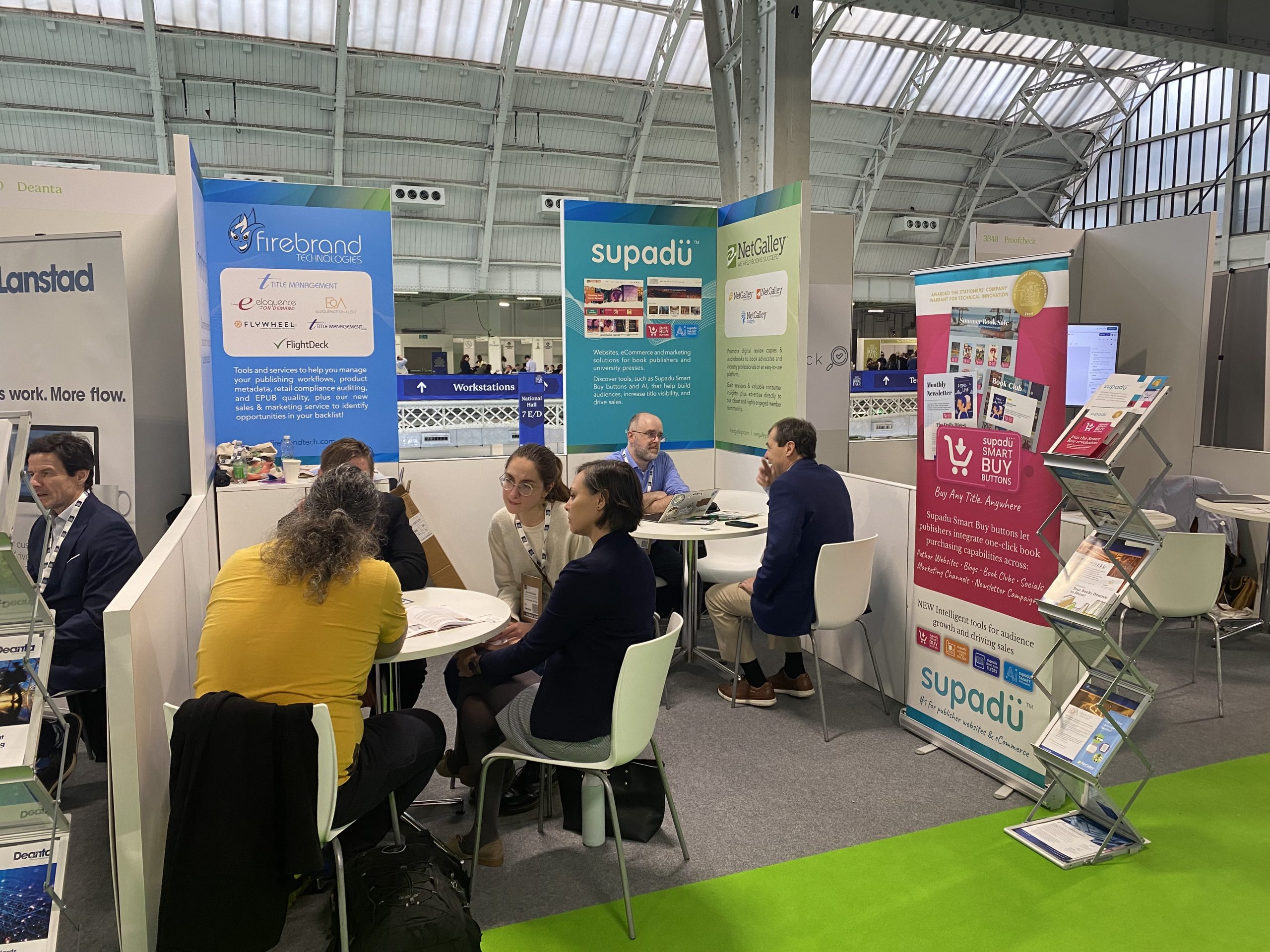
Members of Firebrand Group (NetGalley, Firebrand Technologies, and Supadu) hosting meetings at London Book Fair

BookTok and Influencer Marketing

There were several panels specifically devoted to TikTok, and many more about the broad use of influencer campaigns, and we noticed how much TikTok-endorsed and popularized genres dominated the huge video screens of the bigger publishers. Romance, Romantasy and high concept thrillers were the dominant genres, and nonfiction was much less visible on these stands as in years before.

In the session “BookTok: Bridging Communities and Redefining Reading” presented by Esther Fung from PangoBook and Léa Crumpton, they illuminated how social media platforms are reshaping reading habits and fostering inclusivity within literary communities. With the rise of BookTok, they said readers are discovering diverse voices and narratives, transcending traditional boundaries.

Publishers received a valuable lesson on leveraging behind-the-scenes videos to provide glimpses into the fun inner workings of working in a publishing house, and the importance of collaborations with influencers was emphasized, with a reminder to allow creators the freedom to infuse their unique style into promotional content, therefore maintaining authenticity. 

This concept was reiterated again and again throughout various marketing panels. For instance, At the Byte the Book Drinks Reception, Kelly Weekes, Marketing Mentor & Author Coach, urged creators to prioritize building relationships over direct sales pitches, echoing the sentiment that social media is inherently about fostering connections. And in the session, “Spotlight on YA: Navigating a Crowded Market”, speakers emphasized the significance of genuine engagement over trend-chasing. In-person events and literary prizes emerged as potent avenues for garnering visibility and expanding readership, reaffirming the enduring value of community engagement in the publishing process.

By embracing trends and engaging with audiences consistently, publishers can forge meaningful connections in the digital sphere.

Artificial Intelligence

In terms of AI’s presence at LBF, there were many start-ups offering AI-enhanced or produced content. We observed stands that offered listening booths so attendees could hear AI voice renderings of classics like Alice in Wonderland, and heard from companies using AI to offer end-to-end advertising to aid book discoverability. 

In conversation with some of our clients, we came to understand that publishers recognize where AI can be useful (enhancing internal workflows, creating starter marketing copy to be revised by a human), and where it can be harmful – the publishers we spoke to acknowledged that their readers are against AI-generated art, including book content and cover images.

Sessions like “The Future of Audio in Publishing: Global Trends and the Impact of AI” leaned into the need for transparency with readers, especially if synthetic voices are used. As reported in PW’s London Book Fair 2024: The State of Audiobooks, From AI to Ads, Videl Bar-Kar, v-p of audio at Bookwire GmbH, stated, “There needs to be real transparency and trust. Consumers need to decide, and we talked about it as well. I think there needs to be very clear labeling on behalf of what’s going out there and presenting to consumers.”

Read more of our 2024 conference wrap ups:

And find us at the following events this spring!

  • April 12, Book Industry Study Group (BISG) Annual Meeting
  • April 12 – 14, Paris Book Festival
  • April 25 – 27, Independent Book Publishers Association (IBPA) Publishing University
Divider