Sourcebooks Shares 7 Strategies for Successfully Redesigning Books

Repackaging books with new covers, new back cover copy, or even a new titles is  one of the tools in a publisher’s arsenal to give a book more life. Whether making decisions about the trade paperback design after the hardcover has been on sale, or discussing changes to a backlist title that’s been acquired from another publisher, Sourcebooks uses a lot of data to support their repackaging efforts. 

Sarah Cardillo, Director of Publishing Operations at Sourcebooks shares how she and her team use sales numbers, comp titles, and audience responses to guide their redesign strategy.

1. Consider a book’s total positioning, in addition to sales

When we are looking at the trade paper edition of a hardcover release, we start by looking at sales – how many [books] did we actually sell, what percentage of the inventory sold through within the first 6-8 weeks, and did it sell at the level we had expected it to sell? We look at retail sales [as well as] library sales. Sometimes a book might not sell at our expectations at retail, but may have landed very strongly with the library markets.

If we are looking at the cover for a book that was previously published by another publisher, or perhaps self-published, we look at how the book was positioned as a whole. So, we start even further back than the cover. We think about the title, the story hook, or positioning, and the category the book will be shelved in. Even if the book had relatively strong sales, some of these other factors may give us insight into how to launch the book at a new level for Sourcebooks.
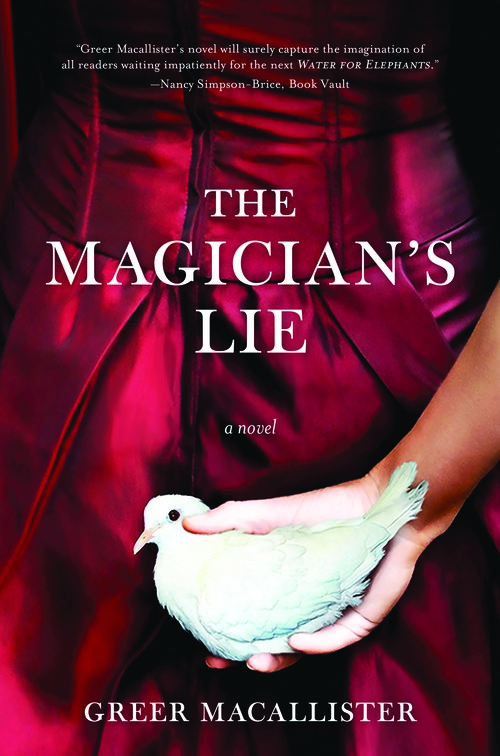
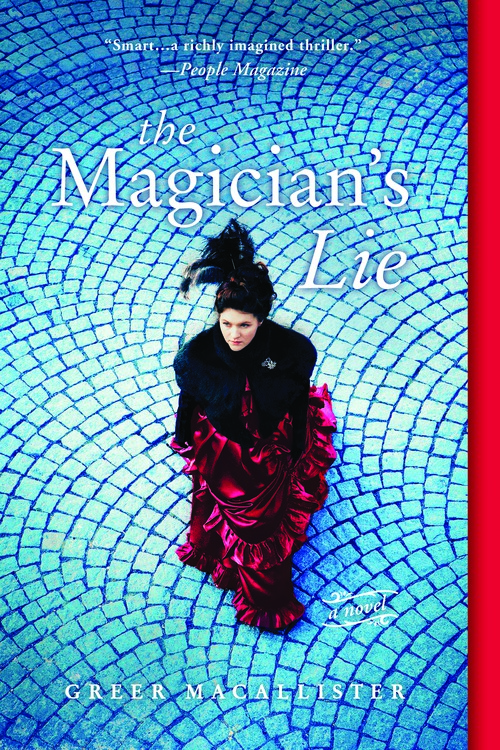
Hardcover
Repackaged as a trade paperback

2. Involve everyone in the process

Since we start by looking at sales, the decision begins with the sales department and the marketing team. The marketing team weighs in with what they were seeing at the point of launch. Did they get the reviews they’d hoped for, the media placement they’d planned? Do they think the media had an impact on the sales (or lack thereof)? We may also discuss what the consumer reviews look like. Sometimes we see that consumers are most excited about a particular aspect of the book that we did not position against – that we didn’t address on the cover or with the back cover copy. 

If this was a previously published book by another publisher or self-published, then the conversation may start with editorial – again though the editorial team starts with how they want to publish the book for their list – once they determine that positioning, the art director will review and make a recommendation on the cover direction.

In most instances, the design team is brought into the conversation when there’s already a recommendation on the table to repackage.

3. Pay attention to comp title performance 

We rely heavily on data – and comp titles provide data. We may see that a design trend has faded or taken off and so we rethink our packaging to fit into that trend. We research the categories and subcategories in depth to provide expertise on what works (and what doesn’t) when positioning a book into a certain category. We want to make sure that the consumer who reads a particular type of book knows at immediate glance that this book is for him or her. We want to make sure that our cover fits within the design space of similar books, but also stands out or stands above the other books. That the consumer sees it and knows it’s what they like to read, and that they care enough to pick it up.

4. Listen to your audience

I would say most repackages are driven by external market considerations. If we believe the current cover didn’t help sell the book, a new cover has the chance to reach a different audience – where your hardcover may have been packaged more like a romance, but your reviewers really like the mystery in the story – a repackage could lean toward the mystery aspect. So it’s still based on content, but now external factors are telling us to reposition against other aspects of the content.

A good example within the romance space was a repackage we did for a book that we published as a trade paperback title – The Curl Up & Dye by Sharon Sala.  Sharon Sala is a New York Times bestselling author in the romance space, but this trade paperback did not land the way we had hoped. But when we released her second Blessings, Georgia book, I’ll Stand By You as a mass market romance, we saw that her numbers were very strong in the mass market space and that people really loved her Blessings, Georgia setting. So we then repackaged The Curl Up & Dye as a mass market romance with a new title, You & Only You. It was already set in Blessings, Georgia, but we did not market it that way for the original trade paperback release. When we put it in mass market we made sure to communicate to the consumer via the packaging that this was set in Blessings. The one thing about mass market books and authors is that they often write within a “world” and the consumer is trained to look for copy on the cover (or in online metadata) that indicates a particular book is part of a particular series, or world. The success of I’ll Stand By You showed opportunity and a market – but more specifically that her customers were in that space already – she had success with other publishers in the mass market space, and keeping her where her customers were but then also packaging her new titles in a cheaper format allowed her to grow her reach both with existing customers but also with customers who read similar mass market titles by other authors. Plus, the lower price presented less of a barrier for entry for new customers. 

Trade paperback
Mass market romance

5. Remember your deep backlist

Sometimes we look at titles that were published 5-10 years ago (or more) and think about bringing them back out with new covers as a way to boost sales.  Especially in the young adult and the romance space. Since those audiences (especially Young Adult) turn over to new people so regularly and trends change so quickly, a successful book with a fresh cover can easily find new readers, and the accounts are happy to take the book because it was successful in the past with the previous audience. We are seeing a lot of illustrated covers in the young adult space right now. 10 years ago covers were all photographic. So we are looking at our backlist right now and seeing what books sold well but could get new life with an illustrated cover direction.


Photographic cover
Illustrated cover

6. Capitalize on the success of a repackaging campaign

If the sales increase, we can attribute part of that to the cover, of course, but we know other factors may play a part, too. The change to a more affordable format and the repositioning of the back cover copy are also important. When we see a repackage working really well, we’ll consider what we did and if there were elements that we can use from that repackage to guide the cover for the author’s next book or similar books in the same genre.

7. Think about repackaging at all stages of the publishing lifecycle, including acquisitions

Our goal in repackaging the Poisoned Pen Press backlist titles [which Sourcebooks acquired in 2018] was to give them a more cohesive look across authors and series and to have more immediate recognition for consumers.  We wanted to make sure that the consumers who devour mystery titles but have never heard of Poisoned Pen would recognize the books as mysteries that they’d want to read. We felt that, while there were many strong covers on the books, there was room to help drive consumer awareness even more. To use our experience designing for this market to increase sales.


Sarah Cardillo is the Director of Publishing Operations at Sourcebooks, one of the 10th largest publishers and the largest woman-owned trade book publisher in North America. She began her career as a production editor with Publications International (now Phoenix International Publications) but since joining Sourcebooks twelve years ago, she has grown her professional reach exponentially. As director of publishing operations, Sarah oversees numerous key departments, including the award-winning art and design department, and the production, manufacturing, and editorial production departments. She utilizes her project management and change management knowledge to build workflows and increase efficiencies across publishing operations. At the onset of the digital transformation, she rebuilt the standard bookmaking process to seamlessly integrate ebook production into the workflow. Her passion for organization and process has transformed the way departments communicate within Sourcebooks. Sarah has both a bachelor’s degree in written communication and a master’s degree in corporate communication and change management. 

Divider

How Authors Budget for Their Books

Results from a NetGalley & IBPA joint survey

For independent authors who are publishing your own work, it can be hard to know how much to spend, and where to spend. Can you publish a book using only free tools and services? Do you need to make a serious dent in your savings account to get your book into the world? 

NetGalley and the IBPA worked together to gather information from an engaged and thoughtful group of authors about how much they budget for their books, where that budget gets allocated, and where they find the most value. We hope that this information can help other authors strategize for their own books, getting the most value out of their budgets.

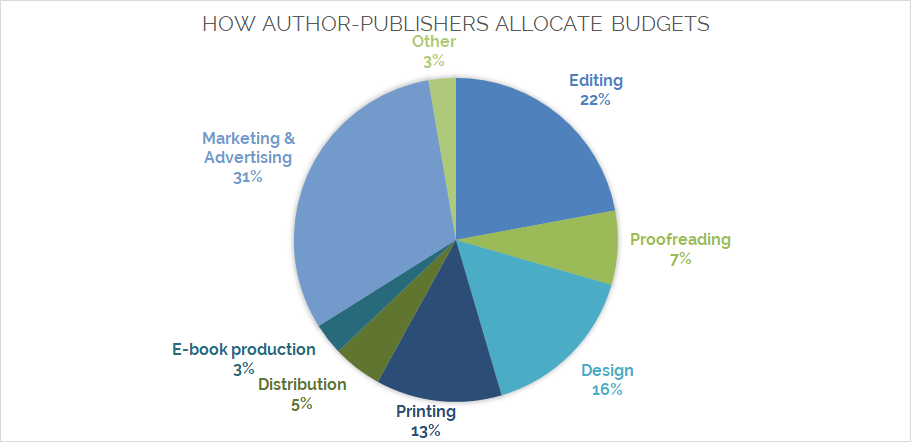
These authors understand that they need to invest in their book, and that the biggest and most valuable expenses will be editing, design, and advertising & marketing in order to give their books the most professional launch possible. 

Thank you to the thoughtful authors who shared their budgets, strategies, and lessons learned about the finances of independent book publishing. 

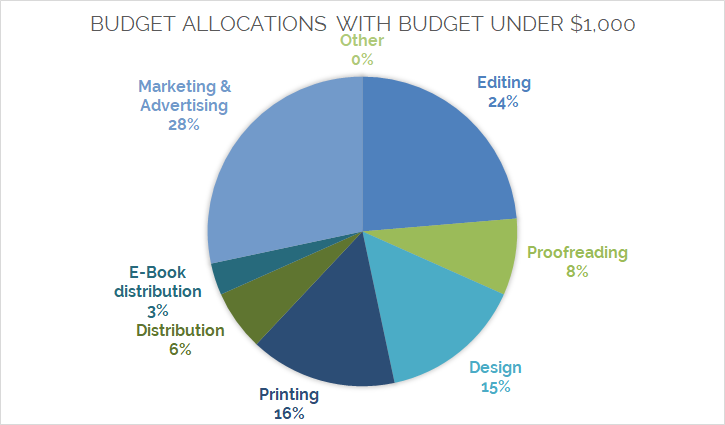
Only 11% of respondents reported spending less than $1,000 on their books, indicating that the most active authors understand that they need to invest at least a bit in their books. The majority of authors spent between $1,000 – $6,000 on their books, with the $1,000 – $3,000 bracket accounting for 28% of the overall responses. 

Across budgets, most authors spend the bulk of their budgets on a combination of marketing & advertising, editing, and design. 

You can see how authors allocated budgets within different budgeting ranges here: 

As authors’ budgets went up, they increased the amount that they spent on marketing and advertising. Other line items – print distribution, proofreading, and ebook distribution – stayed relatively stable across budget brackets. 

Editing was the most valuable line item to 41% of respondents, followed by marketing and advertising (26%), then design (21%). We’ve broken down how they valued these three categories by budget spend below. 

Editing was the most valuable line item to 41% of respondents, followed by marketing and advertising (26%), then design (21%). We’ve broken down how they valued these three categories by budget spend below. 

As an author’s budget goes up, marketing & advertising became more valuable to them. And for the respondents with more limited budgets, they found the most value in first editing, then design

We also asked how authors determined what made a line item valuable to them. Surprisingly, it wasn’t always sales. Only 17% of respondents used sales as their primary marker of value. Instead, 31% of respondents found value when they could see that an expense had made their book a higher quality product. We can see this correlated to the value found in design and editing. Authors were most interested in making their book look – both inside and out – professional and polished, and then putting eyes on it. 

When asked what they would spend less money on in the future, 17% or respondents said marketing & advertising and 15% said printing. But, even in a question about spending less, 12% responded to a question about lowering their budget by saying it would stay the same, 7% said they would spend more. We see again that authors understand that they will need to invest in their books in order to make them the best product that they can be, and to then help their books find readers.   

NetGalley and the IBPA are both dedicated to helping author-publishers. Through NetGalley’s partnership with the IBPA, as well as through direct work with independent authors, we help author-publishers reach our engaged NetGalley community. Plus, authors find many tips and author-focused case studies here on NetGalley Insights. The IBPA has programs, events, webinars, and resources for author-publishers, as well as other segments of the industry. Learn more about the IBPA here, including special NetGalley packages available to IBPA members.

Survey collection: NetGalley and the IBPA collected survey responses from 137 author-publishers between May-June 2019. 

Divider

Inform Timing and Strategy with Google Trends

During Tech Forum in Toronto this spring, we were thrilled to hear Jordyn Martinez of Simon & Schuster Canada encouraging the audience to dig into data available to them to drive their sales tactics. One of the tools she recommended is Google Trends, a free service that allows anyone to look at Google search trends over time. 

Google Trends plots search interest over time on a graph with the x-axis as time and the y-axis as overall interest.* In this example, we can see that most people are searching for summer reading in early June. A marketer looking at this data might see that she should use “summer reading” as an advertising hook beginning in late spring, and tapering off as summer continues. 

Google Trends also allows you to compare search terms against one another. 

You can see how many people are searching for different genres, and when. 

In this example, you can see that people are searching for romance novels and nonfiction titles at mostly comparable rates – they have similar same peaks and valleys, except for a spike in nonfiction searches in mid-December. This is likely a result of last-minute holiday shopping. Romance searches are fairly steady, with small peaks around the holidays and in late summer. When compared to one another, this shows us that interest in nonfiction fluctuates more seasonally, while romance remains steady. It also might indicate that people are buying romances for themselves and nonfiction for others. 

Google Trends also allows you to look at top locations for searches, showing publishers where interest is, in addition to when. 

Google Trends’ location map can help you learn where your target audiences really are. In this search for “Best Romance Novels,” we can see that most searches are in Massachusetts, Colorado, Minnesota, Tennessee, and Virginia. You can also drill down to find the metro areas where your chosen search terms are most popular. Publishers looking to make a splash with a new and steamy debut romance novel should make sure to target these states and cities with advertising and/or book tour stops. This tool can help publishers break out of a static approach to regional marketing, where the same roster of cities and states get standard amounts of marketing energy. Instead, publishers can start to develop a more dynamic and data-driven regional strategy. 

Some advertisers use Google Trends to capitalize on brief viral spikes in public interest by creating of-the-moment ad campaigns. In this example, we can see a sharp increase in interest for “Old Town Road,” the viral song originally by Lil Nas X featuring Billy Ray Cyrus. An advertiser might note during the uptick that they can tie in a product to the hit song, or the flash of interest in cowboys. We recommend using this strategy sparingly. It is time consuming to chase trends effectively, plus audiences can tell if a company is more interested in riding waves of buzz than in building lasting, trusting relationships with consumers.

For publishers, Google Trends is best thought of in the long-term. It can show you whether your genres are getting seasonal, cyclical attention or a steady thrum throughout the year. You’ll know whether you should be pitching your books as holiday picks if interest in their genre spike around December. Plus, you’ll be able to better focus your attention beyond the major markets; how to truly cater to your audience wherever they are. 

Jordyn Martinez of Simon & Schuster Canada told NetGalley Insights, “Google Trends is really useful for any department, particularly acquisitions, sales, and marketing. In terms of sales, I use it to see what the Canadian population is searching for, to see if there’s room for growth or if what I’m selling is tapping into a trend. It’s especially useful if I want to know whether a trend has shifted at all, whether there seems to be more or less demand. It’s information that I can bring to my buyers, so that we can make educated decisions on how to position the book.”

*The data in GoogleTrends is all indexed to 100, meaning that whenever the line reaches 100, it represents the moment in time when there were the most people searching for that term. It does not refer to a percentage of overall Google searches or number of users. This also means that the max interest will represent numbers of people. The peak for “Game of Thrones” searches will cover a wider swath of the population than the peak for “Spring Book Club Picks,” although both will be indexed to 100. Google News Lab gave a nice overview here.

Check out more tips and news for data-driven decision making from NetGalley Insights here.

Divider

Giving Publishers the Data They Need: Developing Eloquence on Alert

Firebrand Technologies’s newest service, Eloquence on Alert, gives publishers more access to data about their titles across retail sites than ever before. Through EoA, publishers can keep tabs on any changes to their title information, including changes to sale price, product pages, buy buttons, and third-party seller activity.

Catherine Toolan, Director of Eloquence Services at Firebrand, gave us an inside look at how Eloquence on Alert developed, and some of the surprising ways that publishers are already using it.

What were the origins of EoA?

Eloquence on Alert came out of a simple need for publishers to determine if and how their products were being displayed on retail and reviewer sites. Publishers send out metadata to trading partners and there is very little feedback from those trading partners once the metadata is received. This simple mission planted the seed and from there we have discovered that there is a lot more information we can provide to make it easier for publishers to help their products succeed.

A lot of the impetus for EoA came from Eloquence on Demand users. Many of our clients were sending out the very best metadata that they could on the industry recommended schedule but they were still having issues with the data or the timing of updates on some sites. They also encountered situations where their titles did not appear on some sites at all. As you can imagine, publishers with a large list cannot check retail sites daily for the presence or absence of their titles. Eloquence on Alert grew out of a need to help publishers tackle these and similar problems.

Eloquence on Alert was conceived in 2016, with the first data collection in July of that year.  We released an “alpha” Title Management-dependent version of EoA in 2017 and quickly realized that we needed to pivot and build a SaaS model (software as a service) that would allow for independent product growth.

How does EoA interact with other Firebrand products like Title Management and Eloquence on Demand?

Eloquence on Alert is a standalone product and does not require the use of any other Firebrand products. We will be working to integrate EoA with Eloquence on Demand and NetGalley in the future.

How does EoA fit in with Firebrand’s overall vision around publishing and data?

Firebrand’s flagship products, Title Management and Eloquence on Demand encourage publishers to develop workflows and data management practices that help them to provide some of the best metadata in the industry. Eloquence on Alert takes this a step further and helps publishers fine-tune their practices by drawing attention to trading partner behavior in relation to their metadata content and delivery schedule. The best metadata in the world does not do much for you if your partners are not using it.    

What need does EoA meet for publishers?

Eloquence on Alert monitors critical factors such as fluctuating list and sale prices, changes in sales rank, missing product pages, missing buy buttons, third-party seller activity, marketing assets, review count growth, and audience sentiment. EoA is committed to continued product development and enhancement to meet emerging industry needs.

We know that a select group of publishers have been using EoA in beta. How have you seen them use EoA?

Each of our beta customers is using EoA in a different way. This was somewhat of a surprise! Some are using it primarily to monitor third-party seller activity, some are using it to track missing product pages or price data fluctuation, and some are using the data in their own Business Intelligence systems to augment their internal data analysis.

Did any of them use it in ways that surprised you?

Yes, there are several uses that have surprised me. One that seems obvious to me now but did not initially is the use of EoA to track products that should not appear on certain sites. When certain products appear for sale on a specific site it is a violation and their product management team is alerted so that they can contact the site to have the product(s) removed.

How do you hope publishers will use EoA now that it’s more widely available?

I hope that EoA will become a “first thing in the morning” activity. The EoA results can be used to let you know if there will be any burning issues to deal with today, if any of your products are on the move, or if all is status quo for the day. A simple check-in with EoA can do a lot to inform your priorities.

Where can readers learn more about EoA or see if it’s a good fit for their goals?

The best way to learn more about Eloquence on Alert is to see it in action – words cannot really describe it! Readers can contact our Sales and Marketing department at info@firebrandtech.com to schedule a demo.

Divider

Proven Strategies: Strong Subject Lines in Email Campaigns

Tips and success stories from NetGalley’s marketing experts

Every day, NetGalley’s marketing team works with publishers and authors to help put their books directly in front of the NetGalley members who are most likely to read, review, and advocate for them. Through years of collaborating closely with clients of all types (from the “Big 5” houses to self-published authors, and publishers of all kinds of books–bestselling fiction to nonfiction and academic, religious, graphic novels, children’s and YA, cookbooks, and beyond) our marketing team has seen first-hand which strategies have worked to engage different kinds of readers.

Dedicated eBlasts are extraordinarily successful and NetGalley’s most popular promotion. Clients see outstanding results with a custom, highly targeted email campaign to meet their goals. The success of any email can be measured by both the Open Rate and the Click Through Rate (CTR). The Open Rate is determined by how many people open the email, and the CTR is determined by how many people click on a link within the email–for example to Request, Read Now, or Wish.

Today’s Proven Strategies post will focus on the first step to a successful eBlast: A strategic subject line. Remember that the subject line is your chance at a strong first impression, and it will determine whether the recipient will either open the email to find out more, or ignore it (or worse, mark it as spam). Here are some crucial tips:

  • Think about the recipient: Why are they receiving this email? Think about what your recipient is looking for, and use that to guide your messaging to ensure it resonates. Does it give them what they want?
  • Be clear and concise: The subject line should be 10 words or 50 characters max. This helps ensure that the subject line won’t get accidentally cut off on specific browsers or mobile devices.
  • Stand out: Inboxes are cluttered! Be sure your subject line catches a reader’s eye with an emoji or first name personalization.
  • If you can’t decide, test: Torn between two subject lines and unsure which will perform better? Run an A/B Test on a small percentage of the overall recipient list to see which subject line yields a higher open rate, and then use that as your subject line for the rest of the recipients.
  • Target strategically: Make sure the email is being sent to the right people. NetGalley can target specific member types, preferred categories and genres, comp titles and authors, and more. Our marketing team can help you determine which of our members will be the best fit for your book, your goal, and your budget.

Now, let’s see some of these tips in action with some recent successful subject lines. According to Mailchimp, a marketing email from a media or publishing company will have an average open rate of 21.92% (which is slightly higher than what Mailchimp sees as an overall average of 20.81%). Keep that baseline in mind as we look at these examples:

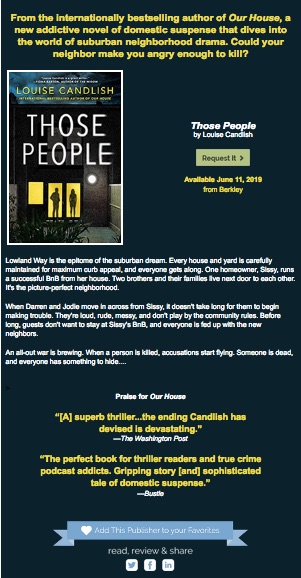
This custom eBlast for Berkley’s Those People had an open rate of 51%! The knife emoji adds drama and flair to an inbox, and the question is engaging. This concise subject line also immediately gives the reader a clear idea of what kind of book this is. This eBlast was targeted to a highly engaged, genre-specific recipient list who had already interacted with the author’s previous book.

This subject line for NetGalley’s Spring Young Adult Newsletter used a bit of reverse-psychology as a result of an A/B test. Our marketing team first tested this subject line against “YA books to add to your TBR right NOW” and found the “DO NOT OPEN” subject performed better in the test. It’s no surprise–it was attention-grabbing with that emoji, too! This newsletter ended up with a 46% open rate, and was sent to a highly engaged list of members who had previously interacted with similar emails.

This concise, compelling, and slightly mysterious subject line for I Am Yours from Amberjack resulted in a whopping 55% open rate! It responds to a recipient’s desire to connect in a meaningful way with a compelling new voice. The custom targeting for this eblast reached fans of comp titles, and readers who had interacted with promotions in the same genre.

Bonus Tip: Consider using a preheader, which is the preview text that follows the subject line in the inbox display. This can be just as important as the subject line! Make the preheader a call to action or use it as a short summary of the email content (we recommend a 35-50 character limit).


Have questions or need advice? Ask NetGalley’s marketing team – marketing@netgalley.com! We’re here to help, and want to help your book succeed. And, stay tuned for more best practices and success stories in our next Proven Strategies post.

Divider

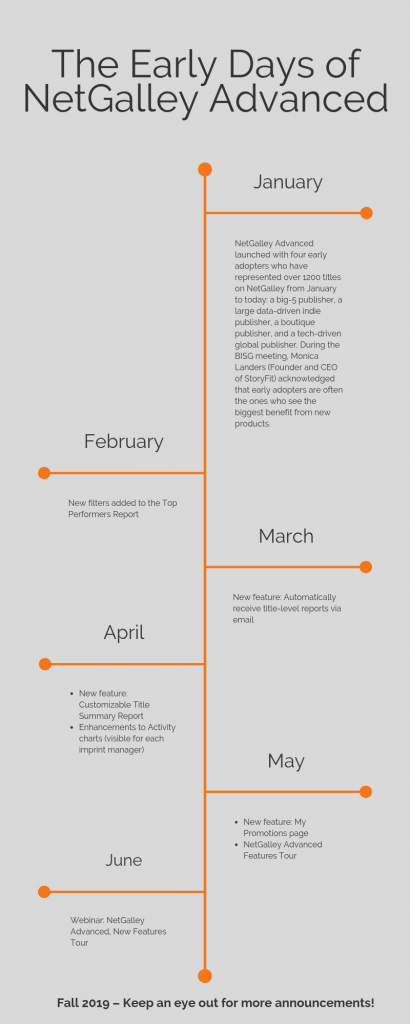
NetGalley Advanced – Where Are We Now?

By: Kristina Radke, VP Business Growth & Engagement

“Innovation” was the theme during last month’s Book Industry Study Group (BISG) Annual Meeting, an inspiring day of conversation where panelists discussed everything from metadata to sales, to rights, and fostering innovation as a company culture. It was validating to hear about all the ways publishers, distributors, agents and suppliers approach technology and data—especially in simplifying workflows and driving decision-making.

At NetGalley, it has been our mission to be innovative in the way we help publishers collect early data about their titles. NetGalley Advanced is our latest step in that mission. I’m proud that this premier service is at the cutting edge of what publishers seek. Let me share a few examples:

“Transparency focuses attention”

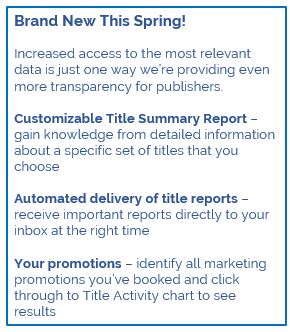
During the “Innovations in Workflow” panel, moderator Carolyn Pittis (Managing Director at Welman Digital) remarked, “transparency focuses attention.” She was referring to how on-site dashboards keep actionable data top-of-mind by combining historical trends and real-time information. NetGalley Advanced offers publishers a new data-driven dashboard, including a number of charts designed to increase transparency so publicists and marketers can focus their attention on strategies that are successful.

Transparency of activity and use:

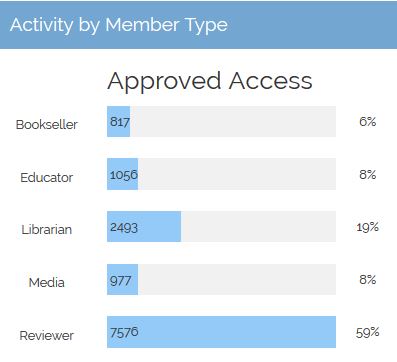
  • Activity by Member Type chartunderstand which members you engage with the most
  • Top Performers list see your top-performing titles based on various metrics and within specific categories
  • Your Promotionsidentify your NetGalley promotions and see resulting activity
  • Title Activity chartcorrelate engagement generated from promotions and understand trends in activity
  • Custom Title Summary Reportgain knowledge from detailed information about a specific set of titles that you choose
  • Types of Access charts (total and over time) – pinpoint successful strategies
  • New Titles Added chartdiscern seasonal fluctuations and recognize when new content should be added
  • Company Admin Dashboardassess NetGalley use across various imprints

NetGalley Advanced offers publishers even more data as early and efficiently as possible, to help you shape strategic decision-making.

“Human+”

Michelle Vu (Director of Business Operations at Houghton Mifflin Harcourt) reminded the BISG audience that automation is designed to reduce painful manual efforts and create space for us to do more meaningful work. She is experimenting with ways to automate data collection to free up her colleagues for more strategic work, overcoming trepidation about automation.

With NetGalley Advanced, we’ve introduced automated delivery of title-activity data, in addition to new ways to cut down on the effort needed to execute strategies. Our goal is to help you use these tools and data to refine your strategies so they’re as effective as possible.

Automations:

  • Title Timelinepre-schedule title availability, including multiple phases to encompass your title’s lifecycle on NetGalley
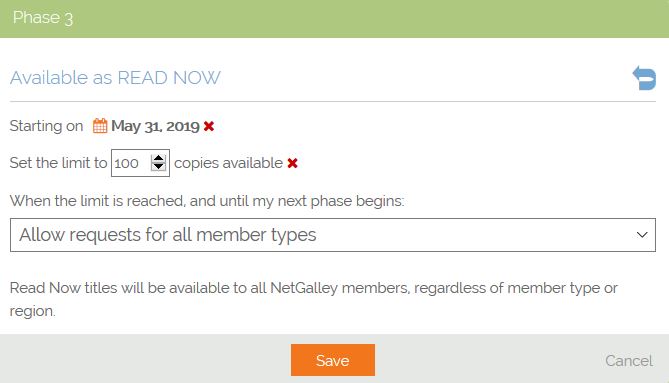
  • Read Now limitsimplement a cap on the number of downloads, or limit access by time
  • Marketing promotionsadded to your Timeline by NetGalley’s marketing team, with pre-scheduled relevant availability
  • Automatic delivery of title reportsreceive important reports to your inbox at the right time, to the right people

“Innovation means trend-setting between business and technology”

In the panel “The Innovative Workforce,” Maja Thomas (Chief Innovation Officer at Hachette Livre) said, “Innovation means trend-setting between business and technology.” Initiating a trend is no easy task; however, armed with data, and with a willingness to be experimental and agile with your strategies, you will discover that the technology and information that you use can drive your business. NetGalley Advanced helps marketers and publicists draw a line between the work that they do and the results they see.

How else we can facilitate innovation for YOU? Please let us know at concierge@netgalley.com.

LEARN MORE! NetGalley Advanced is designed to help you innovate—to give you the tools to be data-driven and create effective strategies backed up by real results. Come learn more about this premier service, see these features in action, and let us know how you’d like NetGalley to continue evolving to meet your needs.

June 13, 11am ET – Join the webinar here.

Divider