
This year’s Audio Publishers Association Conference (APAC) reaffirmed what industry professionals have long suspected: the audiobook market is not just healthy—it’s thriving. With digital audio surpassing e-book unit sales in 2025 and maintaining double-digit annual growth, the format’s dominance is clearer than ever. Industry leaders, including Simon & Schuster CEO, Jonathan Karp, underscored the importance of audio in expanding readership and accessibility, particularly for audiences who might not otherwise buy a book.

Audio’s Expanding Role in Publishing
One of the biggest themes of APAC 2025 was how audiobook sales augment rather than cannibalize book sales. In every business track session, publishers emphasized access to new audiences. In fact, audio is driving book acquisitions, according to Chris Lynch (President & Publisher for S&S Audio) in conversation with Karp. Many bestsellers today originated as self-published audiobooks, proving that the format is an entry point for new voices. Publishers are paying close attention to indie creators and original projects designed specifically for audio. Karp noted that “audio is integral to our growth strategy,” with major publishers actively seeking to acquire audio publishers and strengthen their foothold in this growing sector.
Short-form audio also emerged as a key opportunity, with speakers emphasizing that some projects are better suited to spoken-word formats than print. While economic challenges exist—listeners often associate longer audiobooks with greater value—there is enthusiasm for exploring more flexible pricing models to accommodate shorter content.
The AI Debate: Balancing Technology and Human Artistry
A collective groan rippled through the audience when AI narration came up. The tension is clear: while AI offers potential for cost-effective solutions, especially for backlist titles that might not otherwise be produced, it also raises concerns about diminishing the human artistry at the heart of audiobooks. Chris Lynch noted that AI could help bring audiobooks to underserved markets where traditional production wouldn’t be financially viable, but Karp reminded attendees: “You are artisans… essential to the success of audiobooks.”
For international markets, AI-assisted translation and narration could help expand access, but industry leaders emphasized the importance of local voices. Listeners often prefer narrators who match their regional accents and cultural contexts. The balance between AI’s efficiency and human performance remains a crucial industry challenge.
Marketing Like You Mean It
A standout session from the conference was Seizing the Rise of Audiobooks, Marketing Like You Mean It, moderated by NetGalley’s own Darcy Piedmonte, Director of Customer Acquisition & Success. Piedmonte led a dynamic conversation on how publishers can move beyond the fear that audiobooks cannibalize print sales and instead embrace the rapid expansion of audio into new and diverse markets.
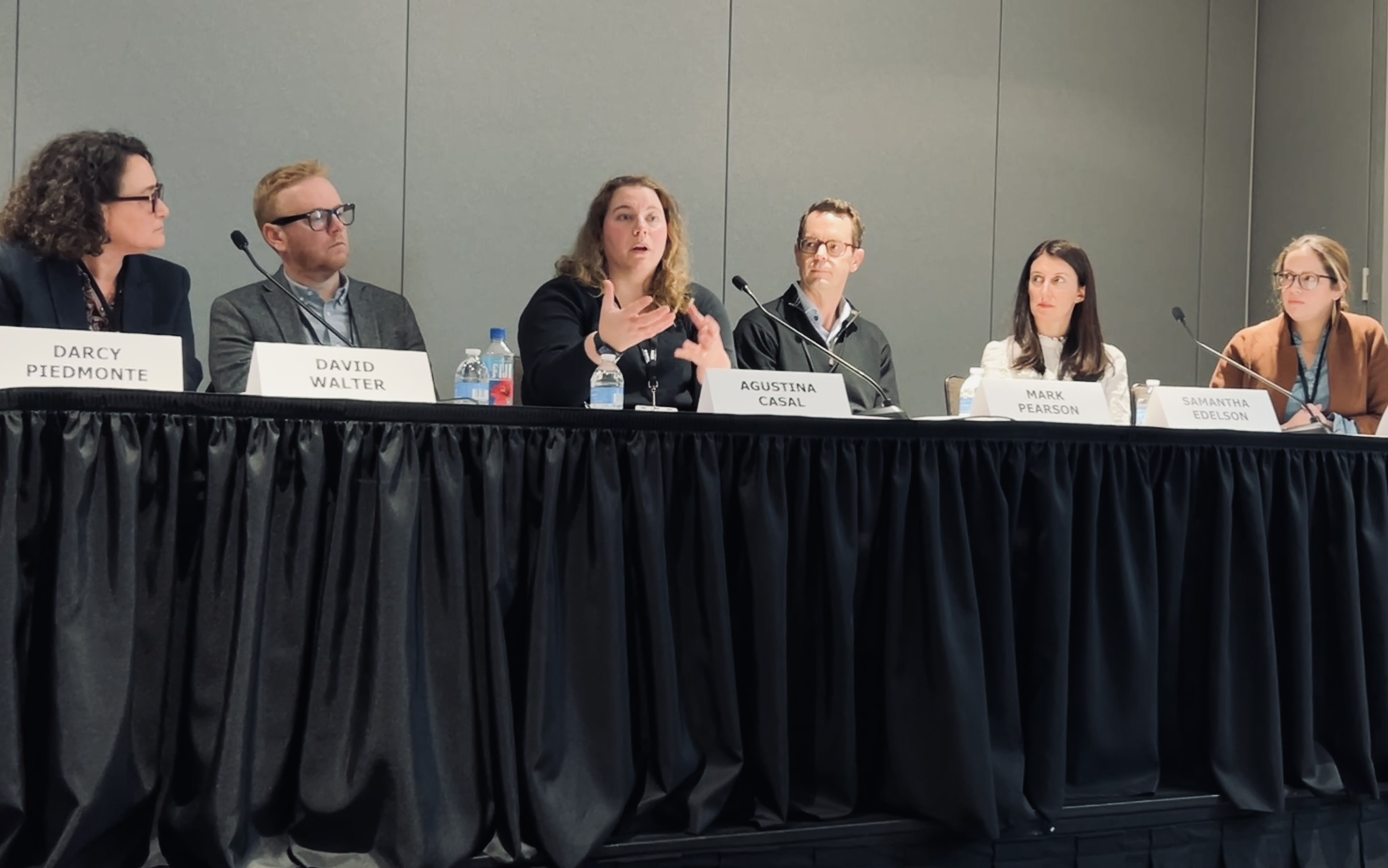
Panelists included:
- David Walter, Executive Director of Client Development – Books for Circana
- Agustina Casal, Director of Digital Sales & Marketing for Ingram Content Group
- Samantha Edelson, Vice President of Marketing for Macmillan Audio
- Mark Pearson, Co-Founder & CEO of Libro.fm
- Jess Kessler, Head of Brand & Content Marketing of Audible, North America
The discussion covered key strategies for innovative and creative audio marketing, including how audiobook marketing continues to evolve alongside digital media consumption. Some of the biggest trends discussed included:
- All Boats Rise: When audiobooks do well, all books do well. While print stays remarkably stable over time, new formats add to publishers’ overall sales.
- Podcasts & Audiobooks: The impact of podcasts on audiobook sales remains a topic of debate. While some see competition, others view it as an opportunity to inspire nonfiction authors to craft compelling, high-quality content.
- Younger Audiences & Genre Growth: The 18-25 demographic is rapidly growing, particularly in nonfiction (well-being) and genre fiction (romance, thriller). The increase in kids’ audiobook consumption also presents a major opportunity, especially through screen-free speaker devices like Yoto and Toniebox.
- Fandom Mentality: Readers increasingly engage with books like fans of TV series or movies, wanting content across multiple formats. The success of multicast productions, such as 1984 featuring Cynthia Erivo and Andrew Garfield, exemplifies how casting choices can draw in new audiences.
- Gaming Crossovers: Creative marketing strategies are reaching new audiences, for instance the Red Dead Redemption gaming community, with projects like Red Dead’s History: A Video Game, an Obsession, and America’s Violent Past (narrated by Roger Clark, the iconic and award-winning full performance-capture actor) that connect books to their interests.
- Discoverability & Metadata: Ensuring accurate and refreshed metadata remains critical. Publishers are investing in tools to optimize audiobook discoverability across platforms.
- Opportunities for Marketing: Audiobooks offer a multitude of ways for booksellers, narrators, educators, and influencers to bring stories to life through listening.
Global Audiobook Market: What’s Next?
The international audiobook market is evolving rapidly. Emerging markets like France and Brazil are set to accelerate their growth, learning from the U.S. experience.
- France is on the verge of becoming a mature market, aided by a booming graphic novel-to-audio pipeline.
- The Nordic region remains a leader, with 60% of books consumed in audio format, driving authors to write with audio-first storytelling in mind.
- Spain and Latin America are key areas of investment, with publishers focused on translating backlist titles and creating original Spanish-language content.
- Local accents matter—listeners in Portugal prefer European Portuguese over Brazilian, and Spanish-speaking listeners are divided among regional dialect preferences.
- The German children’s audiobook market is flourishing, bolstered by speaker boxes that have become the third-largest seller of children’s books.
Looking Forward: Challenges & Opportunities
Despite its rapid growth, the audiobook industry faces several challenges:
- Marketing & Publicity Struggles: Simply releasing an audiobook isn’t enough—publishers need strong hooks tied to cultural moments to break through the noise. Digital marketing tools, including NetGalley, are making early audiobook promotions easier than ever, allowing for pre-pub reviews and cross-format marketing efforts. As mentioned above, the success of one format is a win for all!
- Balancing Format & Content: Publishers must assess whether a story is best suited for an audiobook, a documentary, or another medium. In the case of audiobooks based on graphic novels or manga, producers are closely considering whether the concepts depicted in the art will translate to the audio format and, if so, diving in to create the audiobook.
- The First Listen Matters: If a listener’s first audiobook experience is poor—whether due to AI narration or low production quality—they may abandon the format entirely.
- Piracy on YouTube: Publishers voiced concerns about unauthorized audiobook uploads that fail to compensate rights holders.
Final Thoughts
Audiobooks are not just surviving—they’re thriving, expanding, and reshaping the publishing landscape. Whether it’s embracing indie voices, exploring new markets, or refining marketing strategies, the industry is adapting to ensure that audio continues to be a powerful storytelling force.
As Karp put it, “A great book is a great book.” The challenge ahead is ensuring that audiences can find, access, and engage with these books—no matter how they choose to read or listen.
