Indie author success with the IBPA’s NetGalley Program

How working with the IBPA boosted Rebecca Rosenberg’s historical novel, Gold Digger

On NetGalley Insights, we highlight the successes of NetGalley publishers and authors, and share some of their strategies. Today we’re talking to Rebecca Rosenberg, an independent author and member of the Independent Book Publishers Association (IBPA). She takes advantage of the IBPA’s NetGalley program, which manages her title on NetGalley on her behalf, giving her even more time to think strategically about her ongoing promotional efforts.

What was your experience like working with the IBPA to list your title on NetGalley?

I enjoyed working with the IBPA to list my title on NetGalley and I appreciated their help and guidance. Their response time was great for sending me monthly reports, submitting promotions, forwarding reviews and posting featured reviews. When I was worried I was not getting enough reviews on Gold Digger, they gave me knowledgeable input that Gold Digger was doing quite well!

It is very helpful that IBPA handles all of the technical aspects of posting my book and making updates to the page so that I don’t have to do it myself. I feel that having my book listed under the IBPA umbrella offers prestige for my book.

Tell us why listing the book on NetGalley through the IBPA program was the right choice for you.

I learned from my first novel, The Secret Life of Mrs. London, that NetGalley is the professional hub of bloggers, librarians, Goodreads, Bookbub and Amazon reviewers, and avid readers who love to share their reviews. The more buzz the better when launching a novel, and NetGalley makes that possible.

We encourage professional reviewers to use the NetGalley link as well as bloggers, Facebook group moderators, Goodreads and Bookbub reviewers. In my opinion, if a reviewer gets the book from NetGalley, they are readers who take the reviewing experience seriously. They usually share the review in at least five places: NetGalley, Goodreads, Bookbub, Amazon, Facebook Groups, Twitter, Instagram, and their own blogs. NetGalley reviewers are connected and powerful influencers. I often use reviews in my marketing, and I feel that NetGalley reviewers carry more credibility.

You ran several marketing campaigns with NetGalley – a Category Spotlight in February and a Featured Title placement in March. Tell us about your strategy and unique goals around these promotions.

First of all, I took a six-month run on NetGalley (instead of three-months) before my launch date in order to reach as many reviewers as possible. When I saw the great marketing opportunities NetGalley offered, it made sense to support my listing with the Category Spotlight and Featured Title placement early on to get attention.

I am hoping to reach different segments of readers in different months with different promotions.

There are many marketing opportunities available through NetGalley, and (if I had the budget) I would use them all throughout the six-month listing! I ran a Category Spotlight in the “Historical Fiction” category, in February, and Featured Placement for “Women’s Fiction” in March and again in May. I did another Featured Placement for “Summer Reads” in June, and am waiting to hear if Gold Digger will be included in an upcoming Cover Love post.

How have you been leveraging your NetGalley listing and reviews to increase discoverability?

To expand the reach of my NetGalley listing, I posted the NetGalley link to my book on my Facebook page, Facebook reading groups, Bookbub, LinkedIn, Goodreads and to my mailing list.

I’ve also featured some great NetGalley reviews for Gold Digger on Facebook, Instagram, in my newsletter, and with my Review Crew. I use these reviews in my newsletters and social media to whet readers’ interest and add credibility for my books. We take 5-star reviews and make colorful, eye catching posts.

We love the blog on your website. You’ve been posting lots of great supplementary information about Baby Doe Tabor. Tell us a bit more about how your blog fits into your strategy as an author.

My blog serves to interest readers in my books, whether they’ve read my books or not. As with The Secret Life of Mrs. London, I like to use my two decades of research by creating background stories and character sketches and trying to interest readers in different aspects of the story. I share my blog across all platforms, from Facebook, Amazon, Goodreads, and newsletters, and guest hosting other blogs.

What are some tips you have for other independent authors?

Get involved with readers and other authors of your genre by joining Facebook Reader groups, Goodreads groups, Bookbub, Instagram, your creating own blog and newsletters. My specific Facebook groups would not work for everyone–authors need to search Facebook groups for those that discuss books in their genre. It is important to read the group rules and observe them. For example, a group may only allow promotion on certain days. Become a contributing member first and contribute to the group as a reader of other books, before posting about your own book. Review other books similar to yours and become an information source for great books.

Often, a person posting about your book will tag you. When that happens, be sure to thank them, or engage in an appropriate way. There are also companies that track mentions of your book on social media: Google Alerts, Talk Walkers, Mention. Find out who is talking about your book and thank them for spreading the word. Enthusiastic readers spread the word about your books! In addition to thanking them, ALWAYS ask readers to: “Please read and review Gold Digger on NetGalley!”

Bio: California native Rebecca Rosenberg lives on a lavender farm with her family in Sonoma, the Valley of the Moon, where she and her husband founded the largest lavender product company in America, Sonoma Lavender. Rosenberg is a graduate of the Stanford Writing Certificate Program. Her upcoming novel is Gold Digger, The Remarkable Baby Doe Tabor. Other works include: The Secret Life of Mrs. London, her debut novel and her non-fiction, Lavender Fields of America.

Rebecca Rosenberg’s next novel is Champagne Widows, the story behind Veuve Clicquot and Lily Bollinger.

Find and follow Rebecca on her website, Amazon, Bookbub, Facebook, and Goodreads.


IBPA’s MISSION is to lead and serve the independent publishing community through advocacy, education, and tools for success. Learn more about how IBPA can can meet your specific needs here.

Interviews have been edited for clarity and length.

Divider

Pre-Publication Tips for Authors: Choosing a Marketing Service

Independent authors have the option to sign up for a huge number of services to help them get their books out into the world. Authors can work with companies on jacket design, promotion, editing, distribution, and more.

While each individual author’s goals and budget will determine which services are most important to invest in,there are still some best practices for authors to figure out which company or service is worth their investment.

Before signing up for any service, ask plenty of questions. Feel free to request case studies or examples of previous work the service has rendered. Then you’ll be able to get a better sense of what you can expect for yourself.

Read online reviews. If it’s a well-known company, other authors will be talking about their experiences using it somewhere online. While there are always going to be some outliers, you will be able to see broad trends or early warning signs from these reviews.

Before hiring services to help manage certain parts of your book’s publication, think about your skills and your network. Maybe you don’t need to hire a company to run social media for you, for example. You might find that you can do it yourself, or that you already have someone in your personal or professional network who you can work with. However, remember to think strategically about your time.

Consider your bandwidth. While you might have the ability to manage your own social media accounts, will the time it takes be time better spent on other tasks?

And finally, remember that no publishing or marketing service is a magic bullet. No single service will turn your book into a bestseller or land it a movie deal, but it will hopefully make it a better product available to a greater number of readers.

Divider

Case Study: Black Girls Must Die Exhausted by Jayne Allen

Multi-tiered marketing, strategic cover design, and Read Now access helped readers find this debut novel

On NetGalley Insights, we highlight the successes of NetGalley publishers and authors, and share some of their strategies. Today, we’re hearing from Jayne Allen about her debut novel, Black Girls Must Die Exhausted.

Allen used a multi-tiered, timely marketing strategy to help Black Girls Must Die Exhausted keep finding new NetGalley readers throughout its lifecycle on the site. An intriguing title and visually enticing cover helped the book find an audience looking to see themselves reflected in the characters they read about — including book clubs whose members became some of her biggest advocates!

Black Girls Must Die Exhausted became available on NetGalley shortly before its pub date and stayed up after it went on sale. Tell us how you came to use NetGalley primarily as a post-pub tool and why that works for you.

Allowing the book to be offered for sale during the NetGalley window worked best for me because it allowed NetGalley reviewers to post directly on the Amazon sales page as a consumer review, which meant more early reviews for the book, and it allowed us to start recouping the editing and production investment much earlier. At first, I was concerned that being on NetGalley might somehow erode sales, but the simultaneous window actually served to increase sales and start Black Girls moving up the charts much more quickly.  

Additionally, Jayne Allen is a new pen name for me for fiction. I truly started fresh with this book. I had no email list and told none of my personal network about my novel. On Instagram, @JayneAllenWrites started with not even 30 followers, and there was no website and no Facebook page. All of the early momentum was about the substance of the book itself and the strength of the honest reader response. Thankfully, the NetGalley community responded positively to the work and passion that went into Black Girls Must Die Exhausted and created the early lift that has allowed this project to fly forward.

You ran several marketing campaigns with NetGalley – two Category Spotlights in September, when the book published, a Featured Title placement the next month, and then two more Category Spotlights in February. Tell us about the strategy behind your on-site NetGalley marketing. Why was this combination and timing the best fit for your unique goals?

While I am a passionate advocate for an increase in the volume of diverse and multicultural books in the publishing landscape, the lower number of books in the category as compared to “mainstream” fiction did work to my advantage for visibility on NetGalley. Based on the early response, it was clear that NetGalley readers are hungry for more fresh perspectives and cultural narratives. Still, the NetGalley platform is a popular destination, with new titles being added regularly to all categories. After the initial arrival of Black Girls Must Die Exhausted, the title wasn’t as prominent as before.  

I used the Category Spotlight at the beginning to ensure visibility because I felt that the uniqueness of my protagonist and the diverse character mix would be a strong draw for people looking for something new and different in the realm of multicultural narratives. The early reviews were positive, [so] I used the Featured Title placement to expand to a broader range of readers. As February is Black History Month, I felt that there would undoubtedly be many more readers looking for black cultural perspectives, and I wanted to make sure that they saw Black Girls Must Die Exhausted and had the opportunity to make it part of their Black History Month experience.

Reviews are really the gold bullion currency of book sales. Nothing beats social proof other than direct word of mouth endorsement. NetGalley’s community of avid and engaged readers provided that during the critical post-publication period. The first four months of the marketing plan and budget for Black Girls Must Die Exhausted solely focused on NetGalley and Amazon advertising, nothing more than merely soliciting reviews and point-of-sale exposure. Until the reviews reached a critical mass, I did no author platform building and was not active on social media.

Reviews are truly the most vital asset to have. As an independent publisher, you have to be careful to do things in the correct timing and order so as not to waste precious resources by starting promotions or marketing efforts that are premature, especially as a debut author.

Which segments of the NetGalley community have been most important to you and why?

I knew that the uniqueness of the Black Girls Must Die Exhausted title would allow the audience for the book to define itself. The readers interested in multicultural works were the most active, but at its base, Black Girls Must Die Exhausted is very much chick lit, albeit with a social conscience. You have a typical 30-something professional woman who just wants what we all do at the root of things – to be loved. Only in this book, she also happens to be black with a cultural perspective not often seen in chick lit. As I observed from the reviews and response on NetGalley, black female readers were so happy to finally see themselves reflected in such a multi-layered way in fiction, with their “blackness” written into the experience without overpowering it. Non-black readers were excited to find that they could relate to a story that was culturally authentic but not exclusionary. It was a beautiful thing for me to read many of the reviews from both of the segments that Black Girls Must Die Exhausted reached – Multicultural Interest and Women’s Fiction.

We heard that you’ve been working with book clubs. How has NetGalley fit into your book club outreach?

The book clubs found me! Several book club representatives accessed the title for evaluation over the period that Black Girls Must Die Exhausted was on NetGalley.  It appears that book clubs use NetGalley to source new and interesting titles for their groups. I had no idea that my book had been selected until I received the emails asking for discussion questions, and one asking if I would participate in their meeting to discuss my book via live stream.  Since then, several of the book club members have become some of my most engaged connections on social media.

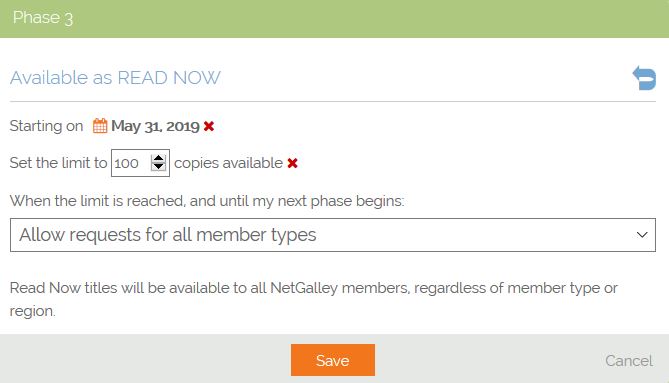
Black Girls Must Die Exhausted was available to any interested member as a Read Now title. Tell us about why you chose that availability setting.

At first, I was concerned that the Read Now setting would lead to a “free for all” without quality reviews from engaged readers who were genuinely interested in reading the book … It worked out wonderfully, and I was happy to give newer reviewers the opportunity to build their reviews on the platform as well.

This was my first experience using NetGalley directly. The prior time, my nonfiction book Regroup was managed by my PR representative, Smith Publicity. At first, I was concerned that the Read Now setting would lead to a “free for all” without quality reviews from engaged readers who were genuinely interested in reading the book. Ultimately, I decided that it was more important, at least at first, to reach more readers than less, especially with a debut novel from a new voice in fiction. I told myself that if there seemed to be an issue, I could always quickly change the setting. Over the course of the entire NetGalley window, I never did. It worked out wonderfully, and I was happy to give newer reviewers the opportunity to build their reviews on the platform as well.

38% of members with access to the title listed the cover as a reason for request. What message did you want to send to potential readers when you were designing the cover?

My professional background is in branding and marketing.  It was essential to me to design a cover that was as delicious as possible to the eyes. I wanted to send a signal of the deliberate quality that went into every nook and cranny of the work. As a visual symbol, I wanted to represent the vibrancy and the richness of life, which is one of the underlying themes of the book – living life to the fullest. The title Black Girls Must Die Exhausted is a little cheeky, so I let the cover tell more of the actual story. Perhaps most important, I wanted the cover to make women feel gorgeous holding the book and for them to feel proud of what they were reading.

46% of members with access said that the description was their reason for request. How did you think about drawing in readers with your copy?

For black women, I just knew instinctively that the title would speak a truth to them that they would want to explore within themselves.  For non-black women and men, I believed that the title would signal an honesty and depth of perspective that would be a rare opportunity to experience outside of one’s own culture.

It was all a bit of a risk, but I’m glad that I took it.

How have you been interacting with members who have access? Have you followed up with them via email?

I try to be extra judicious with my email communications and only send a message when I have something positive and important to share. For example, Black Girls Must Die Exhausted had been on NetGalley for a couple of months already when we finally received the Kirkus review.  Even though it was favorable and exciting, I didn’t share the news via email until Kirkus informed me that their editors selected their review of the book for inclusion in the print version of Kirkus Reviews magazine, a distinction that less than 10% of independently published books receive. That was email-worthy!  Still, I waited until it was also a reasonable time to remind the readers of the NetGalley window to make sure they didn’t miss the book in their long queue of reading.

The average publishing industry email open rate is around 14%, and mine was 51% for my first email and 38% for the second. That is a pretty favorable demonstration of the overall engagement and enthusiasm of the NetGalley community for books and the publishing industry as a whole.

How have you been leveraging your NetGalley listing outside of the site? Have you been including it in emails, newsletters, or trade ads?

NetGalley has been an excellent avenue for providing review copies of Black Girls Must Die Exhausted to fulfill media and book club requests.

It was so much more efficient and secure than blindly emailing copies.  Also, for many of the requesters, referencing NetGalley seemed to send an additional signal that Black Girls Must Die Exhausted was a book to be taken seriously and be meaningfully considered.

What’s your top tip for other independent debut authors?

I would advise making sure that you have a substantial base of reviews before moving on to other marketing efforts, ideally at least 25 to 30.  It is ok to focus 100% of your efforts on garnering reviews at the beginning to ensure that you get the performance and return you’re hoping for when you do eventually direct resources toward other paid marketing efforts.

Bio: Jayne Allen is a black girl from Detroit who smiles widely, laughs loudly and loves to tell stories that stick to your bones. Her debut novel, Black Girls Must Die Exhausted touches upon contemporary women’s issues such as workplace “impostor syndrome,” race, fertility, modern relationships, and mental health awareness, echoing her desire to bring both multiculturalism and multidimensionality to contemporary fiction with dynamic female protagonists who also happen to be black. When she’s not writing “chocolate chick lit with a conscience,” you can find her discussing the publishing business at Book Genius, hosting the Book Genius Meetup in LA or simply spending time with her colorful friends and family, keeping one ear open for her next saucy tale.


Interviews have been edited for clarity and length.

Read the rest of our case studies, featuring authors, trade publishers, and academic publishers here.

Divider

Developing a data strategy with the DIKW Model

We all know that data matters. But for publishers looking to become more data-savvy, it can be hard to know where to start, especially when we are often dealing with qualitative data. Which metrics are important? How do you incorporate data collection and analysis into your workflow? Finding yourself with a glut of data and no real way to interpret or incorporate it isn’t much better than no data at all.

Frameworks for data collection and analysis can help. They provide structuring principles to guide publishers who are developing a data strategy. One that we’ve been thinking about since we attended the Firebrand Community Conference is the DIKW model.

DIKW stands for Data, Information, Knowledge, Wisdom. The pyramid structure represents a process of refining raw data into actionable insight.

Data refers to information in its raw form. This broadest and lowest tier of the pyramid represents the whole glut of information that’s available to you. In this system, data has no context, but is readily available. It needs to be interpreted.

Information begins the interpretation process by putting that information in context. This might mean answering the who, what, when, where, and why’s of the data from the first block of the pyramid.

Knowledge puts the information you have in context. It might link the information you’ve already gained earlier in the pyramid to other pieces of information or take into account trends or events that happened around the same time as the pieces of information were gathered. This block of the pyramid looks at how the information you have fits into a more global view of a project or an industry.

Wisdom, at the top of the pyramid, is what you do with the knowledge you have. Wisdom determines the path forward given the ways you have interpreted the data. Ultimately, when publishers say that they want to be data-driven, they mean that they want to get to this point of the pyramid, where their next steps are guided by data insights.  

Let’s see this in action with a famous literary example.

  • Data: 031544
  • Information: This is a date – March 14, 44 BCE
  • Knowledge: There was a prophecy (at least in Shakespeare’s Julius Caesar) to “beware the Ides of March.”
  • Wisdom: If you’re Caesar, consider calling in sick to the Senate.

Now, let’s put it in terms of the information available to publishers within their NetGalley accounts.

  • Data: 589, 82018, 2304, 011819
  • Information: 589 and 2304 are impression counts for two different titles, Title A and Title B. 82018 and 011819 are the dates that each of the titles went live on NetGalley. Title A went live on August 20, 2018 and Title B on January 18, 2019.
  • Knowledge: Both titles were listed as Nonfiction (Adult) and Biographies & Memoir in NetGalley. The publisher booked an eblast for Title B that went out to all NetGalley members who are interested in the Nonfiction category.
  • Wisdom: By comparing two similar titles that fared differently on NetGalley, we can see two differences immediately. Title A was put on NetGalley in the end of summer when many members are on vacation, meaning that they might be less likely to be at their computer requesting new titles to read. The publisher might consider putting titles up earlier in the summer so that members can read them on vacations, or later in the fall when business-as-usual has resumed. Additionally, we can see that booking an eblast seems to have had a huge effect on impressions, which can help the publisher determine where to best spend ad dollars in the future.

The DIKW paradigm isn’t the end-all, be-all of data-centered decision making. Some critics have pointed out that the pyramid is too rigid and hierarchical. We certainly see their point, and recognize that flexibility is a crucial aspect to successful decision-making.

DIKW is best thought of a starting point – a structure that can be tweaked. It’s a way to begin to think about what data points you as a publisher need to be collecting, what context will help make those data points meaningful, and how you can take that information with you into the future. For publishers who are in the process of asking themselves what it means to be data-driven, the DIKW pyramid is a great place to start.

Divider

Booknet Canada’s Tech Forum: Data, diversity, and collaboration

Each year, Booknet Canada hosts Tech Forum, the largest tech-focused professional development event in the Canadian publishing industry. Like the other conferences and industry events we’ve been attending, panelists were thinking about diversity, inclusion, data, and collaboration. Here are some of our takeaways from Tech Forum 2019’s speakers discussing top-of-mind challenges and trends.

Moving from Diversity to Inclusion

The Canadian publishing industry is no stranger to the conversation around diversity and inclusion in the book world. Tech Forum’s keynote speaker Ritu Bhasin of bhasin consulting inc., addressed this in her presentation, “Disrupting Bias: Overcoming our Discomfort with Differences.”

Diversity, she said, is only one step toward inclusion. Despite best intentions, diversity is a numbers game – counting how many different “kinds” of people are in an institution. Diversity doesn’t ensure that individuals who have been marginalized in the publishing industry and elsewhere are encouraged to be their authentic selves or given the same opportunities as others. For example, diversity means advertising that a certain percentage of a publisher’s list is written by women or POC authors. Inclusion means ensuring that a publisher spends equal resources (or greater resources) to market its diverse list to give those books a better shot in the market.

Bhasin also mentioned that in 15 years Canada’s population is projected to be 35-40% POC and 6% indigenous. So, not only is it an ethical and social imperative to make a more inclusive industry, it is also best business practices.

We also saw questions of inclusion and diversity addressed at London Book Fair. Read our recap here.

Tools for Data-Driven Decisions

Jordyn Martinez, sales representative at Simon & Schuster Canada, explained how to use data to encourage more book sales in her talk, “Finding the Kernel: Data Driven Sales Tactics to Really Sell Your Book.”

She suggested that publishers use Google Trends, which analyzes the top search queries across customizable topics or categories. This useful tool can be used to discover data that can have a major impact on the marketing of your book, especially when it comes to advertising.

Take, for example, regional trends. If you’re hoping to sell your summer beach read, you can use Google Trends to discover which state or province is most likely to be searching for this term. This can help you hone in on how to spend your advertising dollars and get the most bang for your buck. With Google Trends, you can learn that Floridians are much more likely to be searching for beach reads than people living in Alaska, making it a far more sensible decision to start a beach-focused ad campaign in Florida.

Google Trends can also help you pick the optimal publication date for a title, as well. If you’re wondering when you should publish a steamy romance, Google Trends can tell you that the week after Valentine’s Day is the most popular for these types of searches.

Building Bridges Between Publishers and Booksellers

While publishers and booksellers are aligned in goal, we learned during “Building Bridges, Not Walls: Successful Publishing & Retailing Collaborations,” that they do run into issues executing their shared goal of helping books find their audiences.

Laura Ash from Another Story Bookshop told us that as a bookseller, she sometimes has a hard time restocking bestsellers, causing a critical gap between when the book is at its most popular and when they actually have it in stock. If books are out of stock, today’s readers aren’t willing to wait until the bookstore has it again. Instead, they’ll turn to Amazon or a convenient big box store.

Chris Hall of McNally Robinson said that he’s finding it more and more difficult to spot best sellers. But, he noted that for him, a bookseller’s job to generate their own bestsellers. He suggested using engaging displays, interesting newsletters, and targeting the local demographic to set a book up for success. For example, at his own branch in The Forks in Winnipeg, which has a rich history as an early Aboriginal settlement, they’ve worked extra hard to devote shelf space and hand-sell titles by local indigenous authors.


For more of our conference season coverage, check out our recap of London Book Fair and Livre Paris, as well as recent events from BIGNY and the Future of Media. And, keep up with NetGalley Insights conference coverage by signing up for our weekly newsletter!

Divider

Trends at Livre Paris: The power of self-publishing, the global audio market, and keeping young readers’ attention

With conference season in full force around the world, NetGalley France’s Astrid Pourbaix attended Livre Paris, or Paris Book Fair. In its 39th year, Livre Paris gives visitors a grasp on global book trends. 1,200 exhibitors from 45 countries displayed their services, products, and titles. The 160,000 attendees could sit in on one of 800 conference sessions or wait in line for an author signing from one of the 3,000 authors in attendance.

Whereas London Book Fair focused on the Indonesian book market, Livre Paris honored several different global regions. Primarily, the festival focused on Europe as a whole. Speakers including Livre Paris director Sébastien Fresneau discussed Europe’s rich and diverse cultural history as well as issues that affect the whole continent’s book market, such as the EU copyright directive legislation. Additionally, both Bratislava – the capital of Slovakia – and Oman were invited as special honorees.

A major takeaway from Livre Paris, like London Book Fair, was the growing children’s market. School visits to the fair have increased, and Livre Paris has responded by providing more programming designed for younger readers. Students, young influencers, and authors of children’s and YA books appeared on panels and in programs.

One challenge noted during the fair is that young readers’ attention is volatile. Publishing needs to do more to enliven young reading communities and keep them engaged.

Audio was in the air. 2 out of every 10 French people listened to an audiobook in 2018, doubled from 2017. For the first time, there was a prize awarded for audiobooks. Plus, writers and comedians were invited to record audio at the fair.

Like the US market, we are seeing the power of self-publishing in France. Both Amazon Direct Publishing and Books on Demand presented at the fair, indicating that self-publishing is an established part of the French book industry. Attendees also saw the Gutenberg One robot, a print-on-demand solution that can print books in less than 5 minutes. A recent survey saw that 80% of French people enjoy writing and 53% already wrote or would like to write a book one day, indicating that self-publishing is likely to keep growing in the French market. Check out our coverage of London Book Fair, as well as recent events from BIGNY and the Future of Media. And, keep up with NetGalley Insights conference coverage by signing up for our weekly newsletter!

Divider