Sustainability has long been a hot topic in the book industry. With an environmentally savvy consumer market and labor force composed of people who want to make the world a better place, it only makes sense that publishers would lead the charge on sustainable practices. Sadly, this has not always been the case. Now, with rising costs of production, looming tariffs, and much uncertainty in the market there is no better time to face challenges head on and look for solutions wherever they can be found.
Those solutions are often found globally. The Green Book Alliance (GBA), a collaboration across Book Industry Communication (BIC) in the U.K., BookNet Canada, and the Book Industry Study Group (BISG) in the U.S., has been sharing sustainability resources and findings for five years. Brian O’Leary, executive director of BISG, told us “Environmental issues don’t know borders. As the largest publishing market in the world, what happens in the U.S. has an outsized impact on the industry and the world.”

No doubt geographic and geopolitical disruptions will continue to impact the book world this year. Publishers and partners will be discussing ways in which they can reduce costs, speed up production, and align with environmental solutions. NetGalley will be tracking these discussions at conferences and, importantly, demonstrating at least one proven and reliable way to help publishers and book professionals reduce their carbon footprint: Digital Review Copies.
For a book community that has been hungry for strong voices and authentic commitments to save the planet, perhaps this is the year we are ready for real leadership. We’ve all seen the industry slip backward into pre-pandemic practices of sharing physical ARCs instead of digital or audiobooks, all while regarding conference galley rooms with a bit of dismay.
“We as publishers need to push them to realize that this is a problem not only for the environment, but for the supply chain as well… It is a not good for bookstores, publishers or authors (who don’t earn a royalty from third party sales) that these pre-market [print] copies are out there.”
Karla Olson, Patagonia Books
Karla Olson, Director of Patagonia Books, has long been a voice of reason and clarity in our industry. She aims to protect the planet, but also quickly meet the demands of a fickle and competitive market. In 2019, Karla and the team at Patagonia Books declared they would no longer print galleys for environmental reasons. “What’s the point of killing trees, using water, expending fossil fuel, and creating greenhouse gases for something that can easily be replaced by a digital version?” In 2025, she regrets to see publishers actually producing increased quantities of disposable print copies since the pandemic. She writes,
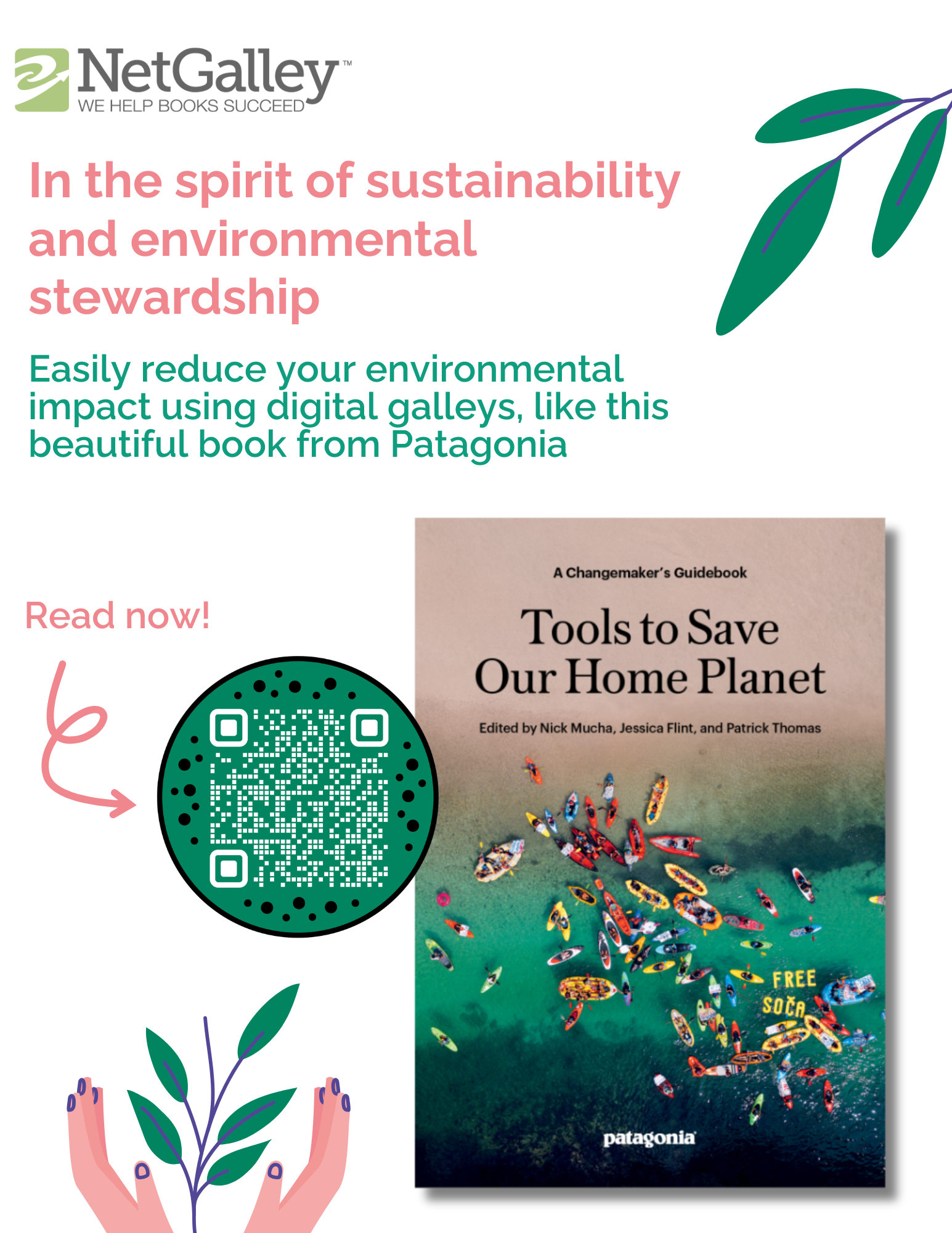
“One of the most impactful ways to improve sustainability is to NOT print ARCs or galleys. Digital galleys are just fine, and in fact, better for the system overall. During the pandemic, many reviewers were accepting DRCs, and we were really hopeful that that would stick. Unfortunately, many reviewers are reverting to their old systems of stacks of ARCs on their desks or in the galley room, instead of cataloging DRCs. We as publishers need to push them to realize that this is a problem not only for the environment, but for the supply chain as well. Those printed ARCs get picked up by the third party sellers on Amazon, who sell them for less and win the buy button. It is not good for bookstores, publishers or authors (who don’t earn a royalty from third party sales) that these pre-market copies are out there.”
Environmental impact at various moments throughout the supply chain is urgent for publishers to continuously acknowledge and make effort to minimize. O’Leary points out, “BISG’s work helps show how actions in one part of the supply chain play out across the industry. Content creation has become fundamentally digital, but we’re not always taking advantage of the opportunities digital provides.”
With a proactive commitment to LCP, a brand new NetGalley Reader, and audiobook early-listening solutions, NetGalley is a proven alternative to print review copies. It’s not just about amplifying our own product. It’s about providing answers to practices that are not only out of fashion, but out of step with our industry’s values. Not only are book files safe and secure thanks to the most up-to-date technology, publishers also benefit from fast, easy tools to distribute digital review copies far beyond the typical reach of print.
Let’s take a chunk out of the galley room and replace tables lined with paper, ink, and cardboard boxes with QR codes and directions for how and where to access digital review copies and audiobooks. We’re here to help!
With a proactive commitment to LCP, a brand new NetGalley Reader, and audiobook early-listening solutions, NetGalley is a proven alternative to print review copies. It’s not just about amplifying our own product. It’s about providing answers to practices that are not only out of fashion, but out of step with our industry’s values.
This article will be updated during the 2025 conference season with feedback from reviewers, publishers, and partners.