Key Marketing & Publicity Takeaways from the Inaugural Publishing Innovation Forum

Publishing professionals from across the industry descended on Nashville, TN at the end of September to attend the Publishing Innovation Forum, hosted by the Firebrand Group. This premier in-person event was designed to unite individuals from various segments of the book publishing industry to share insights, explore new trends, and discuss strategies to adapt to a rapidly evolving publishing landscape. With approximately 150 participants, the forum encouraged collaboration and innovation, ensuring attendees gain valuable knowledge and connections to drive future success in the industry. Expert keynote presentations, and three dedicated breakout tracks for Business, Technology, and Marketing, resulted in lively conversation and important takeaways. For our audience at NetGalley Insights, we have collected some key themes and tips from the highly experienced speakers.

Attendees at the inaugural Publishing Innovation Forum, 2024

Session: Innovations in Book Promotion: Publicity Trends That Move the Needle

Speakers: Kimberly Sneed (Digital Media Director, PR by the book) and Marika Flatt (Owner, PR by the Book)

Kimberly Sneed and Marika Flatt of PR by the Book kicked off this session by explaining that the goal for publicity efforts is to drive author and book recognition, visibility, and overall exposure. The wider the name recognition in the world, the greater chance that book and that author have to build and grow. Exposure is extremely important in early promotional efforts because you are planting seeds for a long trail that follows, even into the backlist. Some important avenues for modern publicists to focus on include:

  • Podcasts: There are hundreds of thousands of podcasts available. Find the right ones in both subject matter and audience for your individual authors.
  • NetGalley and other platforms: Maximize title pages on every platform to include assets like videos, advanced praise, author pages or social media, etc.
  • Social Media: Both presence and promotion matter. Identify and engage with niche, micro audiences, prioritize authenticity, align your messaging with their values.
  • Immersive Storytelling Techniques: Design “expert” pages for your authors, create additional materials like exclusive content, serialized content, short videos, and adjacent narratives to drive engagement and customize media outreach.

One size does not fit all in book marketing and publicity. Step outside the box and don’t be afraid to try something new! No matter what, always connect and build on what you have. Sneed’s and Flatt’s approach is centered on flexibility, experimentation, and working closely with authors to tailor strategies to individual needs and audiences.

Session: Influencers vs. Community: Strategic Activation for Your Book Campaigns

Speakers: Sarah Walsh (Brand Strategist, Branch & Bramble) and Hallie Fields (Social Media Assistant Manager, NetGalley)

Each speaker presented two distinct yet powerful marketing approaches: Sarah Walsh highlighted influencer campaigns, while Hallie Fields emphasized community-driven campaigns.

Walsh showcased how partnerships with influencers can boost brand awareness, leaning on examples like #marcreadsabook and HarperCollins’ #shelvesinthecity. These examples demonstrated the importance of personalized and trend-focused initiatives. It’s important to note that these campaigns were certainly in the high-budget realm; however, there are lessons to be learned from these exciting campaigns that even a publisher with a smaller budget should keep in mind:

  • Jump on trends and interact with followers as part of the community, not an administrator or organizer.
  • Consider the best type of influences to engage. Micro influencers can have big engagement numbers.
  • Give influencers time and opportunity to tell their stories. Bring them to beautiful spaces, or give them Instagrammable assets.
  • Form ongoing partnerships, not just one-off posts, which allows the influencer to create ongoing content that is more organic and authentic.

Fields focused on examples from Camp NetGalley, a community-based challenge campaign, and #MyNetGalleyYear, an annually recurring checkpoint campaign. These examples encourage user-generated content (UGC) by asking audiences to complete a task and share it with their followers. These campaigns allow you to engage with, and unite, the entire community, and allow you to secure your brand’s place in a recurring social landscape.

  • Know your community. At NetGalley, we know our members love fun, nostalgic, interactive experiences, so we built Camp NetGalley with that in mind.
  • Prizes can be simple and digital! In the case of Camp NetGalley, it was a digital badge members can share, and which appear in their NetGalley accounts. For #MyNetGalleyYear, a template we created for them makes it easy for them to brag about everything they’ve read.
  • UGC is excellent to share back to your community, help them feel involved, and take some load off your own content creation.
  • Consider creating campaigns that can be recurring, which gives the community something to look forward to.

Both strategies – influencer campaigns and community engagement – underscore the importance of creating meaningful, relatable experiences that resonate with audiences, while maintaining authenticity and connection.

Session: Book Marketing at Any Budget



Speakers: 

  • Kim Lauber (Vice President of Marketing at Abrams)
  • Ashley Marie Mireles-Guerrero (Director of Sales and Marketing at Familius Publishing) 
  • Allison Marie Pond (Director of Marketing at Mad Cave Studios)
  • Jin Yu (Director of Marketing at Berkley/PRH)

It was exciting to see these top leaders from across the publishing spectrum in one space, delving into practical approaches for maximizing impact in the marketing, publicity, and advertising spaces. The collective in-house wisdom from publishers large and small, who publish across many diverse categories, was too vast to fully cover in this short article, but here are a few key points:

  • Know your audience: Identify where the niche is, where and in what format they will buy, speak to them directly, customize your metadata to reach them.
  • Maximize metadata to boost discoverability, and feed the search engine with more content – announcements, bumpers, reviews – which will expand your reach.
  • Not all marketing involves advertising, and not all marketing has to be expensive. 
  • When you do advertising, consider self-serve ads where you can control where the spend is placed. If you do have an ad budget, consider Amazon ads which one speaker said “are expensive, but are worth it.”
  • Events are a good way to connect with your community. Library and bookseller communities are especially relationship-based. Be sure to identify what you want to get out of it before deciding to attend since they can be expensive.
  • Virtual events have lower cost and can work if you’re creative on how you approach them.
  • Give out QR codes or offer to include items in grab-bags, like bookmarks or other items, which are a great way to stimulate interest.
  • PR is a lot of effort, make the most of it. Continue to utilize the results and keep it updated, making sure to leverage any media hits by letting additional outlets know it’s being talked about.

Session: Building Brand Trust: The Role of Empathetic Marketing in Publishing

Speaker: Emily Lyman (CEO & Founder, Branch & Bramble)

In this popular and engaging session, Lyman emphasized that understanding audience values and emotions is key to creating impactful marketing campaigns. By analyzing consumer patterns in reviews and social interactions, publishers can tailor their messaging to resonate with their audience, and shift from transactional hooks to more meaningful communications.

  • Our values drive our emotions, which drive our decisions.
  • Make small shifts toward empathy, like altering email subject lines to be more engaging vs. a flat statement or sales hook.
  • Example from Alleyoop: Their customer feedback popup doesn’t ask what kind of makeup they like, or why, but rather asks the consumer about themselves and what issues they want to solve. For instance, one response is “I can only spend 5 minutes on my makeup.”
  • To maintain authenticity as you move into more empathetic language, start shifting your hooks to focus on the consumer. Stop making statements like, “Available now!” and shift to how readers will benefit from it. Questions are a great way to do this. A more empathetic subject line would be, “Need more time with your family?”

Bottom line: Empathy strengthens the connection between brands and consumers.

Session: Challenges in Audiobook Marketing and How to Overcome Them

Speaker: Jolene Barto (Marketing Executive, Publishing Professional)

Barto began this session by pointing out three main audiobook audiences: those who want, need, or happen to discover audiobooks. She emphasized that each of these audiences listens to audiobooks for their own reasons and that marketers should keep each of them in mind when considering their marketing language and campaigns–your approach can and should be slightly different when promoting to people who love the audio format, versus those who need to listen to audiobooks due to lifestyle or accessibility constraints. And never forget about those listeners who don’t yet know that they will love audiobooks! A few tips from Barto:

  • Think about audiobook marketing holistically. Integrate audiobooks into the broader marketing efforts through all aspects of the launch and ongoing campaign efforts. Start by educating authors that the audiobook will be available and is just as exciting and desirable as the hardcover. Make sure you update audio metadata at the same times as you update the other formats’ metadata.
  • Incorporate audio-specific keywords in metadata. Keywords like “dual-narrator” or “full cast recording” are important.
  • Market the production process. Listeners romanticize the publishing and in-studio processes. Lean into this!
  • Encourage narrators to be part of the promotion. Offer them announcement assets to share, ask them to record in-studio content, and leverage their audiences.
  • Create custom content (bonus chapters, interviews, music, bloopers, etc). If you’re going to pitch bloopers as a fun, custom bit of content to media outlets, be sure you’ve asked the studio not to discard or cut these bloopers during the recording process.

Barto pointed out that some publishers still seem to hold on to the notion that audiobook sales will somehow cannibalize print sales, but there has been no evidence of this! If anything, consumers will seek out the format they want. Make it easy for them to find. Audiobooks are more likely to be an “in addition” purchase than they are to replace a print sale. 

Overall Themes

As you can see, themes of audience-centric and empathetic messaging ran throughout all of these marketing-focused sessions. Our expert speakers encouraged a shift from pushing books at people and, instead, connecting with readers.

Remember that not every influential reader is a celebrity, and they won’t all ask you for thousands of dollars to promote your books. Identify your core micro influencers, niche communities, and those who are passionate about the types of books you publish. These are the influencers that will drive word of mouth for your books most effectively and authentically.

Don’t be afraid to experiment! Get creative. Find fun ways to engage with your audience. Try new advertising techniques and assess whether they work for you. Adjust as needed.

We are thrilled that the inaugural Publishing Innovation Forum was received so positively by attendees, who told us they were inspired and leaving Nashville equipped to try out some of the strategies outlined above. We hope to see you at another Publishing Innovation Forum in the future!

– The NetGalley Team
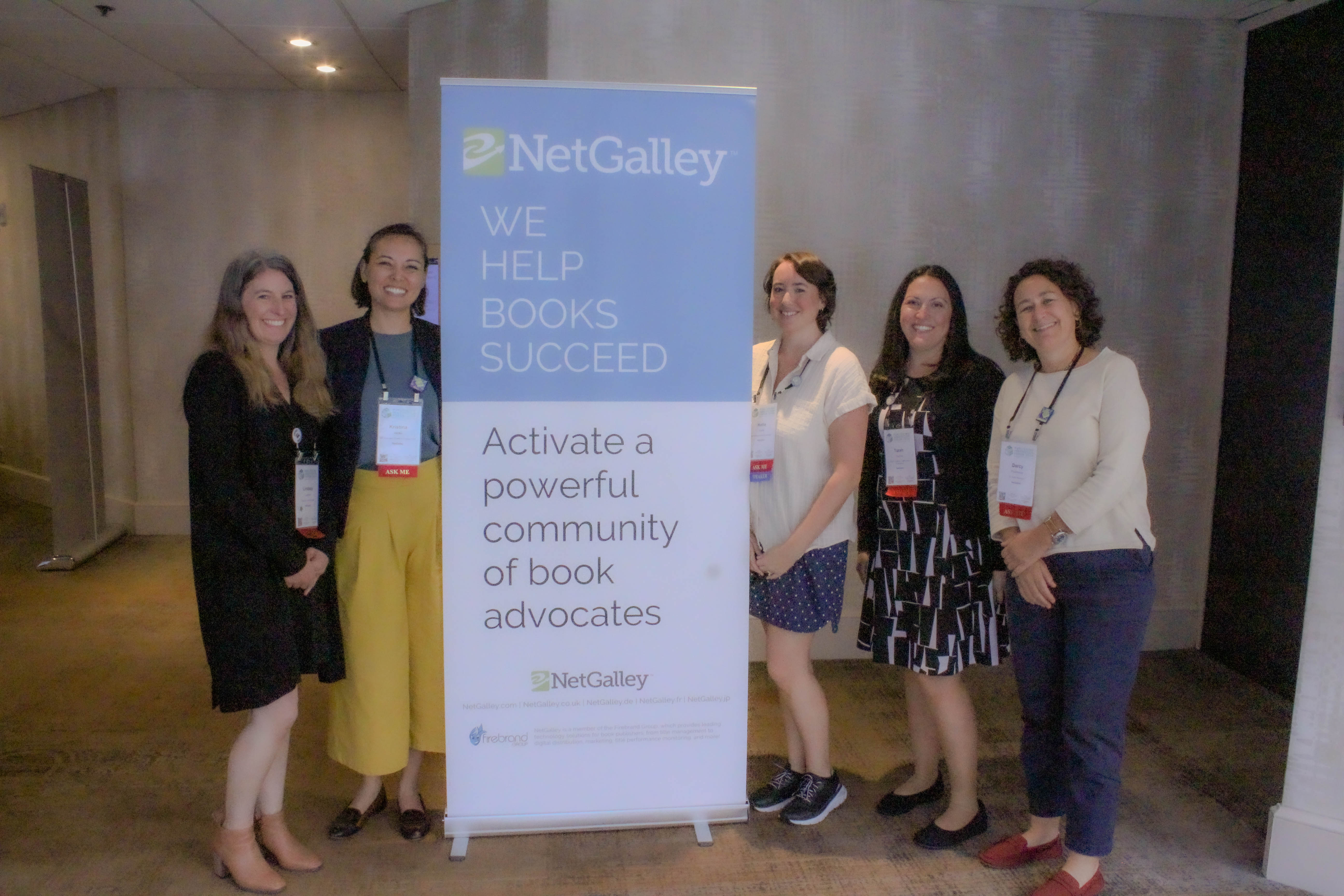
NetGalley team members at Publishing Innovation Forum, 2024: Lindsey Lochner, Kristina Radke, Hallie Fields, Tarah Theoret, Darcy Piedmonte
Divider

Recommended Strategies for Audiobooks on NetGalley

It’s been a couple of years since we last answered some of publishers’ burning questions about promoting audiobooks on NetGalley. Now, with even more data to draw upon, we’re excited to share updated recommendations for audiobook publishers!

How early should I add my audiobook to NetGalley?

As early as possible! In most cases, we’ve seen that publishers are uploading their audiobooks to NetGalley within one month of pub date. This makes sense for most audiobooks, where the final file is not available until very close to the release date. However, if you have a highly-anticipated title, consider building extra buffer time into the production schedule to take advantage of a longer pre-pub marketing timeline. This can help you piggy-back the audio format alongside the earliest marketing and publicity efforts for a simultaneous hardcover release.

67.5% of audiobooks are added to NetGalley 30 days or less prior to the pub date.* However, if you have a highly-anticipated title, consider building extra buffer time into the production schedule.

In the chart below, you will see that a small selection of titles were added to NetGalley much earlier than one month pre-pub. 

67.5% of audiobooks are added to NetGalley 30 days or less prior to the pub date.

How long should my audiobook be available to NetGalley members?

3-4 months is our recommendation for audiobooks to remain active on NetGalley. Generally, the longer you keep an audiobook active on NetGalley, the more impressions it will receive, and we’ve seen that 90 – 120 days of activity is the sweet spot! Right now we’re seeing that most audiobooks are active on NetGalley for only 2 – 8 weeks but, based on our data, activity continues to grow all the way up to 4 months. Keep your audiobooks active for longer so you don’t miss out on members who discover and request a copy in those additional few weeks!

Audiobooks that are active on NetGalley for 90-120 days receive the most impressions, on average.

Audiobooks that are active on NetGalley for 90-120 days receive the most impressions, on average.

How can I drive more activity for my audiobook on NetGalley?

In addition to the organic interest that’s found on NetGalley, there are a number of ways to drive additional activity:

  • Widget: The NetGalley Widget is the quickest and easiest way to invite your key contacts to access your titles. Simply include the widget link in your pitch email and use our template language to ensure they have all the information they need to get started right away. This tool is included as part of your NetGalley subscription.
  • Detailed Activity & Feedback Reports – Use your Detailed Activity and Feedback reports for comp titles to identify key contacts who may be interested in your new title, and invite them to listen using the NetGalley widget. These reports, and more, are available on demand within your account.
  • NetGalley Promotions – Audiobooks can be included in any NetGalley promotion, from email promotions like newsletters and eBlasts, to on-site promotions like Category or Dashboard Spotlights, Featured Title placement, etc. There are also a number of audio-dedicated promotions available throughout the year. The link above suggests options based on specific goals like gaining overall exposure, introducing a new imprint, or driving activity during a particular time period. You can also view our Media Kit to see more information about open and click rates, editorial calendars, and pricing.


Audiobooks can be included in any NetGalley Promotion!

What should I expect from NetGalley members’ audiobook reviews?

In our article, How to Write an Audiobook Review, we recommend that NetGalley members discuss a number of audio-specific features in addition to commenting on the content of the book. For instance, we ask them to focus on the narration, discuss how the audiobook flows, mention unique elements like music or if it is a full-cast recording, and share a specific recommendation.

Members are highly likely to submit audiobook Feedback on NetGalley and share it widely with their audiences.

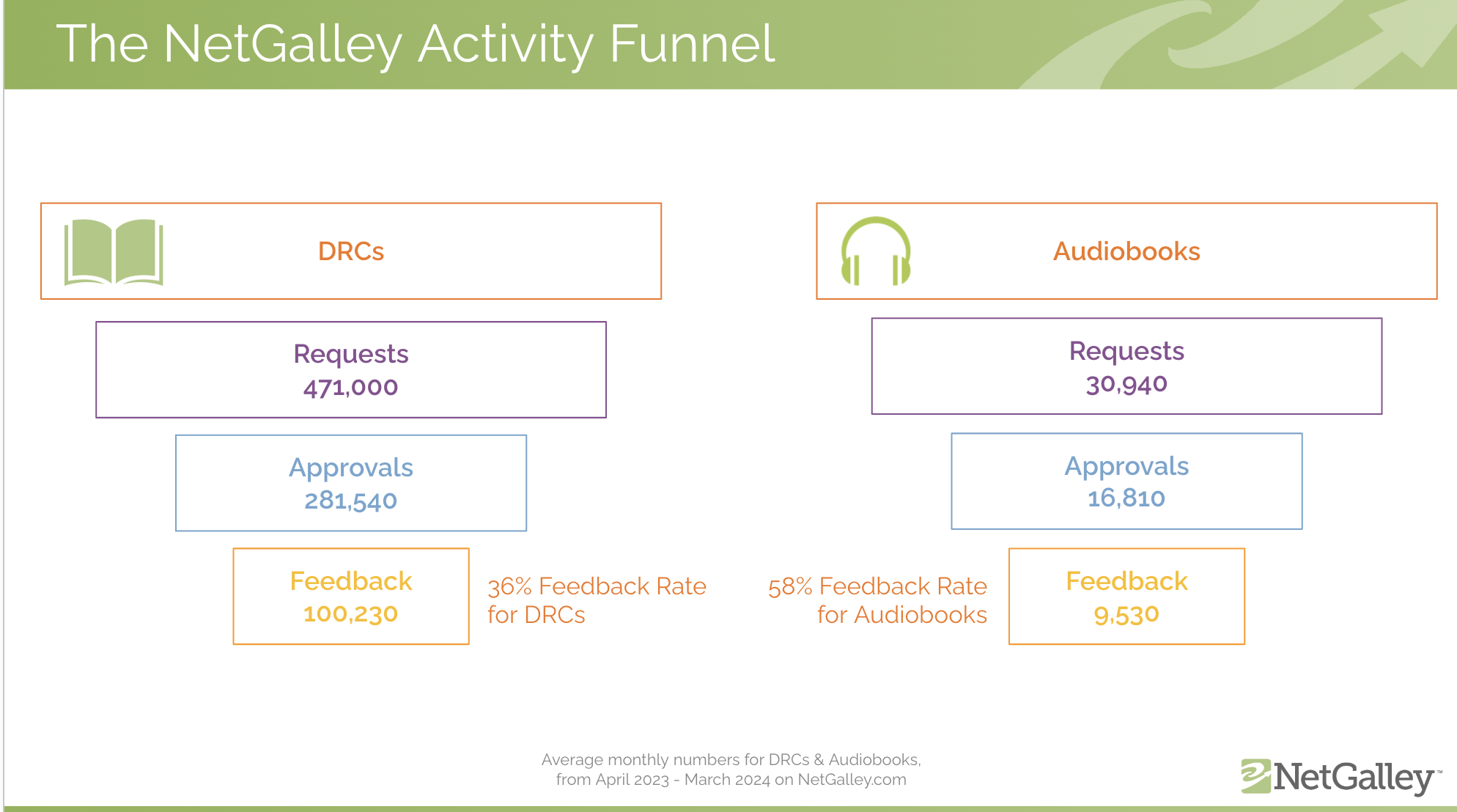
The Feedback Rate** for audiobooks is 58%, which continues to be higher, on average, than it is for digital review copies (36%). This means that approved members are highly likely to submit Feedback on NetGalley and share it widely with their audiences. We are thrilled that NetGalley members continue to embrace the audio format. 

Remember, you can always follow up with approved members to encourage them to share their Feedback! Take a look at our template language here, and best practices for reaching out to NetGalley members.

**Feedback Rate is calculated based on the amount of overall Feedback submitted divided by the number of approvals (of any kind).

For more information about audiobooks on NetGalley:

*Data is based on audiobooks created on NetGalley.com between July 1 2023 – June 30 2024 unless otherwise noted.

Divider

Focus On: LGBTQIAP+

Happy Pride! NetGalley offers a wealth of insightful data that sheds light on the latest trends and preferences, and we’re thrilled to focus on the LGBTQIAP+ category this month. If you haven’t browsed this categories recently, you may be missing out! In the past 12 months, publishers have added over 950 new books, generating a lot of engagement and excitement from the NetGalley community.

Download the full report here.

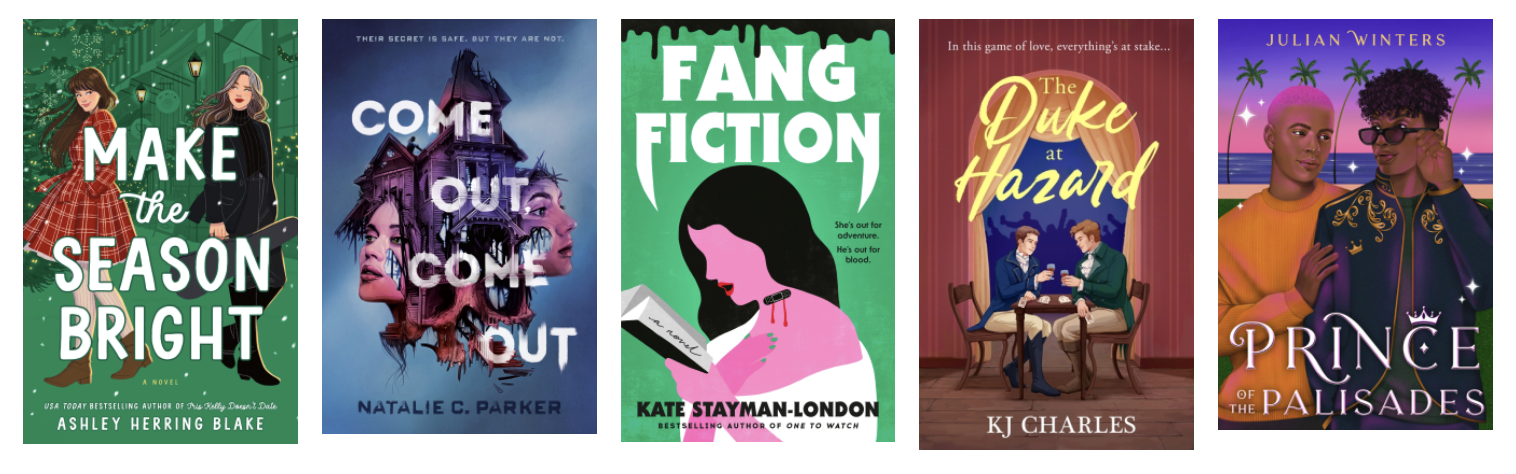
Read on for a glimpse at some of the Most Requested and Top Performing books in the LGBTQIAP+ category

Most Requested*

On average, books in this category receive about 317 requests and auto-approvals. This includes activity generated when a publisher invites a reader to access the book using the NetGalley widget or makes the book available to ‘Read Now’, in addition to organic requests from NetGalley members. The Feedback Ratio (amount of Feedback returned based on all types of approval) is 34%.

Most requested status changes regularly. Books listed in this article were among the most requested in June 2024.

Top Performing**

** “Top Performers” refers to the amount of Feedback titles received. Books listed in this article were among the Top Performers in May 2024.

Case Study: Vengeance Planning for Amateurs by Lee Winter

Penguins, plotting, and payback? Yes please! This cover was love at first sight for the NetGalley team, but it was the “offbeat elements” and “cast of colorful characters” that had NetGalley members hooked. Here’s more of what readers thought about  Vengeance Planning for Amateurs:

  • 96 Feedback as of May 29, 2024
  • Average 4.4 star rating
  • 95% of approved reviewers would recommend this book/author to their audience
  • Over 100 thumbs up on the cover!
  • Check out other books from Ylva Publishing here!

Promotions for LGBTQIAP+

Launch your frontlist or leverage your backlist! We have both on-site and email promotions for every budget, goal, and type of book. Learn more or view the full Media Kit here.

This newsletter was sent to 36,500 members who are interested in LGBTQIAP+ books, and saw a 39% open rate!

Information in this article is from May 2024unless otherwise specified. Data includes details from NetGalley.com.

Divider

Keynote Addresses Announced! Firebrand Group Community Conference

Join us for a very special opportunity to connect with the NetGalley team and your peers from across the publishing industry! We have two very exciting keynote addresses for you during the Firebrand Group Community Conference, September 26- 28 in Baltimore!

Kirsty Melville

Kirsty Melville, President and Publisher of Andrews McMeel Publishing

When we connect, we feel less alone – Rupi Kaur, author of Milk and Honey

The term “Instapoetry” is used to describe short form, accessible poetry on social media platforms like Instagram, Twitter and TikTok. It has been derided as superficial, and “not real poetry” because it originates from social media. Yet the “Instapoetry” label masks the incredible depth and intersection of creativity, marketing, technology and human connection represented by this form of expression.

In this talk, social poetry publisher Kirsty Melville provides a behind the scenes look at how this contemporary poetry phenomenon emerged, and how its impact reflects a significant shift in the publishing dynamic between authors and publishers. Rupi Kaur leads her poetry peers in kicking down the walls of publishing, and we have much to learn from their power to connect and engage with readers worldwide.

Alistair Croll 

Alistair Croll is a founder, bestselling author of Lean Analytics, and conference organizer.

It’s no secret that the arrival of digital technologies has upended most aspects of human society, from how we live and learn, to how we fight and play. The pace of change can be overwhelming, and indeed has overwhelmed many of the established businesses across a wide range of industries. But these changes can be harnessed—if only we have a framework for understanding them to which we can align our organizations.

In this wide-ranging talk that borrows from science, philosophy, and technology, bestselling author Alistair Croll offers an unexpected—and often hilarious—look at how innovation actually happens. You’ll learn more about horse manure, lab-grown meat, tea clippers, the economics of coal, YouTube unboxing videos, child seats, and baggage carousels than you ever thought you wanted to.

Along the way, get a structured approach to different kinds of change, from keep-the-lights on incremental improvements to the unknowable discontinuities of complete transformation. You’ll leave with concrete concepts you can put to work immediately as Alistair shows you how to adjust your thinking so you can thrive amid rapid change.

Divider

Takeaways and Trends from 2021

We’ve all learned a lot over the past couple of years, and 2021 has taught us some especially interesting things. Here are a few takeaways and trends from 2021 that we’ll carry with us as we continue to grow, evolve, and serve the book publishing industry!

Book publishing is in a period of renewal

Often, the things that challenge us the most also create great opportunities. The world has nearly two years of this pandemic behind it, and many publishers have seen surprising gains as consumers turn to books to fill their hours at home. On the BookSmarts podcast, Michael Cader, Founder of Publishers Lunch and PublishersMarketplace.com had this to say about additional opportunities the industry has at this moment:

“As we go through this COVID transition [we] redefine what work looks like and how work becomes meaningful….In the pandemic, people stopped going to book fairs and they stopped touring authors, and a lot of them stopped sending out [printed] galleys, and cut back on marketing expenses and did all kinds of things, some out of necessity, some because those things just didn’t exist, and some for ease, and some because they wanted to conserve. So, there’s this really interesting chance to rethink: Where are we spending our dollars? How are we spending those dollars consciously? And what’s driving ROI?

“There’s an interesting opportunity to rethink every role within the organization. What have people actually done during COVID, when they’ve been working with less direct supervision more on their own at home? And how has that worked well? And how can we enfranchise people to keep doing more of that, and less of what they didn’t like doing? 

It’s this really interesting reset moment. The good news is that publishing is coming at it from a position of strength.

– Michael Cader, Founder of Publishers Lunch and PublishersMarketplace.com

“We’re also in this interesting moment of the industry finally reckoning with diversity in a more meaningful way. Part of diversity means having an industry that’s not just centered in New York. Only certain types of people can afford to live and work in New York, and New York has all sorts of different people and viewpoints in it, but it’s not the nation at large. 

“I think writ large it’s this really interesting reset moment. The good news is that publishing is coming at it from a position of strength… the sales are there, the readers are there. The retail channels have been resilient… So there’s a really strong foundation to build from. So, where people go from there, I think will determine a lot of what the trajectory of the business looks like, over the next few years.”

Listen to Michael Cader on the BookSmarts podcast.

Book discovery is context agnostic

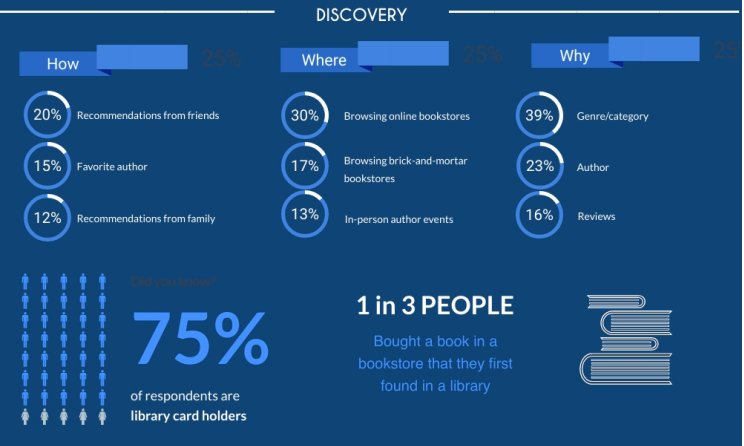
We know that NetGalley is just one of many ways that readers discover books. According to our 2021 NetGalley Member Survey, Goodreads, Friends/Peers, and Amazon also top their list for finding new books. For audio listeners, the library is also a very important means of discovery.

In the Panorama Project’s Immersive Media & Reading Consumer Survey, Dr. Kathi Inman Berens (Associate Professor of Book Publishing and Digital Humanities, at Portland State University) and Dr. Rachel Noorda (Director of Book Publishing and Assistant Professor in English) conducted a consumer behavior study focused on how book discovery works and how libraries fit into the book discovery ecosystem. In April, they spoke about their work on the BookSmarts podcast.

Dr. Berens notes, “In roughly equal numbers, people find a book online and then buy it in a bookstore, or discover a book in a bookstore and then buy it online. It’s actually far more fluid than just looking at sales data would suggest.

“The diversity of ways that people discover books suggests that there’s no one formula for discovery. We do know that people have multiple touch points… We also know that people are largely unaware of how metadata works, how algorithms and recommendation algorithms work. So a question that would be super hard to capture in self-report data would be: How many times did you encounter this book before you finally decided to open your wallet? Or you finally decided to check it out from the library? That’s hard for consumers to be aware of.”

Immersive Media & Books: Consumer Behavior and Experience with Multiple Media Forms, Portland State University 2021, Published by Panorama Project

Dr. Norda adds, “Our study was a cross-media one, and what we found is that avid readers are also avid media consumers in other categories. They’re gaming, they’re watching TV and movies. And there is a really high discovery rate cross-media. About 60% of people are going from engaging with a book to then finding a new TV series, or movie, or game. 61% are going from TV or movie to then finding a book or a game. Games was the lowest [category for cross-media discovery]—but still, about a third, 33% [are] engaging with a game and then finding other media like a book or TV/movies. Cross-discovery is something I don’t think we engage enough with in the industry, to think about readers as cross media consumers.”

Listen to Dr. Norda and Dr. Berens on the BookSmarts podcast!

Data is only as useful as its context

We at NetGalley firmly believe in giving publishers access to their data about NetGalley activity. Information like early impressions, numbers of requests and, of course, the Reviews and Feedback they receive give marketers and publicists the tools they need to analyze the effectiveness of their strategies. This early data helps build context for not only their NetGalley efforts, but their work as a whole. (Have you read our article, The Importance of Early Data?)

Earlier this year, Guy LeCharles Gonzalez, Chief Content Officer at LibraryPass spoke with the BookSmarts podcast, saying, “My issue with ‘data-driven’ is [that] it’s become kind of a buzzword that’s lost its original meaning. I compare it to the early days of GPS, where if you’re not paying attention, GPS will drive you off a cliff.

“Data is only as useful as the context you’re pulling it into, and the other insights you bring to it. Otherwise it can cause you to make some rather myopic decisions. [If] you’re getting all this sales data that says, 70% of our sales are from Amazon, a data-driven approach might say, ‘All right, we’re gonna put 70% of our resources and effort towards maximizing sales on Amazon.’ And data-informed says, ‘Okay, well, we know Amazon is a transactional point, for a lot of people, but it’s not necessarily the point of discovery. [There are] sites that include links to Amazon, social links…’ 


“Data is only as useful as the context you’re pulling it into, and the other insights you bring to it.“

– Guy LeCharles Gonzalez, Chief Content Officer at LibraryPass

“There’s a lot of reasons people go to buy a book on Amazon, and half of them have nothing to do with Amazon helping them discover that book. So if you decide to shift 70% of your resources towards Amazon advertising, and you’re only prioritizing metadata on Amazon, you potentially are losing all of the other touch points that drove those sales to Amazon and suddenly, your Amazon percentage may stay at 70% but your overall sales may drop. And that, to me, is one of the key differences between we’re data-driven versus data-informed. That’s where you really draw a line.”

Joshua Tallent, Director of Sales and Education at Firebrand Technologies and BookSmarts host, adds, “The amount of data you have and the type of data you’re pulling in…  if you’re only looking at a subset of real information, then you’re only going to have enough information to make a very narrow choice. But when it comes down to the data that publishers receive, a lot of times, they don’t get enough data to really be able to be data-informed in the first place. And so you feel like you have to be data-driven, and just make decisions based on what you’ve got.”

Data informed publishers constantly analyze their raw data from as many sources as they can find—from their own internal databases as well as data from their partners’, even beyond sales data. What data points do you use to inform your strategies?

Listen to Guy LeCharles Gonzalez on the BookSmarts podcast.

Backlist is the backbone

Although most titles available on NetGalley are pre-pub, frontlist books (“galley” is in our name, after all), we often work with publishers to promote backlist as well! Often, a publisher wants to promote an author’s previous works on the cusp of a new release, or an important current event may make an older book suddenly relevant to audiences again.

In his interview with BookSmarts, Michael Cader notes, “It’s sort of extraordinary that the business is doing so well given the depth of the real challenges we’re seeing. One is just the increasing difficulty of selling new books, right? You know, what we’ve seen during the pandemic is the backlist sales continue to rise. Backlist sales have been rising for years, which is in part a function of the increased percentage of book sales online, right? Because an online environment is less conducive to displaying new titles, and stacking them up and putting them in prime real estate [as happens in brick and mortar stores], and more conducive to people browsing or searching, or going to look for the book they want at the price or vendor they want to get it from.”

Chief Marketing Officer at Open Road Integrated Media, Mary McAveney, in a separate interview adds, “Lots of publishers saw great increases in revenue and in sales during that time when people were turning to online search, or browsing [retail sites], but a lot of what was happening is readers were gravitating to books they knew about. They either remembered, or they were classics or somehow the book had an audience.”

Referencing BookNet Canada’s study Aged like a fine wine: What’s the ideal age for a backlist title?, Joshua Tallent says, “When you get into two-to-five years, things really pick up. And so there’s an opportunity there for publishers to take advantage of that—especially with debut authors, or lesser known authors, or those midlist titles that aren’t necessarily the ones that are really going to push a ton of marketing on at the beginning, because they don’t have the time or the energy or the or the money for that. Hitting that middle time period, that two-to-five years, might be just a benefit to go back and say, Hey, let’s just put a little more at this, let’s think about these titles that really haven’t… they’ve kind of been selling a little bit here and there. Let’s put a little bit of effort behind them.”

In a few different conversations, Joshua wants to focus on practicalities. He notes the opportunity and asks, “Where do you think discovery comes from? What do you think that can be doing to really push more discovery?”

Drive discovery by joining communities

Connecting directly with readers has long been at the forefront of publishers’ efforts. Within NetGalley, we see publishers directly invite important media contacts, reviewers and influencers, and use their reports to follow up directly with them. As you can imagine, a number of the people who Joshua interviewed spoke about direct-to-reader efforts as well.

Guy LeCharles Gonzalez says, “A lot of the practicalities come from a direct connection to readership. One of the first things I look at is: if you’ve got a clear vertical that you serve, you’ve got opportunities to capture data beyond just the sales data that gets fed to you from your partners.

“…There is a community for everything on the internet, you can get a pretty clear sense of how big it is and how engaged they are. And you can build a business model around that, if you can develop the right content or services—you know, it’s not just about books—for those communities. But it starts with really understanding those communities. And to do that, you got to be a part of them. So you can’t just go buy, you know, Reddit’s mailing list, or do an ad buy on Reddit, and think you’re engaging with the community, you’re just, you know, shifting traditional marketing approaches to the internet.”


“It’s critical to make sure that you’re thinking about the consumer more than you’re thinking about the book.”

– Mary McAveney, Chief Marketing Officer at Open Road Integrated Media

Mary McAveney adds, “If you have a media hit around a book, it’s like manna from heaven…. but you know, what you have to do is actually build your own verticals, to build your own content sites, because there are people looking for books, and they may only know Dan Brown’s name. They don’t know anybody else in that genre, but they know they like that book. It sounds sort of simplistic, but you want to bring in those people who like that book, and it’s really important to make sure that the [next] book you’re putting in front of them when they’re doing that search is something they’re going to enjoy just as much as that book. 

“Authors spend their lives writing [fantastic books] and they shouldn’t be punished just because the demand isn’t evident. You should be able to build that. But it’s work. It’s really creating your own owned media through funnels and content verticals and articles. And if you can harness those readers and really continue that relationship and build it. If you become like a hand-seller you know what [anyone] likes to read, right? Because they’re clicking pretty consistently on the books that they like to read. And as that reader stays in your system for years, you become even more and more familiar with what they’re looking for. And you can really segment the titles well for them, and so that becomes really critical.”


Presented by NetGalley, We Are Bookish is an editorial blog, presenting an independent voice to highlight books and a bookish lifestyle. Recurring features include: book recommendations, author interviews & guest posts from publishing professionals, cover and stepback reveals, gift guides, book club resources, NetGalley member spotlights, and more.

“I know that so many publishers, of all different sizes, are building mailing lists and really trying to develop that one-to-one relationship with the consumer. And it’s critical, but it’s also critical to make sure that you’re thinking about that consumer more than you’re thinking about the book. You have a book you spent a lot of money on to purchase, and you want to push that book out to every consumer you can think of, but that isn’t necessarily going to win the day at the end. You want to really cultivate those customers.

“It’s not an easy proposition. It’s extremely costly to do that. But the way we [at Open Road] started, is really to start with demand. What are people currently searching for? How does that map to the kinds of books that we have available to put in front of them? It starts there, and then you can use those audiences to build—it becomes sort of a pyramid, you get your base of consumers, and then you use those to build on top of it more, more and more. Whether you’re using social channels, or you’re using external newsletter ads, or you’re using just your content and your search engine optimization, or you’re using search engine marketing, there are a number of tools. And they all require a good amount of expertise to function well.”

Interviews have been edited for clarity and length.

Divider

A Publicist’s Tips for Being a Stellar Book Advocate

Estelle Hallick at Forever shares her strategies for finding the right NetGalley members for her books

Originally published on We Are Bookish

NetGalley members are always curious about how they can get publishers to approve more of their requests. That’s why We Are Bookish’s Kelly Gallucci interviewed Estelle Hallick, Publicity and Marketing Manager at Forever, about her process for managing requests, and her advice to members looking to improve their profiles. In addition to giving members an inside look at how a publicist is looking at their profiles and their NetGalley activity, Hallick also provides other publicists and marketers with a template for managing requests systemically. 

In this interview, Hallick shares the metrics she considers when approving Reviewer requests, how she treats new NetGalley members, and why a critical review doesn’t mean that she won’t approve another request from that same member.

Read the interview below! Plus, if you have a book or an author that you think would be a great fit for We Are Bookish, pitch them here

Take us behind the curtain: What does the NetGalley request approval process look like for Forever?

I always start by looking at the Feedback Ratio; I sort the reviewer requests and start the approval process with the highest numbers. Since we get so many requests every day, 80% Feedback Ratio is a benchmark number for me. 

When I start to get below 80%, I begin reading through bios. I tend to give more attention to the people under 80% because I’m genuinely interested to know why they are requesting the title or what brings them to NetGalley. I hope to see that bios are updated recently, or within a year (to me, it’s an indication that they are active reviewers) and to see if they have a list of authors they enjoy. This helps me decide if they are a good fit for our titles. While Feedback Ratio is important to me, I remember what it’s like to be a new reviewer and try to consider newer members whenever I can–but it starts with a detailed Profile.

What are three common missteps that can lead to a declined request?

I look for Feedback Ratio, correct member type, and updated bio with working links. I see so many Profiles with inspirational quotes or information that feels a little like a dating profile. I love personal details, but, in order to catch my eye, the combination of personal and professional information is important.

I look for Feedback Ratio, correct member type, and updated bio with working links. I see so many Profiles with inspirational quotes or information that feels a little like a dating profile. I love personal details, but, in order to catch my eye, the combination of personal and professional information is important.

Do you look for different information in NetGalley Profiles based on member type? 

Every member type should be as detailed as possible.

Bookseller: Where do you work? Are there book clubs at your store?

Librarian: What department do you work in? Are there any programs you run that would be of interest to publishers?

Traditional reviewer: What outlets have you written for?

Blogger: What street teams are you on? Do you organize any annual events on your platform? Do you cross-post? What are your stats?

Traditional reviewers and bloggers should absolutely include links to recent reviews or author interviews that they’ve done.

How often should members be updating their Profiles?

My hope is that reviewers are seeing continual growth on their platforms and want to communicate those updated stats with us. A good rule of thumb is to update whenever there’s something new to add–think of it a bit like a resume in that you want to provide your best and most up-to-date information. Put your best and most accurate foot forward.

We know publishers rely on member stats included in NetGalley Profiles when making approval decisions. Are there any specific stats you personally look for? (Psst, members: To find a publisher’s approval preferences, visit their Publisher page!)

For bloggers, I do look at social media platform growth. While I look at follower count, someone with a following of less than 500 (just as an example) won’t deter me from approving them. To me, it’s about engagement on the platform and how well posts perform.

Let’s talk about review etiquette. In your opinion, what are three important things members should think about when writing reviews? What do you recommend members do when faced with reviewing a book they didn’t enjoy?

First, I want our reviewers to be honest. Giving a book a critical review won’t mean you aren’t qualified to receive other books for review; if anything it makes it easier for us to understand what kind of books you do enjoy. (Reading is an extremely personal experience.)

Second, the most helpful reviews give a sense of the story but do not give away the entire plot. As a bonus, I love when you share if you personally identified with something in the story.

Third, timing. As a NetGalley member, you’re often able to read books well before they’re in stores or libraries. If you love something, don’t wait to share it! Early buzz is so important to authors and publishers. It also alerts other reviewers about the book. The one thing we ask you to keep in mind is remembering to share again on release day.

As an added note, please do not tag authors in critical reviews. Reviews are for other readers, and authors do not need to be alerted of them by a tag.

What can newer members, who may not have a high Feedback Ratio or strong blog/social stats yet, do to stand out to publishers?

New members should take advantage of “Read Now” books to grow their Feedback Ratio, and also give us a better idea of the books you like. Listing authors you enjoy (so we can think about comparable authors we have) and not overdoing the category/genre options would be a great help. I’d also love to see new reviewers share where they read reviews and their hopes for their review life–all great places to start.

Is there anything we didn’t cover here that you’d like to add?

As a NetGalley member, please be sure to read over the decline email you receive before contacting the publisher. A good letter will tell you why you didn’t meet the qualifications for this particular book. If you are still unsure, definitely reach out for specifics.

Divider